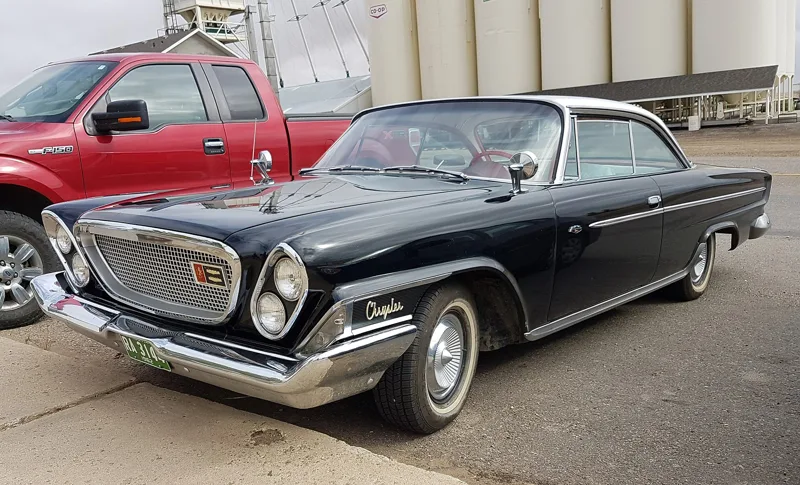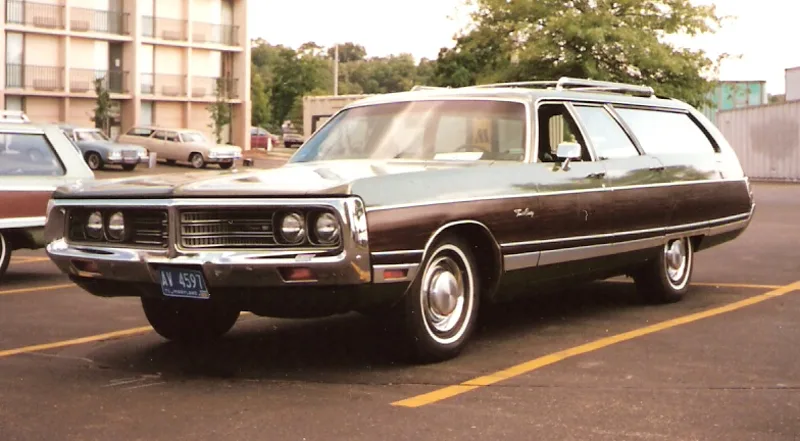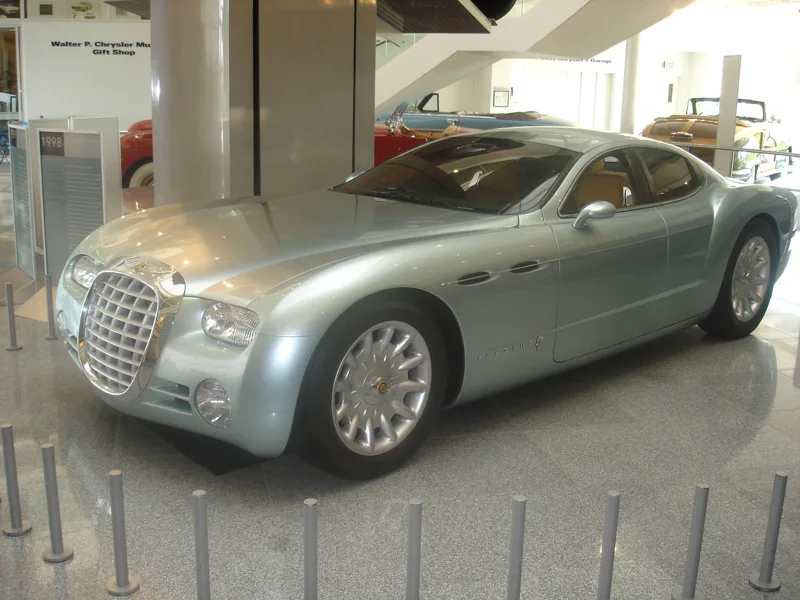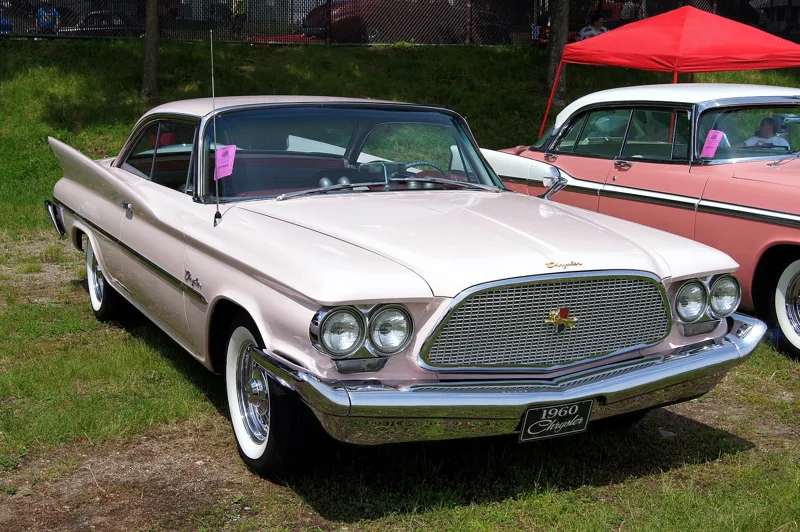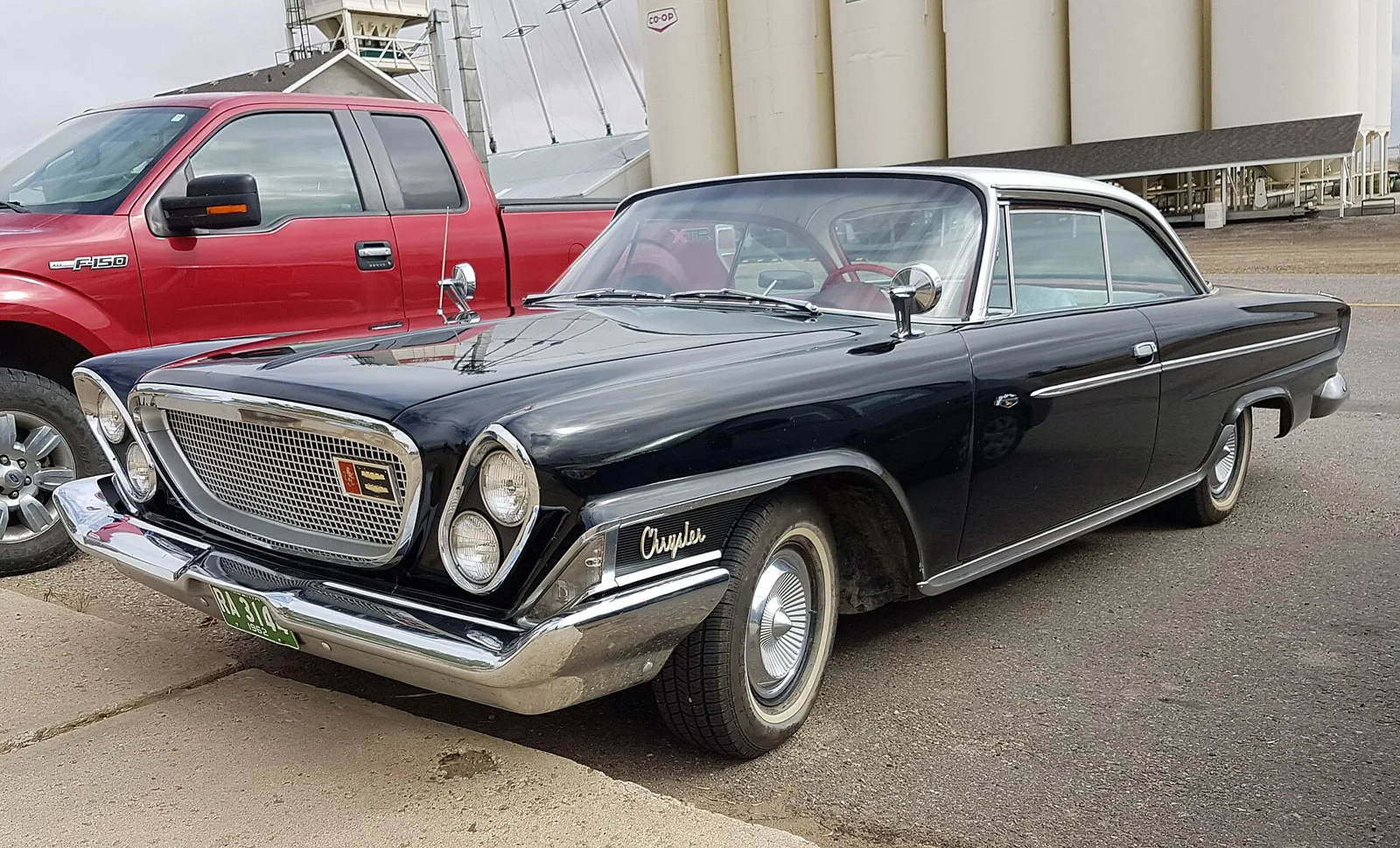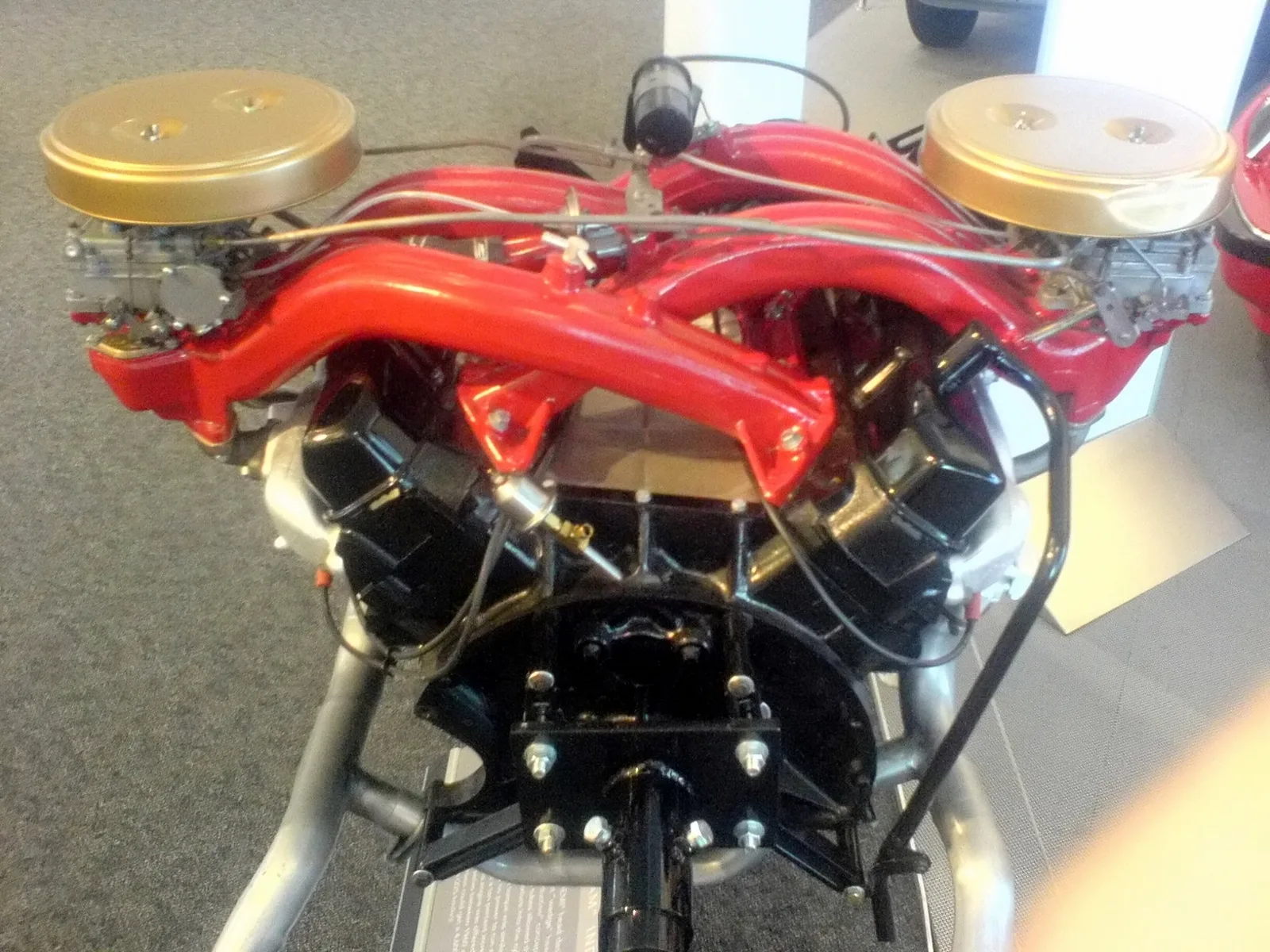
Chrysler's B and RB wedge V8s replaced the FirePower in 1958 and ran for two decades, powering everything from family sedans to Max Wedge drag cars.
The Chrysler B and RB engines were wedge-headed big-block V8s introduced in 1958 to replace the FirePower. The B series came in 350 to 400 cu in sizes and the RB in 383 to 440 cu in, and production ended in 1978.
The Chrysler B and RB engines were a series of big-block V8 petrol engines introduced in 1958 to replace the FirePower, the first-generation Hemi. Enthusiasts call them wedge engines because their combustion chambers are wedge-shaped, which sets them apart from the hemispherical 426 Hemi. They were built in two families, the B and the taller RB, and they stayed in production until 1978.
Why did Chrysler design a new big-block V8?
Chrysler wanted a smaller and lighter replacement for the FirePower. New styling moved the engine forward in the chassis, and that hurt the weight balance, so the company needed a package that could sit lower and further back. The result was a lower hood line and a lower centre of gravity without giving up displacement.
Changing the engine's dimensions and mounting position forced a rethink of the distributor drive and the oil pump. The oil pump could not drop below the crank throw without fouling the steering linkage, so the designers moved the distributor to the front at an angle and placed the pump ahead of the block, above the bottom of the crank throw.
A wedge-headed big block that Chrysler built for twenty years, from the family sedan to the drag strip.
How did the B and RB engines differ in design?
The B and RB shared a family of features. Each cylinder head used 17 capscrews, and the block extended 3 in (76.2 mm) below the crankshaft centreline. The intake manifold sat away from crankcase oil on its underside, the rockers were stamped steel on a shaft, and an external oil pump was driven from the camshaft at the front of the engine.
Race versions used forged steel rockers instead. Because the new engine sat lower, its designers had to reconsider where the distributor and oil pump belonged, and those choices shaped the whole front of the engine. The layout was a practical compromise that let the company keep a compact package while meeting its power goals.
What sizes did the B series come in?
The B series arrived in 1958 in 350 cu in (5.7 L) and 361 cu in (5.9 L) form. Every B engine shared a 3 3/8 in (85.7 mm) stroke. The deck stood 9.98 in (253 mm) high, and the connecting rods were 6.358 in (161.5 mm) long, which gave a 1.88:1 rod ratio. The 361 outlasted the rest of the series, although only for truck use at the end.
The 350 had a 4 1/16 in (103 mm) bore and is classed as a big-block engine. It went into the 1958 DeSoto Firesweep, Dodge Coronet and Plymouth Fury. The 361 was slightly larger in bore at 4 1/8 in (105 mm), and the Polara 500 of 1962 shipped with a 361 rated at 305 bhp (227 kW), using a four-barrel carburettor, a dual-point distributor and dual exhausts.
The 383 B was introduced in 1959 with a 4.25 in (108.0 mm) bore and a displacement of 383.03 cu in (6.3 L). It became the standard Mopar performance engine for the next decade. Its large bore allowed bigger intake valves, and the short stroke helped it to rev freely. The 1960 383 produced 330 hp (246 kW) gross and 460 lb ft (624 N m) of torque, which beat the 392 Hemi on output.
The 400 B arrived in 1972 to replace the 383, using a bore of 4.342 in (110.3 mm), the largest of any production Chrysler V8 at the time of its launch. Its ratings were given on the net method, and the top version, a four-barrel with dual exhausts, was rated 260 hp (194 kW) at 4800 rpm. Its torque peaked at 410 lb ft (556 N m) at 3200 rpm, which made it a favourite for high-performance builds.
What made the RB series different?
The RB engines were raised-block versions of the B engines, built from 1959 to 1979. They all had a 3 3/4 in (95.3 mm) stroke, and the bore set the engine size. The RB deck stood at 10.725 in (272.4 mm), with connecting rods of 6.768 in (171.9 mm) and a rod ratio of 1.80:1. The centre distance between bores was 4.8 in (120 mm), and every RB was oversquare.
The 413 cu in (6.8 L) was the workhorse RB. It was used in cars from 1959 to 1965 and in medium and heavy trucks until 1979. It powered almost all New Yorker and Imperial models, and it was also an option on the Dodge Polara, Monaco and Plymouth Fury. A 383 RB of 382.9 cu in filled a production gap in 1959 and 1960 on US-built Windsors and Saratogas.
How do the B and RB families compare?
The two families differ mainly in stroke and deck height, and the table below sets the main versions side by side. The RB stroke was 3 3/4 in (95.3 mm) against the B's 3 3/8 in (85.7 mm), which is why the taller RB engines could reach larger capacities with the same wedge heads.
| Engine | Introduced | Displacement | Bore | Stroke | Notable output or use |
|---|---|---|---|---|---|
| B 350 | 1958 | 350 cu in (5.7 L) | 4 1/16 in (103 mm) | 3 3/8 in (85.7 mm) | 1958 Dodge Coronet and Plymouth Fury |
| B 383 | 1959 | 383.03 cu in (6.3 L) | 4.25 in (108.0 mm) | 3 3/8 in (85.7 mm) | 330 hp (246 kW) gross in 1960 |
| B 400 | 1972 | 400 cu in (6.6 L) | 4.342 in (110.3 mm) | 3 3/8 in (85.7 mm) | 260 hp (194 kW) high-performance version |
| RB 413 | 1959 | 413 cu in (6.8 L) | 4.1875 in | 3 3/4 in (95.3 mm) | 380 bhp (283 kW) in the 1959 Chrysler 300E |
| RB 426 Wedge | 1962 | 426 cu in (7.0 L) | 4.25 in (108 mm) | 3 3/4 in (95.3 mm) | 415 or 425 bhp (309 or 317 kW) as Max Wedge |
| RB 440 | 1965 | 440 cu in (7.2 L) | 4.32 in (109.7 mm) | 3 3/4 in (95.3 mm) | 375 bhp (280 kW), 1967 to 1971 |
How powerful was the 1959 Chrysler 300E?
The 1959 Chrysler 300E fitted the 413 wedge with inline dual four-barrel carburettors. Its output was 380 bhp (283 kW), reached at 5,000 rpm, while torque reached 525 lb ft (712 N m) at 3,600 rpm. A long-tube ram induction system became standard on the 1960 Chrysler 300 and stayed available through 1964, and it lifted the 413's torque on the 300F to 495 lb ft (671 N m).
A special version called the Max Wedge, built for drag racing and street use, arrived in 1962 with 420 bhp (313 kW) at 5,000 rpm. Ram induction was the key to that output, and the 413 family set the template for the performance versions that followed.
What were the 426 Wedge and Max Wedge?
The 426 Wedge had a 4.25 in (108 mm) bore on an RB block and was Chrysler's main performance engine until the 426 Hemi arrived. The standard S42 option came with a single four-barrel carburettor and 373 or 385 hp (278 or 287 kW), or with dual ram-inducted carburettors and 413 or 421 hp (308 or 314 kW), depending on compression.
The Max Wedge was a race-only variant sold as the Super Stock Plymouth and Ramcharger Dodge. It had high-flow heads with 1 7/8 in (48 mm) exhaust valves, which needed notched bores for clearance, and two Carter AFB 4-barrel carburettors on a cross-ram manifold. Factory ratings were 415 or 425 bhp (309 or 317 kW), alongside 480 lb ft (651 N m) at 4400 rpm. A Stage II version followed in 1963 and a Stage III in 1964.
What happened to the 440 Magnum?
The 440 cu in (7.2 L) RB was built from 1965 until 1978 and was the final RB block version. It had a light-wall, precision cast-iron block with a bore of 4.32 in (109.7 mm). The high-performance version of 1967 to 1971 made 375 bhp (380 PS; 280 kW) at 4600 rpm and 480 lb ft (651 N m) at 3200 rpm, and the Six Pack version with three two-barrel carburettors made 390 bhp (395 PS; 291 kW).
Emissions rules and the move from gross to net ratings cut the figures sharply. In 1972 the 440 was rated at 335 bhp (250 kW) gross but only 225 hp (168 kW) net. From 1972 to 1974 the engine was rated at 280 hp (209 kW) net, and by 1978 the police-specification 440 was down to 255 hp (190 kW). Chrysler's big-block production ended that year.
Where were the B and RB engines fitted?
The B and RB engines went into a broad range of Chrysler-group vehicles, from the New Yorker and Imperial to the Dodge and Plymouth B-body cars. The 413 also powered medium and heavy trucks, including truck-tractors such as the C-1000, and it was fitted to some European cars such as the Facel Vega Facel II. The 400 went into car, truck and motorhome chassis, so one block served very different buyers.
Marine and heavy-duty commercial versions of the 440 kept the engine on sale after the passenger cars had moved on, and the family as a whole stayed in production for two decades. That breadth is a large part of why the wedge engines remain such familiar names among Mopar enthusiasts.
Why did the big-block wedges end in 1978?
Tighter emissions standards and the switch to net ratings lowered the published output year after year. Horsepower and torque ratings declined as more federally mandated emissions controls were added. The 400 was down to 190 hp (142 kW) in its final year, although a heavy-duty version was still available, and all Chrysler passenger vehicle big-block production ceased in 1978.
The 440 Magnum, the final RB block, followed the same path. Its police specification fell to 255 hp (190 kW) in 1978, and that version was limited to the large B-body cars, including the New Yorker and Newport and the police pursuit Dodge Monaco and Plymouth Fury. The closing years of the wedge big block were therefore defined as much by regulation as by engineering.