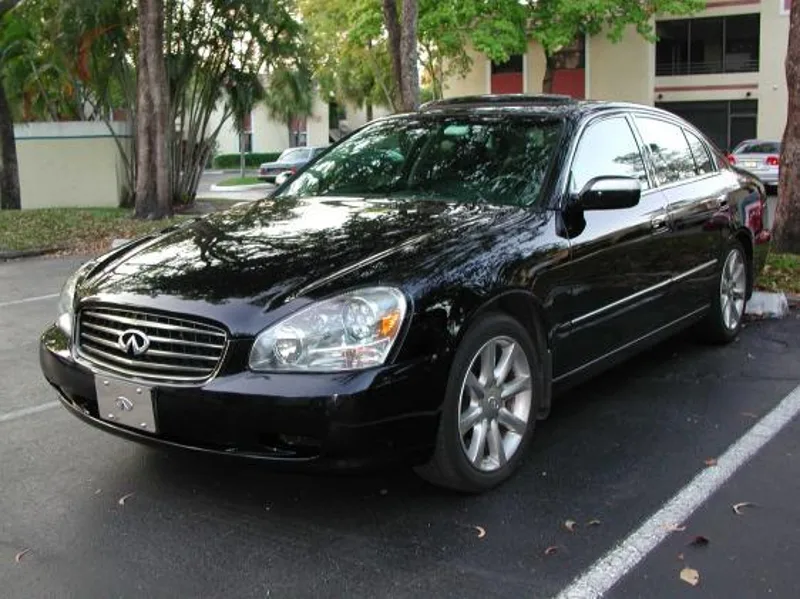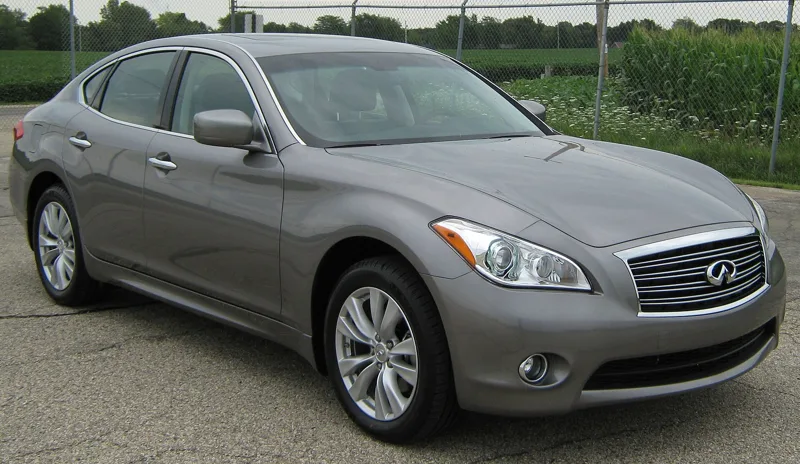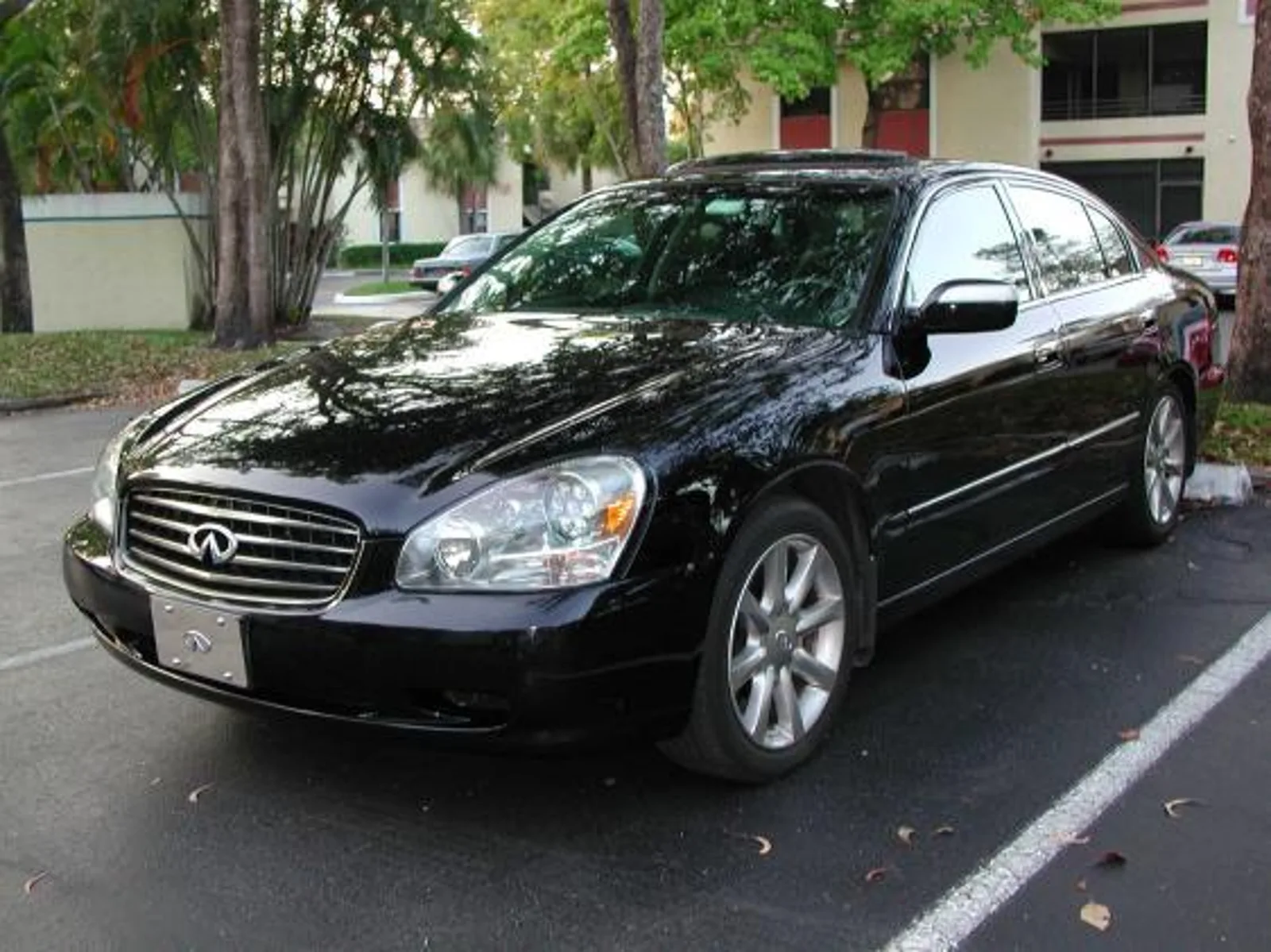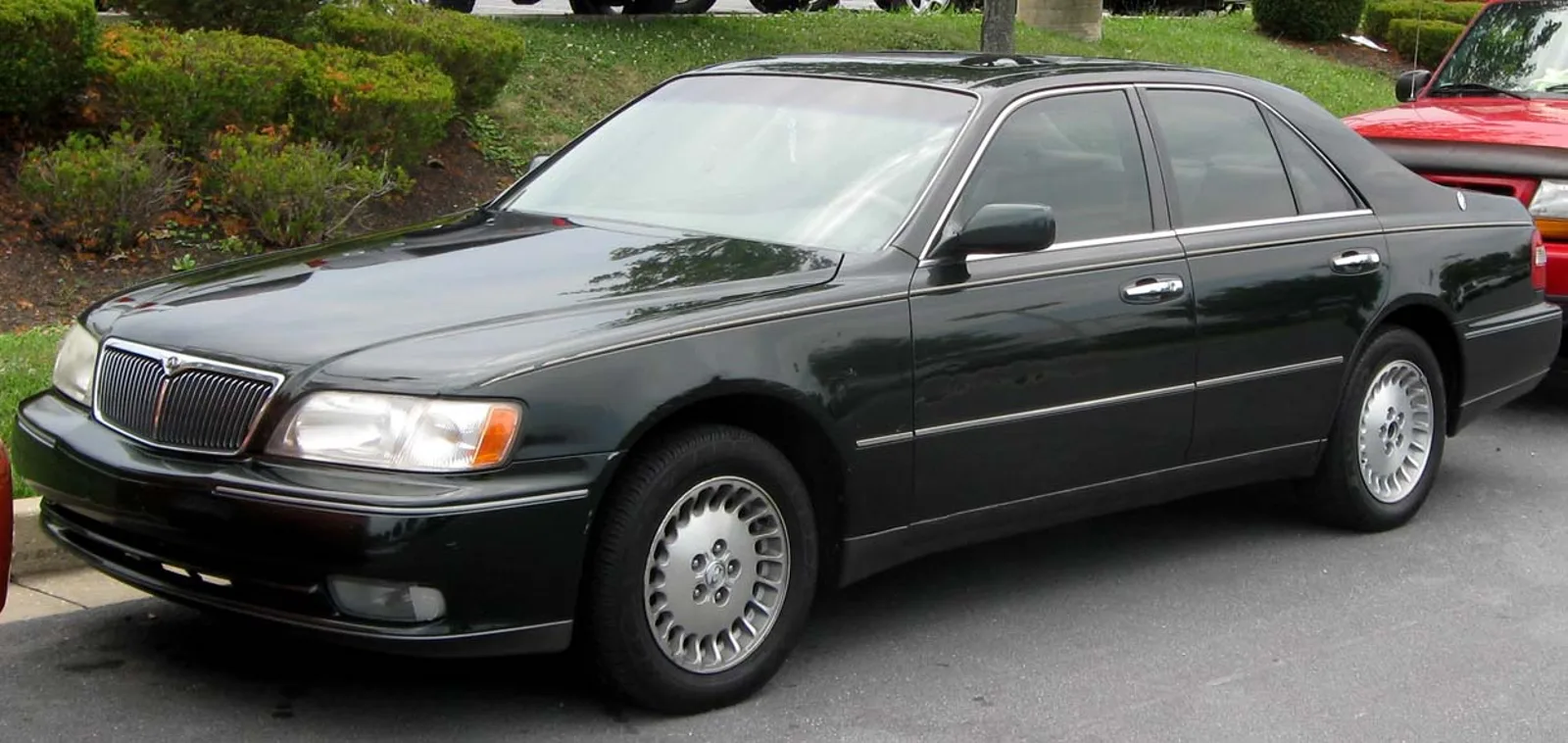
Nissan's Infiniti flagship was built to take on the German full-size benchmark, and the S-Class answered by cutting prices and widening its range.
The Infiniti Q45 went on sale in 1989 as Nissan's flagship for the new Infiniti brand, with a 278 hp V8 and US$38,000 pricing. The Mercedes-Benz S-Class W140 followed in 1991 with V8 and V12 engines, and the two competed for the same full-size luxury buyers.
The Infiniti Q45 and the Mercedes-Benz S-Class W140 were built for the same buyer, the owner of a full-size luxury sedan who wanted something more than the established German flagships. The Q45 was Infiniti's opening move as a brand, while the W140 was the S-Class's most ambitious generation yet.
The Q45 was positioned to compete with the W140's peers, and in its early years it was priced close to the Lexus LS 400. The W140 answered with a V12 and a long list of engineering features, but it lost ground to lower-priced Japanese rivals in the early 1990s.
Were the Q45 and W140 direct rivals?
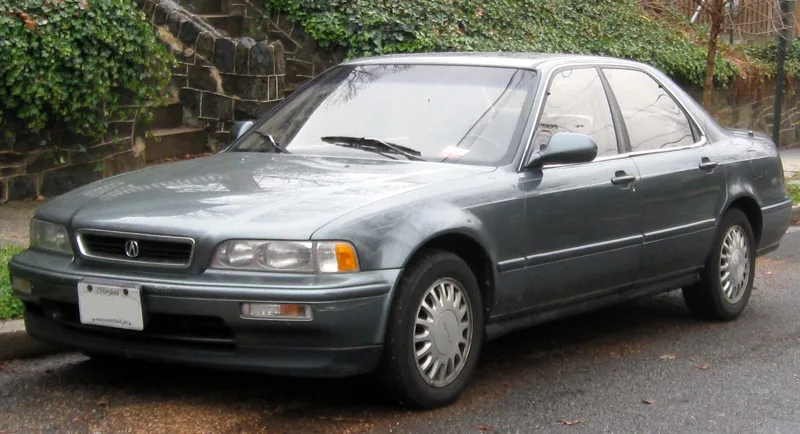
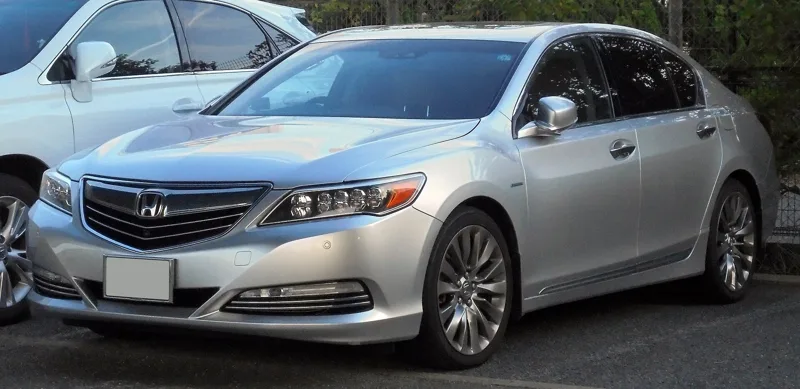
They were. The Q45 was marketed to compete with the Acura Legend, the Lexus LS 400, the BMW 7-Series and the Mercedes-Benz S-Class, matching the German cars closely in size. The W140's own history shows the pressure, because prospective buyers switched to the Q45 and the LS for lower prices.
The Q45 started at US$43,600 in 1992, while the six-cylinder 300SE was US$71,500 that year. That gap between the two cars explains why the W140 had to answer on engineering rather than price alone.
A Japanese challenger with a V8 and a clever suspension, set against a German flagship with a V12 and a long engineering head start.
Specifications side by side
| Specification | Infiniti Q45 (G50, 1990) | Mercedes-Benz S-Class (W140, 1991) |
|---|---|---|
| Production | 1990 to 2006 model years, first generation 1990 to 1996 | 1991 to 1998, 432,732 cars in total |
| Engine | 4.5 L VH45DE DOHC 32-valve V8 | V8 of 4.2 L or 5.0 L; V12 of 6.0 L |
| Power | 278 hp (207 kW) in North American trim | V12: 290 to 300 kW (394 to 408 PS; 389 to 402 hp) |
| Torque | 292 lb ft (396 N m) | V12: 569 to 580 N m (420 to 428 lb ft) |
| Limited-slip | Viscous limited-slip differential on all cars | No figure given |
| Suspension | Multi-link front and rear; Full-Active option on the Q45a | Front double-wishbone, rear multi-link; ADS damping |
| Steering | Super HICAS on the Q45t, deleted for 1995 | No figure given |
| Launch price | US$38,000 in 1990 | Six-cylinder 300SE US$71,500 in 1992 |
| Price later | US$54,000 by 1995 | Up to 25 percent above the W126 it replaced |
| Trunk | 12.6 cubic feet (360 L) in the second generation | No figure given |
| Sales | Did not reach the volume of the LS 400 | Slow sales in the 1990 to 1994 recession |
How did the Q45's V8 perform?
The first-generation Q45 used a high-output 4.5-litre VH45DE DOHC 32-valve V8, rated at 278 hp (207 kW) and 292 lb ft (396 N m) in North American trim. Every Q45 included a viscous limited-slip differential and a multi-link suspension at both ends.
The second-generation car used a smaller 252 cu in (4.1 L) VH41DE V8 producing 267 hp (199 kW) and 278 lb ft (377 N m). It took about 7.5 seconds to reach 97 km/h (60 mph) from rest.
What did the Q45's active suspension do?
The Q45a model introduced Full-Active Suspension for the 1990 model year. It used ten sensors that fed microprocessor-controlled hydraulic actuators at each wheel, designed to reduce body roll, dive and pitch. The system responded to road features up to about 3 Hz, which was the limit of the hardware.
The system added 202 lb (92 kg) and cut fuel economy by 10 percent, and it reached the United States for the 1991 model year. Mercedes-Benz developed a similar system called Active Body Control, which arrived a decade later on the C215 CL-Class.
How did the W140's V12 compare?
The W140's V12 was Mercedes-Benz's first passenger V12, introduced in 1991 in response to BMW's 750i. The 6.0-litre M 120 developed between 290 and 300 kW, with 569 to 580 N m of torque, and it was the engine that set the W140 apart from the Q45's V8.
An AMG-prepared M 120 raised output to 327 kW (445 PS; 439 hp) and 623 N m (460 lb ft), but it was offered only in the S- and CL-Class coupes and not in the sedans.
How did the Q45's design come about?
Nissan meant the Q45 to express the Japanese concept of luxury, using traditional Japanese craftsmanship. As first released it had no front grille and no wood on the dashboard, and Poltrona Frau assisted with the minimalist interior. Nissan's aim was a car that looked plain but performed well, which is why the design was kept simple at launch.
A grille was added in 1993 and interior wood had appeared by 1995. The Q-car name came from the western tradition of cars whose plain looks hid their performance.
How did the W140 come to be styled?
Olivier Boulay's design was selected on 9 December 1986, and the design patents were filed in West Germany on 23 February 1988 and in the United States on 23 August 1988. The lead designer Bruno Sacco named Jaguar's XJ40 and BMW's E32 as influences.
The W140 became the second model after the R129 to use extruded metal for its grille. The car's design was also held back by BMW's V12-equipped 7-Series, which forced an eighteen-month delay to its introduction.
Why did the Q45 struggle in sales?
The Q45 did not achieve the sales volumes of the Lexus LS 400, which was nearly universally praised for its specification and standards. Its unconventional styling, particularly the grille and the lack of interior woodgrain or chrome trim, was blamed, and its advertising showed no photos of the car.
Its price also rose to US$54,000 by 1995, which slowed sales. In Australia the Infiniti brand launched in 1993 with the Q45 alone at A$140,000, sold poorly and was withdrawn in 1996.
How did the Q45 change in its second generation?
The second-generation Q45 was a lightly revised Nissan Cima for Japan, and it shared a platform with the Cedric and Gloria. Its styling featured an inverse curve C-pillar and a full-length beltline, and rear legroom grew by 3.9 in (99 mm).
The Y33 weighed about 200 lb (91 kg) less than the first-generation car, and its steering ratio slowed from 17.0:1 to 18.5:1. Edmunds noted for the 1997 model year that the Q45 no longer aspired to be a sport sedan.
What did the third-generation Q45 offer?
The third generation, the F50, was introduced at the 2000 New York Auto Show and had a new twin-cam 4.5 L VK45DE V8 with a five-speed automatic. Sales started in April 2001 as a 2002 model, with a starting MSRP of US$50,500.
It was wider, with a longer wheelbase, 5 ft3 (0.14 m3) more interior volume and torsional rigidity 40 percent higher than its predecessor. It was also the first Infiniti with a laser-based autonomous cruise control system.
How did the W140 model range compare?
The W140 came as a standard-wheelbase sedan, a long-wheelbase sedan and a coupe, with the coupe renamed as the CL-Class in 1996. In June 1993 every model took the plain S name. The Pullman, with a 4140 mm wheelbase, arrived in 1995 with S 500 and S 600 engines, and it was the longest car in the range.
Production reached 432,732 cars, with 406,710 sedans and 26,022 coupes, before the W220 replaced it in 1998.
What safety and comfort features did the W140 add?
The W140 introduced several firsts for the S-Class. Double-paned soundproofed glass was new, and the car offered electrically operated mirrors that folded at the touch of a switch, heated exterior mirrors and a 12-way powered front seat with three memory settings.
Electronic Stability Program arrived in 1995 on the S 600 Coupe, and Xenon low-beam headlights followed the same year. Side airbags and seat occupancy sensors came in 1996 for the 1997 model year, alongside Brake Assist and automatic rain-sensing wipers.
Parktronic, a sonar-based parking system, replaced the older rear parking guide rods in 1995. Linguatronic voice control followed in 1996, and the TELEAID emergency and tracking system reached the US market in 1997. The climate control could also run for 20 minutes after the engine was switched off.
How did the Q45's equipment change over its life?
Standard equipment included a Bose sound system, leather upholstery, power adjustable front passenger seats with a memory feature that also moved the steering wheel, and keyless entry. The 1993 revisions brought 17:1 steering to most cars, while the Q45t kept its original 15.1:1 ratio.
The Q45t dropped its Super HICAS four-wheel steering for 1995, and OBD-II arrived for the 1996 model year. The 1999 update made HID headlights and an analogue clock standard, and the Anniversary Edition was limited to 3,000 units.
That Anniversary Edition added genuine wood trim, a wood and leather steering wheel and 17-inch performance wheels to the Q45t's features, with special markings on the tailgate badge and ignition key.
Which engines did the W140 use besides the V12?
The M 104 petrol six arrived in 1992 in 2.8-litre and 3.2-litre sizes, with double overhead cams and four valves per cylinder. The M 119 V8 came as a 4.2-litre and a 5.0-litre, unchanged for its whole run, and AMG developed a 6.0-litre V8 in 1994 that made 279 kW (379 PS; 374 bhp).
The 3.5-litre inline-six diesel OM 603.97x was carried over from the W126 until 1996, when a 24-valve diesel replaced it. The S 300 TURBODIESEL, introduced in 1996, brought four valves per cylinder to an inline-six diesel for Mercedes-Benz.
What did the second-generation Q45 include inside?
The Y33 came with traction control, leather upholstery with faux wood trim, and a single zone climate control that later became dual zone. The Bose audio system had eight speakers and an in-dash single-disc CD player, and a memory system stored the driver's seat and steering wheel positions.
Options included an integrated satellite navigation system, a six-disc CD autochanger and heated seats. The Q45t touring package added 17-inch wheels, electronically modulated suspension, a blacked-out grille and headlight treatment, and a performance-style steering wheel.
What did reviewers make of the later Q45?
Car and Driver's Brock Yates called the F50 a superbly refined, comfortable and distinctive machine when it arrived. Edmunds, writing about the 1997 Y33, said the Q45 had given up any ambition to be a sport sedan, because its main job was now interstate cruising.
Those verdicts describe a car that moved from the sharp handling of its first generation toward comfort and quiet, which is the change that defined the second and third generations.
Which buyer suits each car?
The Q45 suits a buyer who wants a full-size Japanese sedan with a V8, a choice of active suspension, and a price that sat close to the Lexus LS 400 in its early years. The W140 suits a buyer who wants a V12 option and a flagship that its enthusiasts regard as the last true S-Class.
Practicality is only partly covered. The Q45's trunk is given at 12.6 cubic feet (360 L) for the second generation, but no W140 boot figure is given, and running costs for either car are not compared.