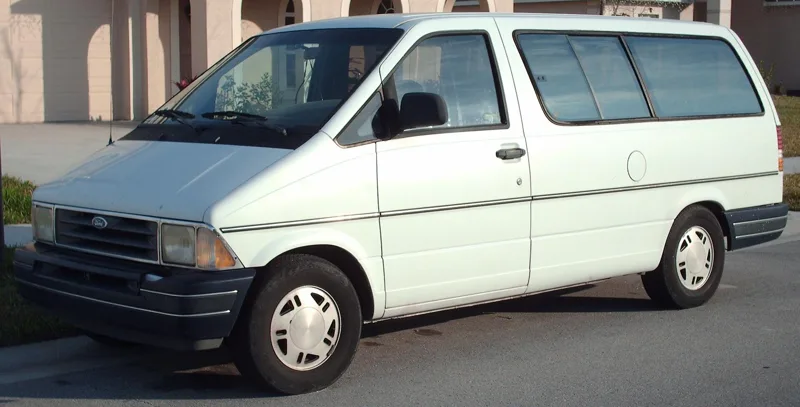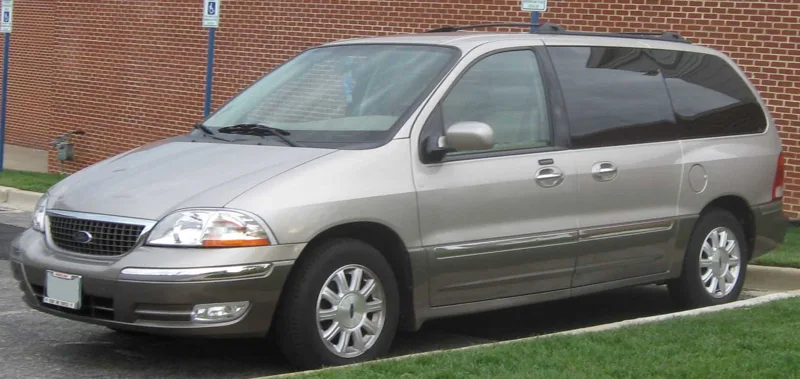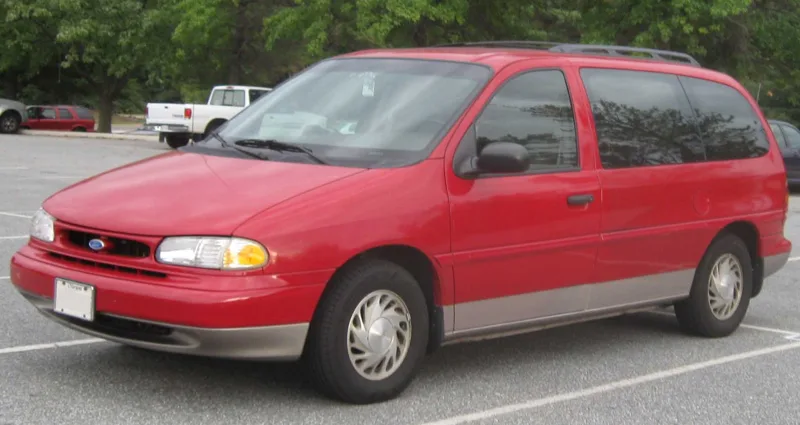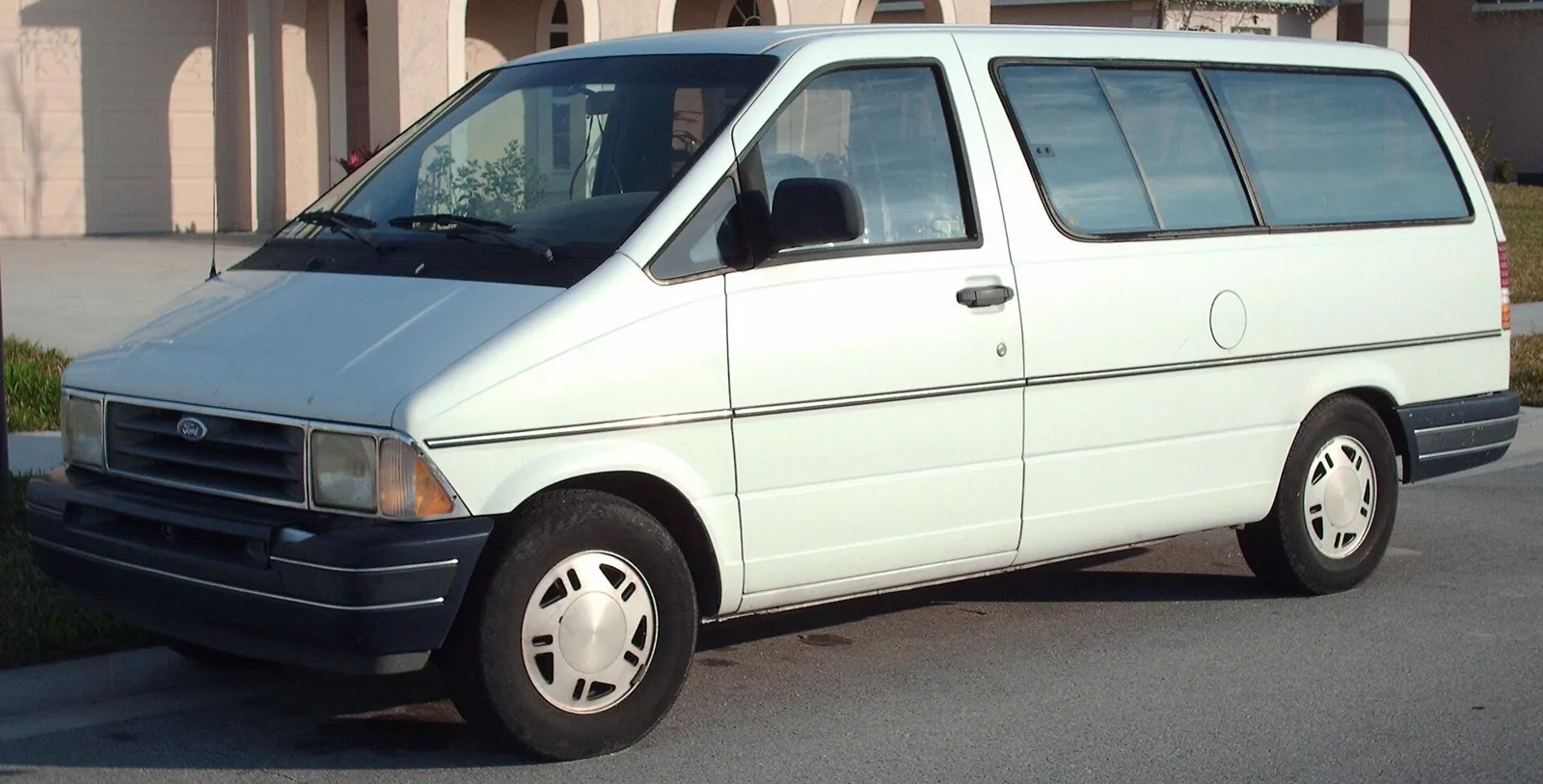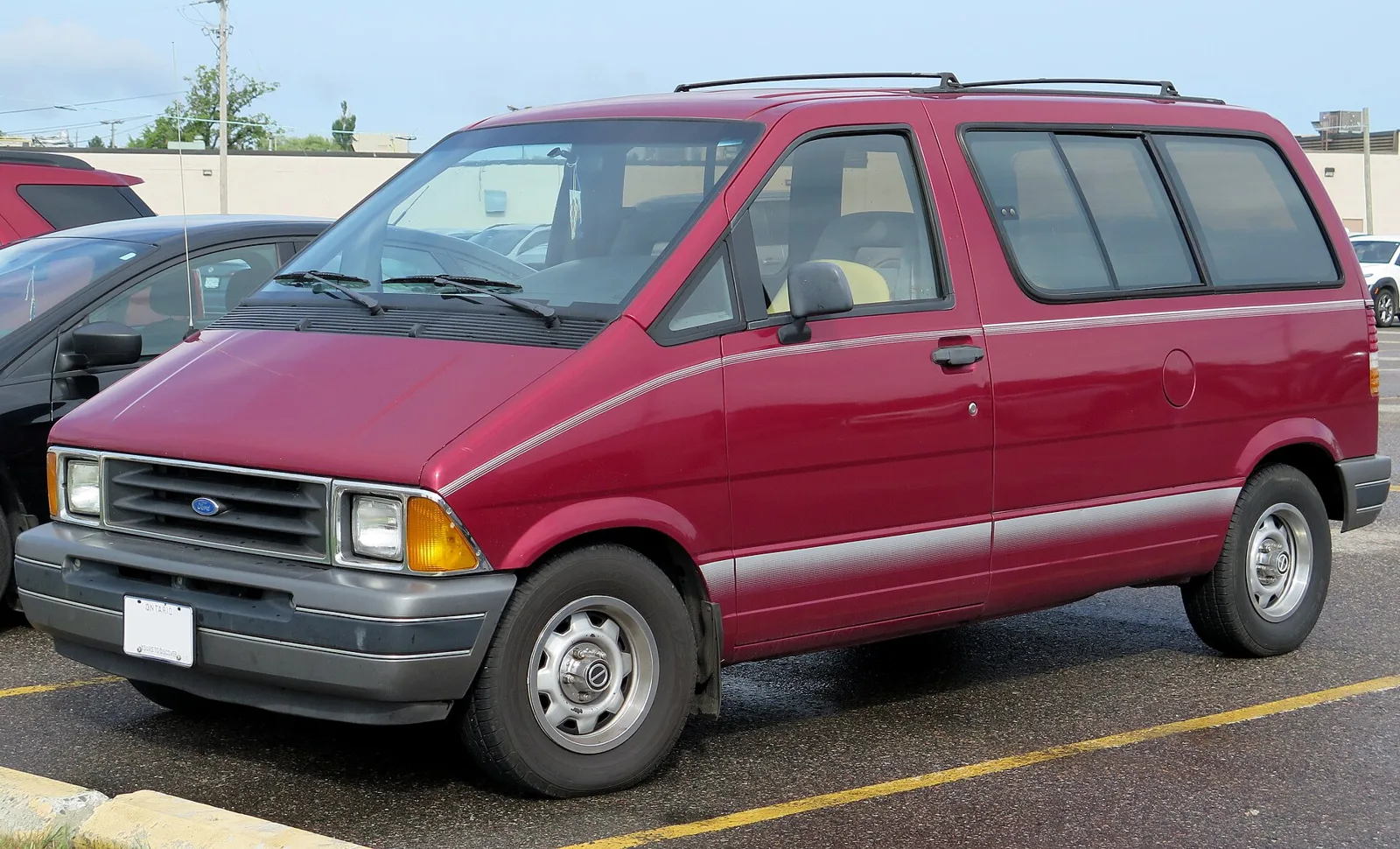
Ford's Aerostar was its first minivan, and the Windstar was built to replace it with front-wheel drive, a longer wheelbase and a design aimed squarely at Chrysler.
The Ford Aerostar was a rear-drive, one-box minivan sold from 1986 to 1997, and it was Ford's first minivan. The Ford Windstar was a front-drive, two-box minivan built from 1995 to 2007, with its wheelbase set at 120.7 inches.
The Ford Aerostar and the Ford Windstar were two generations of Ford's family minivan, but they were built on different ideas. The Aerostar was rear-wheel drive, with a one-box body and a hybrid frame. The Windstar was front-wheel drive, with a two-box body and full unibody construction. Ford positioned the Windstar as the Aerostar's replacement, yet the two sold side by side for three model years.
How did the two vans arrive?
The Aerostar was a range of vans that Ford sold from the 1986 to the 1997 model years. It was the first minivan Ford produced, and it was marketed against the Chevrolet Astro, the GMC Safari and the first two Chrysler minivan generations. It was built at the St. Louis Assembly Plant in Hazelwood, Missouri, in a single generation that totalled 2,029,577 vehicles.
The Windstar was a minivan that Ford produced and sold from the 1995 to 2007 model years, and its design was chosen to match the market Chrysler had built. It was Ford's second minivan line. Later versions carried the Freestar name, and Mercury sold a Monterey version. The Windstar arrived for 1995 as the planned successor to the Aerostar, yet Ford kept both lines on sale through the 1997 model year.
The Windstar was released in March 1994 as a 1995 model. That timing put it on the road more than a year before the third-generation Chrysler minivans arrived. It let Ford take a significant share of Chrysler minivan sales, and it was sold only in the long-wheelbase form that matched the Chrysler Grand vans.
A rear-drive one-box van and its front-drive two-box successor, sold side by side for three model years.
Why did Ford change the layout?
Ford's Aerostar held second place in minivan sales for its whole run. It outsold the Chevrolet Astro and the Volkswagen Vanagon, but it still trailed Chrysler. To compete more directly, Ford decided that its next minivan would adopt the front-wheel drive layout that Chrysler had made popular.
The new minivan was given the codename WIN88. Development began in 1988, with a projected 1993 introduction for the 1994 model year. By 1989 the design work was well advanced, and a concept theme had been chosen by December 1989. Camilo Pardo's WIN88 exterior was locked in 1990, and prototypes were tested from early 1991.
The Windstar name was filed as a trademark on April 13, 1992, and development ended in 1993. Although the vehicle was developed by Ford's truck division, which had also designed the Aerostar and the Econoline and Club Wagon, the design team was predominantly women. The team considered scenarios such as pregnant women and women in skirts and high heels, and it added family features such as reconfigurable cupholders and auxiliary stereo controls.
How did the Aerostar's chassis differ from the Windstar's?
The Aerostar used a rear-wheel drive chassis that combined unibody construction with full-length frame rails. That hybrid design gave it a 5,000-pound tow rating, which matched the Chevrolet Astro and GMC Safari. Its wheelbase was 119 inches, and its front suspension used unequal-length A-arms with coil springs.
The Windstar replaced that frame-rail design with full unibody construction, and it sat on the DN5 front-wheel drive platform that it shared with the Taurus and the Sable. Its wheelbase was 120.7 inches, nearly 15 inches longer than the Taurus. The front suspension used MacPherson struts, and the rear was a beam axle with coil springs, with air suspension available as an option.
Brake fitments also differed. The Windstar had front disc brakes with rear drums, and anti-lock braking came as standard. Four-wheel disc brakes arrived as an option in 1996 when the car was ordered with traction control or the towing package. The Windstar used 15-inch wheels, where the Aerostar's wheel sizes were a separate matter.
What engines did the two vans use?
The Aerostar launched in 1986 with a 100 hp 2.3 litre four-cylinder that was standard, and a 115 hp 2.8 litre V6 as an option. A running change during 1986 replaced the 2.8 with a 145 hp 3.0 litre V6 shared with the Taurus and the Sable. For 1988 the four was dropped, and the 3.0 became the only engine, which made the Aerostar the first minivan to offer only V6 engines.
For 1990 the Aerostar gained a 160 hp 4.0 litre V6 with the E-4WD all-wheel drive system, which ran through 1997 on XLT and Eddie Bauer trims. E-4WD used a Dana TC28 transfer case and an electronically controlled clutch, and it was built for bad-weather traction rather than off-road use.
The Windstar sold with a single engine at first. Its 3.8 litre V6 produced 155 hp in the GL and LX models in 1995, and a 150 hp 3.0 litre V6 became standard on base and lower GL models from October 1995. For 1996 the 3.8 litre V6 rose to 200 hp. Like the Aerostar, the Windstar shared its powertrains with the Taurus and the Sable. The 1995 3.8 litre engine was susceptible to head gasket failure, as it was in those stablemates.
How did the two bodies look?
The Aerostar was a one-box design with a sloped nose. Its drag coefficient was 0.37, and its long wheelbase placed the wheels near the corners. Plastic bumper covers, a plastic fuel tank and a plastic rear hatch helped to keep its weight down, and it was offered as a passenger van, a cargo van and an extended-length body from 1989.
The Windstar moved to a two-box configuration, with a distinct hood line and a separate passenger compartment, to compete more closely with Chrysler. It was given a longer wheelbase than the Aerostar, and only the long-wheelbase version was sold. Its curved dashboard shared some influence from the multi-tiered design of the Lincoln Mark VIII.
The most notable styling choice was the Windstar's oval rear window. It was a preview of the 1996 Taurus, and it sat alongside design elements borrowed from the Mercury Villager and the Nissan Quest. Mercury's own Villager was unrelated to the Windstar, which was sold without a Lincoln-Mercury counterpart.
What did the first Windstar leave out?
The first Windstar was marketed without a driver-side sliding door, a feature that third-generation Chrysler minivans had made popular. Ford said its focus groups did not identify the door as important, and vans of every size with a driver-side sliding door had sold poorly in the United States. The omission later became a design fault, and in 1998 Ford extended the driver's door and added an optional tilting and sliding driver seat, which it called the king door.
The 1998 revision also brought a trapezoidal grille, redesigned headlamps and new wheel covers. The Windstar gained rear-seat audio controls, rear air conditioning and middle-row bucket seats, as well as a keyless entry system with a door-mounted keypad. Its lock control on the rear doors and its wide-angle overhead mirror were also new features for the segment.
For 1998 Ford added the Limited trim, which had a monochromatic exterior, five-spoke 16-inch chrome wheels and wood interior trim. It sat above the LX and the Mercury Villager LS, and it came with every LX option as standard. The base trim was the GL, and the LX was the flagship. The GL could also be ordered with Quad Command bucket seats, which dealers often marketed as a GLX.
How did the two models sell alongside each other?
The Aerostar and the Windstar were sold together from 1995 to 1997, because continued demand for the Aerostar led Ford to keep both on sale. The Windstar was priced above both the Aerostar and the Mercury Villager in its first year. By 1997, the Villager's base price had passed the Windstar's by several hundred dollars, and the top Villager Nautica was about $6,000 more.
Over its life the Windstar line produced 1,984,232 vehicles, of which 1,704,786 were Windstars, 246,493 were Freestars and 32,953 were Montereys. The Aerostar's single generation produced 2,029,577. The two lines were close in total output, although they were built in different plants and had different names.
The Windstar was built at the Oakville Assembly plant in Oakville, Ontario. Europe also received the van through Ford's official sales network, making it the first North American-built van sent there. It was slotted above the Ford Galaxy in size and equipment, and it was sold with the 3.0 litre V6 and an automatic transmission only.
How do the two vans compare side by side?
| Feature | Ford Aerostar | Ford Windstar |
|---|---|---|
| Years | 1986 to 1997 model years | 1995 to 2007 model years |
| Drive | Rear-wheel drive; E-4WD all-wheel drive 1990 to 1997 | Front-wheel drive |
| Structure | Hybrid unibody with full-length frame rails | Full unibody construction |
| Body | One-box, sloped nose | Two-box with a distinct hood line |
| Wheelbase | 119 inches | 120.7 inches |
| Engines | 2.3 litre four, 2.8 then 3.0 litre V6, 4.0 litre V6 from 1990 | 3.8 litre V6, 155 hp rising to 200 hp; 3.0 litre V6 from 1995 |
| Tow rating | 5,000 pounds | Not given |
| Output | 2,029,577 in one generation | 1,984,232 across Windstar, Freestar and Monterey |
| Assembly | St. Louis Assembly Plant, Missouri | Oakville Assembly, Ontario |
Which buyer suits each van?
The Aerostar suited families who wanted a rear-drive chassis for towing, with 5,000 pounds of tow rating. Its extended-length body and E-4WD option gave buyers more space and traction in bad weather, and its V6 engines were shared with other Ford models.
The Windstar suited families who wanted a car-like ride from a front-drive minivan, with a longer wheelbase and family features such as rear-seat audio and rear air conditioning. Its safety record was strong, because the 1995 model received an Excellent rating from the IIHS, and Ford marketed it as the safest minivan on the market.
Neither van is shown to be better overall. The Aerostar offered the towing and all-wheel drive, while the Windstar offered the newer layout and the longer wheelbase. The right choice depends on whether a buyer values a rear-drive chassis or a front-drive minivan.