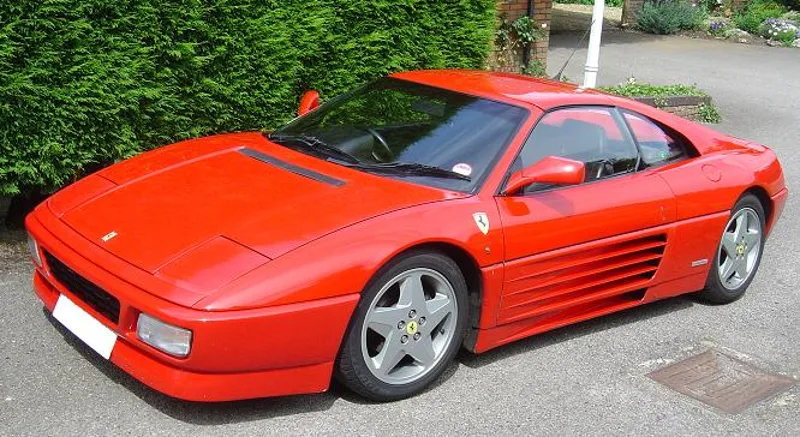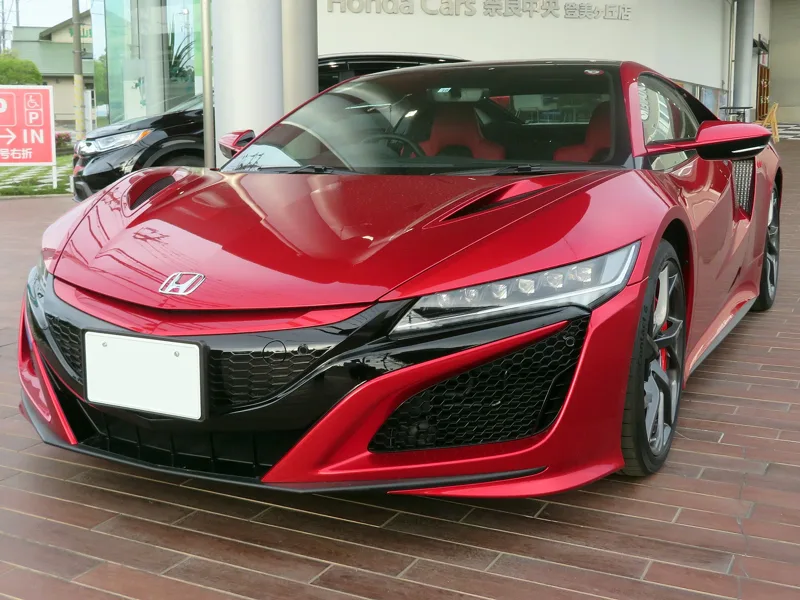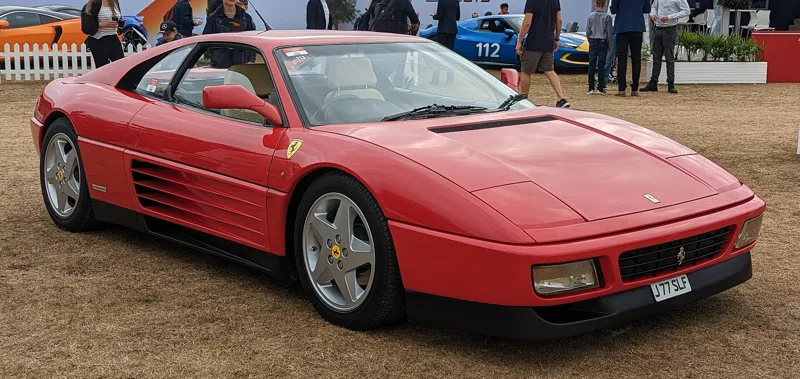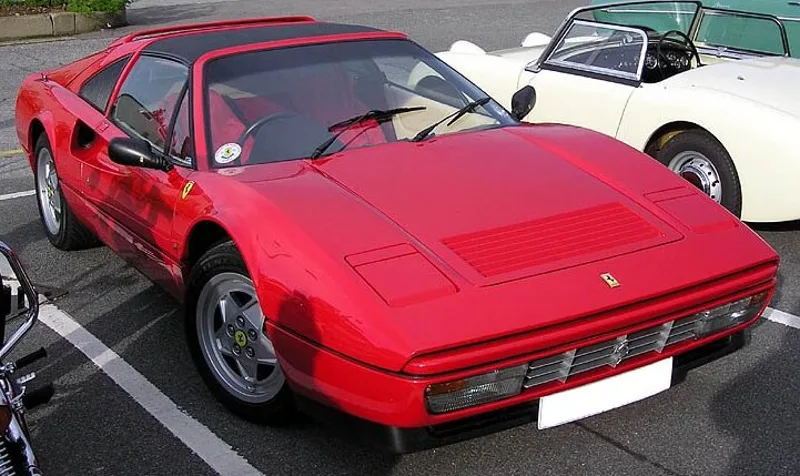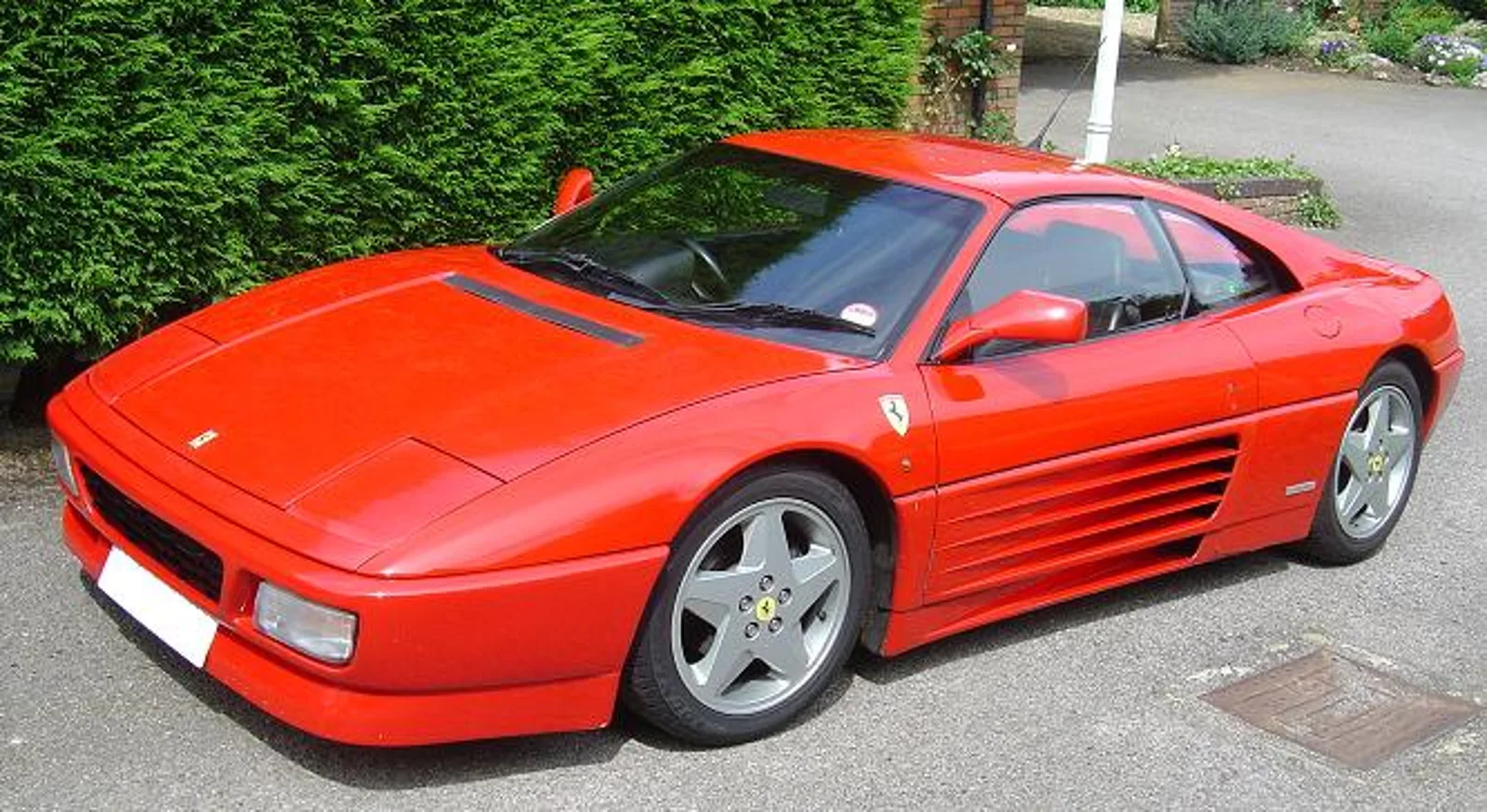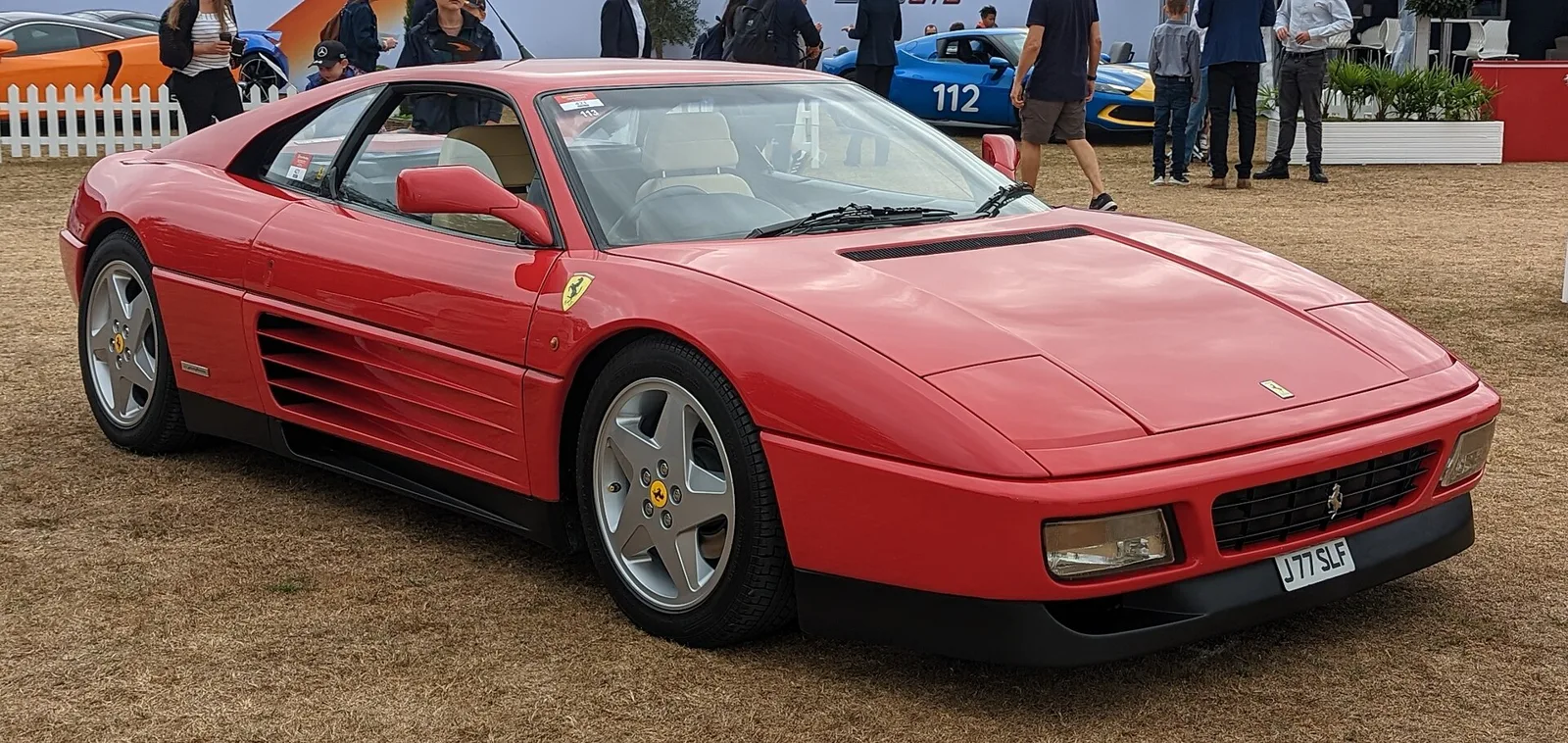
A Ferrari V8 from the late 1980s against the mid-engined Honda that was designed to match its performance at a lower price.
The Ferrari 348 and the first-generation Honda NSX were both mid-engined two-seaters that arrived around 1989 and 1990. The 348 used a 3.4-litre V8 with 300 PS, while the NSX was designed to match Ferrari's V8 performance at a lower price.
Honda wanted to match the performance of Ferrari's V8 sports cars at a lower price, and the Ferrari 348 was the car it had in mind. The 348 arrived in 1989 as a two-seat mid-engined coupe and targa, while the first Honda NSX went on sale in 1990 with an all-aluminium body. Both cars put their engines behind the seats, but they got there by very different routes.
Where did the 348 come from?
The 348 replaced the 328 in 1989 and stayed in production until mid-1994, when the F355 took over. It was the last V8 model developed under Enzo Ferrari's direction, and it went into production after his death.
The name follows Ferrari's usual code. The first two digits gave the engine's displacement and the third gave its cylinder count, so the 348 was a 3.4-litre V8. The tb label stood for Trasversale Berlinetta and the ts for Trasversale Spider, both pointing at the transverse gearbox that Ferrari wanted to highlight.
One car came from Ferrari with a V8 and a racing record. The other was built to match that V8 for less money.
Why was the NSX built to rival Ferrari?
Honda began with a 1984 concept, the HP-X, a rear mid-engined V6 car with a design by Pininfarina. Its brief was to meet or exceed the performance of Ferrari's V8s while offering better reliability and a lower price. The Ferrari 328, and later the 348, were the benchmarks.
The original engine plan was a non-VTEC 3.0-litre double overhead camshaft V6 making about 253 PS (186 kW; 250 hp). Honda then decided to add VTEC late in development, and its then-president, Tadashi Kume, questioned the decision to leave it out of the flagship. The engine was redesigned very late, with a new block and larger heads.
The late change had a knock-on effect on packaging. The C30A engine was too large for the bay sized for the earlier unit, so the whole engine was tilted back by about 5 degrees. That tilt stayed on the NSX until production ended.
How was the NSX designed?
Honda's sports car project grew out of mid-engine experiments around 1984. One test mule was a Honda City cut in half, with its engine behind the driver's seat driving the rear wheels. That car was never developed further, but the engineers who drove it became convinced that Honda should build a pure sports car.
The design team was led by Masahito Nakano, with Shigeru Uehara as executive chief engineer. Uehara studied the 360-degree visibility from an F-16 fighter cockpit, and the car's cab-forward layout put the cabin ahead of the engine, as in aircraft and open-wheel race cars. The long tail was there to keep the car stable at high speed.
The targets were set high. Engineers were told the car had to be as fast as anything from Italy or Germany, so the HP-X prototype's 2.0-litre V6 was shelved in favour of a 3.0-litre VTEC V6 with much more power.
How did the 348 look and work?
The 348 was the last design overseen by chief stylist Leonardo Fioravanti, whose earlier work included the F40, the Daytona and the 288 GTO. Its straked side intakes and rectangular taillights borrowed from the Testarossa, and the F355 that followed returned to the rounder lights of the 328.
Some engineering choices were conservative and others unusual. The oil and coolant radiators moved from the nose to the sides, which made the cabin easier to cool and the doors very wide. A dry sump prevented oil starvation under hard cornering, but the oil level could only be read on the dipstick with the engine running.
The 348 also used dual Bosch Motronic engine management with twin ECUs, double-redundant anti-lock brakes and adjustable ride height. A removable rear sub-frame let the mechanics lift the engine out for maintenance.
What engines did the two cars use?
The 348 ran a naturally aspirated 3.4-litre, quad-cam, four-valve-per-cylinder V8 mounted longitudinally, with a transverse gearbox behind it. That gearbox design came from the 312T Formula One car and was a first for a Ferrari road car. The 348 was also the first mid-engined longitudinal V8 road Ferrari since the 288 GTO.
Honda's answer was an all-aluminium 3.0-litre V6 with VTEC variable valve timing, mounted transversely. Manual cars moved to the 3.2-litre C32B from 1996, while automatics kept the 3.0-litre C30A throughout.
Specifications side by side
| Specification | Ferrari 348 | Honda NSX (first generation) |
|---|---|---|
| Years built | 1989 to mid-1994, replacing the 328 | 1990 to December 2005 |
| Layout | Mid-engined, longitudinal V8, two seats | Mid-engined, transverse V6, rear-wheel drive, two seats |
| Engine | 3.4-litre, quad-cam, four valves per cylinder | All-aluminium 3.0-litre VTEC V6; 3.2-litre from 1997 |
| Power | 300 PS (221 kW; 296 hp) on tb and ts; 320 PS (235 kW; 316 hp) on GTB and GTS | 253 PS (186 kW; 250 hp) on the early development engine |
| Torque | 324 Nm (238 lb ft) at 4,200 rpm on tb and ts | 282 N m (208 lb ft) on the early development engine |
| Gearbox | 5-speed manual with a transverse gearbox | 5-speed manual; SportShift 4-speed automatic from 1994 |
| Built | 2,894 TB and 4,228 TS overall | Fewer than 20,000 in total |
| Variants | tb, ts, GTB, GTS, Spider, Serie Speciale, GT Competizione | Coupe, targa from 1995, 3.2-litre update in 1997, facelift in 2002 |
Which car was faster?
On the published figures, the 348 is the only one with a published top speed and acceleration time. The tb and ts reached 267 km/h (166 mph) and 0-97 km/h (60 mph) in 6.0 seconds, while the NSX numbers cover its development engine, so no like-for-like contest is possible.
The 348 GTB and GTS raised the bar. With 320 PS (235 kW; 316 hp) and a compression ratio of 10.8:1, they were rated at over 280 km/h (over 174 mph), reached 100 km/h (62 mph) in 5.4 seconds and covered 161 km/h (100 mph) in 12.0 seconds.
A run of 100 cars, sold only in the US from 1992 and 1993, gave the 348 Serie Speciale its name. It took the engine to 316 PS (232 kW; 312 hp) at 7,200 rpm and reached 97 km/h in 5.3 seconds, with a standing quarter mile of 13.75 seconds.
Where did the NSX's engineering stand out?
The NSX pioneered the all-aluminium semi-monocoque among general production cars, and the metal brought real savings. Aluminium cut nearly 200 kg (441 lb) from the body alone, and the suspension arms saved another 20 kg (44 lb).
Chassis development ran at the Nurburgring Nordschleife. Development driver Motoharu Kurosawa completed laps while engineers hand-welded aluminium braces between runs, and the flex data went to Honda's headquarters. A Cray supercomputer turned that data into reinforcements for the production monocoque, and chassis stiffness rose by more than 50% for a small weight increase.
Ayrton Senna's role is often overstated. He rode the development car only a few times and offered advice, while Kurosawa did the real work on the chassis.
Other features were typical of Honda's engineering. The NSX had four-channel anti-lock brakes and electric power steering, and in 1995 it gained the first electronic throttle control fitted to a Honda production car.
Which one-off 348s were built?
Zagato, the Italian coachbuilder, announced an Elaborazione package for the 348 TB between 1991 and 1992. The changes were cosmetic and the mechanical parts stayed the same. A new bumper, a glass engine cover that showed off the V8, round triple tail-lights, an electronically controlled rear spoiler and a double-bubble roof were added. Zagato initially promised 22 examples, yet built just 10.
A more radical one-off was the Barchetta Competizione, a true open-top body built for collector Guy Audebert from his crashed 348. It had a deeper chin spoiler, a quick-release bonnet, a racing interior with a detachable steering wheel and a roll bar, and 18-inch BBS wheels. Its large rear wing drew on the F40 LM. The builder and the technical details were kept private, but the weight was given as 1,100 kg (2,425 lb).
Did either car go racing?
Ferrari did the most visible racing work of the pair. The 348 GT Competizione homologated a lightweight version for the GT Championship in 1993, and the 348 Challenge series ran from 1993 to 1995.
The GT Competizione was a homologation special, with 50 cars built, 8 of them right-hand drive. It made 320 PS (235 kW; 316 hp) at 7,000 rpm, weighed a dry 1,180 kg (2,601 lb) and used a 25/27 final drive for performance.
The 348 Challenge series ran alongside the production car. It debuted in 1993 across Italian and European series. Its cars ran slick tyres, a fresh body kit, better brake pads, a roll bar and harnesses. From 1994, G-spec cars switched to H-spec cylinder heads and injection, and most conversions were done by dealers using factory Challenge kits. The 1995 season was the last, and the F355 Challenge replaced it.
Before that, Ferrari's 348 chassis 82881 went to Ecurie Francorchamps in 1991 to test the car's competition potential. The development mule weighed 1,165 kg (2,569 lb) and ran at Spa Ferrari race events without a formal series entry.
Honda's motorsport link was less direct. The NSX programme drew on Honda's Formula One experience, and Satoru Nakajima took part in early development at Suzuka.
How did the two cars end their runs?
The 348 gave way to the F355 in mid-1994. Its GTB and GTS versions had a short life, with production ending in May 1994 after less than a year, and only 440 were built, 222 berlinettas and 218 targas.
Production of the first-generation car stopped in December 2005, and fewer than 20,000 had been made. That scarcity keeps used examples relatively expensive.
The second generation had a long gestation. In December 2007 Acura announced plans for an NSX successor by 2010, styled on the front V10 Advanced Sports Car Concept, or ASCC. Honda cancelled the production plans a year later, citing poor economic conditions, and in March 2010 it showed the HSV-010 GT, a Super GT racer that never became a street car.
Reports of a new NSX resurfaced in April 2011. By December 2011 Honda had a second-generation concept, which was unveiled as the Acura NSX Concept in January 2012. The production model followed at the 2015 show and went on sale in 2016. The name now stood for New Sports eXperience, and the car was built entirely in Marysville, Ohio, under chief engineer Ted Klaus.
From 2016 to 2022 the car ran a twin-turbocharged V6 hybrid with all-wheel drive and 573 hp (427 kW; 581 PS). The Type S, revealed on 12 August 2021, raised that to 602 hp (449 kW) before production ended in November 2022.
The first production car, VIN 001, sold at auction on 29 January 2016 to NASCAR team owner Rick Hendrick for US$1,200,000, and the whole bid went to two charities.
Which car suits which buyer?
A buyer who wants a Ferrari V8 with the badge and the racing family behind it will look at the 348. A buyer who values Honda's engineering, and the reliability the company aimed for, will find more to like in the NSX.
Body styles favour the 348 on the published figures. It came as a coupe, a targa and a Spider, while the first-generation NSX started as a coupe and gained a targa top from 1995.
Rarity affects the choice too. The NSX's fewer-than-20,000 total is small, while the 348 ran to 2,894 TB and 4,228 TS, plus the GTB and GTS.
Neither car is better on every count. The 348 offers the V8 and the Ferrari name, and the NSX offers the aluminium engineering and the lower price Honda had in mind from the start.