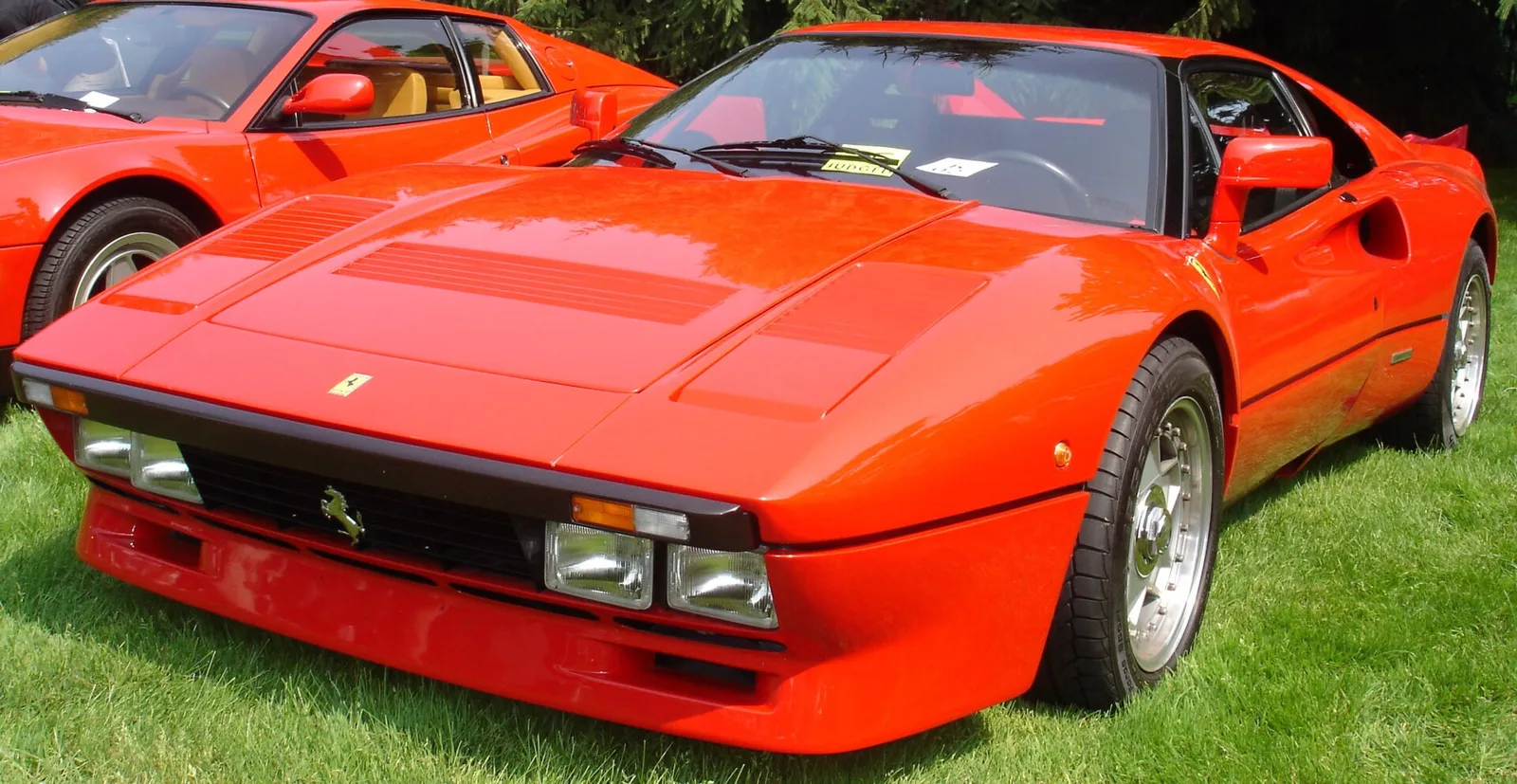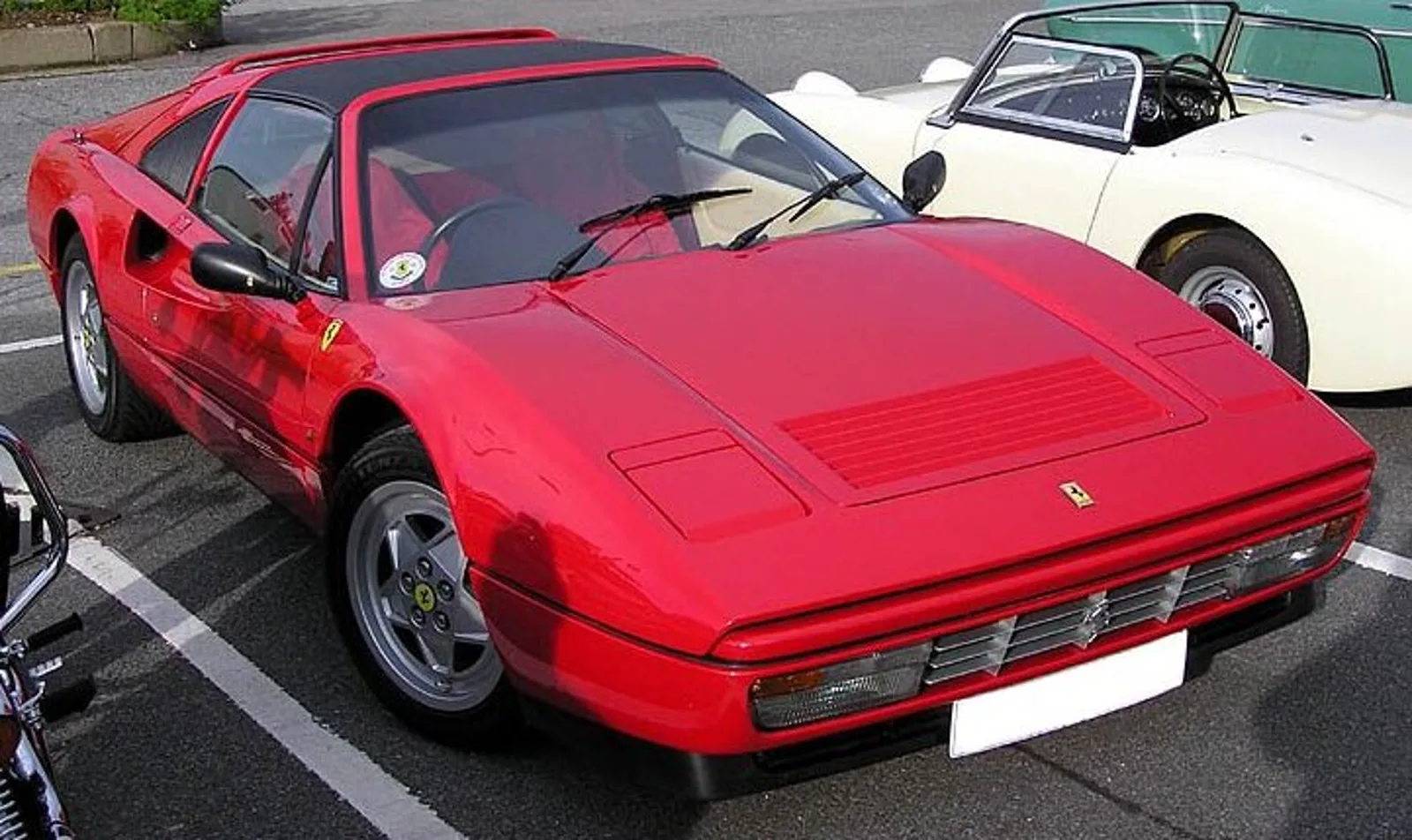
Pininfarina styling, a 3.2-litre V8 with 270 PS and a turbocharged 2.0-litre variant, built in GTB and GTS forms from 1985 to 1989.
The Ferrari 328 was a mid-engined V8 two-seater sold as the GTB coupe and GTS targa from 1985 to 1989. It enlarged the 308's engine to 3.2 litres and produced 270 PS. A turbocharged two-litre variant was offered from 1986.
The Ferrari 328 was a mid-engined two-seater that Ferrari sold as a fixed-roof coupe (GTB) and a targa-top Spider (GTS) from 1985 to 1989. It kept the 308's chassis and layout but enlarged the V8 to 3.2 litres for more power and torque. Many enthusiasts still rate it among the most practical classic Ferraris to own and drive.
Where did the Ferrari 328 come from?
The 328 replaced the Ferrari 308 GTB and GTS. Mechanically it stayed close to the 308, but Ferrari reworked the body, chassis and engine, chiefly by enlarging the V8 to 3.2 litres. It was introduced at the 1985 Frankfurt Salon and stayed in production until 1989.
The 308 and 328 formed a family of Ferrari road cars with similar but not identical bodies, chassis and engines. In practice the 328 was a reworked 308, a design that had gone eight years without a radical change to its outline. The new model was introduced alongside the Mondial 3.2 series.
A mid-engined V8 that refined the 308 into one of the most usable classic Ferraris, built in both coupe and targa forms.
What do GTB and GTS mean?
GTB stands for Gran Turismo Berlinetta and refers to the fixed-roof coupe body. GTS stands for Gran Turismo Spider and refers to the car with a removable targa top. The 328 in the name is the engine's total capacity of 3.2 litres, and the 8 gives the number of cylinders.
Both models came in the same two body styles, so buyers chose between a closed coupe and an open-top targa.
How was the 328 styled?
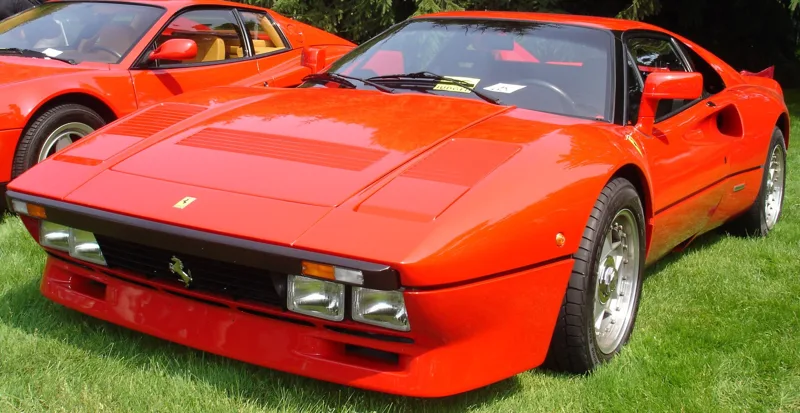
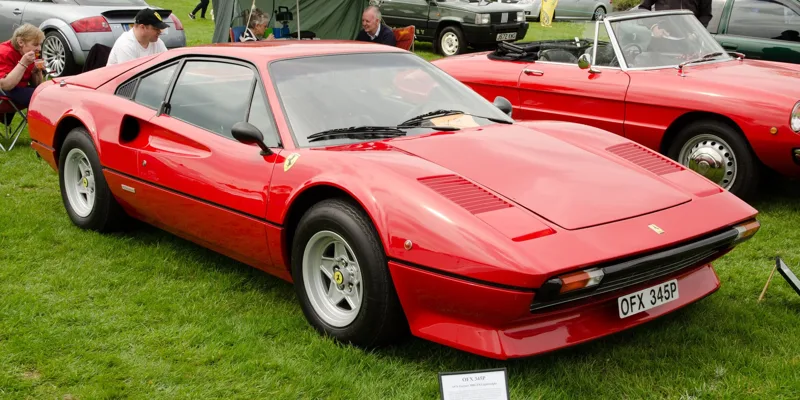
Pininfarina carried over the 308's basic design but softened the wedge profile with a rounder nose and body-colour bumpers that were integral with the valance panels. The body was still largely built by hand at the Scaglietti works.
The revisions also improved aerodynamic characteristics as well as looks. The exhaust louvres behind the retractable headlight pods of the 308 disappeared, and the nose and tail now shared a unified family look with the other eight-cylinder cars in the range.
Inside, the trim was thoroughly overhauled. The seat panels received new upholstery and stitching, the door panels and pulls were revised, and the cockpit switches were updated. The dashboard gauges were back-lit orange on black, borrowed from the 1984 GTO, and the main instrument panel was seen through an anatomical Momo steering wheel.
Optional equipment included air conditioning, a leather dashboard, metallic paint and Pirelli P7 tyres. Some markets also received a rear aerofoil as standard.
One small design flaw involved the line carrying oil between the engine and the cooler, which proved too short. Under constant pressure and engine motion, it could come away from the cooler and eventually crack it. A common remedy was to fit the hoses upside down, which gave the lower one more slack.
What engine did the 328 use?
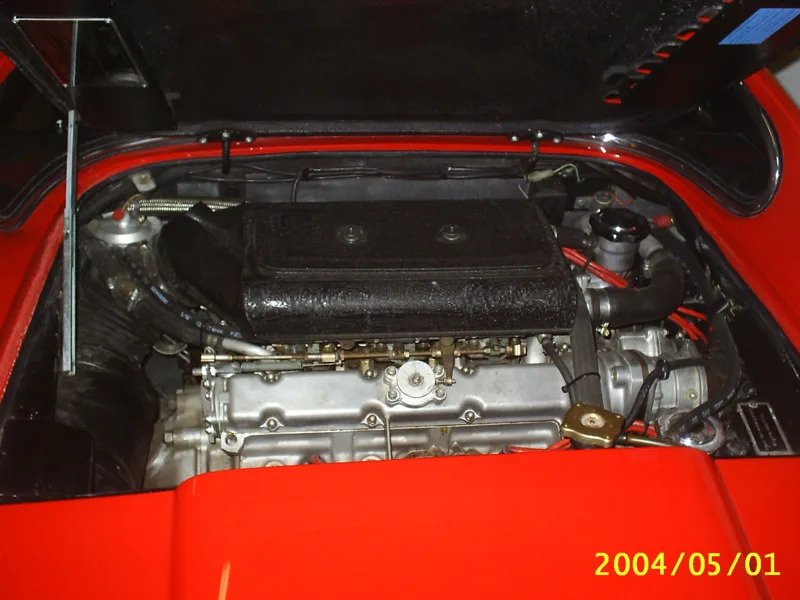
The 328 used a naturally aspirated V8 of 3.2 litres (3185 cc), with four valves per cylinder, mounted transversely behind the seats. It kept Bosch K-Jetronic fuel injection and a Marelli electronic ignition system. Output was 270 PS (199 kW; 266 hp), with torque of 304 N-m (224 lb-ft).
The engine was the final evolution of the transversely mounted Dino V8, a design that ran from the late 1950s into the early 2000s. Its bore and stroke measured 83 mm by 73.6 mm. It sat in unit with a five-speed manual gearbox below and behind the wet sump, and the shifter kept Ferrari's traditional gated layout.
Maintenance is one of the car's strengths. Much of the work can be carried out without lowering the engine from the chassis, which is part of why some enthusiasts consider it one of the most functional Ferraris.
How was the 328 chassis built?
The frame uses oval tubular steel, which gave race-car stiffness without much added weight. Most of the body is steel, with a front hood in aluminium and a floor pan built as a sandwich of steel and fibreglass.
Galvanised steel was a key improvement over earlier models, and it drastically slowed corrosion. The exterior and structural design cut the car's weight compared with the 308, while the front and rear suspension used unequal-length double wishbones with coil springs, Koni hydraulic dampers and anti-roll bars.
The steering was unassisted rack and pinion, which needed 3.25 turns lock to lock. That was slightly quicker than the 308. Large vented discs with twin-piston calipers did the braking, backed by a hydraulic circuit with built-in redundancy.
How quick was the Ferrari 328?
The naturally aspirated GTB reached 60 mph in about 5.5 seconds, with a top speed of 166 mph (267 km/h). The GTS needed 5.9 seconds to 60 mph and topped out at 163 mph (262 km/h). The engine's own figures put 100 mph at 13.0 seconds.
The 328's acceleration was strong for a 1980s road car, and the engine's torque was usable across the rev range. Its performance was competitive with the best of the period, though the Turbo variant offered a different character altogether.
What did the 1988 update change?
Late in the 1988 model year Ferrari made its only major mechanical change, adding anti-lock braking. That required new suspension geometry with negative offset and convex 16-inch alloy wheels in place of concave ones. Cars from chassis 76626 in February 1988 had the revised suspension and wheels, with or without ABS.
In Europe ABS could be specified on every mid-1988 and 1989 car. American mid-1988 cars went without it, but all 1989 US cars had it. The wheel change is the simplest visual clue to a later car, and 1988 and 1989 mirrors also carried small Cavallino Rampante badges.
How did the 328 Turbo differ from the standard car?
In 1986 Ferrari launched a turbocharged, intercooled two-litre version called the GTB Turbo or GTS Turbo. It was developed mainly for the Italian market, where cars above two litres paid a 38% value-added tax instead of the normal 18%. Peak output reached 254 PS (187 kW; 251 bhp), a figure Ferrari deliberately held below the naturally aspirated car's.
The Turbo's 1,991 cc V8 was evolved from the 208 Turbo engine. Nicola Materazzi led the powertrain work. He brought turbocharging experience from the Lancia Stratos GR5 and the Ferrari 126C, and had earlier been chief engineer on the 288 GTO. Cylinders were coated with Cermetal to reduce friction, and a knock sensor could retard the ignition if pre-ignition threatened.
The turbo was a water-cooled IHI unit boosting to 1.05 bar (15.2 psi), and the intercooler sat on top of the engine. Torque peaked at 242 lb-ft (328 N-m) at 4,100 rpm, arriving 700 rpm earlier than on the 208 Turbo, which made the engine more flexible. Commercial reasons kept it under the normal car's 270 PS, even though it could have made considerably more power.
Quattroruote compared a GTS and a GTS Turbo in June 1986 and found similar acceleration and top speed. The Turbo took 6.6 seconds to reach 100 km/h, a tenth of a second behind the standard car, and recorded 251 km/h (156 mph). Ferrari built 308 GTB Turbos and 828 GTS Turbos between 1986 and 1989.
How many 328s were built?
Ferrari built 7,412 cars between 1985 and 1989, of which 6,068 were GTS models and 1,344 were GTB models. The GTS outnumbered the GTB almost five to one. Including the 308, the family was one of Ferrari's most commercially successful, with nearly 20,000 cars produced.
Chassis numbers show the production pattern. Early cars used the odd-numbered road car sequence, while later examples after chassis 75000 used a continuous sequence. GTS chassis ran from 59301 to 83136, and GTB chassis ran from 58735 to 83017.
How did production of the 328 end?
The final production year ran from September 1988 to late 1989, and 1,338 cars were built in that year alone. Enzo Ferrari died in August 1988, and many of the last cars were bought either as tributes or or on speculation. The 348 replaced the 328 in the autumn of 1989.
Some cars from the final year were never registered for the road. Decades later it is still possible to find an unregistered 328 from that last run for sale.
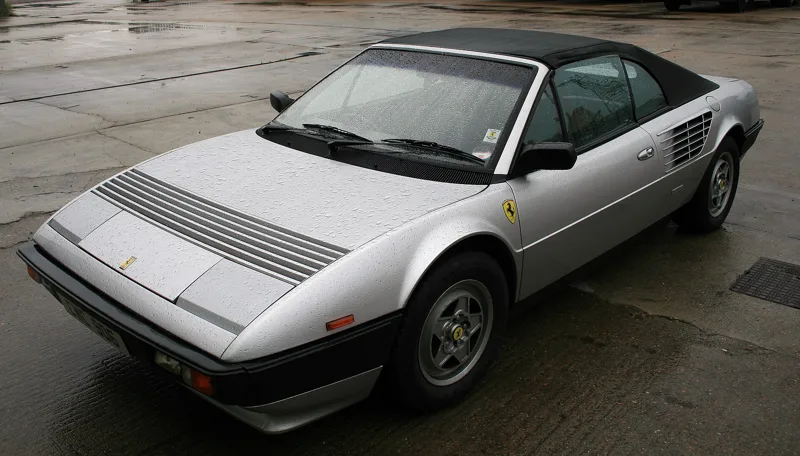
The model's history also includes an unusual prototype. Chassis 49543 was built in the summer of 1984 as a full soft-top convertible and was road-registered for extensive testing. Marketing staff worried that an open model would compete with the Mondial Cabriolet, so production stayed with the Berlinetta and the removable-hardtop Spider. Chassis 49543 is still registered for road use in Italy.
Ferrari 328 specifications at a glance
| Specification | Detail |
|---|---|
| Type | F106 mid-engined V8 two-seater, GTB coupe or GTS targa |
| Production | 1985 to 1989; 7,412 cars in total |
| Engine | 3.2 L (3185 cc) naturally aspirated V8, four valves per cylinder |
| Bore and stroke | 83 mm x 73.6 mm |
| Power and torque | 270 PS (199 kW; 266 hp); 304 N-m (224 lb-ft) |
| Gearbox | Five-speed manual, gated shifter |
| 0-60 mph | About 5.5 seconds (GTB); 5.9 seconds (GTS) |
| Top speed | 166 mph (267 km/h) GTB; 163 mph (262 km/h) GTS |
| Turbo engine | 1,991 cc; 254 PS (187 kW; 251 bhp); peak torque 242 lb-ft (328 N-m) at 4,100 rpm |
| Turbo top speed | 253 km/h (157 mph) manufacturer; 251 km/h (156 mph) Quattroruote |
| Steering | Unassisted rack and pinion, 3.25 turns lock to lock |
| Successor | 348, from autumn 1989 |