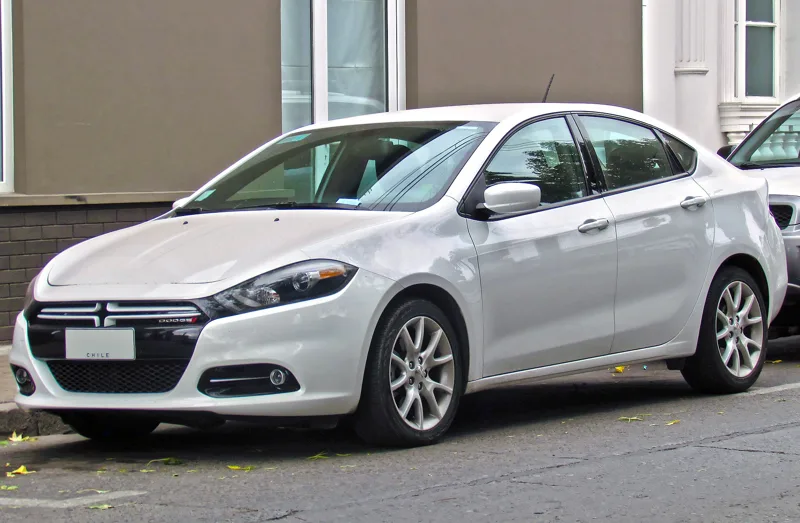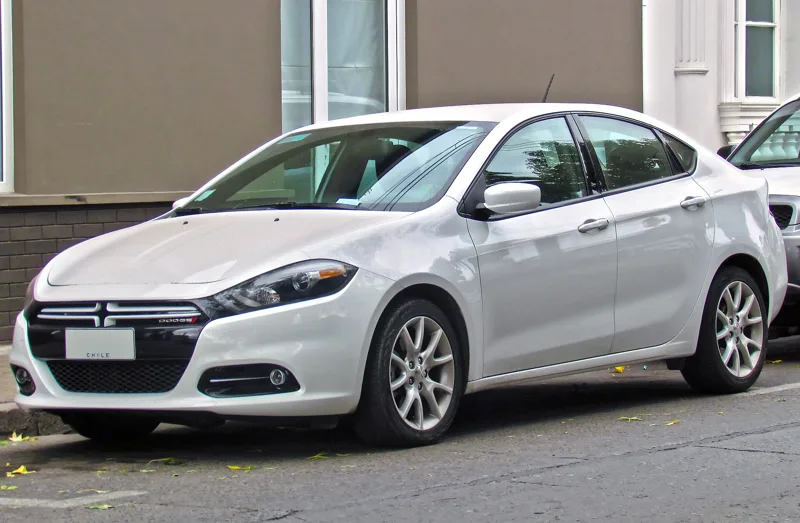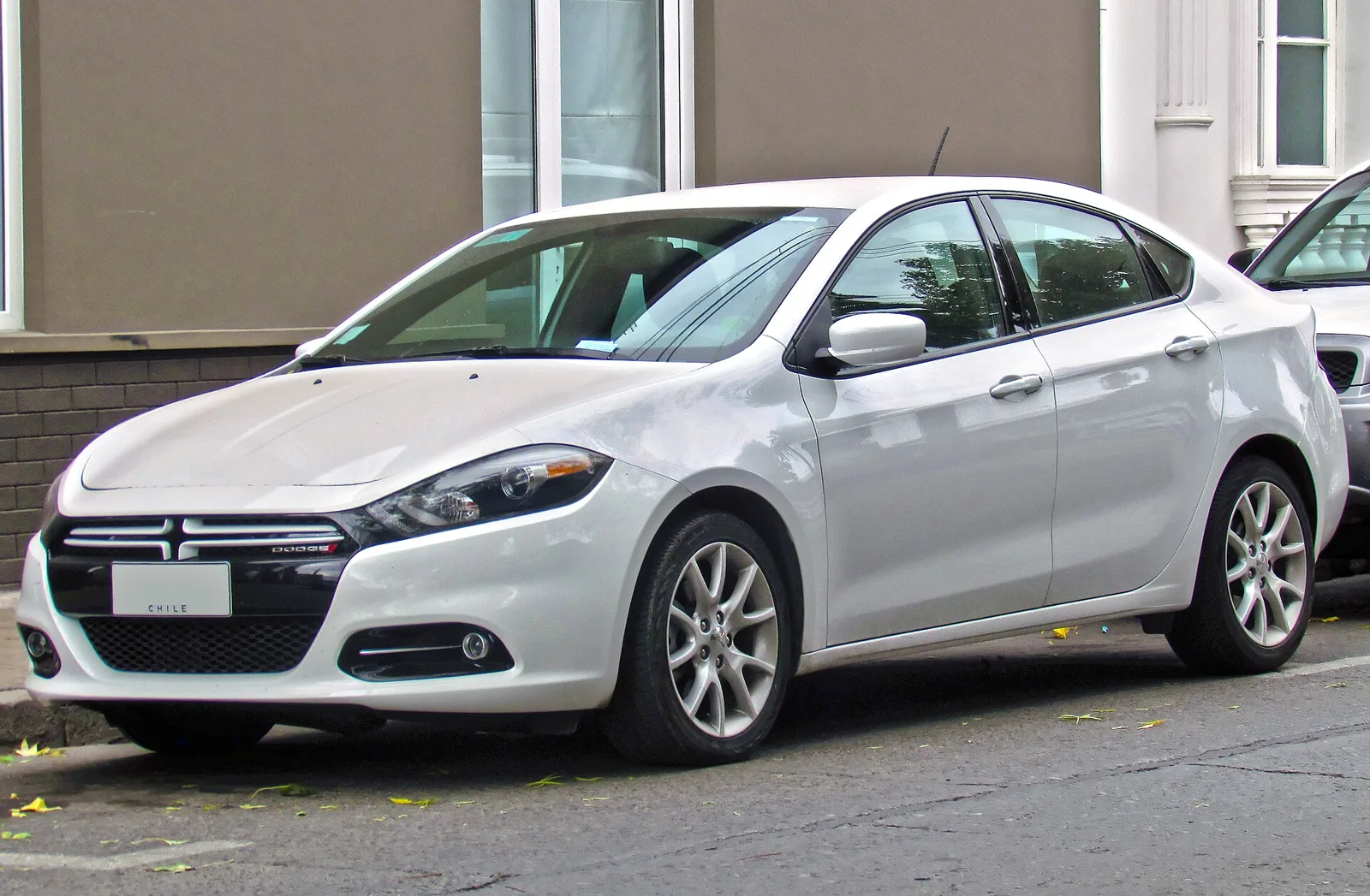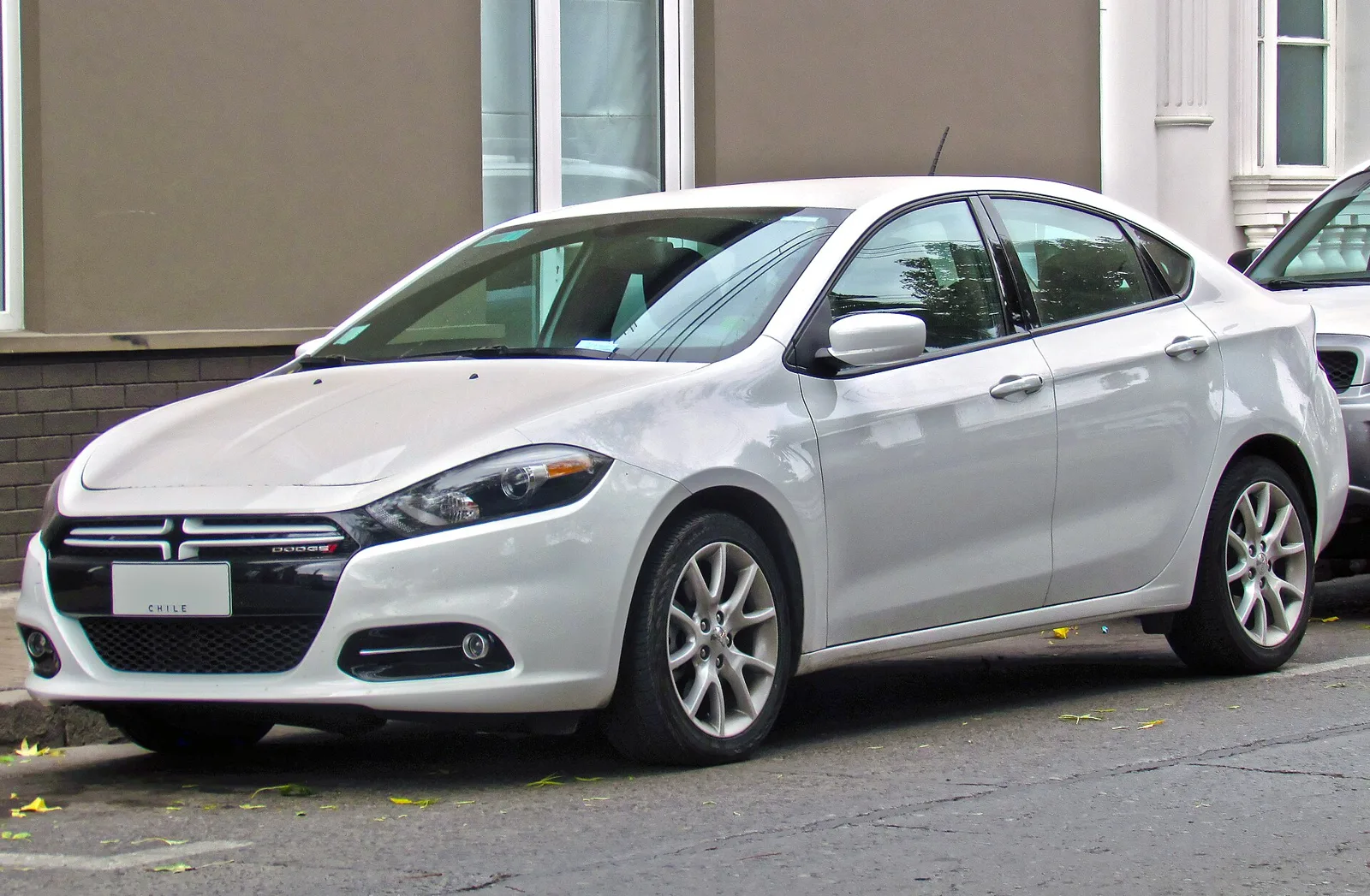
Two North American compact cars from the early 2010s, one a short-lived Dodge revival on a Fiat-based platform and one a global Ford with a turbo-era engine line-up.
The Dodge Dart was a Fiat-based compact sedan built from 2012 to 2016 with a 160 hp base engine and 10 standard airbags. The Ford Focus Mk III arrived in 2010 as a global car with a 160 hp 2.0-litre base engine and a 252 hp ST, and its PowerShift transmission drew shudder complaints.
The Dodge Dart and the Ford Focus Mk III were both compact cars sold in North America in the early 2010s, and both were pitched at buyers who wanted fuel economy without giving up a decent drive. The Dart was a front-wheel drive sedan built on a Fiat-linked platform, and the Focus was a global Ford with a turbocharged range. Their engine choices, transmission records and safety results separate them more than their size does.
Where did each car come from?
The Dart debuted at the 2012 North American International Auto Show in Detroit as a front-engine, front-wheel drive four-door compact sedan. It was made by FCA US, a subsidiary of Fiat Chrysler Automobiles, and in some non-US markets it was sold as the Fiat Viaggio.
The Dart revived a nameplate Dodge had used from 1960 to 1976 on full-size, mid-size and finally compact models. It was the brand's first compact sedan since the Neon was discontinued in 2005.
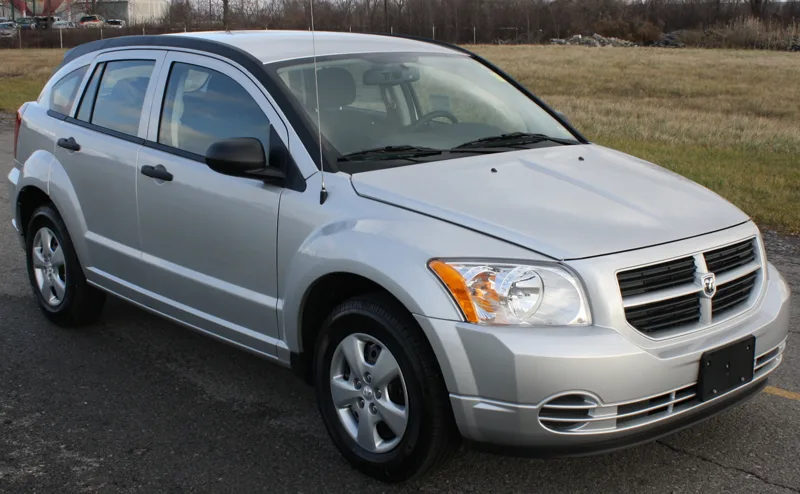
The car began life as a mini MPV concept, the Dodge Hornet, revealed in 2006 for Europe. The concept was dropped during the Great Recession, and after Chrysler's merger with Fiat in late 2010 it was reworked around a Fiat platform. In December 2011 the new small sedan was named the Dart to replace the Dodge Caliber.
The Focus Mk III, code-named C346, first appeared at the 2010 North American International Auto Show as a 2012 model, with a four-door sedan and five-door hatchback. It was the first Ford designed under CEO Alan Mulally and the One Ford plan, which aimed to build globally sold cars with minimal regional changes.
A Fiat-based Dodge sedan with a 160 hp start against a global Ford with a 252 hp hot hatch and a transmission under scrutiny.
How did the platforms and designs differ?
The Dart used a modified Fiat Compact platform shared with the Alfa Romeo Giulietta. Its wheelbase was widened by 38 mm (1.5 in) and lengthened by 94 mm (3.7 in), creating a platform that Chrysler called the Compact U.S. Wide. The modified platform took about 18 months to design at a cost of US$1 billion.
The Focus was built on Ford's Kinetic Design language, with a trapezoidal grille and tail lights set lower at the rear, similar to the Ford Fiesta. The sedan used cheaper gooseneck trunk hinges in place of the space-saving gas-strut hinges of its predecessor, a change that reflected its economy car image.
Ford's young designers wore the Third Age Suit, which restricts movement to simulate the limits of an older person, and the insights from it found their way into the car's design. Ford also gave the Focus a capless fuel tank.
The Dart's chassis was tuned to suit North American buyers. Its front suspension used MacPherson struts with coil springs, and its rear was an independent multilink. The chief engineer said the setup had been softened compared with the Alfa, taking a little edge off the handling.
What trims did the Dart offer?
The Dart was sold in several trims over its four-year run, each with its own equipment list. The SE was the base car from 2013 to 2016, with a 160 hp 2.0-litre engine, a six-speed manual, a heater without air conditioning, and fifteen-inch steel wheels with plastic covers.
The SXT was the mid-level trim. It added 16-inch aluminium alloys from 2014, U Connect Bluetooth with streaming audio, SiriusXM Satellite Radio, air conditioning and keyless entry, and its options included the 8.4-inch touch-screen U Connect system and a nine-speaker Alpine audio system.
The Limited sat above the SXT with seventeen-inch alloys, Nappa leather seating, dual heated front seats and GPS navigation. The GT was the top car, with 18-inch Granite Crystal wheels and the 184 hp 2.4-litre engine, and in the final months of production the SXT and GT became the SXT Sport and GT Sport.
The Aero was built for economy. It used the SXT as its base, added the 8.4-inch touch screen and the 1.4-litre MultiAir engine, and was the trim that carried the dual-clutch transmission.
What engines did they offer?
The Dart's base SE came with a 160 hp 2.0-litre Tigershark four and a six-speed manual. A 160 hp 1.4-litre MultiAir turbocharged four was offered on the SXT, Limited and Aero, and a 184 hp 2.4-litre Tigershark four arrived for the Limited and GT.
The Dart's 1.4-litre turbo was the same engine used in the Alfa Romeo Giulietta, retuned for American use. A six-speed dual-clutch transmission was available with it, while the 2.0 and 2.4 litre engines could take a six-speed automatic.
The Focus Mk III launched with a single engine in North America, a 2.0-litre Duratec direct-injection four with Ti-VCT, producing 160 hp (119 kW). Flex Fuel capability arrived in mid-2012, and in late 2012 the Focus ST joined the range with a turbocharged 2.0-litre producing 252 hp (188 kW) and 270 lb ft (366 N m).
The Focus line grew to include a 1.0-litre EcoBoost three-cylinder as an extra-cost option in 2015, followed by a 2.3-litre EcoBoost for the RS trim in 2016. Europe had its own range, with 1.6-litre Duratec and EcoBoost petrols and a 2.0-litre Duratorq diesel topping the list.
Specifications side by side
| Feature | Dodge Dart (PF) | Ford Focus Mk III |
|---|---|---|
| Debut | 2012 North American International Auto Show | 2010 North American International Auto Show as a 2012 model |
| Body | Four-door compact sedan | Four-door sedan and five-door hatchback in North America |
| Drive | Front-engine, front-wheel drive | Front-wheel drive |
| Base engine | 2.0-litre Tigershark, 160 hp | 2.0-litre Duratec, 160 hp (119 kW) |
| Turbo engine | 1.4-litre MultiAir, 160 hp | 2.0-litre turbo ST at 252 hp (188 kW) |
| Largest petrol | 2.4-litre Tigershark, 184 hp | 2.3-litre EcoBoost for RS (2016) |
| Trunk or cargo | 13.1 cu ft (370 L) | No figure |
| EPA economy | Aero: 41 mpg highway | 28 city and 38 highway (automatic); 26 and 36 (manual) |
| Airbags | 10 standard | No figure |
| Safety ratings | IIHS five stars (2013) and Top Safety Pick (2012) | No figure |
| Build plant | Belvidere Assembly Plant | Wayne, Michigan; Saarlouis, Germany; Rayong, Thailand; Chongqing, China |
| Ending | Production ended in 2016 after poor sales | No figure |
| Recall history | No figure | 2017 recall of 1.6 EcoBoost cars for engine fire risk |
Which car was quicker in its class?
The Dart's most potent road model in the range was the 2.4-litre Tigershark, which offered 184 hp in the Limited and GT. The Dart SRT4 was planned for December 2016 but never went into production after the decision to end the Dart.
The Focus ST was the stronger performer, with its 252 hp turbo and 270 lb ft torque, available only with a six-speed manual. Ford's hot hatch was announced at the Paris Motor Show in September 2010, and its existence put the Focus on a sportier footing than the Dart.
The Dart's competition-flavoured car was a separate story. A Dart rally car shown at the 2012 New York International Auto Show entered the 2012 Global RallyCross Championship, with a 2.0-litre turbo rated at 600 hp and four-wheel drive from Sadev.
How did the transmissions compare?
The Dart offered a manual alongside automatics and a dual-clutch option, and its Aero trim used the six-speed dual-clutch transmission for fuel economy. The Aero was rated at 41 mpg on the highway.
The Focus Mk III's PowerShift DPS6 dual-clutch transmission attracted criticism for shuddering, and it led to several lemon law claims. The problem was linked to the dry clutches on petrol models, and Ford's response was to replace the clutch pack when shuddering exceeded 250 rpm after a customer complaint.
Ford revised its clutch packs and control modules at least six times, and one of the causes was a seal that leaked transmission fluid onto the dry clutches. The National Highway Traffic Safety Administration did not require a recall for the transmission, and manual Focus models were not affected.
What did the Focus's North American range add?
The Focus was offered in North America as a sedan and a hatchback, and the estate that had been previewed at Geneva a month after its debut was not sold there. Both body styles used the new platform, which Ford said was 25 per cent stronger than the previous North American version.
The Super Fuel Economy package, known as SFE, was an add-on for the SE sedan with the PowerShift automatic. It lifted highway economy to 40 mpg through a rear spoiler, low-drag tyres on 16-inch steel wheels with streamlined hubcaps, and active grille shutters borrowed from the ECOnetic.
Inside, the Focus had a redesigned cabin with changed materials and a new infotainment system. Ford gave the car two types of centre console, a basic one for smaller engines and a premium one for the more powerful engines, and the Titanium trim could be ordered without the MyFord Touch system.
How safe were the two cars?
The Dart had 10 airbags as standard, along with brake assist, electronic stability control, traction control, electronic roll mitigation, hill-start assist and a rear backup camera. The IIHS gave the 2013 Dart five stars in its frontal offset, rollover and side tests, and the car earned a Top Safety Pick for 2012.
The Dart also added rear obstacle detection and blind-spot monitoring, which put it ahead of most compact sedans on safety equipment. The Giulietta, the Dart's platform sibling, was reported to have achieved the highest rating for a compact car in Euro NCAP tests.
The Focus Mk III's most serious safety story was a 2017 recall of 1.6 EcoBoost cars because of a risk of engine fires from a lack of coolant circulation. Ford had 29 fires reported in the United States and Canada, and the recall contributed to a US$300 million charge.
How did the cars sell and where were they built?
The Dart was built at Chrysler's Belvidere Assembly Plant, where the Caliber and Jeep Compass were also made. It was discontinued in 2016 because of poor sales, and the SE trim was dropped in mid-2016, with the SXT Sport becoming the base model.
The Focus was a global best seller, and it was named the best-selling car in the world for 2012. Production started at Saarlouis in Germany in December 2010 and at Wayne, Michigan in February 2011, with later plants in Russia, Thailand, China, Taiwan and Argentina.
The Focus Electric arrived in 2011 to compete with the Nissan Leaf and the Chevrolet Volt, showing how the car's family extended beyond the petrol range. The Mercury Tracer sedan that had been planned for the Focus platform was scrapped when Ford closed the Mercury division in the summer of 2010.
Which buyer should choose which?
A buyer who wanted a Dodge sedan with a 40 mpg highway figure, a 10-airbag standard specification and a turbo option in the Aero would look at the Dart. The car also offered a range of interior trims, and from 2014 Bluetooth was standard on all but the base SE.
A buyer who wanted a Ford with a wide European-style engine range, the Focus ST's sharpness or the capless fuel tank and modern design would look at the Focus. The Focus also brought the One Ford strategy, which meant one engineering base for many markets.
On these facts neither car has a clear overall win. The Dart had the stronger safety record on paper, with IIHS honours and 10 standard airbags. The Focus had the sharper engine range and the bigger global development story, but also transmission complaints and an engine recall.