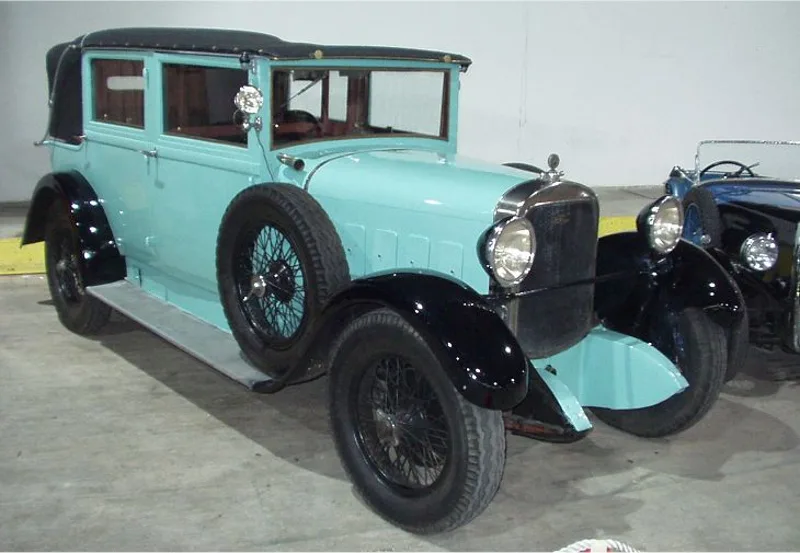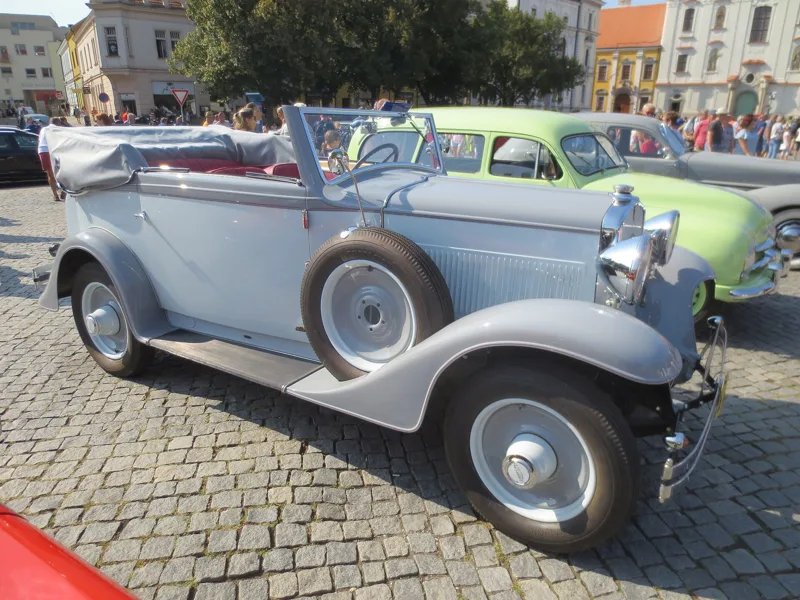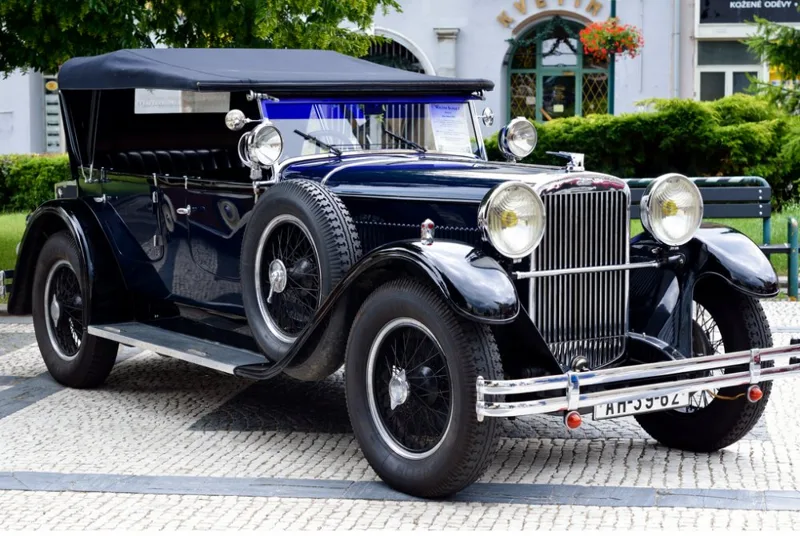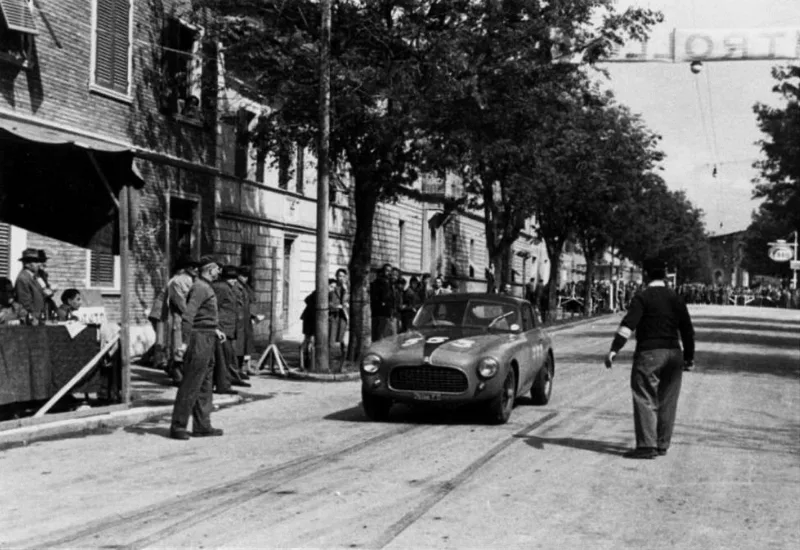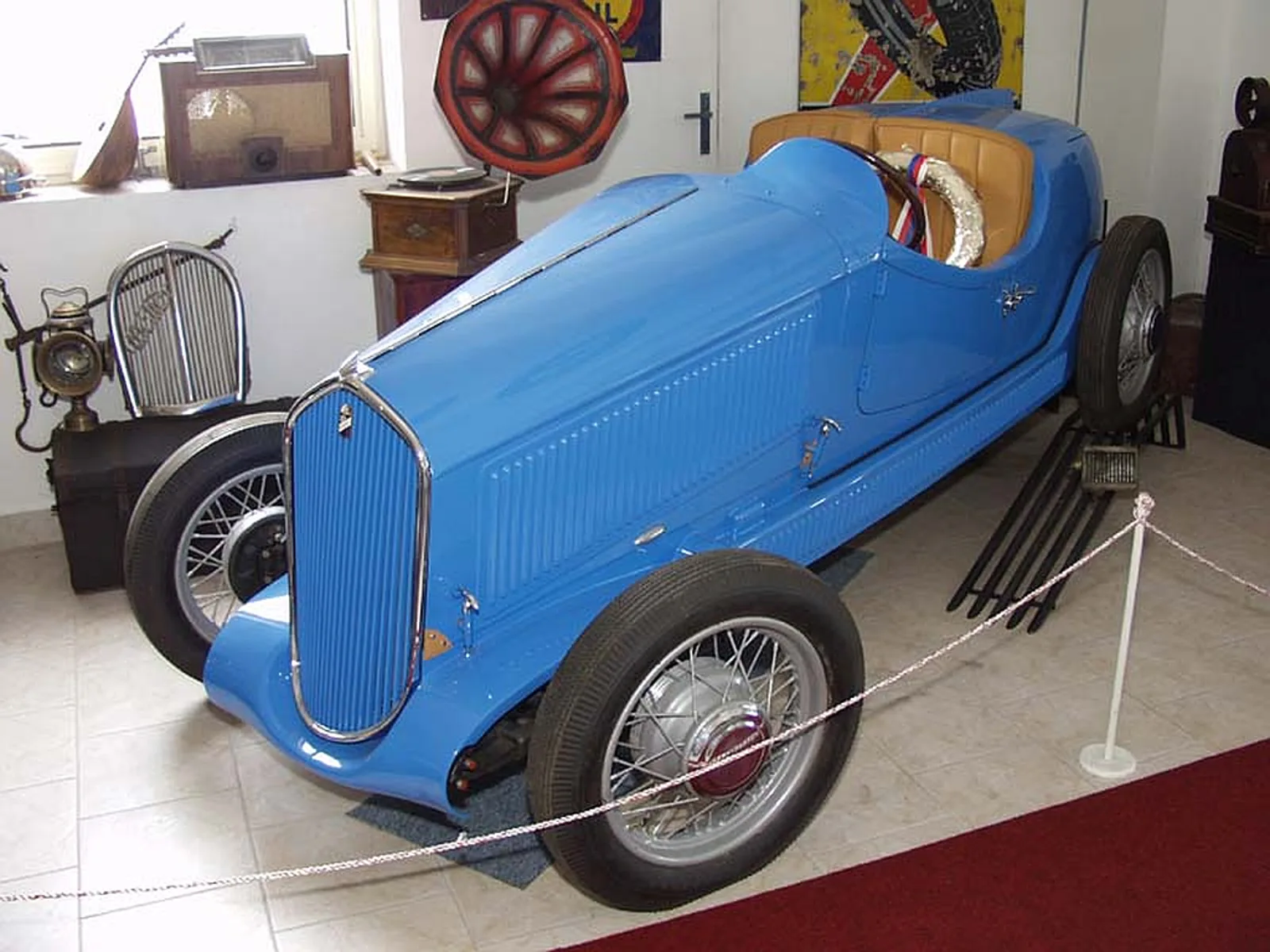
A sporting Junior from Jinonice that made its debut in the 1933 1000 mil race, then raced in a 40 PS form on Czechoslovak circuits and hill climbs.
The Walter Junior S was a 1933 sporting roadster from the Jinonice works in Prague, built as the sporting version of the Walter Junior. Its 995 cc (60.7 cu in) side-valve engine was tuned to 30 PS/22 kW and it became a regular in Czech circuit and hill-climb racing.
Walter returned to speed racing in 1933 with a sporting version of its Junior, and the car went on to win its class at the 1000 mil race. The Juniors S were cheap, reliable and nimble, and they are now among the most sought-after veteran cars.
Where did the Walter Junior S come from?
The Walter Junior S was the sporting version of the Walter Junior, built at Jinonice in Prague from 1933. Walter was a Czech maker of passenger cars and aero engines, and the S was the first car from the Jinonice factory with left-hand drive.
It was identical to the Fiat 508 S Ballila Sport, which the Italian maker had presented at the Milan motor show in mid-April 1933. The sporting Walter Junior S was introduced to the public the same year.
Walter's accounts showed a net profit of 300,362 Kc for 1932, yet the company halved its workforce to limit production and cut wages and salaries by 10 per cent. Sales were 374 cars in 1932 and 517 a year later. The interwar peak came in 1934, with 624 cars of all categories.
After almost two years out of speed competition, the Jinonice company returned in 1933. Its success led it to build the sporting Junior in larger series. A racing version followed in the autumn, fitted with an original cylinder head with OHV valve gear from SIATA, a Turin tuning firm founded in 1926 by the amateur racer Giorgio Ambrosini. SIATA began by making performance parts for Fiat cars, then built its own racing machines and worked with Ferrari and Maserati.
Cheap, reliable and nimble, the Junior S gained priority in Czechoslovak sports car production.
What did the Walter Junior S engine produce?
The sporting engine was a liquid-cooled inline four with side-valve valve gear and a capacity of 995 cc (60.7 cu in). A compression ratio of 6.3:1 and a new carburettor lifted its output to 30 PS/22 kW at 4,000 rpm, enough for a top speed of 120 km/h (75 mph).
The engine was essentially the same as the one in the Walter Junior saloon, with a bore of 65 mm and a stroke of 75 mm. A three-speed gearbox with modified ratios carried the drive, and the sporting car weighed 600 kg (1,323 lb). The magazine Auto, in issue 8 of 1933, praised its lively flexibility and acceleration, easy steering, excellent road holding and the 120 km/h top speed, calling it a car whose overall concept suited a sportsman.
For the racing version, a limited run of original cylinder heads was made, with the necessary parts from SIATA and OHV valve gear. In that form the engine produced 40 PS/29.5 kW at 5,500 rpm, and the car could be pushed to 150 km/h (93 mph).
How was the chassis built?
The chassis of the touring Junior was kept largely unchanged. A two-seat roadster body sat on a low rectangular frame with a cross brace, and the open car weighed about 600 kg (1,323 lb) with a payload of no more than 200 kg (441 lb).
Each of the two solid axles hung on longitudinal, semi-elliptic leaf springs, with hydraulic dampers on every wheel. Hydraulic brakes worked on 17-inch wire wheels with four-bolt flanges, shod with 4.00-17 tyres. The wheelbase measured 2,250 mm (88.6 in) and the track 1,200 mm (47.2 in), and the car tipped the scales at 765 kg (1,687 lb), of which the bare chassis accounted for 380 kg (838 lb).
The stiff frame, braced in an X shape at its centre, gave the roadster handling good enough to suit motorsport from the outset. In the sporting version the 65-litre fuel tank moved from the engine bay to the rear, behind the seats. The race-prepared car ran four forward gears, with synchromesh on the upper two, and its original mechanical parking brake was replaced by a hydraulic one.
Body and styling
The Walter-Junior S was bodied as a torpedo-form roadster with low, stretched lines and a carefully aerodynamic profile. The radiator was pushed forward behind a sloping, pointed mask, and the winged, profiled front wings blended with its shape along a sweeping line that ran almost to seat level.
When under way, the windscreen was folded back at an angle, and it was made of non-splintering glass. The doors were strongly cut out, which emphasised the sporting character of the elbow-out style that dominated sports car bodies for many years.
Rather than a spare wheel bulge, the tail was egg-shaped and carried a small vertical fin at its centre. The spares lived in the rear section of the body, which opened.
How did the Walter Junior S perform at the 1000 mil race?
Jindrich Knapp and Karel Vojir won the class up to 1100 cc at the 1000 mil race on 10 and 11 June 1933, in a time of 19:55.08 h at an average of 79.98 km/h. Walter's three cars took 1st, 3rd and 5th in that class.
The race ran between Prague and Bratislava, on a route through Kolin, Jihlava, Brno, Hodonin, Breclav and Malacky, measuring 796.4 km and driven twice. The Automobile Club of the Czechoslovak Republic (AKRCs) organised it on the model of the Italian Mille Miglia, and it unexpectedly became one of the largest speed races in Europe.
Of the 20 starters in the class, 13 crews finished. Overall, Walter took second place behind the six-cylinder Praga Alfa 1.8-litre crewed by Ing. Petr Mucha, who was entered under the pseudonyms FLY and Kaja. In the factory team standings Walter was second behind the Aero club team, but it was the fastest team in the class up to 1100 cc and won the AKRCs prize for that.
Knapp also collected the Brno city prize for the quickest up-to-1100 cc driver on the Prague to Brno leg. He covered it in about 2 hours 40 minutes, an average of 87 km/h. A wheel change near Jihlava cost him about 50 minutes, after the threads on the wheel bolts stripped, and that cost him the overall win. He made up much of the lost time and finished as the second-fastest driver of the event, behind Mucha.
Leo Sabat was second in his class with 10 km to go, but a broken spark-plug lead dropped him to third. All three Walter cars beat every car in the next category up to 1500 cc. Of the 57 crews on the start, 34 cars reached the finish and 31 were classified, so the Walter Junior S result was a major sporting success.
How did the car fare in circuit races later in 1933?
The sporting Junior was raced on several circuits in 1933. At Hradec Kralove on 6 July, Sabat took 5th and Manda 6th in the class up to 1100 cc, while on 6 August at the Zdirecky circuit, Walter drivers finished 3rd and 4th behind a winner racing as Kiki on an Aero 1000.
The Hradec Kralove race, the first for the East Bohemian club, ran through the town streets, and organisers estimated the crowd at 40,000. The magazine Auto was critical of the format, since a narrow course could not fit two fast cars side by side, and spectators lost interest when cars started one at a time. The Walter Junior S cars did not do quite as well there, and only 9 of the 11 cars in the class finished.
The Zdirecky event was run in excellent weather on a circuit about 2 km long. Dust was a problem, so water had to be sprayed on the course, stretching the races out, and the quickest drivers averaged under 70 km/h. Jan Kubicek and Jaroslav Manda finished close behind the winner, a few seconds apart.
The season closed with the 5th Ostrava Circuit on 24 September. The event was cut to five laps on a roughly 2 km loop through the Belsky Les forest, and 50,000 spectators watched in fine weather. Several accidents caused serious injuries, including 16 injured spectators. Manda raced in two categories, and in the sporting class up to 1100 cc he took first place.
What happened at the Ecce Homo hill climb and the Masaryk Circuit?
The racing version appeared at the Ecce Homo hill climb near Sternberk on 10 September 1933, and at the 4th Masaryk Circuit a week later. At Ecce Homo, Knapp took first place in the racing class up to 1100 cc, and at the Masaryk Circuit he finished 4th in the Voiturette class despite a heavy crash in practice.
The racing version was lightened at least by the removal of all its wings and the windscreen. That year Ecce Homo was the sole hill climb in Czechoslovakia with foreign entrants. Knapp finished 5th among the racing cars and 9th overall, and Zdenek Pohl won the event on a Bugatti.
The 4th Masaryk Circuit, run by the CAMS motoring club for Moravia and Silesia, drew a record field from all seven interwar editions. Out of 44 entrants, 33 made the grid, 21 of them in the bigger class. Heavy rain fell until the tenth lap, and about 150 thousand spectators came anyway.
Louis Chiron won the stronger category for the third year running, in an Alfa Romeo P3 Tipo B, in 4:50:22.8 h, ahead of Fagioli and Wimille, both also on Alfa Romeo. In the Voiturette race over 15 laps, 437.1 km, Knapp was in 4th place at an average of 92 km/h by the start of the seventh lap, after a collision with Paul Pietsch in the stronger category. E. G. Burggaller won that race in 4:32:50.1 h at 96.135 km/h, ahead of Bruno Sojka, both on Bugatti.
Knapp took a travelling trophy from the Ministry of Defence for the fastest Czechoslovak driver in a home-built car, along with the AKRCs award and the organising club's prize. The daily Lidove noviny praised his 38-year-old drive, noting two spins and a slide before he finished 4th in 4:52:48.4 h and won the bronze plaque of the organising club.
Knapp later said the rain had made the clay on the road slippery once it began to dry, and that he lost his glasses on lap six, driving the rest of the race without them. The AKRCs cup for 1933 went to the Walter and Co. factory at Jinonice, and Knapp was given the silver badge of the sporting commission. A year later he turned that silver into gold.
Specifications at a glance
| Specification | Detail |
|---|---|
| Built | 1933; sporting version of the Walter Junior, which had been built since 1932 |
| Sporting engine | 995 cc (60.7 cu in) side-valve inline four; bore 65 mm, stroke 75 mm |
| Sporting power | 30 PS/22 kW at 4,000 rpm; compression ratio 6.3:1 |
| Racing engine | OHV head from SIATA; 40 PS/29.5 kW at 5,500 rpm |
| Gearbox | Three-speed with modified ratios; four-speed with synchromesh on third and fourth in the racing car |
| Top speed | 120 km/h (75 mph) sporting; up to 150 km/h (93 mph) racing |
| Weight | About 600 kg (1,323 lb) for the open car; 765 kg (1,687 lb) total; chassis alone 380 kg (838 lb) |
| Wheelbase and track | 2,250 mm (88.6 in); 1,200 mm (47.2 in) |
| Payload | No more than 200 kg (441 lb) |
| Wheels and tyres | 17-inch wire wheels; 4.00-17 tyres |
| Fuel tank | 65 litres, moved behind the seats in the sporting version |
| Steering | Left-hand drive, the first car from the Jinonice factory |
Surviving examples
One Walter Junior S built in the racing version could be seen at the Auto Moto Museum in Nova Paka, although the museum has been closed since 2024. In 2026 the car took part in the 1000 mil Czechoslovak race in its sporting version. Its restoration aimed to retain as many surviving original parts as it could.
The car was returned to its 1933 specification, with its original SIATA cylinder head. Its side-valve engine still drives the fuel pump from a cam, and, unusually for the model, this car keeps friction dampers.