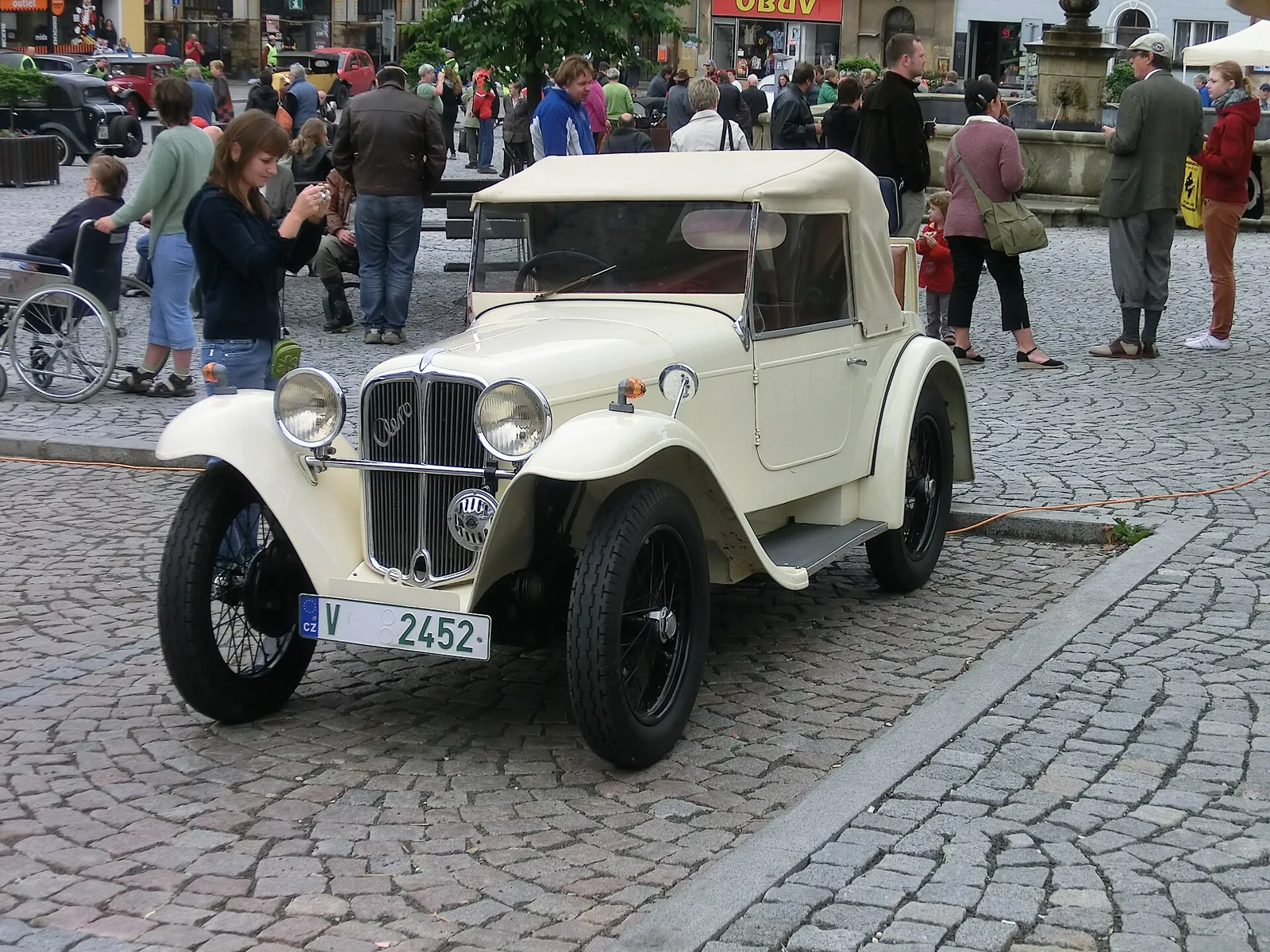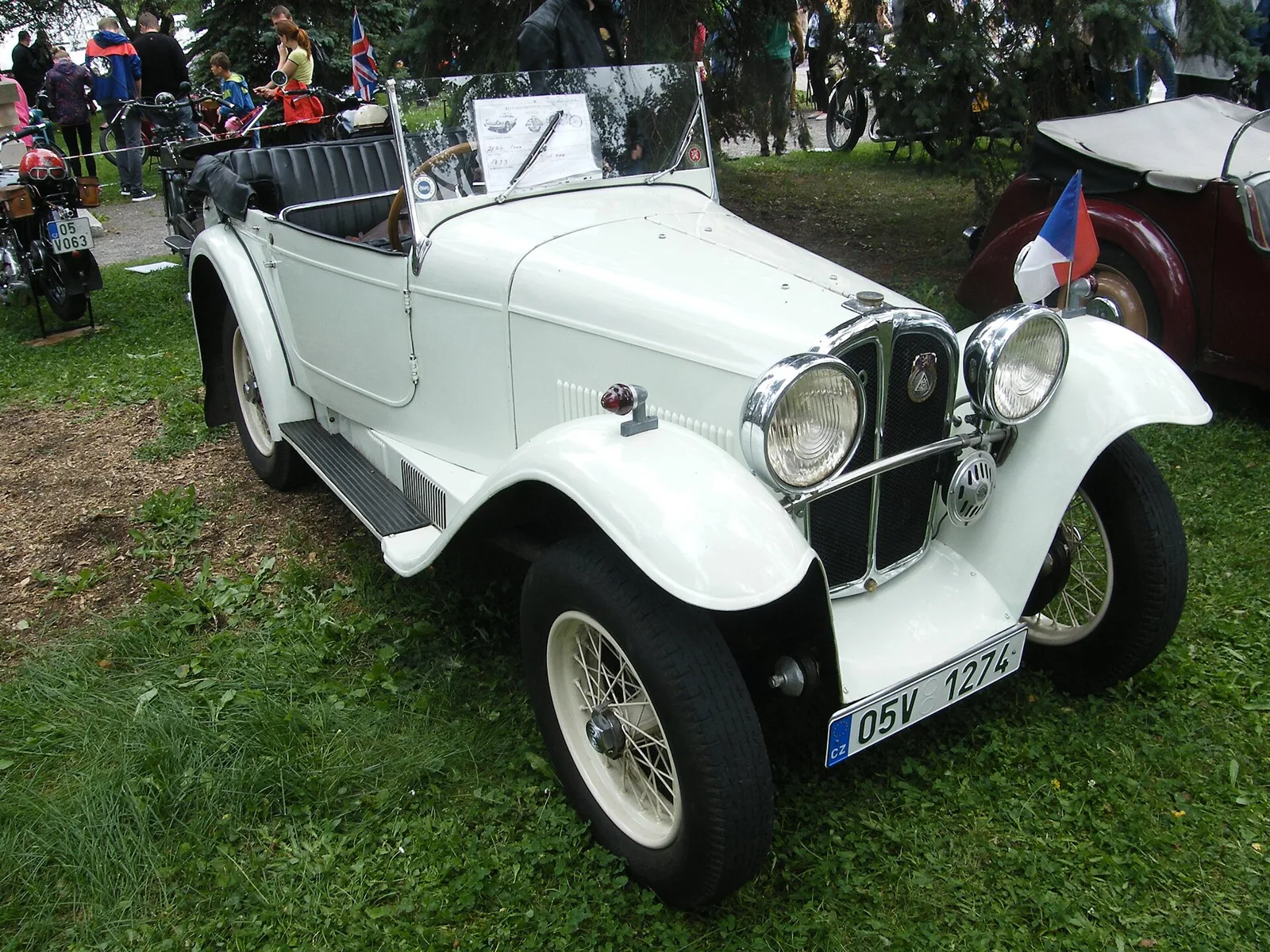
A one-litre twin made from two Aero 500 engines, built in just 236 examples and driven as far as Athens and Monte Carlo under its own power.
The Aero 1000 was a one-litre Czechoslovak twin-cylinder car built by Aero from 1933 to 1934. Made from two Aero 500 engines, only 236 were built, yet it became one of the most successful cars in Czechoslovak motorsport.
The Aero 1000 was a Czechoslovak car built by the Aero factory at Prague-Vysocany from 1933 to 1934. It was less successful than the factory's other models in commercial terms, but it became one of the most effective cars on Czechoslovak race tracks and in competitions. Its engine was a one-litre two-stroke twin, and it was also known as the Aero 20 HP.
Why did Aero build the Aero 1000?
Aero launched a new push for the Czechoslovak car market in spring 1933 by cutting prices and introducing a new one-litre model. The Aero 500 sold for 16,600 Kc and the Aero 662 for 19,900 Kc, and the Aero 1000 was added to that line-up. Because of taxation and the insurance rate, the factory quoted its output as 13 kW (20 PS), which gave the car its name.
The real output was 19 kW (26 PS). The success of the Aero 662 on long-distance trips and in races had shown that its strengthened chassis could take a stronger engine, and the car's dynamic qualities earned it the nickname Aero litr, road pike.
The engine was the idea of production manager Josef Baska. It was assembled from two Aero 500 engines. A 500 cylinder was cast twice side by side in one mould, and that mould produced a two-cylinder block. A built-up crankshaft was designed for the new block, so the engine was built quite differently from the twin used in the Aero 662.
A 20 HP car on paper and a 26 PS car in reality, sold in only 236 examples and still winning its class in 1933.
How did the Aero 1000 engine work?
The Aero 1000 used a liquid-cooled two-stroke twin with no supercharging. Its 998 cc (60.9 cu in) displacement came from an 85.0 mm bore and an 88.0 mm stroke. At a compression ratio of 5.2 it gave 19 kW (26 PS) at 2,800 rpm, and with rear-wheel drive it could reach up to 100 km/h (62 mph).
The crankshaft was built up from two parts, and the cast-iron block carried a removable cylinder head in a special light alloy. Carburettors came in two types, an Amal with a 30 mm venturi and a Solex 30 UAHG with a 24 mm venturi, with a Jikov 30 LOH used later. Fuel flowed by gravity from a 38-litre tank to the carburettor, and the thermosiphon cooling system held 12 litres.
Fuel consumption, using a benzol and oil mix of 40:1, was around 9 l/100 km (31 mpg-imp; 26 mpg-US). Starting was electric, through a Bosch 6V starter whose pinion was pushed out mechanically by a foot pedal. The battery was 6 V with 40-45 Ah, and the Bosch dynamo gave 6 V and 70 W.
How was the chassis built?
The frameless chassis carried a self-supporting steel body. The forged front axle also carried the brakes, while the rear axle was made from tubes. Both axles were sprung by longitudinal quarter-elliptic leaf springs, and friction dampers of domestic manufacture were fitted only to the front axle.
Drive passed through a light connecting shaft to the rear axle. The three-speed gearbox sat at the rear axle, unusually placed alongside a final drive with no differential. The steering was a rack and pinion of the company's own design, with a sprung steering rod, and the wheel was on the right. Drum brakes acted on all four wheels, and the handbrake worked only on the rear wheels.
The car ran on wider 16-inch tyres, sized 4.75-5.25 x 16 inches, fitted to wire wheels fastened by a central nut. Most of the chassis came from the previous type, and the changes were minor, including a longer wheelbase, a wider track and brakes on all wheels.
How many Aero 1000 cars were made?
Only 236 examples were built, and almost all of them came in 1933. In 1934 the dominant model in production was the Aero 662, the Aero 500 was winding down, and from April 1934 the Aero 30 went into production. Around 80 Aero 1000 cars are thought to survive.
At the end of 1934 the chief designer, Ing. Bretislav Novotny, the man behind the Aero 500, 662 and 1000 range, left the factory. His successor was Ing. Zdenek Michl, son of Vilem Michl of the Orion motorcycle firm in Slany.
Bodywork and the Special Coupe
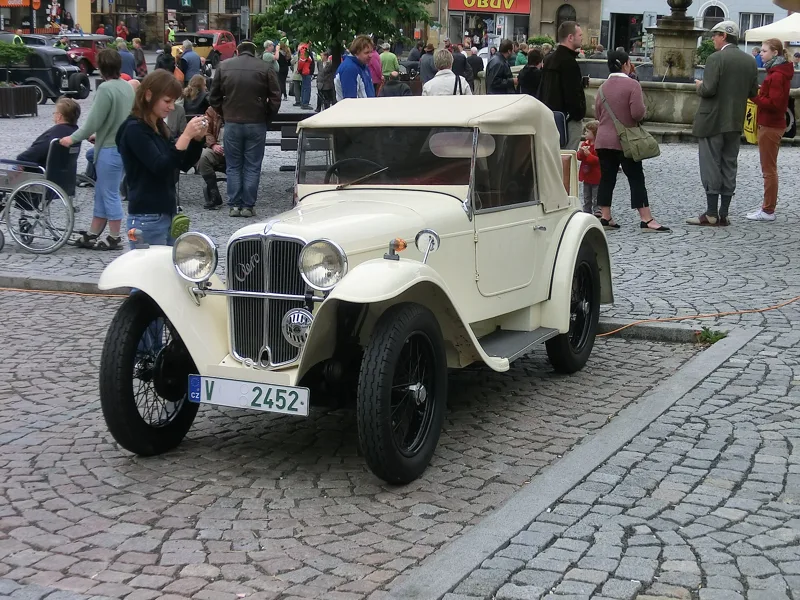
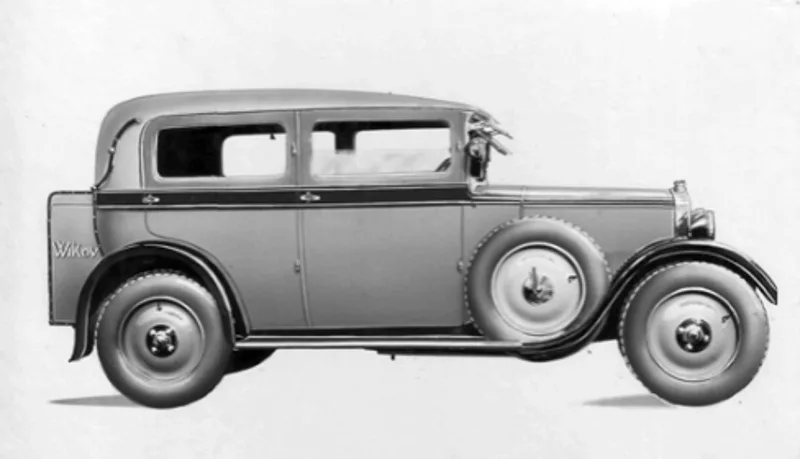
The usual version was a two-seat open roadster with an emergency seat in its hinged rear and a fabric folding roof, which sold for 23,900 Kc. A smaller number were supplied as a four-seat open Sport or as a closed four-seat limousine, which cost 25,800 Kc. The factory widened the body by 100 mm, and the two front seats were widened by the same amount.
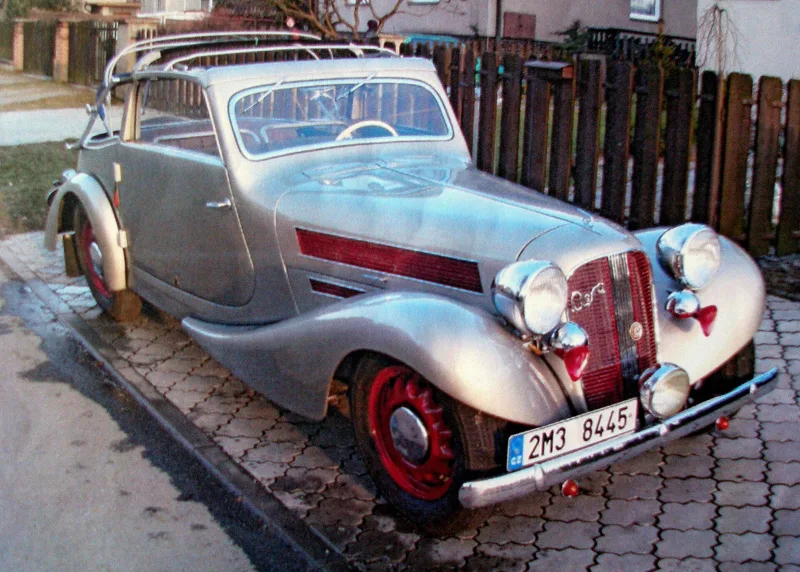
The Aero 662 could be told apart from the 1000 by its wider horseshoe-shaped radiator, which had a vertical bar in the middle, and by an arched bracing tube between the front wings. The best-known body variant was the Aero 1000 Special Coupe of 1934. Oldrich Uhlik prepared it, and it was an almost faithful copy of his earlier Aero 750 Sport Coupe of 1933, apart from the engine.
That aerodynamic coupe body was made for Otto Nimshaus, who took it into the 1934 1000 Miles of Czechoslovakia race. The engine in the sporting versions was tuned to 22.1 kW (30 PS), a unit that later served the commercially most successful Aero car, the Aero 30.
How did the Aero 1000 perform at the 1933 1000 Miles race?
The first 1000 Miles of Czechoslovakia race ran on 10 and 11 June 1933 with 60 entries. Aero cars took several places in the class up to 1100 cc, with Kafunek and Zoldner second and Ela Slavikova with Antonin Nahodil eighth. The Aero-Car-Club Praha team won the overall prize and the President of the Republic's prize.
Of the 60 entries, 57 started, but only four factory teams reached the finish. Bohumil Turek, the favourite of his class, had trouble with his car before Nemecky Brod. He dropped back to eleventh, then to fourteenth after tinkering with the car, and finished twelfth. Slavikova and Nahodil started cautiously, moved up to seventh and fifth at various points, and finished eighth.
Slavikova also received a handsome prize that the organising club gave to the woman who placed best in the 1000 Miles.
How did the Aero 1000 do in the local races of 1933?
On 6 July 1933 the East Bohemian Auto Club held its first circuit race around the town of Hradec Kralove. In the class up to 1100 cc over 20 laps (35.4 km), Turek took second ahead of Liska and Kafunek, who were all in Aero 1000 cars.
On 23 July 1933 the Aero car club held the first reliability and regularity competition for Aero cars in Stara Paka. The competitors drove the circuit six times, for a total of 204 km. Nineteen cars started and all of them finished without penalty points, so the prizes were decided by lot. Otto Nimshaus and Kafunek, members of the winning team from the 1000 Miles, also took part.
At Zlin on 30 July the cars raced on a 6.82 km circuit through the town's streets, in front of a crowd of more than ten thousand. Turek won the touring class at an average speed of 72.3 km/h (45 mph) in an Aero 662, and Formanek won the sports class up to 1100 cc ahead of Nimshaus, both in Aero 1000 cars.
At the Silver Triangle of Czechoslovakia on 6 August, Kiki won the most strongly contested class up to 1100 cc over 10 laps in an Aero 1000, ahead of Nimshaus in the same type. At the Ecce Homo hill climb on 10 September 1933, Mirko Sochor won the touring cars up to 1000 cc. The season ended at the Ostrava circuit on 24 September, where sixteen spectators were injured and the car races were cut from 10 laps to 5.
Did the Aero 1000 reach Monte Carlo?
Turek and Antonin Nahodil reached Monte Carlo in the January 1934 Rallye, finishing ninth overall and third in the class up to 1500 cc. They had chosen the hardest route and the most distant point, Athens, and had driven there under their own power before covering a further 4,000 km over snowy Balkan roads.
The second Aero 1000 in the event, driven by Vladimir Formanek, did not reach the finish. The Monte Carlo result was the greatest success of the car.
What was the Blue Team expedition of 1934?
In early 1934 a group known as the Blue Team drove Aero 1000 cars on a long-distance expedition. Six women set off on 24 February for North Africa, Algeria and Morocco, returning to Prague on 6 April. The expedition was organised by the motoring pioneer Frantisek Alexander Elstner, who had written a book about the Aero car, though the initiator was Eliska Junkova.
Junkova worked in the tyre sales department of the Bata company from autumn 1933. As part of a promotion she proposed the unusual expedition to the management of Aero, and three Aero cars were fitted with Bata tyres. Three experienced women drivers, Ela Slavikova, Vera Vlckova and Zdenka Vesela, took the wheels, and the team also included Elstner's wife Eva, the mechanic's sister Eliska Kavalierova and Helga Martenova, whose film-director husband supplied a camera and film.
The route ran from Prague through Strasbourg, Marseille, Algiers, Fes, Casablanca, Tiznit, Ceuta, Gibraltar and Madrid, and then through Paris back to the Czechoslovak capital. The women did not take the shortest or easiest path. They crossed the High Atlas, visited the desert near Tiznit, and called at the oasis of Bou Saada in northern Algeria.
Slavikova wrote about the trip in the society magazine Mesic, saying that the aim was to promote Czechoslovakia rather than to chase romance or records. She noted that the crew did not seek applause and that the warm welcome they received pleased them mainly as proof of honest promotional work.
Aero 1000 specifications at a glance
| Specification | Detail |
|---|---|
| Engine | Liquid-cooled two-stroke twin, 998 cc (60.9 cu in), 19 kW (26 PS) at 2,800 rpm |
| Bore and stroke | 85.0 mm x 88.0 mm |
| Compression ratio | 5.2 |
| Drive and gearbox | Rear-wheel drive, three-speed gearbox |
| Top speed | Up to 100 km/h (62 mph) |
| Fuel use | About 9 l/100 km (31 mpg-imp; 26 mpg-US), benzol and oil at 40:1 |
| Tyres | 16-inch, 4.75-5.25 x 16 inches, on wire wheels |
| Aero 750 Sport Coupe, 1934 | 20 kW (27 PS) at 3,000 rpm; wheelbase 2,280 mm (89.8 in); weight 590 kg (1,301 lb); top speed 120 km/h (75 mph) |
| Production | 236 examples, almost all in 1933 |
Curiosities and later life
An Aero roadster appeared in the 1934 film Hej rup!, in which Jiri Voskovec and Jan Werich tried to rescue the car from a steam roller that nobody could control. The roller flattened the car until it reached the top of the windscreen, and the glass remained undamaged.
A children's book, Stana learns to be a motorist, was published in Prague before the war. Written by Jaroslav Jezdinsky and illustrated by Zdenek Guth, it explained the construction and operation of a car, drawing mainly on the small Aero cars, and its title page used a coloured photograph of an Aero 1000.