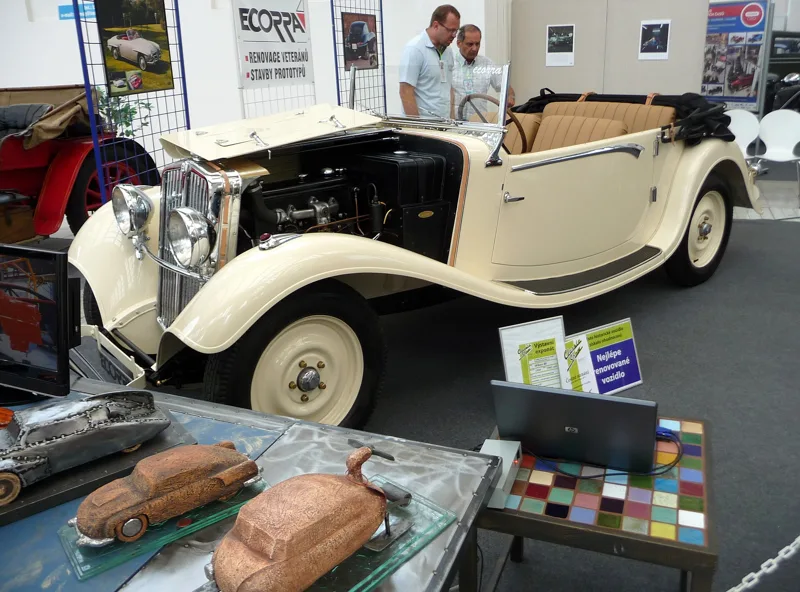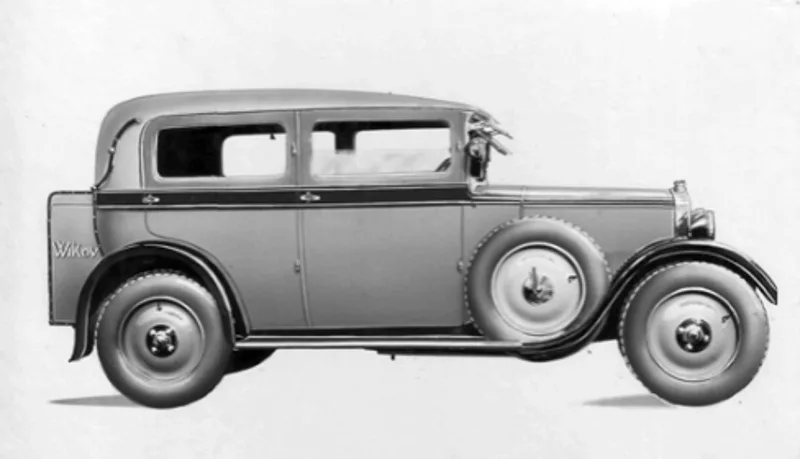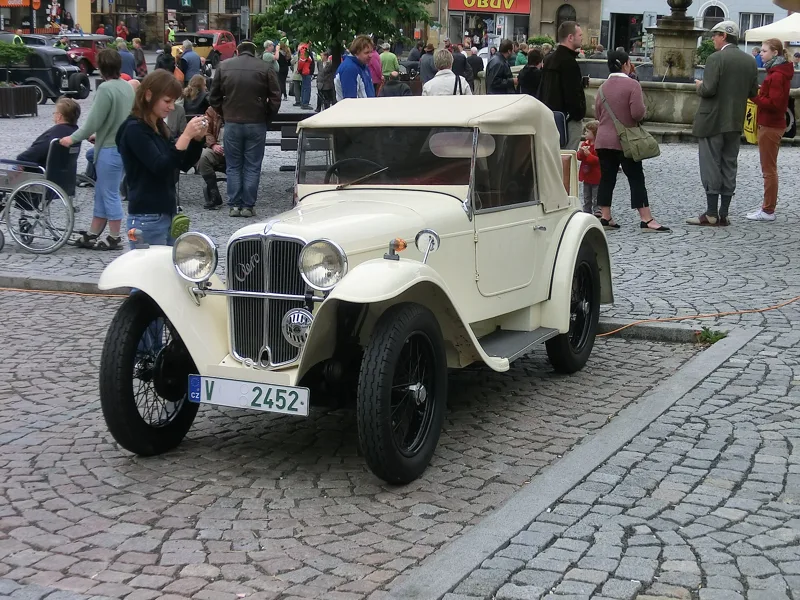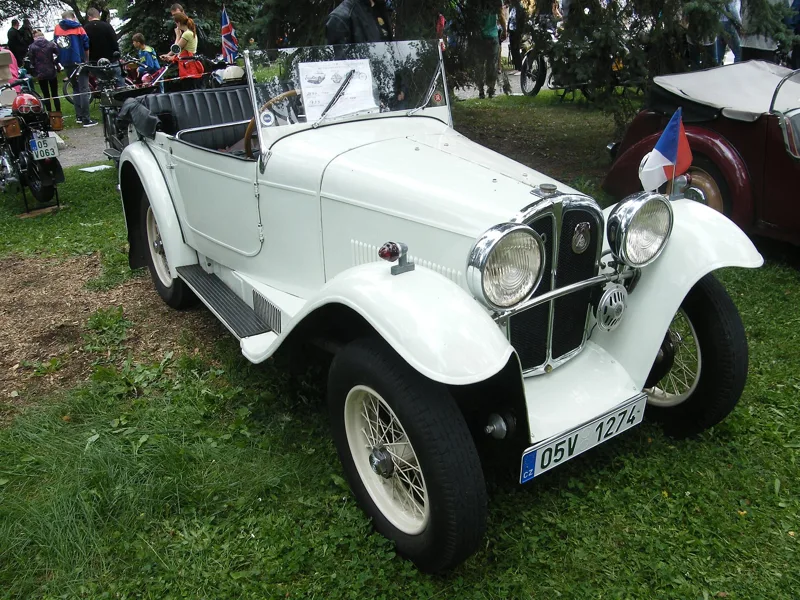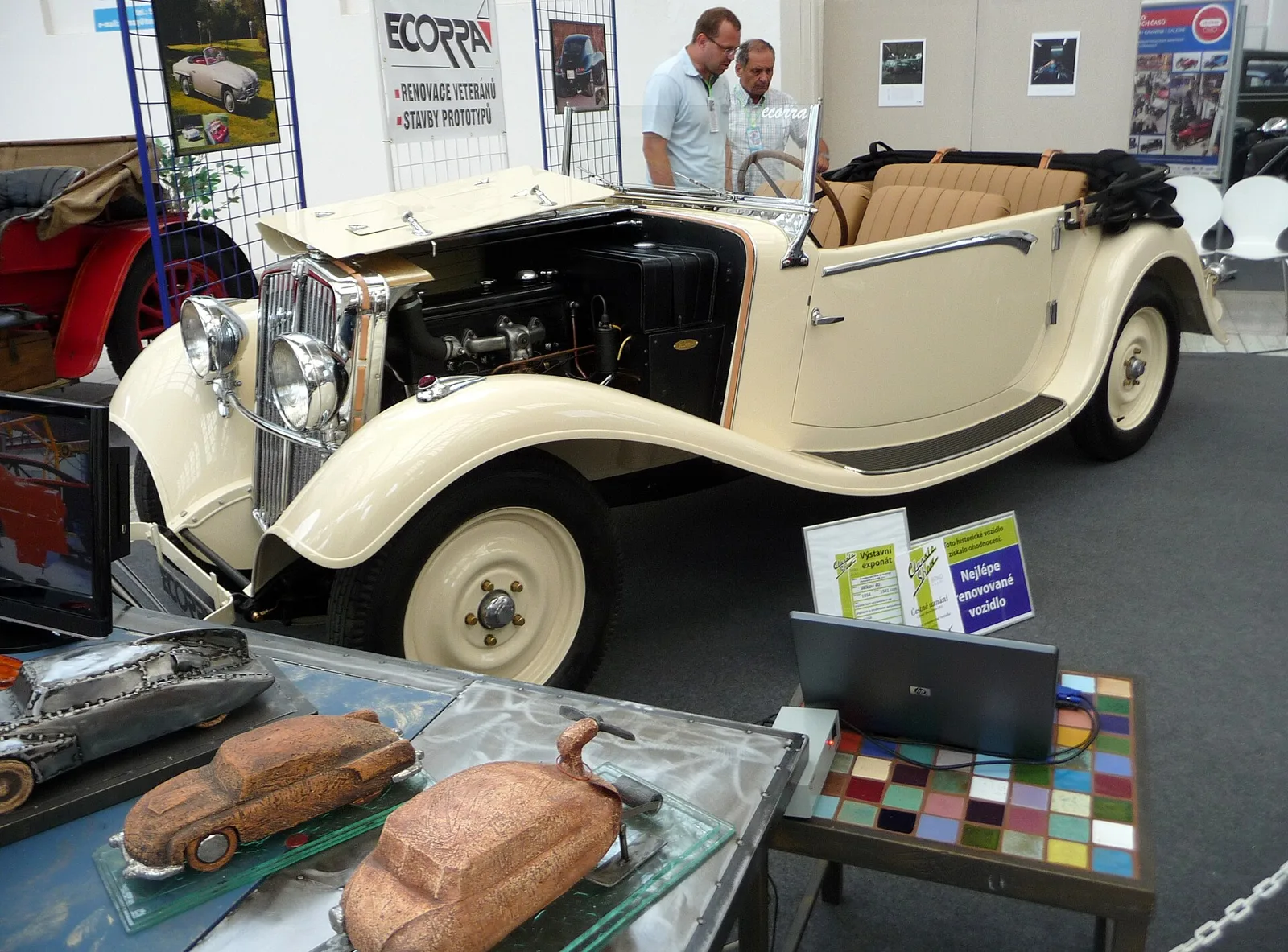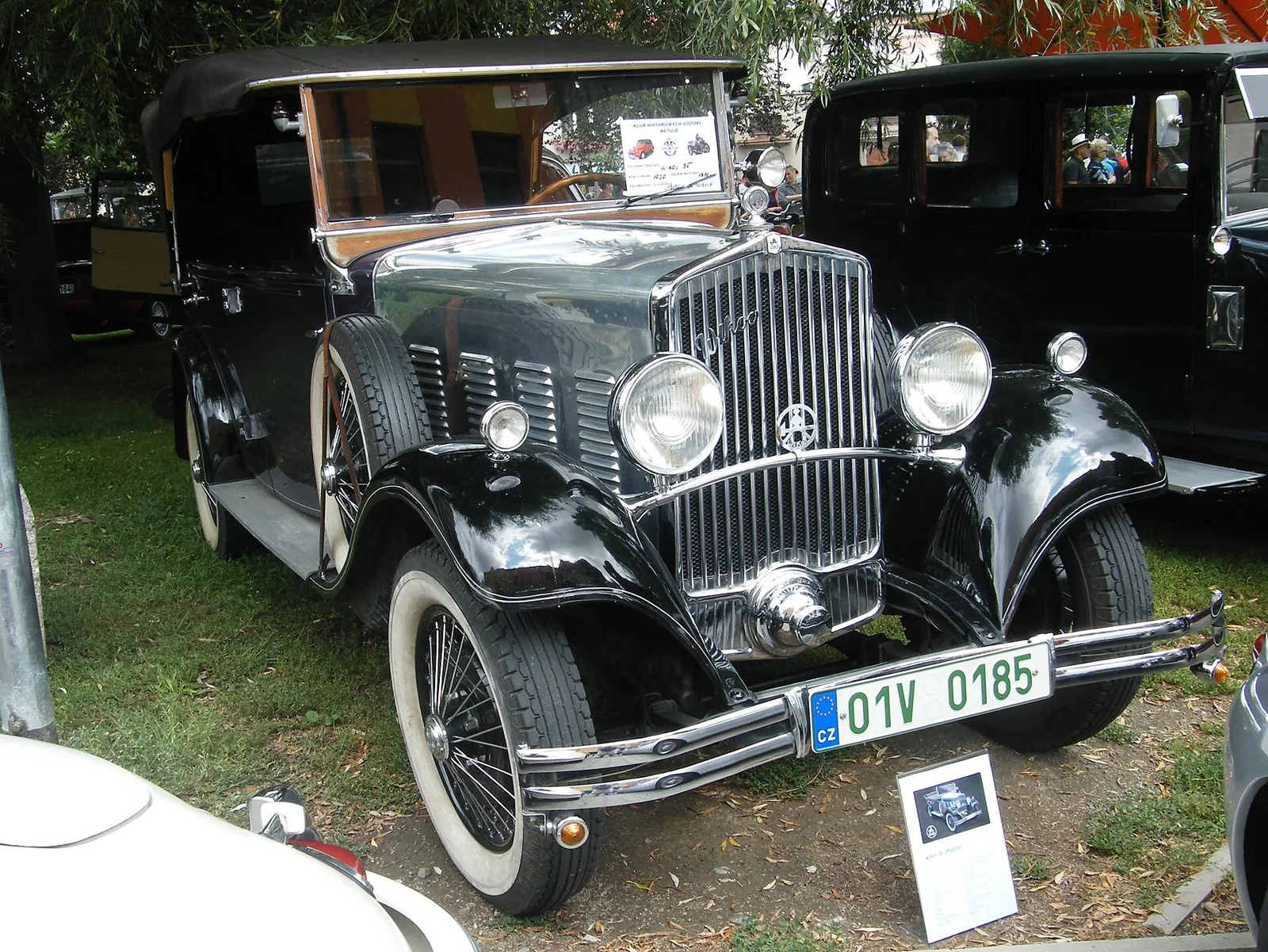
A Czechoslovak four-cylinder from 1930 to 1934, and the aerodynamic Kapka, in a model that won elegance prizes and rally awards in its home market.
The Wikov 35 was a 1930s car from the Czechoslovak firm Wikov, made from 1930 to 1934 in several chassis and body variants. A 1,743 cc four-cylinder gave 27.2 kW (35 PS; 36.5 hp), and the streamlined Kapka version was the first aerodynamic car made in the country.
The Wikov 35 was a Czechoslovak car built by the Wikov works from 1930 to 1934, and its name comes from its 35 PS rating. It was the company's second car of its own design. The range included the streamlined Kapka, which was the first Czechoslovak aerodynamic car.
Where did the Wikov 35 come from?
The Wikov 35 grew out of the earlier Wikov 7/28 and was shown at the Prague show in October 1930. The Wichterle and Kovarik company, a maker of farm machinery, tractors and locomotives, built it in several chassis and body variants until 1934.
The company was run by Frantisek Kovarik, son of Josef Kovarik, and Eugen Wichterle, son of Lambert Wichterle. Ing. Boleslav Hanzelka (1890-1961) led the designers, who closely followed developments in the world. The firm sorted its buyers into three groups: people who really understood cars, people who could afford them, and people who wanted a perfect car.
The new model appeared at the XXII. International Motor Car Exhibition in Prague in October 1930, alongside the luxury Wikov 70 with an eight-cylinder engine. Lockheed hydraulic brakes were among the modern touches that the Wikov 35 brought to market, together with an aluminium engine block.
A 35 PS four-cylinder from Moravia, with a streamlined Kapka that won its share of prizes.
How powerful was the Wikov 35 engine?
The engine was a 1,743 cc (106.4 cu in) liquid-cooled four-cylinder with overhead camshaft valve gear. It produced 27.2 kW (35 PS; 36.5 hp) at 2,800 rpm and 114 Nm (84.1 lb ft) of torque at 1,600 rpm. The compression ratio was 5.2, and commentators noted that it pulled well at high and very low revs alike.
The cylinders were lined with hardened steel that had been finely ground, so the engines combined solid output with long life. The combustion chamber had a shape protected by a Wikov patent, and a triple-row roller chain drove the camshaft, which ran in three bearings and was balanced both statically and dynamically.
Metals were chosen with care. The block and crankcase cover were cast in silumin, an aluminium and silicon alloy, and the pistons were cast in electron, an alloy of 90% magnesium and 10% aluminium. The connecting rods were drop-forged from duralumin, and the cast-iron cylinder head was the only part made of heavier material.
Fuel use was 9-11 l/100 km (21.4-26.1 mpg-US; 25.7-31.4 mpg-imp) in the lighter variants, and 10-12 l/100 km (19.6-23.5 mpg-US; 23.5-28.2 mpg-imp) in the saloons. Oil use ran at 0.17-0.2 kg/100 km, and the 40 l (10.6 US gal) tank sat at the front under the bonnet, feeding the carburettor by gravity.
The electrics ran at 12 V, using two 6 V batteries. The kit included a dynamo, a starter, a 60 Ah battery, a Bosch distributor and coil, and lighting. The dynamo sat on the side of the engine, and its shaft also drove the water pump and an air compressor for inflating tyres.
What did the chassis and body look like?
The chassis used rigid axles, leaf springs and Lockheed drum brakes on all four wheels, with worm-gear steering on the left. The short wheelbase was 2,800 mm (110.2 in), with a long version at 3,000 mm (118.1 in), and the track was 1,280 mm (50.4 in) front and rear.
The bodies sat on a wooden frame covered in thin sheet metal, with a fixed wooden roof. Cars from 1930 had squarer lines, but from 1931 Wikov moved to rounder shapes. The radiator later took a chromed mask with vertical bars, and the spare wheels sat on the sides of the car in recesses in the front wings.
Weight depended on the body. The open car weighed 1,100 kg (2,425 lb) and the closed car 1,320 kg (2,910 lb), while the chassis alone weighed 750-850 kg (1,654-1,874 lb). Steering had no power assistance, and a flexible coupling in the steering shaft kept shocks from reaching the wheel.
The handbrake first worked on the propeller shaft behind the gearbox as a band brake. Later cars used the standard arrangement, acting on the rear wheels. Wire wheels from Rudge-Whitworth were an option on some cars, with Michelin Confort tyres in size 14 x 45.
The front axle was drop-forged to an I-section from chrome-nickel steel, while the rear axle, of the banjo type, was pressed from sheet metal. Its differential used bevel gearing, and the chassis itself was pressed from steel sheet on a rectangular frame.
Unlike the Wikov 7/28, these cars already had left-hand steering. In 1932 nearly all of Europe drove on the right, apart from Hungary and England, and a draft road code requiring drivers to keep right was being debated in the Czechoslovak parliament. That law only came into force in the turbulent March days of 1939, and the company was not to blame for the delay.
What was the Wikov 35 Kapka?
The Kapka was a streamlined four-seat, two-door saloon on the Wikov 35 chassis, shown at the Prague show in autumn 1931. It was the first Czechoslovak aerodynamic car. Probably only 3 were built, and its top speed rose by 10 km/h to 110 km/h (68 mph).
The body had a drop-shaped outline, a sloping nose and a divided front window. The wheels were hidden in gondola-shaped wings, with the headlamps sunk into them, and a keel-shaped fin rose at the tail. The luggage boot, which held both spare wheels, was reached from inside the car by folding the rear seat backs.
Weight was a problem. The Kapka weighed 1,200 kg (2,646 lb), 100 kg (220 lb) more than the standard car, and its underside was not shaped for airflow. The probable reasons for its limited success were its unusual looks and a small gain in speed, while fuel use hardly fell.
Some Wikov 35s carried aerodynamic bodies from the Lepil coachworks in Rousinov, which kept the standard look with a sloping, flowing rear. The Kapka itself was nicknamed Krasin, after the Soviet icebreaker, and Capuchin.
A new body was built on original chassis no. 606 in 2015, using the original plans, photographs and materials. The car now appears at veteran events, and the Wikov 35 Kapka is permanently displayed in the Veteran Arena in Olomouc.
How well did the Wikov 35 sell?
Wikov sold 81 passenger cars in 1932, which placed it last among Czechoslovak passenger car makers that year. Tatra, Praga, Skoda, Aero, Zetka and Walter all sold more. Sales did not improve in the following years, and production of the model ended in 1934.
Tatra sold 3,045 passenger cars that year, Praga 2,531, Skoda 1,709, Aero 1,285, Zetka 350 and Walter 217. Wikov's total of 112 vehicles included lorries and buses, and in 1934, when the model's production ended, it sold 58 cars.
Prices in the early 1930s started at 53,000 Kc for the open four-seat tourer. A two-seat roadster with an emergency seat cost 54,000 Kc, a four-door limousine 64,000 Kc and a four-seat coach 65,000 Kc. The six-seat luxury limousine with a sloping front windscreen cost 70,000 Kc, and the Kapka was offered in March 1933 at 75,000 Kc.
Which trials and rallies did the Wikov 35 win?
Wikov 35s took elegance prizes and rally wins between 1930 and 1932. Adolf Szczyzycki won the first High Tatras rally in 1930 and repeated the win in June 1931. Six entered Wikovs took five first prizes and a second at the Luhacovice elegance contest in August 1932.
The Automobile Days at Luhacovice, held on 13 and 14 August 1932, drew good weather and a large crowd. Frantisek Wichterle, a landowner from Slavicin, entered a two-door Wikov 35 with an aerodynamic rear, called the Helmet, and won first prize and the golden ribbon. Eugen Wichterle placed first in the car skill contest, tied with Karel Divisek on a Z 9, and the final was watched by 5,000 spectators.
The 1930 rally covered 8,687 km (5,398 miles) officially in 14 days through nine European states, and detours took the actual distance to almost 10,000 km (6,214 miles). Szczyzycki had five tyre punctures on that trip. In 1931 he crossed Czechoslovakia six times in 17 days, covering 12,737 km (7,915 miles), and he suffered 34 punctures.
The prizes included the travelling first prize, which he kept after the second win, along with a Slovak Motor Club award, a Lidove noviny prize and a silver Bosch cup for the best performance with Bosch lighting. In the Luhacovice elegance contest the Kapka itself took first prize for its original design and rare comfort.
In mid-April 1932 Szczyzycki drove a Kapka through a two-day, 793 km (493 miles) reliability trial organised by CAMS. All six Wikovs, in two three-man teams, finished without penalty points, winning two team prizes and six plaques for the drivers.
The 1,000 Czechoslovak miles race in June 1933 went less well. Both Kapkas used a 1,960 cc (119.6 cu in) engine from the Wikov 40 type, and neither finished. Konecnik retired after 1,290 km (802 miles), before Hodonin, and Szczyzycki stopped in the fourth stage, before Brno, after 1,361 km (846 miles) of the 1,600 km (994 miles) route.
In May 1932 the Slovak Eight, a two-day event of 1,015 km (631 miles) entered by 49 crews of cars and motorcycles, ended with 21 cars reaching the finish. Jaroslav Konecnik earned a gilded plaque for a Wikov 35 in the class up to 2 l.
Are any Wikov 35 cars still around?
Only 6 Wikov 35s are said to survive, and five of them are in Olomouc, where the Veteran Arena holds the largest collection. One six-seat saloon from 1931, with its original interior, was put up for auction at the Prague Car Festival 2022, opening at 1.8 million Kc.
The auctioned car had repairs to its mechanical parts, especially the engine and chassis, followed by work on the paint. It kept its original interior and its wooden body framing.
Was there a commercial version of the Wikov 35?
Wikov built commercial versions as well. In 1931 it showed quick delivery vans carrying 800-1,000 kg (1,764-2,205 lb) on a Wikov 35 chassis adjusted for the job, and a later lorry with a 1.5-2 tonne payload used a modified chassis. Lorries and buses were counted in its 1932 total of 112 vehicles.
Beyond the frame, the lorry had a rear axle sized to suit its load. Its final drive used double reduction, the gearbox had four speeds, and the hydraulic brake shoes adjusted themselves automatically.
Wikov 35 specifications
| Specification | Detail |
|---|---|
| Built | 1930 to 1934 |
| Engine | 1,743 cc (106.4 cu in) four-cylinder, OHC |
| Output | 27.2 kW (35 PS; 36.5 hp) at 2,800 rpm |
| Torque | 114 Nm (84.1 lb ft) at 1,600 rpm |
| Compression ratio | 5.2 |
| Bore and stroke | 72 mm and 107 mm |
| Fuel use | 9-11 l/100 km (21.4-26.1 mpg-US; 25.7-31.4 mpg-imp), lighter variants |
| Wheelbase | 2,800 mm (110.2 in) short; 3,000 mm (118.1 in) long |
| Track | 1,280 mm (50.4 in), front and rear |
| Chassis weight | 750-850 kg (1,654-1,874 lb) |
| Top speed | 95-100 km/h (59-62 mph); Kapka 110 km/h (68 mph) |