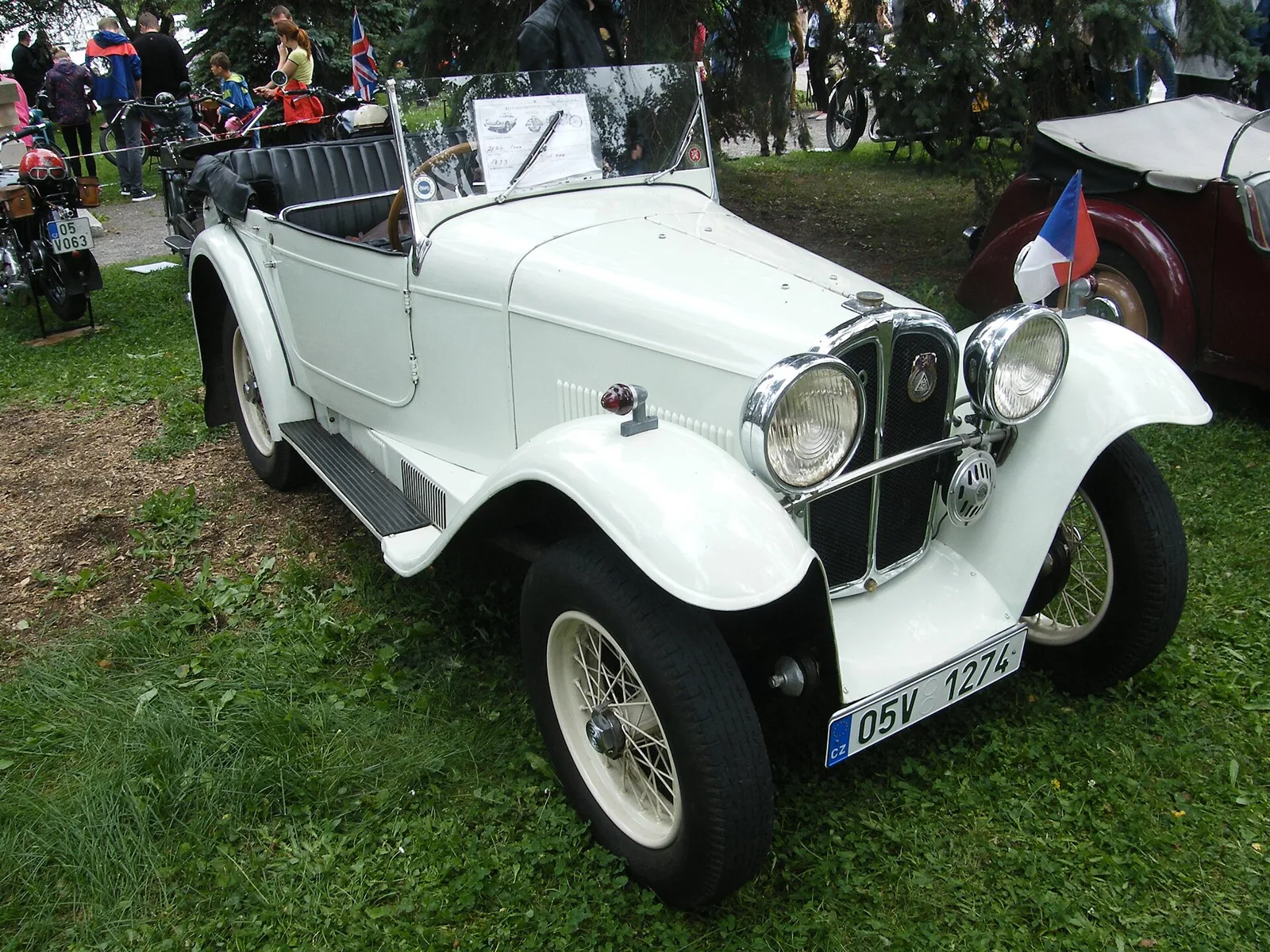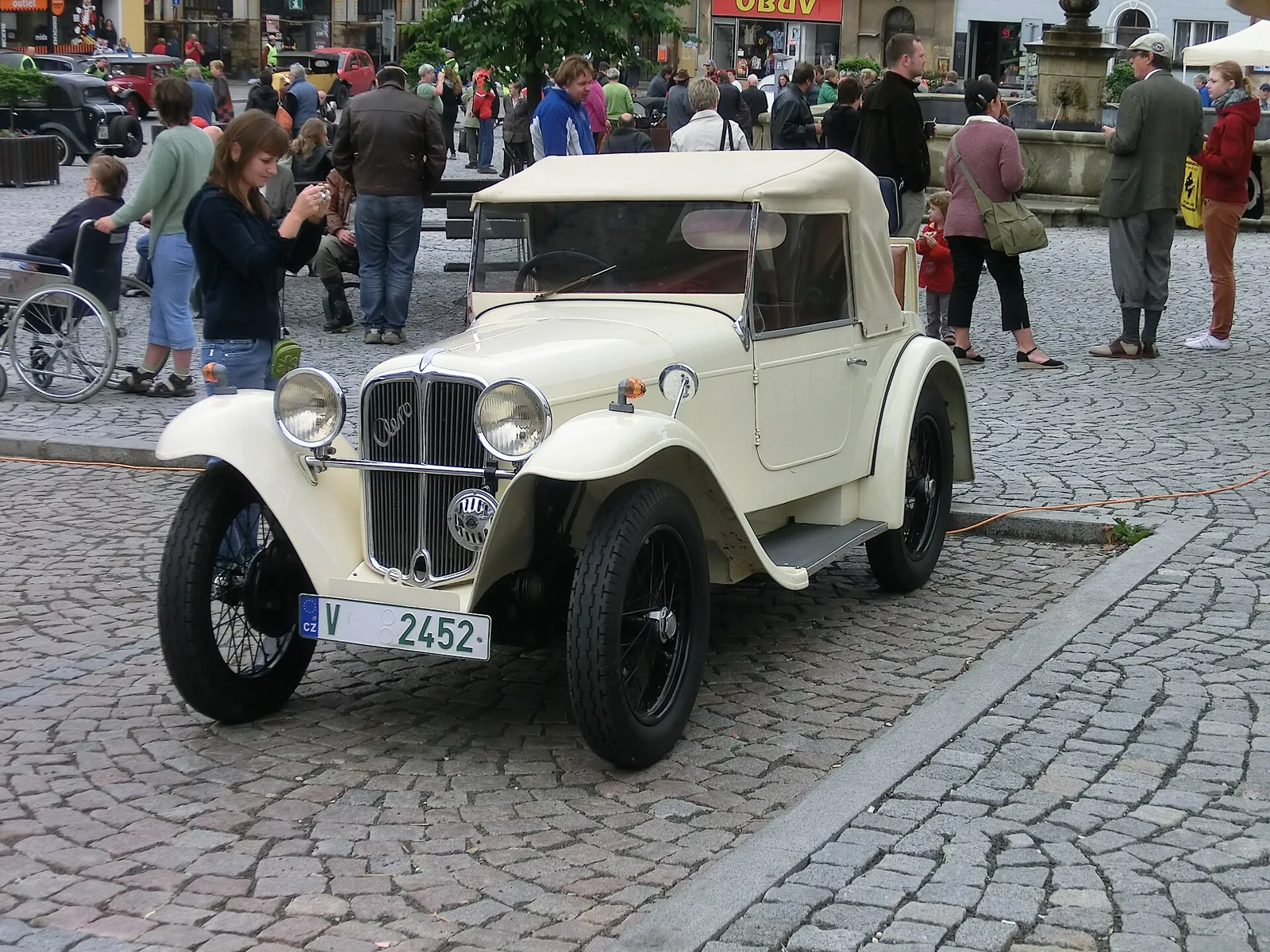
A two-stroke twin from the Aero factory in Prague, with 2,615 cars built and a run of endurance and reliability results from 1931 to 1933.
The Aero 662 was a small Czechoslovak car built by the Aero factory from 1930 to 1934. Its 662 cc two-stroke twin gave 18 hp, and 2,615 examples were built. Aero ranked fourth in 1932 and third in 1933 among Czechoslovak makers by cars built.
The Aero 662 was a stronger-engined step up from the tiny Aero 500, and it was made by the Aero factory in Prague. Its drivers took class wins in long-distance events across Europe, and by 1932 and 1933 the factory ranked among the largest car producers in Czechoslovakia.
How was the Aero 662 developed?
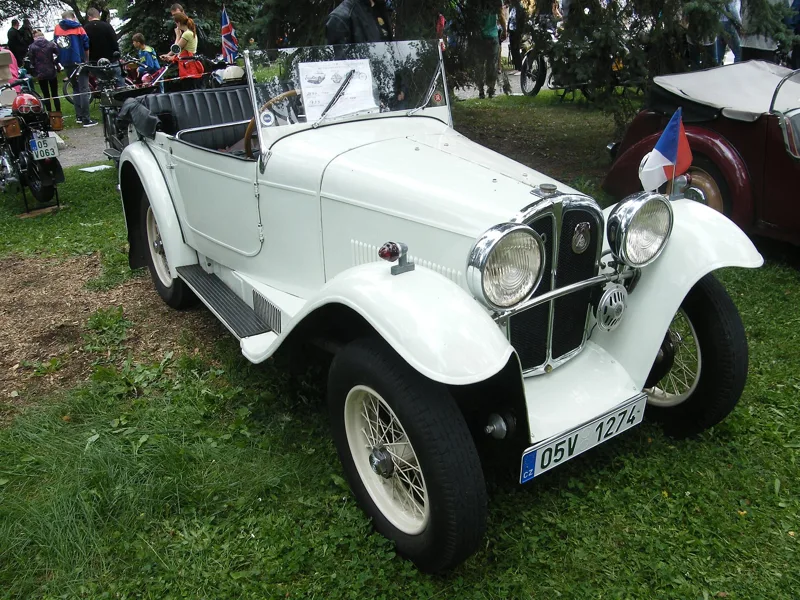
After the unexpected success of the small Aero 500, chief designer Bretislav Novotny and his sibling Hostivit, who was also a designer, received the job of developing a stronger engine. It went into an essentially unchanged Aero 500 body, which differed outwardly only in its larger headlamps.
The first cars were sold as the Aero 16 HP, and from 1933 as the Aero 18 HP. Series production began in 1931, when 500 cars were built. The first examples had a single door, and a second door on the driver's side was added from late 1931.
The Aero 1000 brought front brakes to the 662 in 1933. For 1934 the model was further modernised with a wider rear track, a longer wheelbase, and changes to length and width. The record is not consistent here: another account places the front brakes in the 1934 modernisation.
Like the Aero 500 before it, the 662 was nicknamed cililink after the noise of its hand starter, until an electric starter was fitted.
A small two-stroke twin from the factory that rose to third place in Czechoslovak car output by 1933.
Did Aero build its own parts?
Not largely. The factory ordered whole mechanical groups and individual parts from specialist firms, and the rear axle came from a Kosire firm, Josef Walter and Sons. At Aero the car was mainly assembled and bodied in house.
The clutch was a dry friction unit with one plate, and the gearbox was mechanical. The chassis was frameless, carrying a unitary all-steel body, with quarter-elliptic leaf springs at both ends. The rack-and-pinion steering had its wheel on the right, and the wheels were fitted to wire rims with a central nut.
What engine did the Aero 662 have?
The engine was a spark-ignition, liquid-cooled, in-line two-stroke twin of 662 cc (40.4 cu in), with a 75 mm bore and stroke. Output was 13.3 kW (18 PS; 18 hp) at 3,000 rpm, the compression was 5.2 to one, and the drive went to the rear wheels.
Petrol and oil were mixed at 40:1. The 18-litre tank fed the carburettor by gravity, and the water-cooling system used a thermosiphon with a 7-litre tank. Consumption ran at 6.5 to 7.5 L/100 km (43.5 to 37.7 mpg-imp), and the top speed was about 90 km/h (56 mph).
Starting was electric from a Bosch 6 V system, with a hand lever fitted originally. The battery was 6 V with 40 to 45 Ah, and the dynamo was rated at 70 W.
What did the Aero 750 variant do?
About 40 Aero 1000 chassis were given roadster bodies and a 750 cc engine in 1934, producing 16.2 kW (22 PS; 22 hp). The engine had been bored out from the Aero 662 unit, and the car, called the Aero 750, was used mainly for testing and racing.
How much did the Aero 662 cost?
The Aero 662 sold for between 21,100 Kc for the roadster and 23,700 Kc for the faux cabriolet. Some 2,615 cars were built in total, and about 300 survive today.
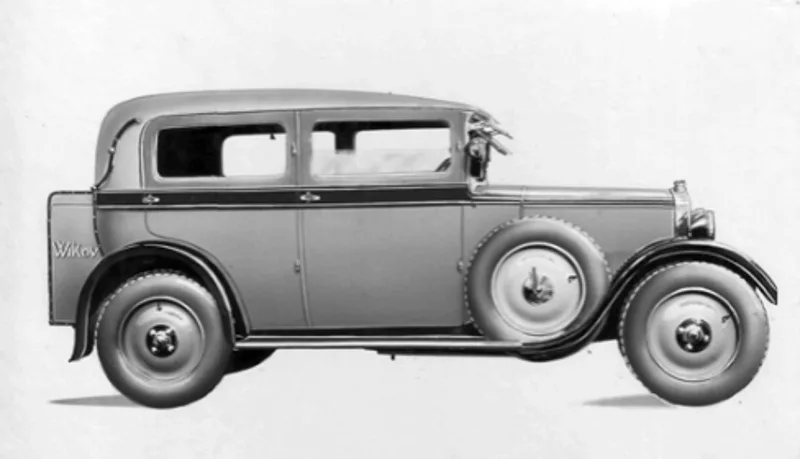
Bodies varied: the usual choice was an open two-seat roadster, with an emergency seat in the hinged tail, while a smaller number were built as four-seat faux cabriolets, two-seat coupes or closed four-seat limousines. Small tradesmen also received pick-ups and closed vans.
Survivors appear in historic vehicle collections, including the Znojmo Motor Museum, the Auto-Moto Museum in Nova Paka and the Terezin Automuseum, as well as at short exhibitions and veteran car competitions.
Aero 662 specifications
| Specification | Figure |
|---|---|
| Production years | 1930 to 1934 |
| Engine | Two-stroke, liquid-cooled in-line twin, 662 cc (40.4 cu in) |
| Bore and stroke | 75 mm and 75 mm |
| Power | 13.3 kW (18 PS; 18 hp) at 3,000 rpm |
| Compression ratio | 5.2 |
| Top speed | About 90 km/h (56 mph) |
| Fuel use | 6.5 to 7.5 L/100 km (43.5 to 37.7 mpg-imp) |
| Fuel tank | 18 litres |
| Tyres | 4.5 x 18 in on wire wheels |
| Cars built | 2,615 |
| Price | 21,100 to 23,700 Kc |
How was the 10,000 km run organised?
The German motor club, Automobilclub von Deutschland, organised the event with the national clubs of the countries along the route. The Automobile Club of the Czechoslovak Republic took part, and the 17-day run began and ended in Berlin, passing through Saarbrucken, Geneva and San Sebastian on the way.
Czechoslovak drivers entered Tatra, Praga, Aero and Walter cars. The event ended at the AVUS racing circuit in Berlin with a 100 km run.
How did the Aero 662 perform in competition?
Its first race started on 31 May 1931, when Vladimir Sorel won the touring-car class up to 750 cc at the Zbraslav-Jiloviste national race. Between 21 May and 7 June 1931, Bohumil Turek drove an Aero 662 in the 10,000 km reliability run across Europe and won class I, up to 2,000 cc.
That run lasted 17 days including rest days, covered 10,255 km in nine stages, and ran out of Germany across more than ten countries and home again. The longest stage ran 1,455 km from Barcelona to Rome. Out of 88 crews on the grid, 67 got to the end, and 60 cars had no penalty points.
The Katschberg pass, at 1,641 m above sea level, proved the critical point, where many powerful cars 'died'. Local residents helped by providing draught teams to pull cars over the summit, and the weakest cars, up to 1.0 litre, sometimes climbed in reverse.
The Slovak Eight, run on 15 and 16 May 1932, covered 1,015 km across two days. Turek's showing in the up-to-750 cc class earned him the top prize, a gilded plaque, and the Aero team of Turek, Wohanka and Stastny won the same award in the team competition. Of 49 starters, 40 finished, while nine retired with punctures and were excluded.
The Slovak Eight used intersecting routes from four starting towns, which formed a figure eight and made the event hard for the press to follow. Turek set off from Bratislava and reached Kosice after 503 km, and the next day he came back by a slightly changed 512 km route. The most spectacular fight pitted Manda's Red Devil, a Walter Super 6, against Turek's Red Imp in his Aero.
From 12 July to 11 August 1932 Turek drove an Aero 662 for 30 days, covering 30,000 km in daily stages of 1,000 km under the eye of a sporting commission. It was a promotional test for the new model. For his sporting results in 1932, Turek received the gold badge of the Czechoslovak national motoring club (ARCS).
In 1933 a planned AeroSpExOr expedition took three Aero 662 cars across Italy, Sicily and Libya, then through Tunisia, Algeria, Morocco and Spain. Over 42 days the route came to about 14,000 km, and it brought five men and one woman back to Prague. Frantisek Alexander Elstner later described the journey in his book South of Benghazi.
The 1000 Miles of Czechoslovakia started on Saturday 10 June 1933 in front of the Automobile Club building. Of 57 starters, 31 were classified. Seven of the nine small Aeros in the 750 cc class finished, and the fastest, crewed by Jiri Pohl and Frantisek Holoubek, averaged 72.4 km/h to take 18th overall. The class cars had been raised to the limit of their class, to 745 cc, and faced no rivals in the lowest class.
Pohl had bought a single-cylinder Aero 500 two years earlier, was surprised by its performance, and so bought the twin Aero 662 instead.
Pohl's crew came out ahead of Antonin Vitvar on a start-to-finish basis. The Aero Car Club of Prague won the works team competition and collected two state prizes, one from the Republic's President and one from the Commerce Ministry. Pohl later said the car had surpassed itself, and he called the 1000 Miles the finest race he had ever driven.