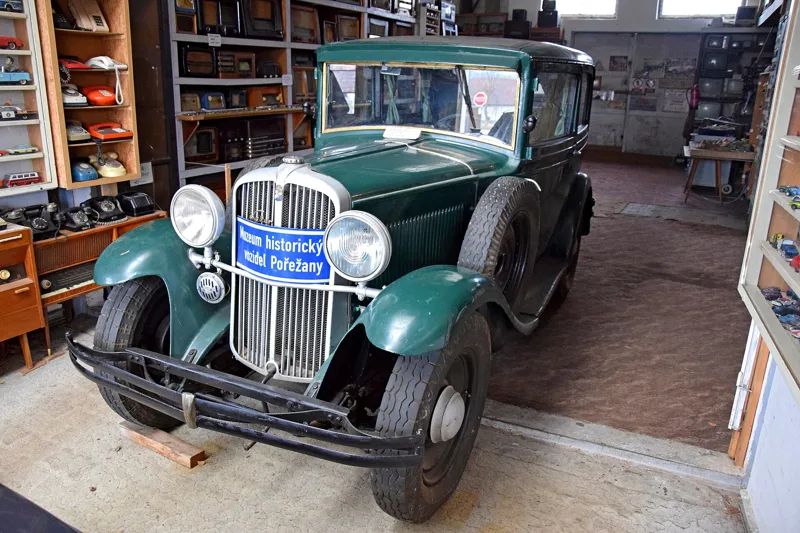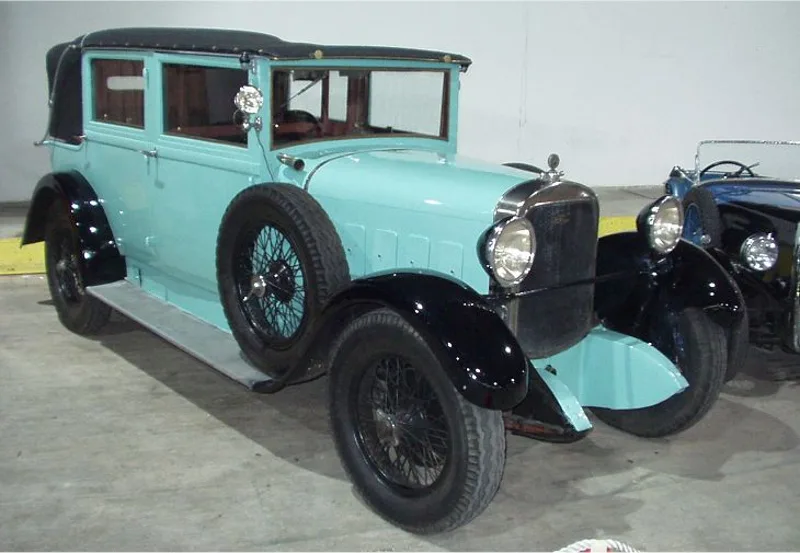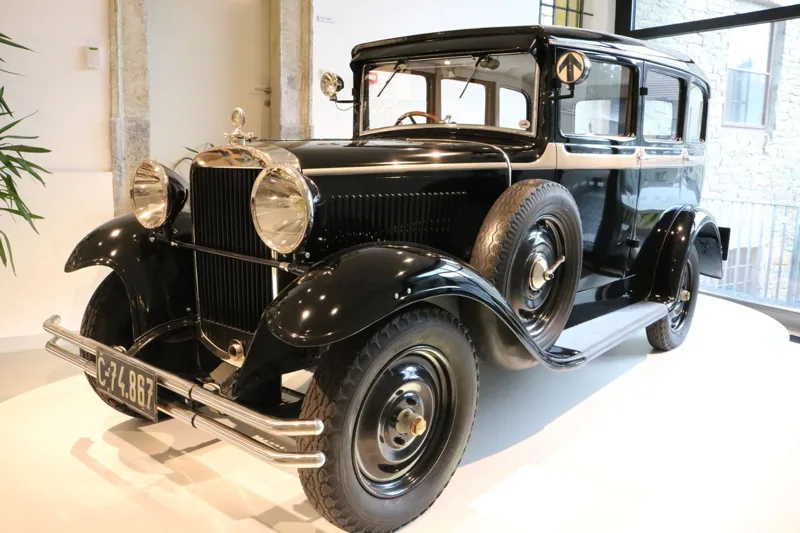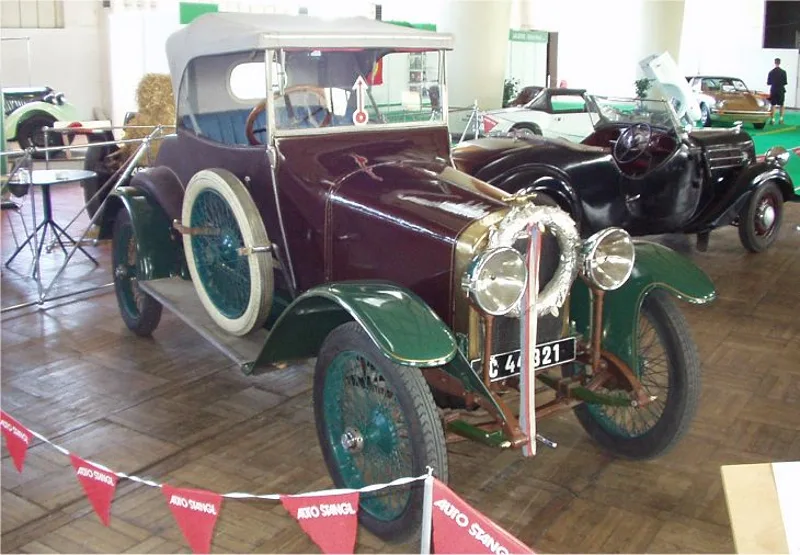
A 1930 Prague-built six-cylinder touring car with a 3,257 cc engine, elegance prizes and a 10,000 km run across Europe.
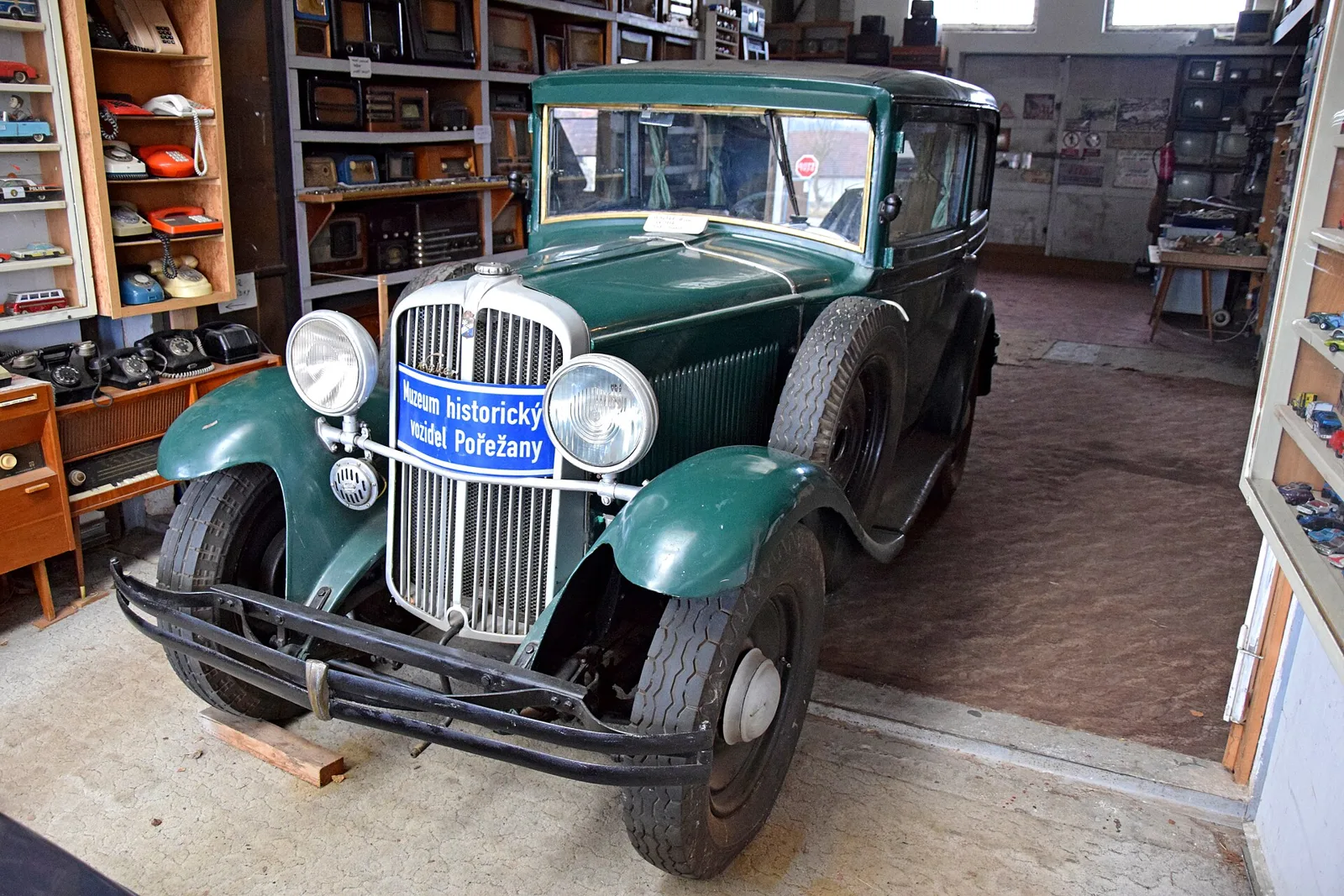
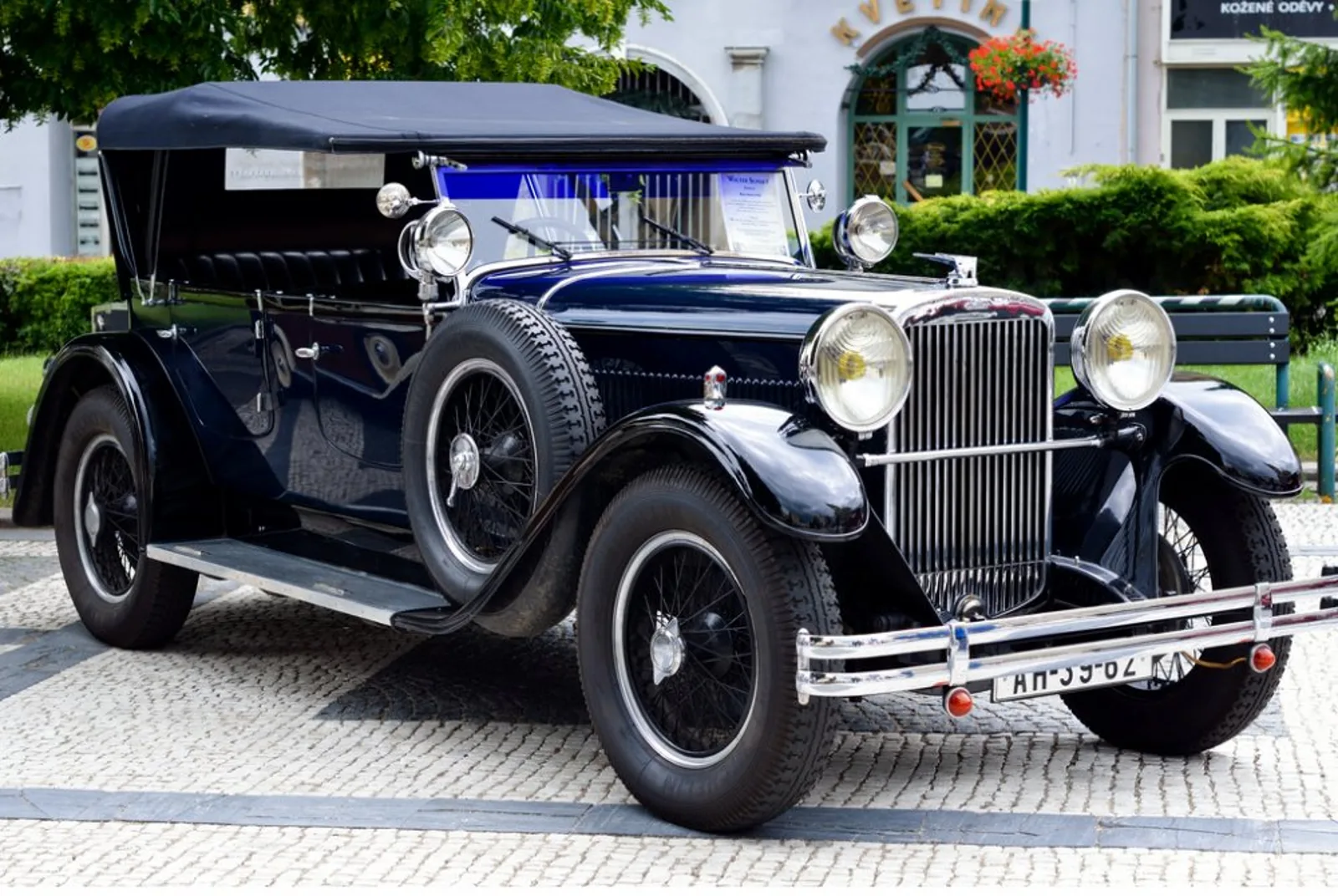
Built at Prague-Jinonice, the Walter Super 6 was a 1930 six-cylinder touring and representational car. With 3,257 cc and 70 PS, it came as a limousine, tourer or cabriolet, and only 30 cars were made in total.
The Walter Super 6 was a 1930 Czech luxury car built at the Jinonice factory in Prague. A team of three of its red-painted cars took the factory teams' prize on the 10,000 km AvD drive across Europe in 1931.
Where did the Walter Super 6 come from?
The Super 6 followed the six-cylinder Walter 6-B of 1928 to 1930. Walter unveiled it, with the Standard 6, at the 22nd international motor show in Prague, held from 22 to 29 October 1930. It was sold as a luxurious, openly representational car and was produced from 1930 to 1934.
The company had begun as a limited liability firm in 1911 and became a joint-stock company in 1919, with Josef Walter among its founders. Vitezslav Kumpera sr. was one of the partners in both steps and played a strong part in Josef Walter leaving the management in 1922. As chairman, he brought both of his sons onto the board in 1927.
Antonin 'Teny' Kumpera, a mechanical engineer, became general director after Jan Novak left for Skodovka. His brother Vitezslav, a lawyer, took the post of commercial director. By 1925 the share capital stood at 7,000,000 Kc, and by 1926 at 8,400,000 Kc. In January 1932 the company took the name Joint-stock company Walter, factory for automobiles and aero engines, with capital of 16,000,000 Kc.
A six-cylinder Walter that took elegance prizes and a 10,000 km test across Europe.
How did the Super 6 differ from the Walter 6-B?
The main change was the chassis. Walter lengthened, widened and lowered it, and the company's advertising promised a car that held the road in fast straights and tight corners alike, with steering as easy as sitting down behind the wheel. Every control, the steering wheel and pedals included, answered a light touch.
The brochure also claimed the car moved forward and backward with an unstoppable force, with no tremor or sound to show where that force began. The engine itself was a step up as well: the Super 6 kept the six-cylinder layout of the 6-B but enlarged its capacity, adding 421 cubics to reach 3,257 cc.
What did the engine deliver?
The 3,257 cc (198.8 cu in) six-cylinder produced 51.5 kW (70 PS; 69 hp) at 3,000 rpm, 10 PS (10 hp) more than the 6-B, with a compression ratio of 6.5:1. Closed cars were rated at 110 km/h (68 mph), while open tourers and cabriolets reached 125-130 km/h (78-81 mph) in 1930.
The engine was a spark-ignition, liquid-cooled four-stroke with OHV valve gear and two valves per cylinder, with no supercharging. Three silent blocks mounted it, and a vacuum pump supplied fuel to the twin Zenith HAK 30 carburettors. The fuel tank held 90 l, and ignition came from a Bosch magneto-electric system.
The crankshaft was balanced and mounted in four positions with a flywheel, and a torsional vibration damper smoothed the running. Lubrication was pressure-fed and circulating, through an oil filter. The water pump ran on a toothed belt, which was a notable novelty for the Jinonice cars.
The gearbox was a four-speed with reverse (4+R), shifted by a ball-jointed lever on the floor. Walter fitted a Maybach freewheel on request, and it also tested an overdrive as early as 1928. The overdrive, built under a Maybach licence, let the engine turn more slowly at speed, and the low fuel use on the 1931 drive was partly down to it.
Drivers found the Maybach freewheel very pleasant to use. In top gear the car climbed ordinary gradients easily and accelerated flexibly in town, and once it reached a straight road the overdrive lowered engine speed as the car gathered pace.
How was the chassis built?
The chassis was conventional, with both axles rigid and sprung on longitudinal leaf springs with bump stops. Steering was right-hand, a segment-type unit whose worm drive locks itself. The front axle was rigid, made from an I-section cross member, and drive went by cardan shaft to a rigid rear axle of the Banjo type with Gleason gearing.
A rectangular frame, braced across the middle, carried everything. The wheelbase was 3,300 mm (129.9 in) and the track was 1,400 mm at both ends. Overall the car measured 4,700-5,400 mm (185.0-212.6 in) long, 1,600 mm wide and 1,700-1,780 mm (66.9-70.1 in) high, with 210 mm of ground clearance and a weight of 1,650 kg (3,638 lb).
Seating ran from four to seven, depending on the body. The brakes were hydraulic Lockheed drums with a Bosch-Dewandre vacuum servo. The drums were heavily ribbed for air cooling, and the handbrake worked on the rear wheels. Tyres were usually Michelin 6.50/7.00-20.
What bodies could buyers order?
The 1930 display was made up of four saloons, a four-seat cabriolet and an open four-seat tourer. The six-seat limousine sold for 128,000 Kc and the chassis alone for 88,000 Kc. After prices were cut in 1932, the limousine fell to 99,800 Kc and the two-door cabriolet to 112,000 Kc.
The company described its bodies in plain terms. The tourer was for touring and sport, the five-seat two-door cabriolet with a detachable roof was for the most refined customers, and the six or seven-seat limousine suited city and comfortable travel. It had a partition behind the driver and a telephone for the rear passengers, which made it a representative car. The four-door club sedan was for sportsmen and businessmen.
Special bodies were also available from outside builders, among them Sodomka (Vysoke Myto), Peter (Vrchlabi), Uhlik (Prague), and Leitner or Brozik (Plzen). One limousine went to the Foreign Ministry, and the Czechoslovak ambassador in Belgrade used a Super 6. Two cars went to the army, one for the minister of defence and one for the chief of the general staff. In total, however, only 30 cars were built.
Did the Super 6 win elegance prizes?
The car was made for concours d'elegance. In May 1932 a contest was staged on the Brno fairground by the club for Moravia and Silesia, and a week later the Slovak club held one at Piestany. Walter cars won at both, taking the Golden Ribbon at Brno and a first prize with a gold band at Piestany.
Private owners also took prizes in Super 6 cars at the 1932 events, including Vokoun, Horak, Balcar, Dohnalek and Sedlacek, and most of them won the top awards. Walter's president and its general director won with a closed car and a special Walter, and the Kumpera brothers also took prizes with the Walter Royal limousine and cabriolet.
The car still turns up at period events. The elegance shows at the Roztoky and Loucen castles, the hill climbs at Zbraslav-Jiloviste and Brno-Sobesice, the 1000 Miles Czechoslovak runs and the Veteran events of Moravske Slovacko all draw Super 6 entries.
How did the 10,000 km AvD drive go?
From 21 May to 7 June 1931 a team of three red cars took part in a 10,000 km reliability run across Europe, organised by the German Automobilclub von Deutschland. The event covered 10,255 km in nine stages over 17 days, and the three Walters won the factory teams' competition. All three came home in excellent condition.
The crews were general director Antonin Kumpera with Jaroslav Manda, commercial director Vitezslav Kumpera with J. Traube, and Jindrich Knapp and Frantisek Nemota as the works pair. Their engines carried the numbers 5324, 5326 and 5328, and the expedition also brought a manager, two mechanics and the travel writer Vladislav Forejt-Alan.
The route ran from Germany through ten countries, taking in Geneva, Madrid, Lisbon, Barcelona and Rome, then Budapest and Vienna, before finishing in Berlin. The Katschberg climb, at 1,641 m above sea level, proved the critical point. The longest stage, from Barcelona to Rome, was 1,455 km.
The cars were in their final test on the AVUS circuit in Berlin, where they had to cover 100 km. Of the 88 starters, 67 crossed the line, and 60 of those had no penalty points. Fuel use averaged 14 litres per 100 km (20.2 mpg-imp; 16.8 mpg-US), and the oil used was 1 kg for every 1,250 km. The cars also won the class over 2000 cc.
The drive was not all smooth running. Knapp later recalled constantly patching punctured inner tubes, and a row with general director Kumpera over who would reach the factory first. Knapp was so put out that he wanted to quit, and it took the persuasion of two colleagues before the team continued to Berlin.
Jaroslav Manda, who rode with the general director in car no. 63, was the cheeriest passenger on the trip. Before the start his wife gave him a home-baked bun as a good-luck charm. He ate it as soon as the car left Prague, and only later learned that a consecrated medallion from Svata Hora had been baked into it. Manda went on to become a successful works driver for Walter.
A detailed statement of the trip's costs, prepared by manager Hart and approved by general director Antonin Kumpera, survives in the Walter archive. The suites went to the two Kumpera brothers and to the editor Alan Forejt, while the rest of the party shared multi-bed rooms.
Which other events did the Super 6 enter?
A Super 6 team took part in the second Louny Rose Run, a 439 km reliability event held on 14 June 1931 and driven four times round a circuit through 19 towns. It was a true speed race, with 80 competitors registered and 65 starting. The Walter team collected gilded plaques. A year later only Leo Sabat entered, and he finished successfully in a Super 6.
The 1931 Alpine Cup, a six-stage route from Munich to Bern, was less kind. In Stage IV, from Turin to Nice over the Ligurian Alps, one Super 6 crashed on a hairpin bend after avoiding a car that was reversing round the corner. The factory then withdrew the two remaining cars, which left the team unclassified.
On the home front, Super 6 cars also appeared in the South Bohemian endurance event, the Across Sumava competition of 1932 and the two-day Slovak Eight of 15-16 May 1932. In the Slovak Eight Jaroslav Manda won the class over 2000 cc, and on 12 June 1932 he finished second overall at the Ostrava circuit, winning the class for cars above 1.5 litres.
On its competition record, the Super 6 can be called the most successful touring car in the history of the Jinonice factory.
Key specifications
| Specification | Detail |
|---|---|
| Launch | 1930, Prague International Motor Show, with the Standard 6 |
| Engine | 3,257 cc (198.8 cu in) six-cylinder, OHV, two valves per cylinder |
| Length | 4,700-5,400 mm (185.0-212.6 in) |
| Output | 51.5 kW (70 PS; 69 hp) at 3,000 rpm |
| Width | 1,600 mm (63.0 in) |
| Compression ratio | 6.5:1 |
| Height | 1,700-1,780 mm (66.9-70.1 in) |
| Top speed | 110 km/h (68 mph) closed; 125-130 km/h (78-81 mph) tourers and cabriolets |
| Wheelbase | 3,300 mm (129.9 in) |
| Fuel use | 16 l/100 km (17.7 mpg-imp; 14.7 mpg-US) |
| Kerb weight | 1,650 kg (3,638 lb) |
| Prices | Chassis 88,000 Kc; six-seat limousine 128,000 Kc |
| Production | 1930 to 1934; 30 cars in total |