A 1928 Czech four-cylinder from the Walter factory, its enlarged 1929 engine, its body styles and its results in national contests.
The Walter 4B was a 1928 to 1930 Czech passenger car from the Walter factory. It used a 1,664 cc four-cylinder, later enlarged to 1,908 cc, and came in bodies from roadster to saloon. Its designer, Ing. F. A. Barvitius, gave the B in its name.
The Walter 4B was a passenger car from the Walter factory at Prague-Jinonice, built between 1928 and 1930. It started life with a 1,664 cc four-cylinder that was later bored out to 1,908 cc, and its designs carried the letter B for the engineer who drew them. Its story is a useful window on the Walter factory's car programme in the late 1920s and early 1930s.
Who made the Walter 4B and why does the B matter?
Walter was a Czech maker of passenger cars, and the company was a joint-stock firm for motor cars and aero engines, Josef Walter and Co. The letter B in the designation stands for Ing. F. A. Barvitius, who designed the 4B and 6B. A street in the Waltrovka residential complex was named after him.
The factory's reputation came partly from its aero-engine work. Its tradition of building cars reached back to earlier days, and the makers saw the combination as a guarantee of a good product.
In 1928 the company dropped its older unified range, the WZ, and its continuation, the P range, which had been in production since 1919 and 1924. In their place came a new family of four-cylinder (4B) and six-cylinder (6B) cars, first shown at the 20th International Motor Show in Prague.
A 1928 Czech four-cylinder from a factory with an aero-engine heritage, sold as a roadster, coach or saloon.
How powerful was the original 4B engine?
The 1928 car, first shown as the Walter Four 6/30 HP, had a 1,664 cc (101.6 cu in) four-cylinder with a detachable head, rated at 22.4 kW (30 PS; 29.6 hp). Its bore was 70 mm and its stroke 108 mm. The engine was a liquid-cooled, four-stroke spark-ignition unit.
When the car was presented, the factory stressed that the chassis on show came directly from the six-cylinder type. The engine followed the same design as the six, with only two cylinders fewer. That gave the car a fairly low road tax compared with the 6B, a point the factory was happy to make when the car was presented.
What changed when the engine was enlarged in 1929?
The 1929 revision, sold as the HP 8/35, raised capacity to 1,908 cc through a bore of 75 mm, with the stroke unchanged at 108 mm. Output rose to 25.7 kW (35 PS; 34.5 hp) at 2,500 rpm, and the car reached 100 km/h (62 mph) against the 90-95 km/h (56-59 mph) of the 1928 version.
The engine block was aluminium alloy and formed one unit with the gearbox, which gave the chassis a smooth structure. Nelson-Bohnalite alloy pistons were used to resist the rapid wear that aluminium pistons tended to suffer, and the crankshaft ran in three bearings.
Ignition, cooling and transmission
A Zenith HAK 30 carburettor was fitted on the left, with the dynamo on the right. Scintilla, a Swiss company, supplied the Vertex magneto dynamo. Circulating lubrication used a gear-type pump, already supplemented by an oil cleaner.
Thermosiphon cooling was helped by a honeycomb radiator and a fan, and adjustable shutters in the front grille strengthened the cooling. A single-plate dry clutch drove a four-speed gearbox with reverse, and the gear lever sat on the gearbox cover in the middle of the cabin. The steering was on the right side and was a self-locking worm type.
How was the Walter 4B chassis built?
The engine sat at the front and drove the rear wheels. Both axles were rigid pressed-steel units, the front of I-section and the rear of the banjo type. Both were sprung on longitudinal half-elliptic leaf springs with swinging shackles, and shock absorbers were fitted as well.
Poulet hydraulic drum brakes sat on the front wheels, while the rear wheels used expanding hydraulic brakes. A mechanical handbrake worked on the rear wheels. From 1929 a Dewandre servo worked through a Lockheed pressure distribution system, which spread the braking evenly across all four wheels.
The track measured 1,380 mm (54.3 in) and the wheelbase 2,800 mm (110.2 in), with Bibendum tyres in the sizes 757x145 or 876x171 mm. The chassis weighed 900 kg (1,984 lb). The fuel tank held 60-65 litres, and the frame was rectangular, made of U-section members.
The rest of the running gear followed the six-cylinder chassis. The gearbox, rear axle, suspension, radiator and brakes were of similar design, scaled down to suit the smaller car. The car was distinguished by its low frame and wide track. With an open five-seat body it weighed 1,150 kg (2,535 lb), and the number of seats ran from four to six depending on the body type.
What body styles did the 4B come in?
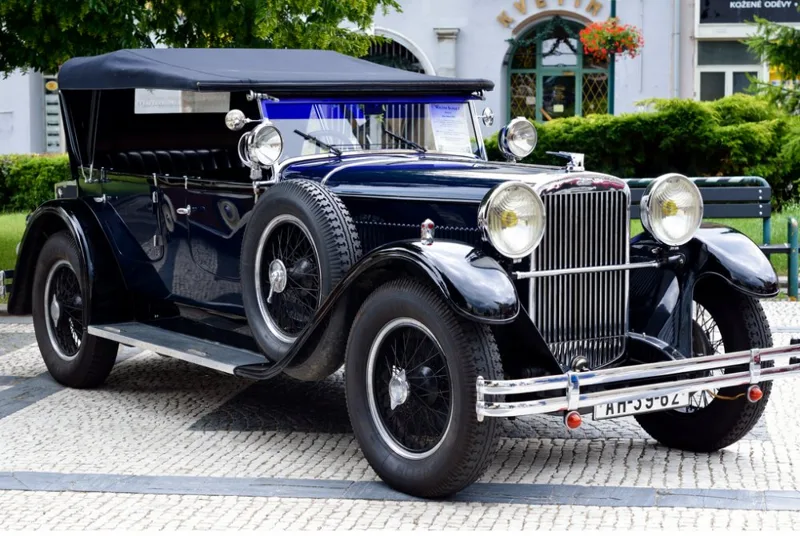
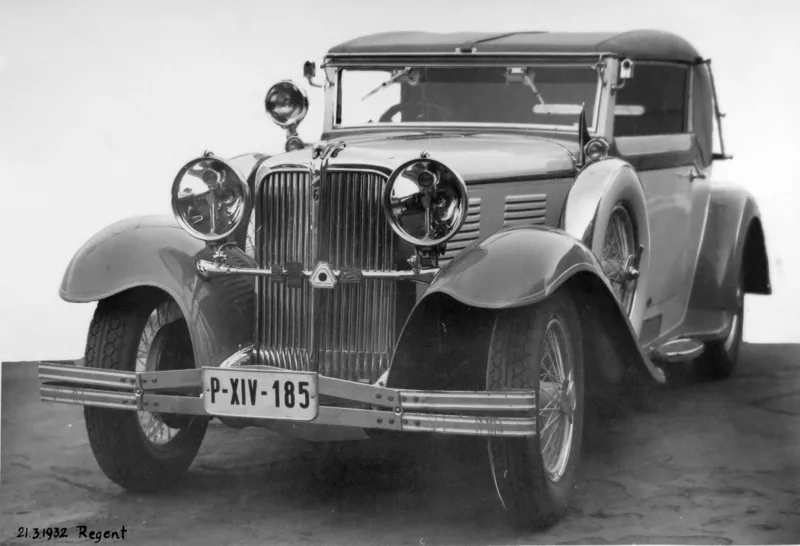
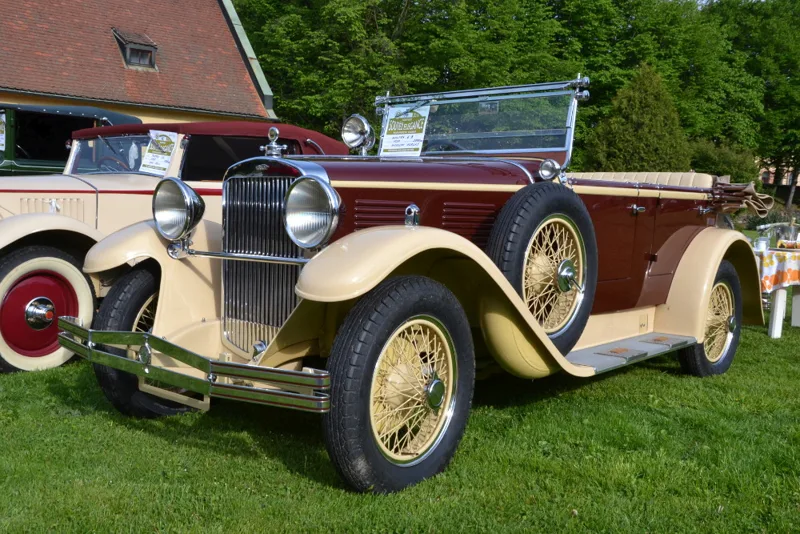
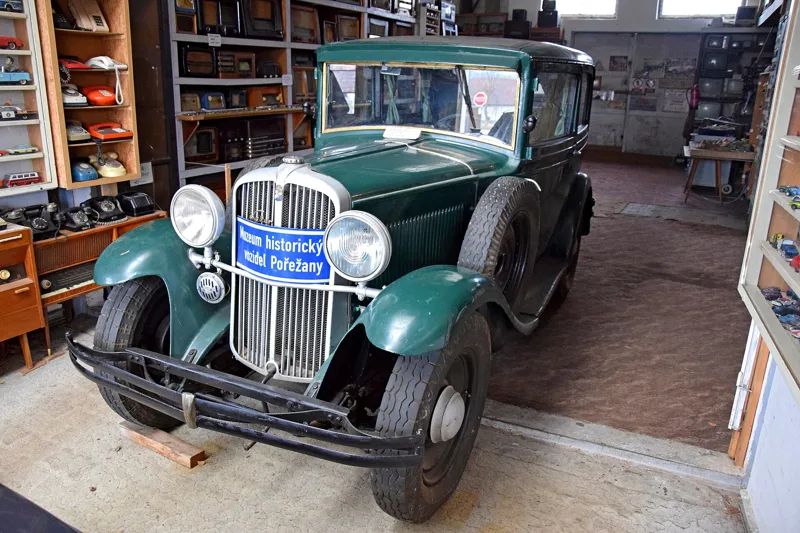
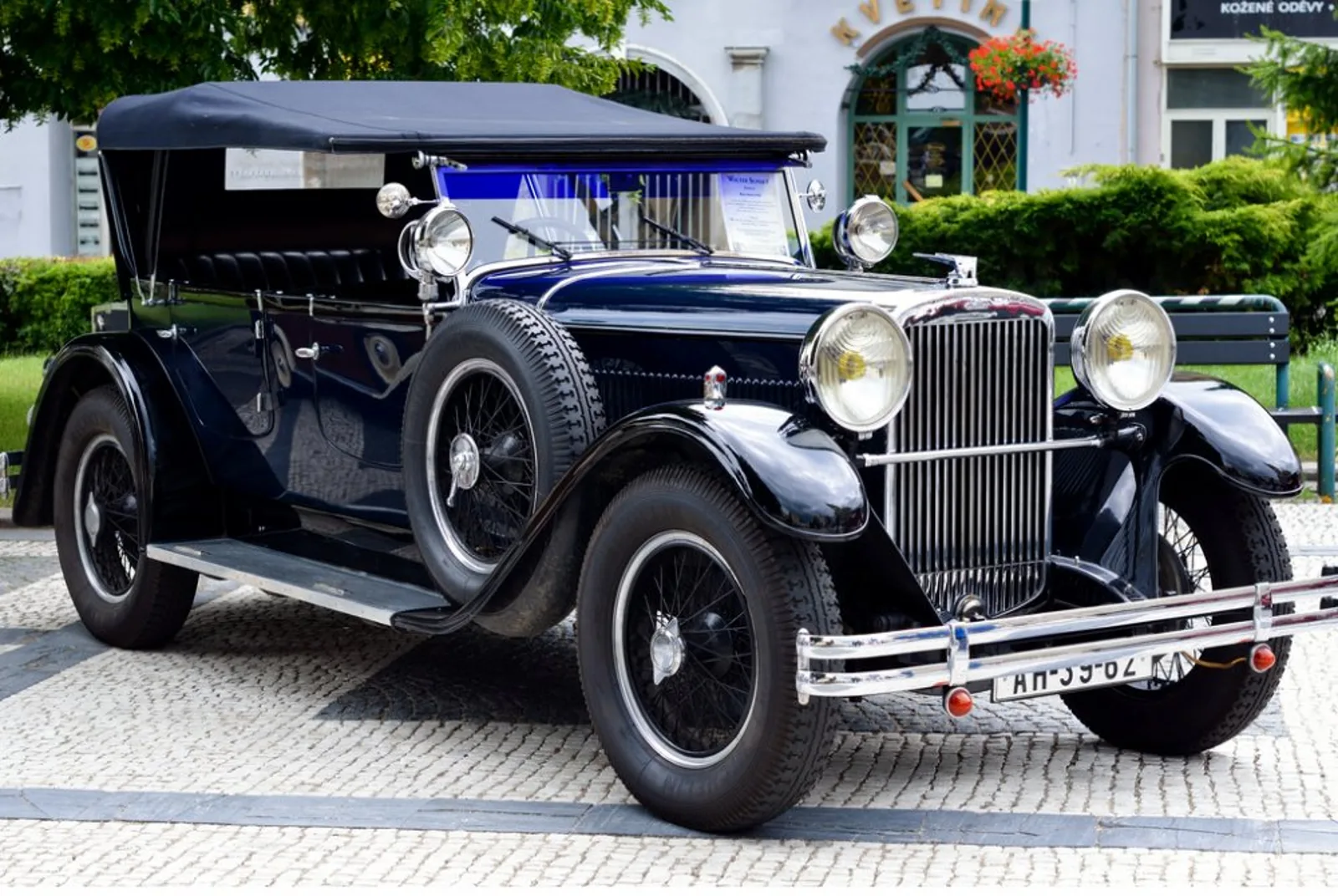
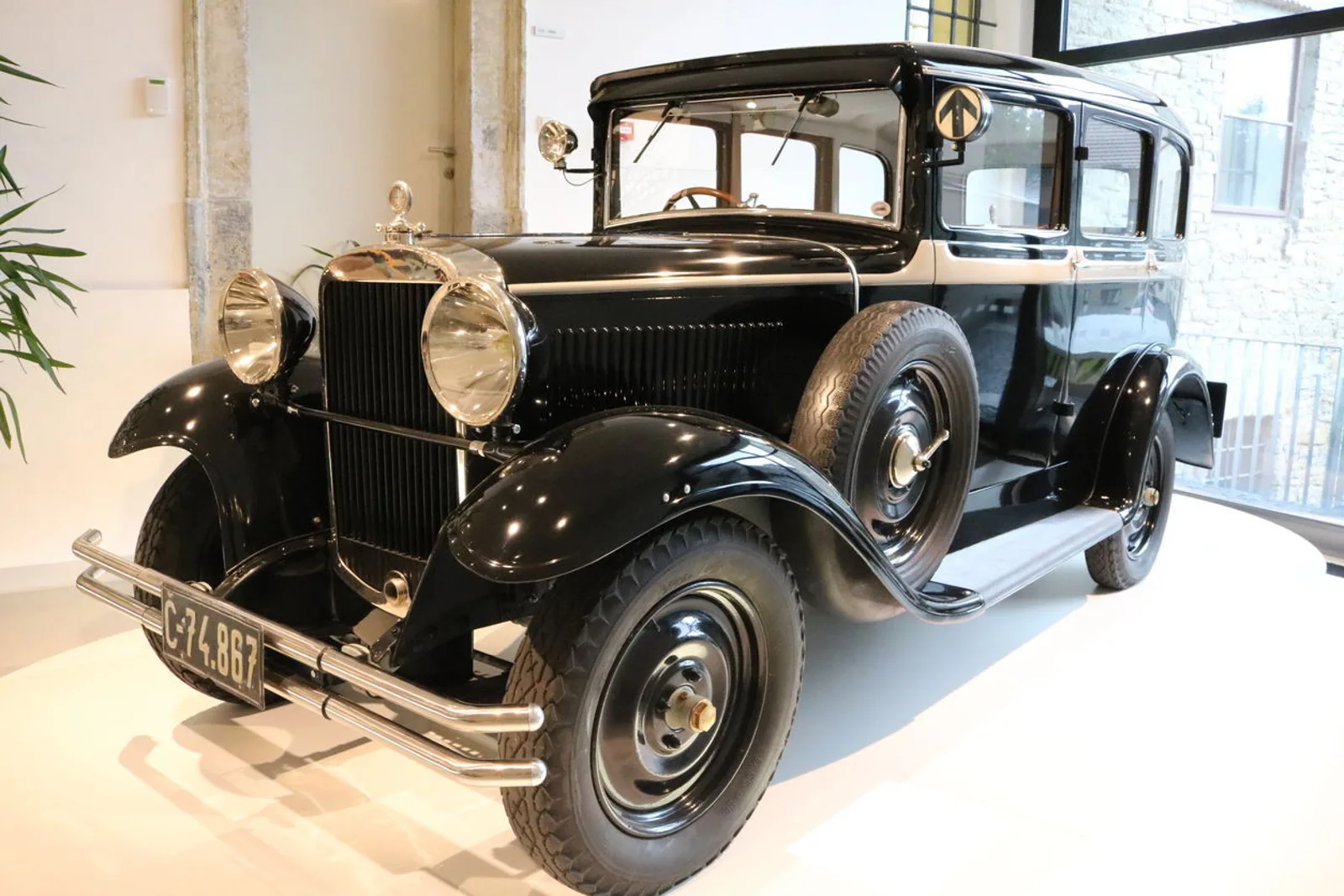
The 4B was offered in many body styles. The 1928 show range included a two-seat convertible with two emergency seats, a sports car with an American-style roof, a two-door coach and a four-door, four-seat faux cabriolet. A closed five-seat saloon and a two-seat roadster in black and red completed the line.
By then Walter's standard bodies were all-metal, with wood largely replaced by metal. From 1929 the upgrade to luxury bodies brought perfect chrome plating on the bumpers, headlamps and radiator grille in place of nickel plating.
At the 1930 show there were again two cars: a saloon in light colours and a sporty roadster. Unlike the black that had been customary, the 4B bodies were offered in a varied palette of colours. The show comments said the car, though smaller than the 6B, Super 6 and Standard 6, was a very perfect and imposing whole.
How did the 4B perform in competition?
The 4B reached production at the same time as the stronger 6B, so the factory mainly entered the 6B in races, hill climbs, long-distance runs and elegance contests. Later it used the Standard S, the Super 6 and the racing Super 6B. Even so, a 4B appeared in two notable results.
The first national reliability and consumption contest was held on 3 August 1930 near Slany. It was run as a circuit race of six laps of 23.2 km, a total of 140 km. Ing. Vladimir Balcar, a body design engineer at Walter, placed 5th in the class for cars up to 2,000 cc, and he finished without penalty points. The final order was decided by fuel consumption under a special formula.
The following year Balcar drove again, at the fourth star run to Luhacovice and the Concours d'Elegance held on 22-23 August 1931. He finished the star run without penalty points. In the elegance contest, which drew 27 cars, he took 5th to 7th place with 20 points.
What happened to Walter's car business?
Walter's most successful period ran from 1928 to 1934. The Standard 6 and Super 6 arrived in 1930, the Royal in 1931 and the Regent in 1932. The Walter Standard S won the Czechoslovak 1,000 Miles race in 1934, which marked the high point of that period.
The stronger engine also went into the Walter Comercial, a lorry with a payload of 1.5 t and a small bus for 12-20 passengers, both in production from 1930. Car production ended in 1936, and Balcar, after almost ten years in Walter's body design department, moved to the car division of the Aero factory.
Walter 4B specifications
| Specification | Detail |
|---|---|
| Engine | 1,664 cc (101.6 cu in) inline four; 1,908 cc from 1929 |
| Output | 22.4 kW (30 PS; 29.6 hp); 25.7 kW (35 PS; 34.5 hp) from 1929 |
| Top speed | 90-95 km/h (56-59 mph); 100 km/h (62 mph) with the 1929 engine |
| Fuel use | 9-12 L/100 km (23.5-31.4 mpg-imp; 19.6-26.1 mpg-US) |
| Track | 1,380 mm (54.3 in) |
| Wheelbase | 2,800 mm (110.2 in) |
| Chassis weight | 900 kg (1,984 lb) |
| Saloon weight | 1,300 kg (2,866 lb) |
| Seats | Four to six, depending on body |
| Fuel tank | 60-65 litres |
| Gearbox | Four-speed with reverse |