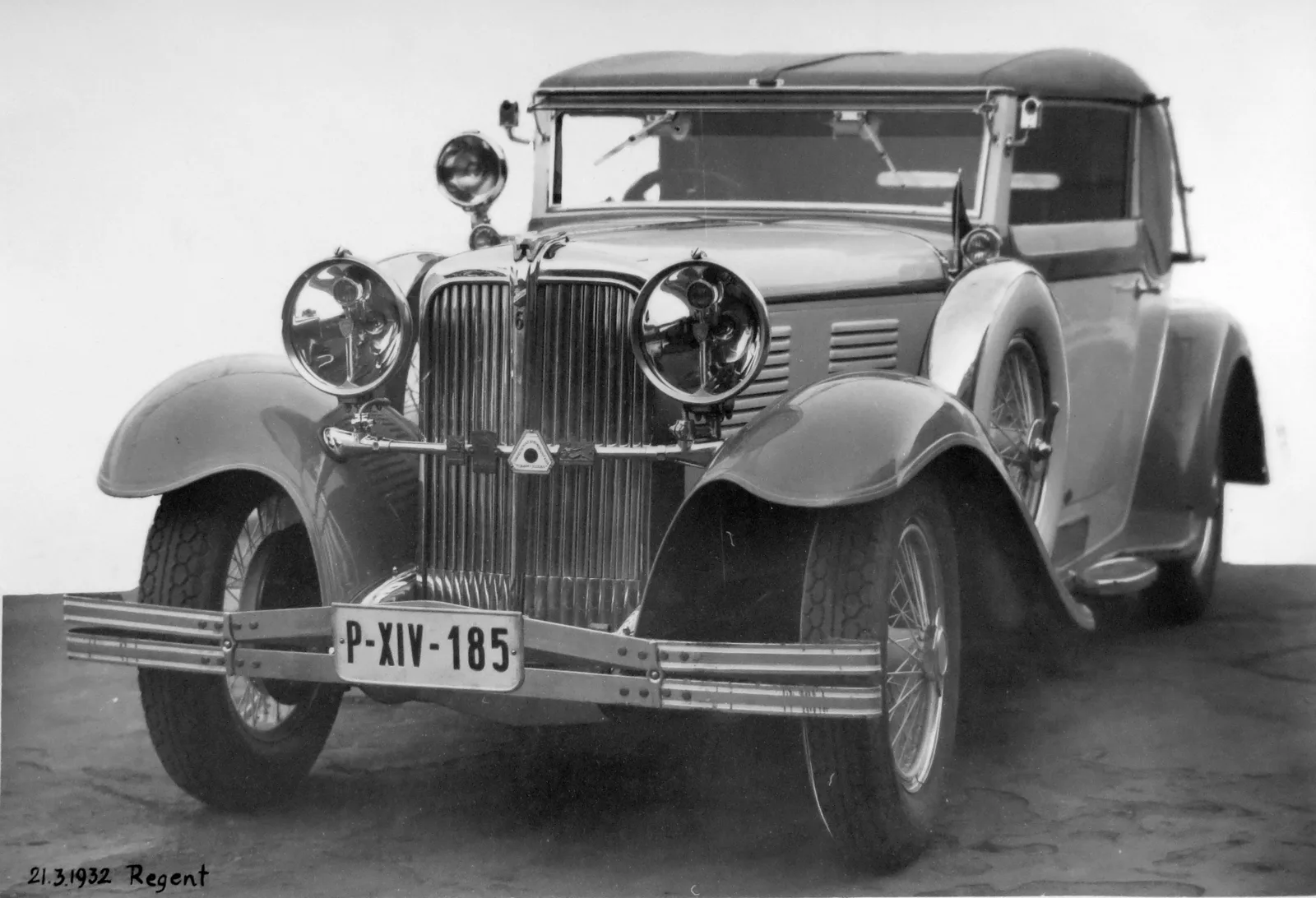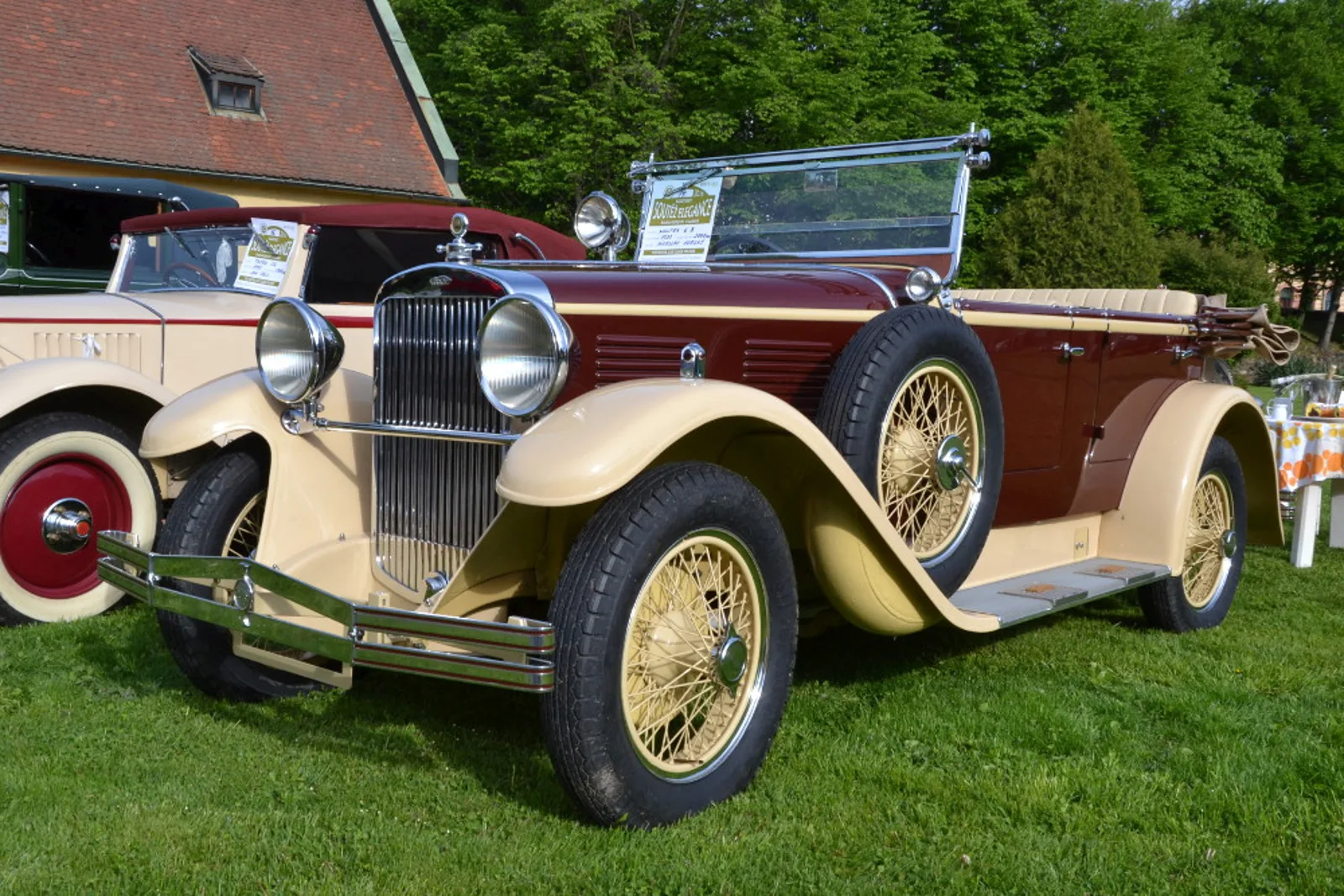
A Prague-built six from 1928, enlarged in 1929, dressed by specialist coachbuilders and tested in hill climbs and long reliability trials.
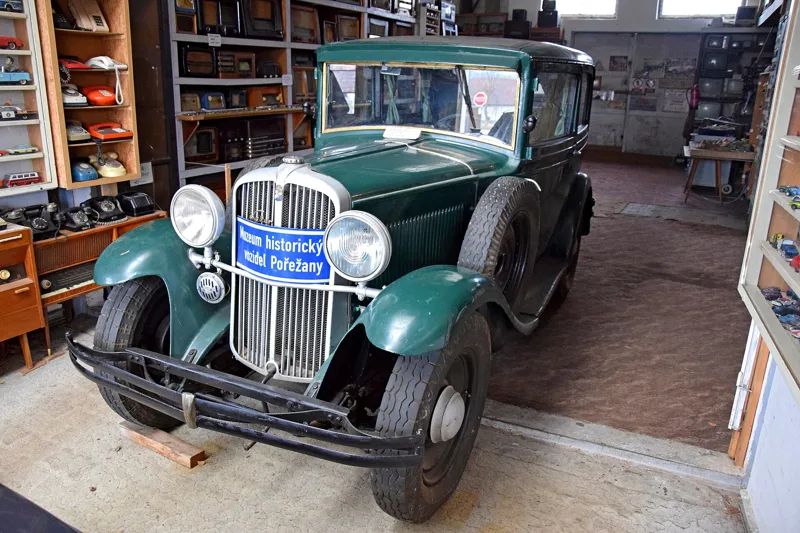
The Walter 6 B was a six-cylinder car from the Czech Walter factory, first shown in Prague in 1928 and given a larger engine in 1929. It had a 2,863 cc (174.7 cu in) in-line six producing 44.1 kW (60 PS; 59 hp) in its later form, and was offered as a saloon, a limousine and sporting bodies.
The Walter 6 B was a six-cylinder passenger car from the Walter factory at Praha-Jinonice, first shown at the Prague motor show in September 1928. Its engine was enlarged a year later, and the car went on to win hill-climb and elegance prizes. It came from a factory that also built aircraft engines.
Where did the Walter 6 B come from?
The car started life as the Walter Six, a name the factory later changed to 9/50 HP. A year after its debut, cylinder capacity and output rose, and the car was marketed as 12/60 HP. The designation's B refers to its designer, Ing. Frantisek Adolf Barvitius, who was honoured with a street in the Waltrovka residential complex.
The Walter works at Jinonice was unusual in Czech car making. It was equally a factory of aircraft engines and of automobiles, and each side strongly influenced the other. The site covered 40,000 m2 and employed 1,320 people, 1,200 of them production workers, with capacity for up to 600 cars a year.
Standardisation kept production smooth. Much of the hardware was common to the 6 B and its smaller sibling, the Walter 4 B, which was originally named Walter Four in 1928. A slogan much used in 1930s advertising claimed that the firm reigned over both the air and the roads. The car was shown again at the twenty-first Prague show from 23 to 31 October 1929, the year its engine was enlarged.
The problem of stolen cars is an old one, as a 1929 case shows. A six-seat limousine with a Weymann body, worth 105,000 korunas, was taken from a closed garage on Fochova Street in Prague. It belonged to a lawyer, Karel Fuchs, and a search was launched for the driver, Stepan Jurda from Brno.
A Prague factory that made both aircraft engines and cars, and a six that won its share of trophies.
What was the engine like?
The 1928 engine was an in-line four-stroke six with overhead valves and a capacity of 2,496 cc (152.3 cu in). A 1929 revision raised capacity to 2,863 cc (174.7 cu in) by boring out the cylinders, and at a compression ratio of 5.2:1 it produced 44.1 kW (60 PS; 59 hp) at 2,600 rpm.
The cylinder head could be lifted off, which gave good access for cleaning cylinders and pistons, and its combustion chambers were fully machined. The cast-iron block sat on an aluminium crankcase. The crankshaft was turned from a single ingot of chromium-nickel steel and ran in four bronze bearings, while the horizontally split crankcase was cast from electron, a magnesium alloy.
Lubrication was by pressure circulation through an oil filter, with a gear pump regulating the pressure. Two valves per cylinder sat vertically and parallel to each other, and the camshaft ran in seven bronze bearings. The camshaft and magneto dynamo were driven by quiet helical gears. Two Zenith-Lyon HAK 30 carburettors were fed from a 90-litre tank behind the rear axle by an Espero pump.
Cooling relied on a centrifugal pump and a Thermoburg thermostat. A driver could work the grille shutters from a spiral spring on the dashboard or leave an automatic thermostat in control. Ignition came from a Swiss Scintilla magneto, and the car started on an electric starter fed by two 6 V Varta batteries. The fan, combined with the water pump, ran on a V-belt.
Chassis and transmission
The pressed steel frame had front, rear and centre cross members, but the centre member alone did little to stiffen it. Later cars fitted an X-shaped member to remove that weakness. The forged I-beam front axle carried worm steering, with the steering on the right, and Tecalemit grease nipples served the pivots and the other lubrication points.
Suspension used unusually long semi-elliptic leaf springs on swinging shackles, with Lincoln friction dampers at the front and rear. All four wheels had Lockheed hydraulic brakes with a Bosch-Dewandre vacuum servo, and the handbrake worked on the rear wheels through a countershaft and steel cables.
Overall the car measured 4,423 mm (174.1 in) long, 1,740 mm (68.5 in) wide and 1,520 mm (59.8 in) high. Its 3,300 mm (129.9 in) wheelbase and 1,400 mm (55.1 in) track left 345 mm (13.6 in) of ground clearance under the frame.
The rear axle was a pressed steel banjo type with Gleason bevel gears. Drive ran through a propeller shaft in a tube, and the complete differential could be removed with its shaft without taking out the axle. The single-plate dry clutch fed a box with four forward speeds and a reverse, but no synchromesh.
Which bodies could buyers order?
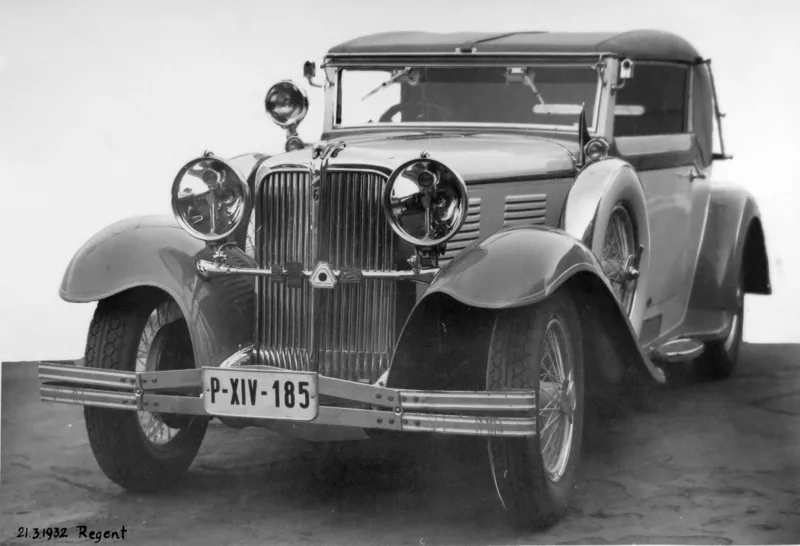
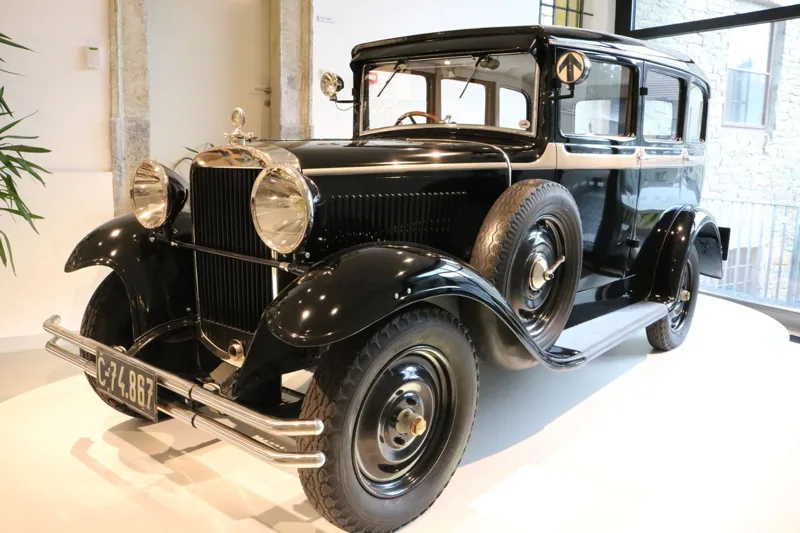
At the September 1928 show Walter displayed four versions: a rosewood and aluminium four-door sporting model, an open sporting body, a six-seat limousine and a black limousine for the President of the Republic. Specialist coachbuilders built many more bodies, for Walter and other makes.
The Royal Faux-Cabriolet had silvered internal and external parts, a white canvas roof, and a rosewood body combined with aluminium. The sporting open body was made of rosewood and African leather, also combined with aluminium.
Walter supplied the chassis frame with bonnet and engine, and the coachbuilders completed the rest. Sodomka of Vysoke Myto built around two hundred bodies for such makes, and Uhlik of Prague built twice as many. Petera of Vrchlabi and V. Brozik and Sons of Plzen also worked on the cars, and many bodies were effectively one-offs.
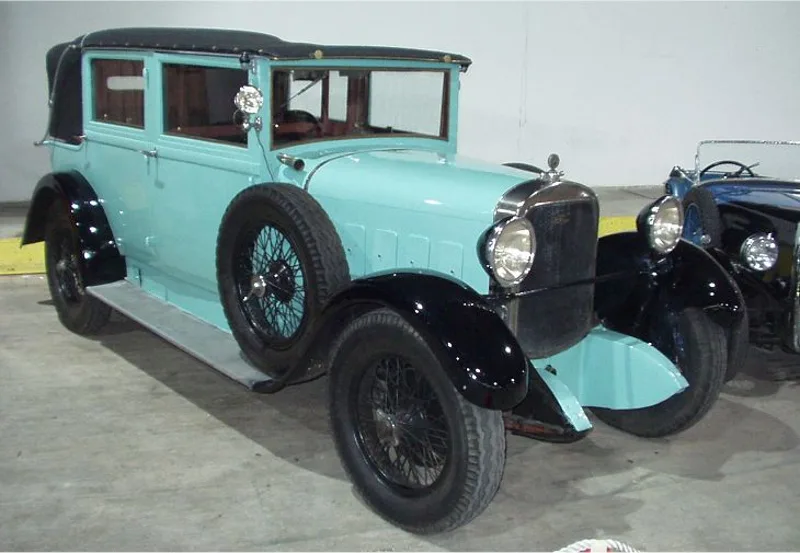
Among other honours, Sodomka's two-door saloon and convertible took the top trophy at the Brno Concours d'Elegance. The October 1929 show brought a seven-seat saloon with six windows, a four-seat club saloon with four windows, an open tourer and a Brozik-bodied limousine. Commentators praised chrome fittings that looked far better than the earlier nickel plating.
Standard equipment included a speedometer, an oil pressure gauge, a fuel gauge and a clock, along with twin-filament Scintilla headlamps and electric direction indicators. Cars carried two spare wheels. The factory supplied a spare parts kit of 35 items and a tool kit of 56 items, and the warranty lasted six months for the first owner, covering only factory parts.
Warranty cover also left out add-on items such as support springs, ball bearings, lighting kits, gauges and tyres. Wear parts, including brake linings, bulbs and window glass, were excluded as well.
The factory took unusual care over the interiors of its luxury limousines, especially the seats, which recalled lounge club armchairs.
How did the car perform in competition?
Raising the compression to six or seven and making other small changes lifted the 6 B to 51.5 kW (70 PS) and 135 km/h (84 mph). That output was entirely sufficient for a leading place in hill climbs and in reliability trials, and the factory's cars did well in both.
The twelfth Zbraslav-Jiloviste hill climb ran on 28 April 1929 on a new road surface, and up to 100,000 spectators watched. Hans Stuck won overall in an Austro-Daimler of 3.3 l without a supercharger, with a record course time of 2:45.8, and Rudolf Caracciola took second in a supercharged 7.2 l Mercedes-Benz at 2:49.2. Many spectators did not realise that they were about to see a duel between the two drivers, a contest that would have been a sensation across Germany or France.
Jindrich Knapp won the touring class up to 3,000 cc in 3:42.7 min and finished second overall among touring cars. Practice was fast and not always safe. Count Lobkowicz (Jiri Kristian Lobkovicz, born 1907 in Turnov, died 1932 at Berlin/AVUS) lost control of his machine during a training run, and the result was a defeated telegraph pole.
The 1929 running also brought new records for the event.
Six years on, the chief designer Frantisek Barvitius told the magazine AUTO that the works had entered a 3.25 l racer at the hill climb. The Super 6 models of that capacity, built from 1930, grew out of that machine.
Key specifications
| Specification | Detail |
|---|---|
| Engine (from 1929) | 2,863 cc (174.7 cu in) in-line six, overhead valves |
| Bore and stroke | 75 mm x 108 mm |
| Compression ratio | 5.2:1 |
| Output | 44.1 kW (60 PS; 59 hp) at 2,600 rpm |
| Tuned output | 51.5 kW (70 PS) |
| Top speed | 110 km/h (68 mph) standard; 125 km/h (78 mph) sports; 135 km/h (84 mph) tuned |
| Fuel use | 14 to 18 l/100 km |
| Wheelbase | 3,300 mm (129.9 in) |
| Track | 1,400 mm (55.1 in) |
| Overall length | 4,423 mm (174.1 in) |
| Overall width | 1,740 mm (68.5 in) |
| Overall height | 1,520 mm (59.8 in) |
| Ground clearance | 345 mm (13.6 in) |
| Weight | 1,150 kg (2,535 lb) chassis; 1,500 kg (3,307 lb) open car; 1,650 kg (3,638 lb) limousine |
| Gearbox | Four forward speeds and one reverse, no synchromesh |
| Fuel tank | 90 litres |
How did the Walter 6 B fare on long drives?
In late May 1930 a demonstrator made a promotional drive from Prague over the Katschberg pass, at 1,738 m on the frontier of Salzburg and Carinthia, and back over the Gaisberg near Salzburg at 1,287 m. The car had already covered 40,000 km before it set out.
The run was over 1,100 km and averaged 52.7 km/h (32.7 mph), using 21.1 l of petrol per 100 km. Jindrich Knapp drove most of the way, the Kumpera brothers also took the wheel, and the editor Vilem Heinz of the Narodni listy newspaper wrote a detailed account. Despite the mountain route, the average speed showed that the trip was far from a pleasure outing.
Chief designer Ing. Barvitius and director Ing. Benak completed the team, and the six-seat demonstrator was fully occupied for the run.
The third Great Sumava reliability trial followed on 5 July 1931. It covered 385 km from Plzen, with 74 starters. The route led through the most beautiful parts of the Sumava foothills, though the participants saw little of them, and rain fell for most of the day. The roads became a sea of mud, and steering at the required pace took steady nerves and skill.
A good third of the field got back to Plzen inside the window of 17 to 19 hours, although their cars were damaged. Ing. Jan Susta also reached the finish in a Walter 6 B, one of the faultless cars. Susta was the son of the historian Josef Susta and a prominent figure in the Walter design office.
Did official customers buy the Walter 6 B?
The Presidential Office bought one for President T. G. Masaryk in 1929, after good experience with earlier Walter P cars of 8/30 HP and 9/36 HP. The car was a luxury limousine in the 12/60 HP form, the model that followed the debut by a year.
The Walter 6 B also took part in the elegance competitions of its day. In early May 1930 three Walter sixes entered the Brno Concours d'Elegance and took the competition's gold band, the highest prize, along with two first prizes. A Brozik-bodied limousine won the gold ribbon for the best closed body, and the car was presented by the factory representative Ing. Lobenstein.
The factory's Prague sales branch was at Platnerska Street 11, and the demonstrator used for the 1930 drive came from there.