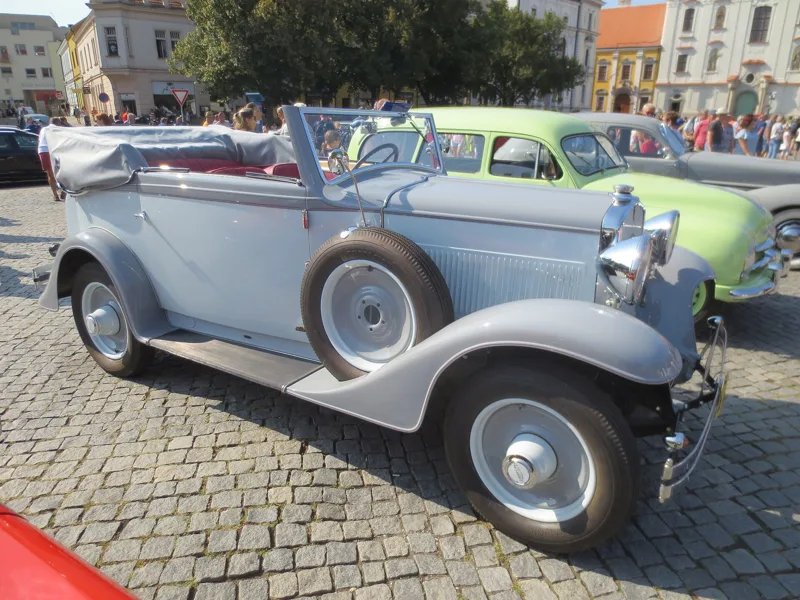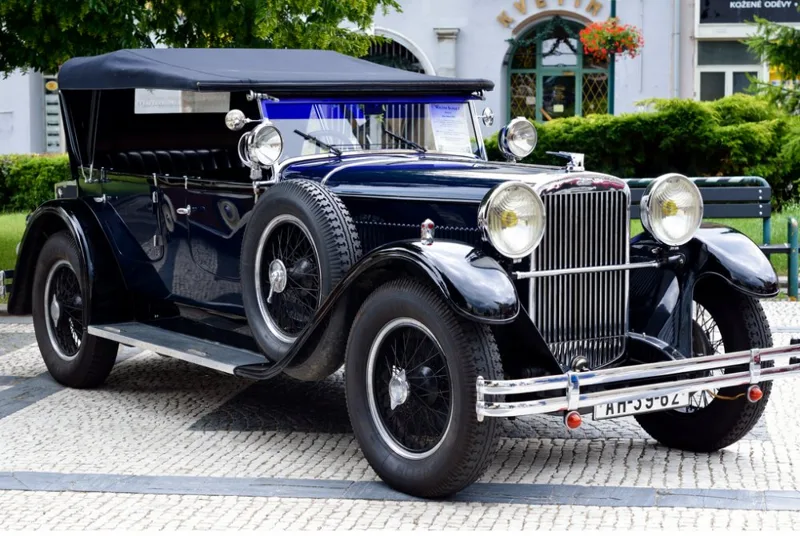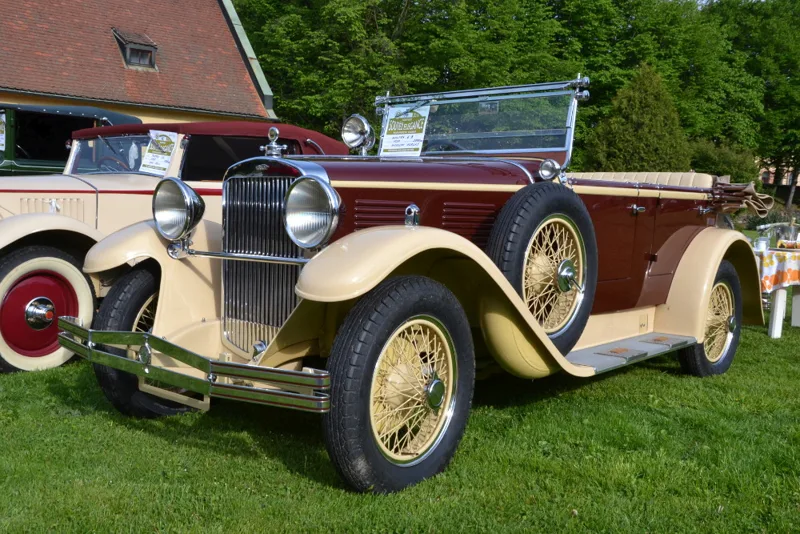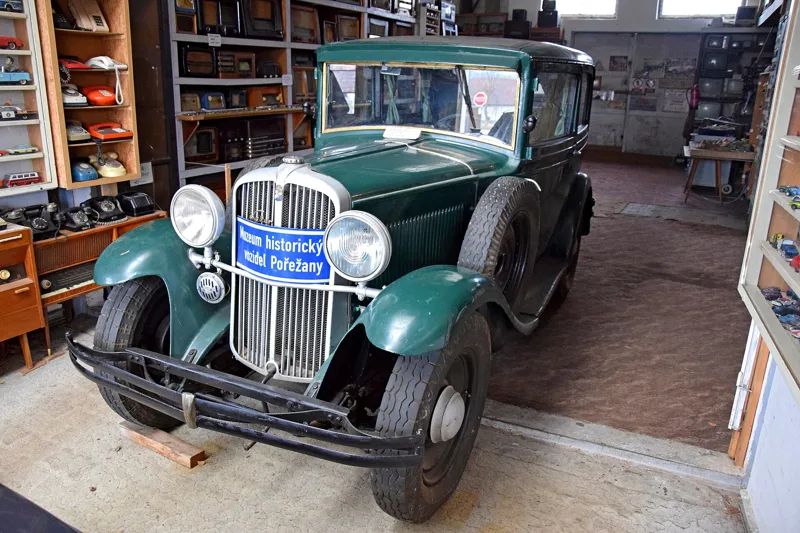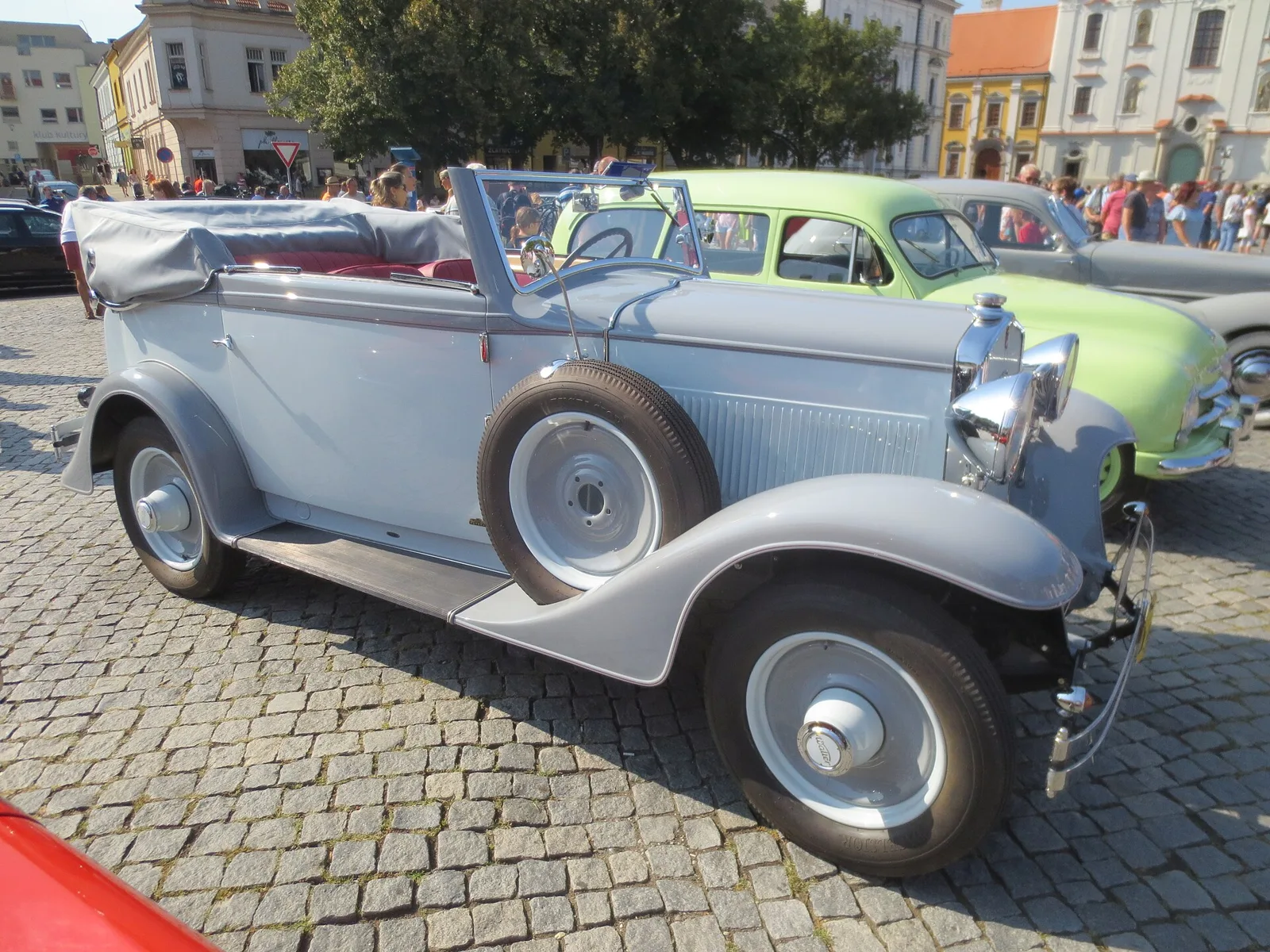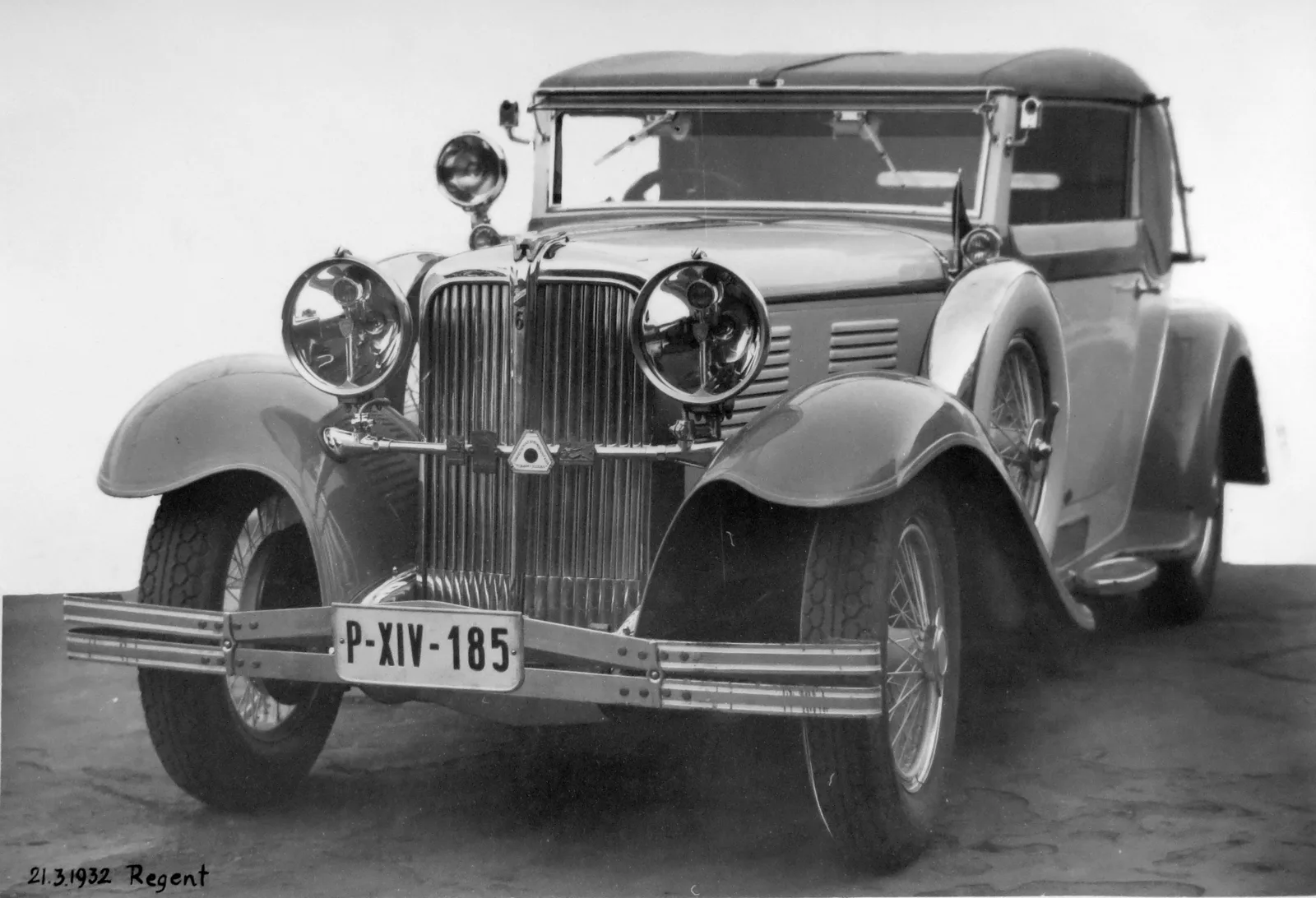
A 1932 Czech six-cylinder luxury car from the Jinonice works, with a 3,257 cc engine, Sodomka coachwork and a short production run to 1936.
Built from 1932 to 1936, the Walter Regent was the penultimate car designed at Jinonice, counting a one-off sports model. Its 3,257 cc six came from the Super 6, and Sodomka and Petera supplied its most striking bodies, while the works shifted its attention to aircraft engines.
The Walter Regent was a Czech luxury car from the Walter works at Prague-Jinonice, presented in spring 1932 and built until 1936. Its 3,257 cc inline six was carried over from the Super 6, while the Regent added a more lavish radiator grille, richer equipment and notable bodywork from Sodomka and other coachbuilders.
Where did the Regent come from?
The Regent came from a company that also built aircraft engines from 1923. It was based on the 6-B, Standard 6 and Super 6 types, and set itself apart from the Super 6 with a grander radiator grille, a stronger engine and a richer specification.
The company changed its name in this period, and the name gave more prominence to aircraft engines while the emphasis on cars faded. The Regent and the Royal marked the peak of car production at Jinonice, with the Royal introduced a year earlier.
The Walter brand was a byword for solid construction and top quality, with modern production equipment and skilled staff. Besides its well-known aircraft engines, it made cars in limited numbers, along with lorries, buses and coaches. The Regent was the last series-produced passenger car from the works.
Built with seeming disregard for cost, the Regent stood at the peak of car production at Jinonice.
What engine did the Regent use?
The Regent used the same engine as the preceding Super 6: a petrol, liquid-cooled inline six with OHV valve gear, 3,257 cc, two valves per cylinder and no supercharger. The bore was 80 mm and the stroke 108 mm.
By 1934 output had climbed by 10 PS to 59 kW (80 PS) at 3,000 rpm, with compression set at 6.5:1. The original 1932 car produced 51.5 kW (70 PS). Output could be raised to 85 kW (115 PS) by changing the compression ratio from 5.2 up to 9.0 and raising the revs to 5,200 rpm.
Two carburettors were fed by an electromagnetic fuel pump. Oil use was 0.2 to 0.3 kg per 100 km. Depending on the version, the Regents reached 120 to 130 km/h and burned 14 to 18 litres of petrol per 100 km. A 90-litre tank behind the rear axle gave a range of 500 to 600 km between fill-ups.
Engine and gearbox details
Good performance depended on a finely finished combustion chamber, a balanced crankshaft of chrome-nickel steel and light pistons with Invar inserts. Pressure-fed lubrication used an oil filter, and a thermostat, then called the kalorista, controlled the shutters in front of the radiator. The electrics came from a Swiss supplier and ran at 12 V, with electromagnetic ignition.
A dry single-plate clutch fed a four-speed manual gearbox, written as 4+Z. Linings riveted to the flywheel and the pressure plate reduced the inertia of the disc, which made gear changes easier and quicker. An optional overdrive had proved itself in 1931 on the Super 6, during a 10,000 km journey across Europe.
How was the chassis built?
The engine sat at the front and drove the rear wheels, on a robust rectangular frame braced by an X-shaped cross member. Both rigid axles hung on longitudinal semi-elliptic leaf springs, and the drum brakes were hydraulically operated and boosted by a vacuum servo.
Tyres measured 6.00 x 18 or 6.50 x 20 inches and were mounted on wire wheels with centre-lock nuts. Hydraulic dampers were offered in various types, depending on what the customer wanted.
Track measured 1,400 mm or 1,450 mm front and rear, and the wheelbase was 3,300 or 3,600 mm. Bodies were 1,730 mm wide over the wings. Ground clearance was 180 mm, though the 1935 Sodomka cars had only 160 mm. The chassis measured 4,490 mm long, with the top of the frame 470 mm above the road.
Classically cut bodies came close to five metres in length. The maximum height was 1,800 mm and the overall length reached 5,400 mm. Bare, the chassis tipped the scales at 1,050 kg, and finished cars weighed between 1,580 and 1,950 kg.
The Sodomka cabriolet had an odd pedal layout, with the brake to the right of the accelerator, which sat in the middle, and the clutch on the far left.
What body styles did the Regent come in?
The Regent came in three body styles: a limousine or saloon with four doors and seating for four to seven, a sporting convertible and a two-door coupe seating four to five.
The front window hinged open at its bottom edge, and the gap could be set finely to let in air. That helped on hot days. Convertibles and other bodies could be fitted on request with a removable fabric roof.
Which coachbuilders made Regent bodies?
Sodomka of Vysoke Myto and Theodor Petera and Sons of Vrchlabi supplied the two notable Regents of 1934, while other custom bodies came from specialist coachbuilders such as Brozik of Plzen and Uhlik of Prague.
Two notable Regents were shown at the 1934 Prague motor show. Sodomka supplied an elegant five-seat, two-door coupe with no centre pillars and a roof opening under a folding fabric cover. The Petera convertible had a sculpted nose, its headlights half sunk into the front wings, and a long, drawn-out tail.
That tail recalled the work of the German coachbuilder Spohn on Maybach chassis. The same styling came back 12 years later on English Rolls-Royce, Bentley and Daimler cars. A strip along the lower side of the body also protected the bodywork from the side.
What did the 1935 aerodynamic Regents look like?
Josef Sodomka built several, probably three, aerodynamic Regent convertibles in 1935. Their bodies overhung the wheels, the rear seat sat ahead of the rear-wheel arches, and the steering wheel was moved fully to the right. That left room for two extra people beside the driver.
Commentators praised the engine and chassis, which had been finished with the care typical of Walter products. They said the car was stable at high speed, easy to handle, reliable and safe. One six-seat example, named Grand Luxe Walter Regent, went to the Petschek and Co. banking house.
The Regent Airspeed of 1935, also by Sodomka, came as a seven-seat limousine or as an aerodynamic convertible. Its front wings ran all the way back to the rear wheels, and the two-door saloon had no centre pillars.
With a 3,300 mm wheelbase and an interior width of 1,600 mm, the saloon offered six seats in a 3+3 arrangement, and its 5.3 m body still left room for luggage. The spare wheel sat fully recessed in the tail under a cover, and a second spare was fitted only for longer journeys. The luxury body raised the total weight to 1,800 kg, although the chassis stayed at 1,050 kg.
How much did a Regent cost?
In 1932 a limousine cost 125,000 Kc, a sporting convertible 137,000 Kc and a bare chassis 85,000 Kc. A 1935 price cut brought the limousine down to 85,000 Kc and the Regent Convertible Spec. to 95,000 Kc.
The six-seat limousine cost 90,000 Kc in April 1936, while Sodomka convertibles could still reach 150,000 Kc.
Walter and Sodomka had worked together since the late twenties, when Sodomka built bus bodies on Walter PN chassis. The main partnership began in 1932 with the first Regent convertible and lasted until car production ended. Their joint work ran across the Walter 4 B, 6 B, Super 6, Junior, Princ and Lord models.
How many Regents were built?
Regents and Super 6 cars were made one-off to order or in small series. Over five years only a couple of dozen of them were built, and the factory's output shrank sharply in 1936.
That year only a few dozen new vehicles were built, and stock chassis and cars were sold off. Walter had no stand at the 1936 Prague motor show. A communique cited in the press said the works was devoting its strength to aircraft engines, and that the absence was only temporary. It was never fulfilled.
By 1937 the story of Walter cars had ended. The only exception was the PN lorry, which the army took until 1939.
Did the Regent race?
Not in the end. A factory team entry was considered for the 1935 1000 Miles of Czechoslovakia, for a car internally called the Regent SS. Frantisek Barvitius described the plan to the magazine Auto in an interview printed in October 1934, but the entry never happened.
The luxury model suited racetracks poorly. It was far more successful at motor shows and elegance contests, including the Prague shows of 1934 and 1935 and the Piestany elegance competition in 1934 and 1935.
Regents still do well at elegance contests as prized veterans. Only two examples survive, the Sodomka saloon and convertible.
Key specifications at a glance
| Specification | Value | Notes |
|---|---|---|
| Engine | 3,257 cc inline six, OHV | Two valves per cylinder, no supercharger |
| Power | 51.5 kW (70 PS), then 59 kW (80 PS) | Rise came in 1934 |
| Compression | 6.5:1 | Tuning range from 5.2 to 9.0 |
| Top speed | 120 to 130 km/h | Depends on version |
| Fuel use | 14 to 18 litres per 100 km | 90-litre tank, 500 to 600 km range |
| Wheelbase | 3,300 or 3,600 mm | Track 1,400 mm or 1,450 mm |
| Width and length | 1,730 mm wide; 4,490 mm chassis | Up to 5,400 mm overall |
| Height | 1,800 mm maximum | Bodied car |
| Weight | 1,050 kg chassis | 1,580 to 1,950 kg bodied |