A doubled Aero 30 engine, a Sodomka bodywork special and a string of Czech circuit, rally and Monte Carlo results.
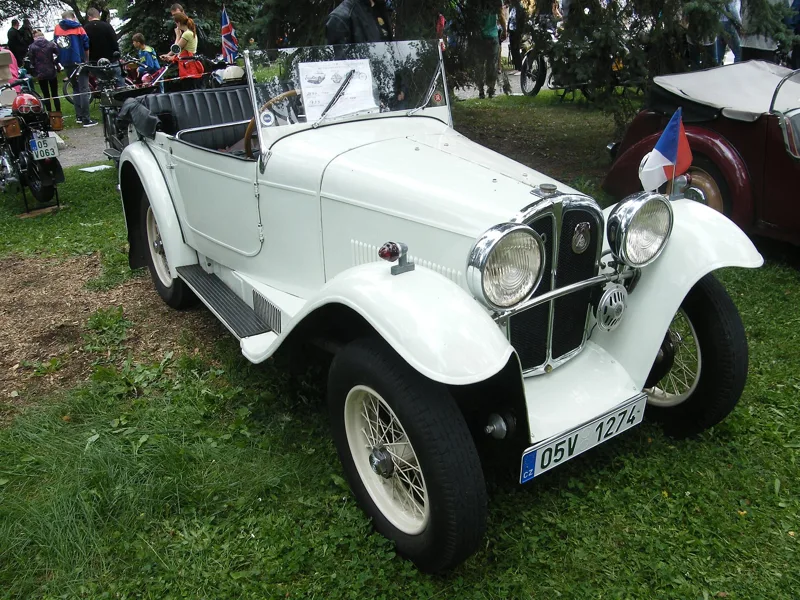
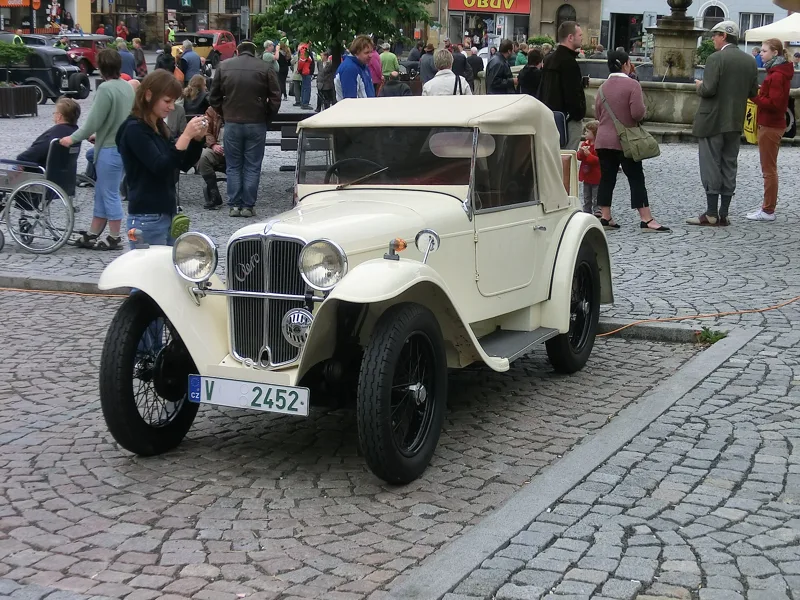
The Aero 50 was a Czechoslovak two-litre four-cylinder two-stroke built by the Aero factory from 1936 to 1941. It came from doubling the Aero 30's engine, and it was offered as a roadster, a convertible or a saloon, with Sodomka bodies on some cars.
The Aero 50 was a Czechoslovak car built by the Aero factory in Prague-Vysocany from 1936 to 1941. It doubled the engine of the Aero 30, the factory's most successful earlier model, to make a two-litre four-cylinder two-stroke, and it represented the peak of Aero's car production. Around 1,205 cars were built.
Why did Aero build a larger car?
Aero had sold its small cars mainly to ordinary buyers, but it sensed interest from the middle and upper classes. A two-cylinder, low-power two-stroke had little prospect of success in that segment, so the company designed a new engine by doubling the existing unit.
The result was a two-litre in-line four that shared the front-wheel-drive layout of the Aero 30. The car was described as a fast vehicle for long journeys. Its stretched engine bay and unusually low build earned both the Aero 50 and the Aero 30 the nickname Czech Jaguars.
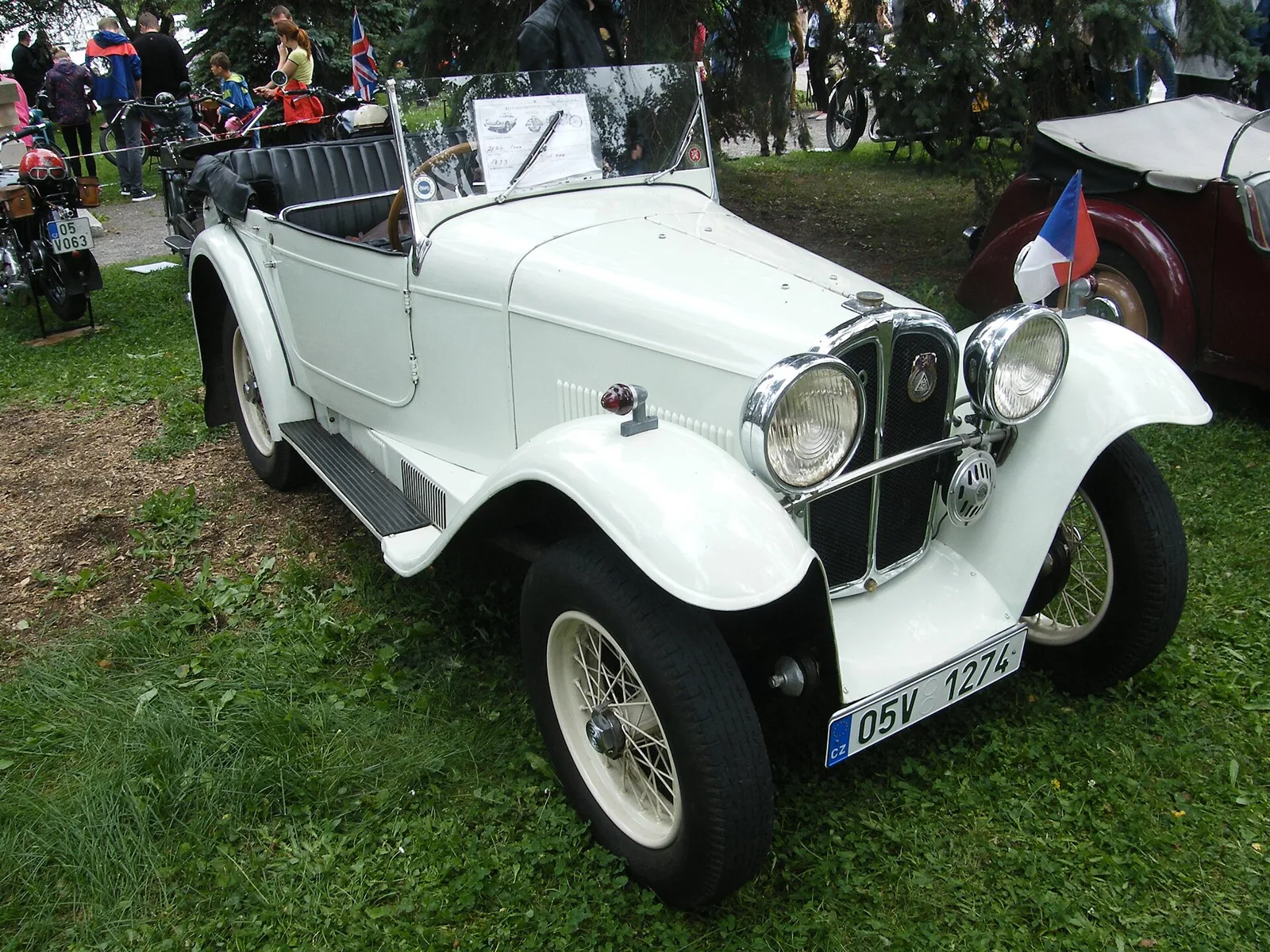
Aero showed the car to the public in October 1936 at Prague's 26th International Motor Show. Two body styles came first: a four-seat saloon with a Webasto canvas roof that folded back, and a two-seat roadster built on a shorter wheelbase.
Two cylinders doubled into four, bodied by Sodomka and raced across Czechoslovakia and Poland.
How did the engine and gearbox work?
The 1,997 cc unit was a spark-ignition, liquid-cooled two-stroke with four in-line cylinders and no supercharger. Its bore measured 85.0 mm and its stroke 88.0 mm. Running a compression ratio of 5.2, it delivered between 35.3 and 36.7 kW (48-50 PS; 47-49 hp) at 3,500 rpm, and the figure of up to 50 PS gave the model its name.
With a three-speed gearbox, synchromesh on second and third, the car reached up to 125 km/h (78 mph). Burning petrol mixed with oil at 40:1, the car used between 12.5 and 15.0 l/100 km (18.8-22.6 mpg-imp; 15.7-18.8 mpg-US). That thirst led the designers to fit an electromagnetic device that shut off the fuel supply on downhill runs.
The device was patented, but it was later replaced by a more perfect system that disengaged the clutch through the vacuum in the intake pipe, sold for an extra charge. Cooling was by liquid, with a pump and a fan, and the engine sat lengthwise just behind the front axle. Cars carried one Solex USHD or DHF carburettor, while the roadster carried two of them.
The fuel tank held 45 l, of which 5 l was reserve, and it sat at the front above the engine, against the partition separating the cabin.
Aero 50 key specifications
| Item | Detail |
|---|---|
| Engine | 1,997 cc (121.9 cu in), two-stroke in-line four |
| Power | 35.3-36.7 kW (48-50 PS; 47-49 hp) at 3,500 rpm |
| Compression ratio | 5.2 |
| Top speed | 125 km/h (78 mph), 135 km/h (84 mph) in race trim |
| Fuel use | 12.5-15.0 l/100 km (18.8-22.6 mpg-imp; 15.7-18.8 mpg-US) |
| Wheelbase | 2.59 m (8.5 ft) roadster, 2.79 m (9.2 ft) saloon |
| Length | 3.88 m (12.7 ft) roadster, 4.4 m (14.4 ft) saloon |
| Fuel tank | 45 l, with 5 l as reserve |
| Gearbox | Three-speed, front-wheel drive |
How was the chassis built?
The platform frame was lengthened by about 15 cm in the engine bay to fit the doubled engine, which gave a 2.59 m (8.5 ft) wheelbase on the roadster and 2.79 m (9.2 ft) on the four-seat saloon. All four wheels were independently suspended, and the brakes were mechanical drums until hydraulic ATE Lockheed brakes arrived in 1938.
The drive order, from the front, was differential, gearbox and engine. That arrangement made the car harder to control at higher speeds, and its wheels often spun when pulling away. The rack-and-pinion steering had its wheel on the left.
What bodies did the Aero 50 wear?
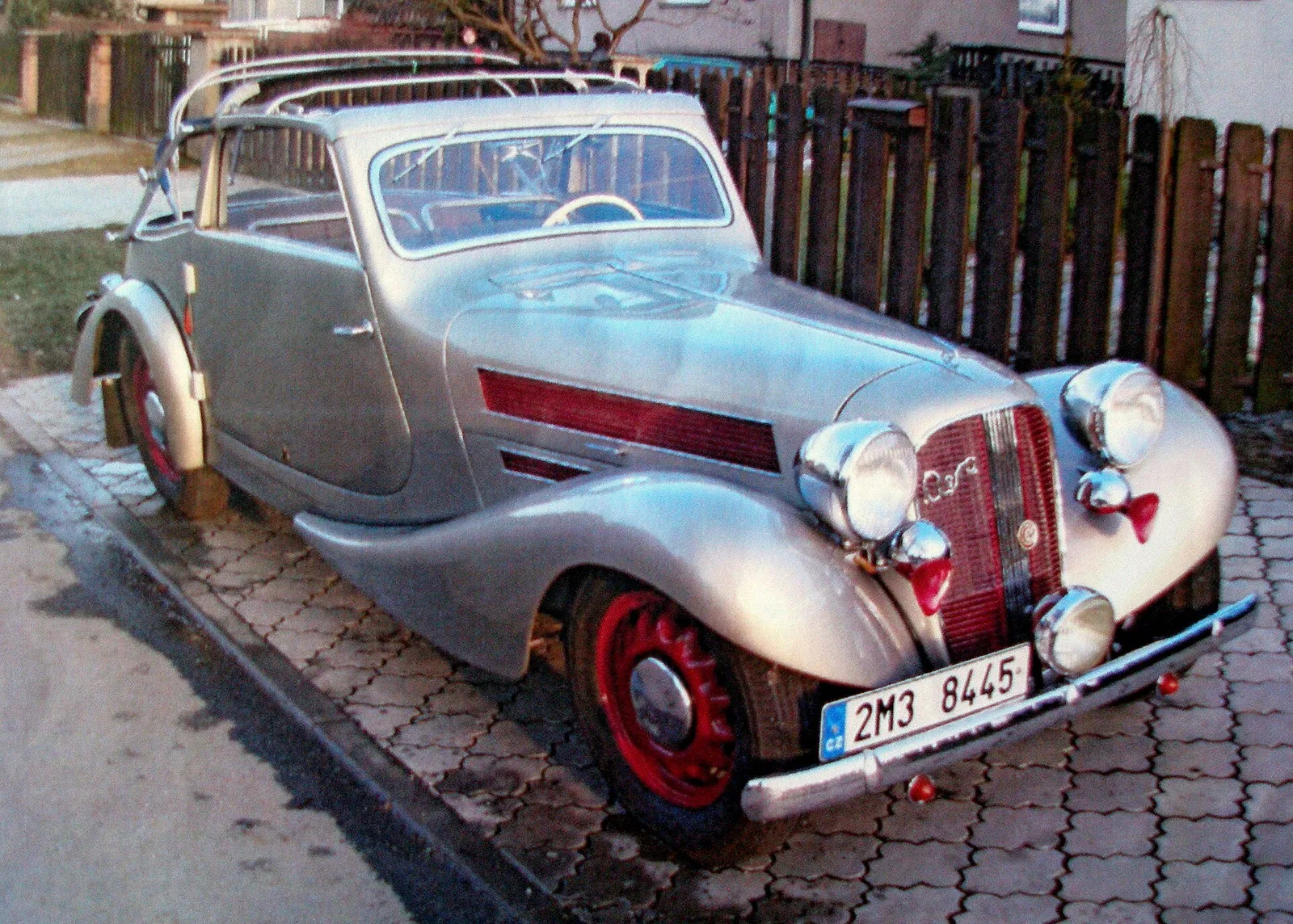
The early cars were all-metal roadsters, four-seat convertibles and two-door saloons. For 1936 to 1938 the car looked very much like the Aero 30, until the front and bonnet were reworked for the 1938 model year, and the 1939 models adopted a new, more substantial, rounded body.
The 1938 update was limited to a series of one hundred. It rounded the wings, added a rounded front ahead of the radiator and a one-piece engine cover that hinged to the rear. The car also received new brakes and a fuel-saving freewheel, and it was widened and lengthened, so the saloon's wheelbase became 2,940 mm (115.7 in). Buyers abroad could also get one, with sales recorded in Poland, Hungary, Romania and the Baltic states.
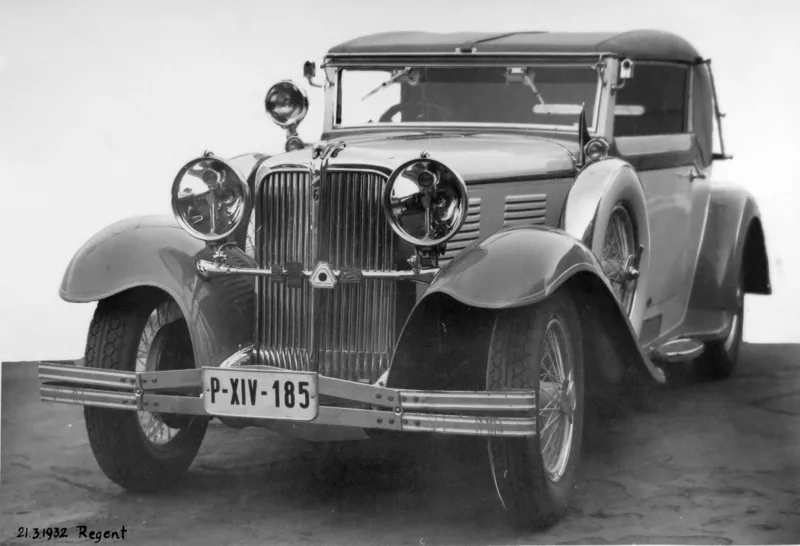
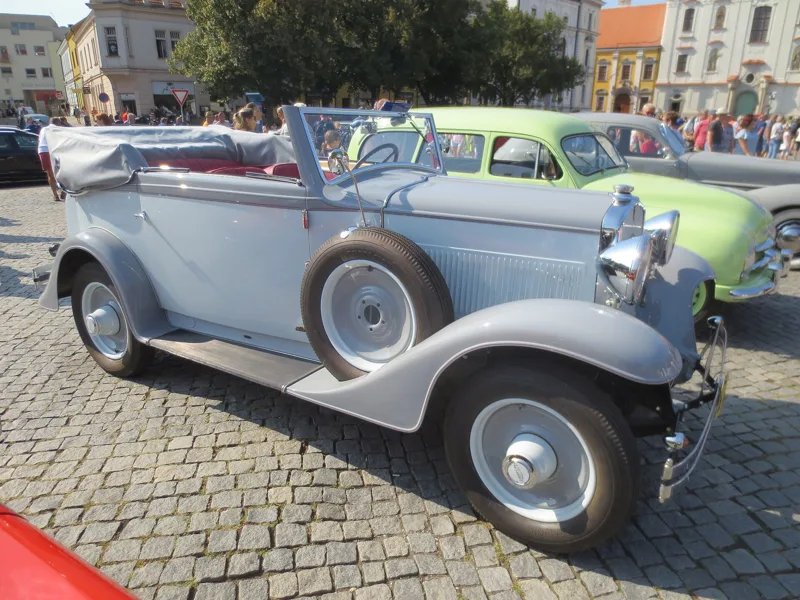
Josef Vorisek, an aviation engineer and artist, designed the bodies, but the most productive partnership was with Josef Sodomka's coachworks in Vysoke Myto. The partnership started around the time the Aero 50 appeared, once Walter had stopped making passenger cars in 1935. Sodomka modified the wings and radiator grilles and produced stiffer bodies with richer equipment, which made the Aeros look like much larger cars.
Around 90 of the 1,205 cars were bodied by Sodomka. Its most striking model, the Aero 50 Dynamik, had wings that half covered the front and rear wheels. Estimates put the number of Dynamiks at six to nine, built between 1938 and 1940.
How much did the Aero 50 cost?
The launch range was priced from 23,750 korun for the sporting 2+2 and 25,200 korun for the two-seat roadster. The saloon listed at 28,600 korun in 1936, and the luxury convertible at 33,400 korun. Prices climbed quickly after that, and the 1939 saloon reached 42,900 korun.
In 1937 a roadster cost 37,500 korun, a 2+2 convertible 38,699 korun and a saloon 39,800 korun. The modernised roadster of 1939 was priced at 38,900 korun, a luxury four-seat convertible at 48,900 korun, and Sodomka's most lavish creations sold for as much as 44,500 korun.
Who raced the Aero 50 and how well did it do?
The Aero 50 HP roadsters took part in many races and competitions from 1937 to 1939, and in race trim they reached up to 135 km/h (84 mph). Vladimir Vojtechovsky won several class events, including the under-2,000 cc class of the 500 km Slovak race in 1937 and the Bohdanec circuit race in 1938.
The domestic season opened on 25 April 1937 at the new 4.3 km Zdib circuit, where Vojtechovsky finished 3rd in the over-1,500 cc class and received the honorary prize of Dr. Kabes as the best Aero driver. Several thousand spectators watched, and General Jaroslav Cizek, chairman of AKRCs, was a guest.
Other results were mixed. At the Podkrkonosi race on the Krakonos circuit, held on 1 August 1937 over 110 km, Vojtechovsky retired on the third lap. A week later, in the touring cars up to 2,000 cc at the Bohdanec circuit race, Navratil on an Imperia beat Stehlik on a Praga and Engineer Vladimir Kavalier on an Aero 50.
At the last pre-war Lochotin circuit race on 28 August 1938, over 23 laps and 98.9 km, Komar won ahead of Vanicek, both on Bugattis, and Mikula finished third on an Aero 50 ahead of Vojtechovsky and Jansky.
The Cesky Brod circuit race of 23 May 1937 used a shortened 7.6 km course with a sharp bend behind Tismice. Vojtechovsky won the 10-lap race for cars up to 2,000 cc in 44:27.6 min, and his drive drew much attention. His was the best time of any Czechoslovak-built car.
How did the Aero 50 fare in the rallies?
Sodomka bodies won prizes at Monte Carlo in 1938 and 1939 in the luxury and elegance competition, and at home they took first place in elegance contests at the spa towns of Podebrady, Bohdanec, Luhacovice and Marianske Lazne.
The Aero 50 made several appearances in the Monte Carlo Rally. In 1937 the crew of Vojtechovsky and Zak finished 37th or 38th overall (accounts differ) in the 16th edition, and in 1938 Vladimir Formanek placed 38th overall and 10th in class among the 92 crews that finished. In 1939 Formanek and Zahradka finished 50th in the 18th edition.
In June 1937 Vojtechovsky took part in the three-stage Polish Rally, a 2,809 km event. He placed 3rd overall, and in the under-2,000 cc class he was runner-up to the Pole Aleksander Mazurek, who drove a Chevrolet. Later that summer Vojtechovsky also took 4th place in the Coppa de Carpatul in Romania, the only Czechoslovak entrant, as the first three places went to eight-cylinder Fords.
The Mala dohoda competition of 12 to 20 September 1937 ran from Prague through Bratislava, Uzhorod and Bucharest to Belgrade. Eighty-eight cars, 10 sidecars and 55 motorcycles were entered, and Stanislav Kafunek won the class up to 2 litres, placing 5th overall behind Jiri Pohl on an Aero 30.
In 1939 the Polish Automobile Club held its 12th raid over 4,353 km, with acceleration and braking tests, a hill climb up the Rownica, and a road speed test. The flying kilometre was owned by the Pole Tarnawa, who clocked 137 km/h (85 mph) in an Aero 50 and took every other speed test too.
How did the 1938 season go at home?
The winter calendar included a military motoring competition on 13 February 1938 on the Lysa nad Labem, Mlada Boleslav and Milovice route, combined with grenade throwing and rifle shooting. Kavalier, Janousek and Vojtechovsky took the top places in the class up to 2,000 cc, all in Aero 50s. Janousek later won the class in the Winter Car Competition of 27 February over 250 km from Pardubice to Prague.
The Ceskobrod motorcycle and car race of 24 April 1938 gave the factory two more podium places. Mikula and Vojtechovsky finished second and third among the senior over-1,500 cc drivers, with Kubicek ahead on a Bugatti Ford Special. At the 2nd Zdib circuit race on 8 May, Kubicek won the sports car category, and Vojtechovsky took the class up to 2,000 cc at an average of 89.1 km/h.
The 4th Zlin Eight, held on 15 May, went to the Aero team in the cars up to 2,000 cc, with Janousek, Vojtechovsky and Mikula in the first three places. In the 500 km Slovak competition in June, the Aero 50s of Vojtechovsky, Janousek and Mikula all retired, and Formanek took the win in an Aero 30.
Which Aero 50s survive?
Of the Sodomka-bodied cars, two surviving examples are named: one in California and one in the regional museum in Vysoke Myto. The Arizona car reached the USA, was restored around 1985 and joined the Blackhawk Collection automobile museum in California.
The restored Arizona was auctioned at RM Sotheby's in California in summer 2022 for 346 thousand dollars. The other survivor is held by the regional museum in Vysoke Myto, home of the Sodomka coachworks.
How did a Benes convertible come home?
In autumn 1939 a Sodomka-bodied convertible was assembled in London for Edvard Benes and his wife Hana, using imported parts. It later served the Czechoslovak diplomatic corps in Britain during the Second World War.
The car came back to Czechia thanks to Philip Goldsmith, who rescued it and donated it in 2012 to the National Technical Museum, where it is now displayed. Hana Benesova had earlier bought a Sodomka convertible for 62,000 korun, and that car stayed in Bohemia after the couple's forced exile in October 1938.