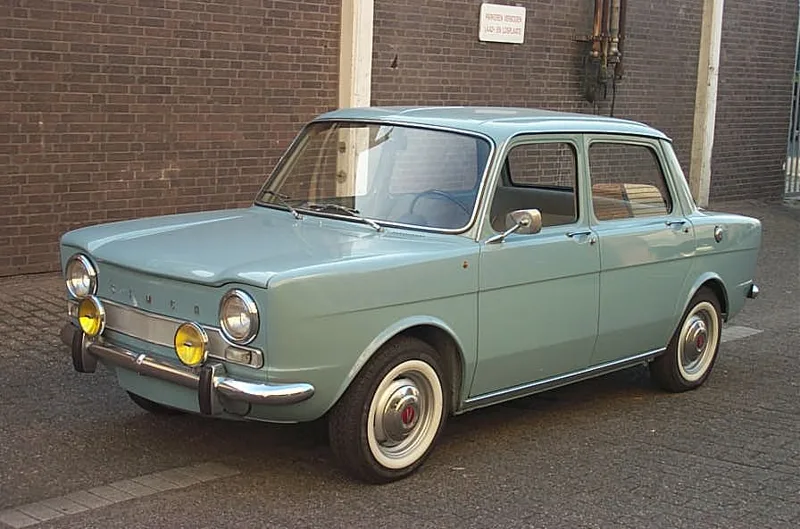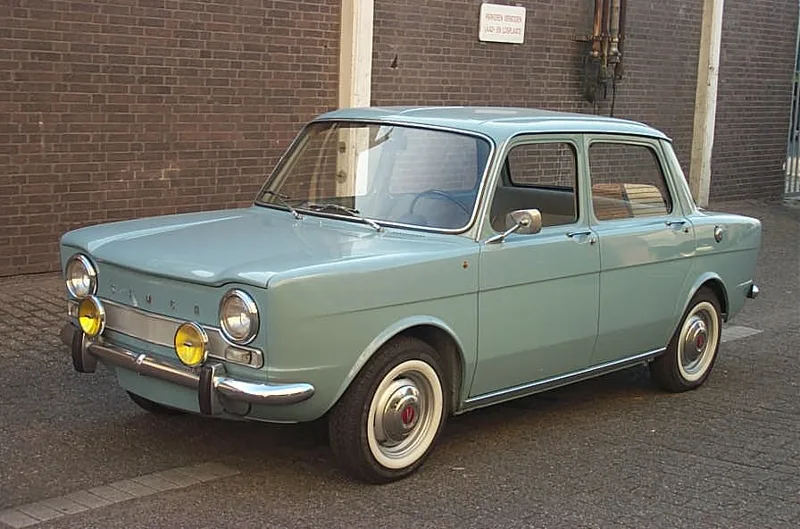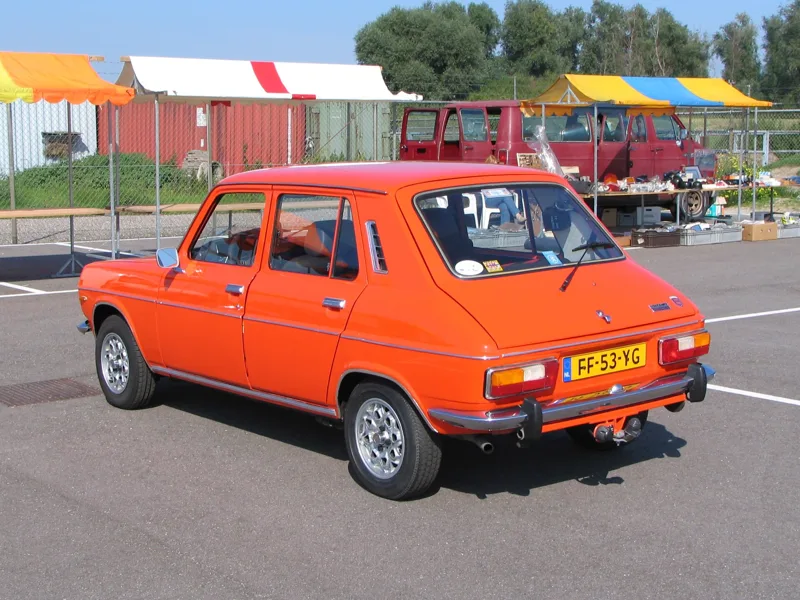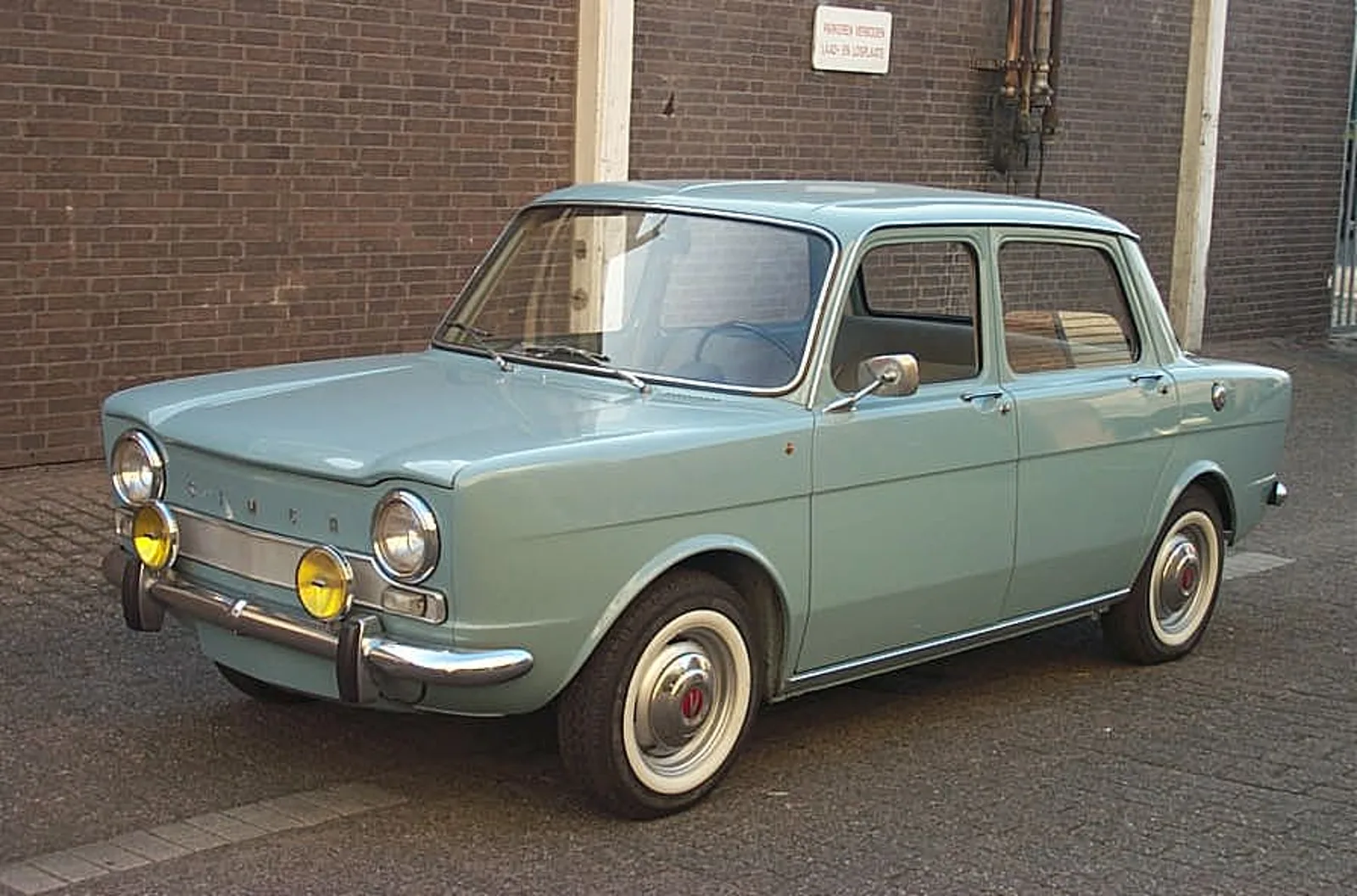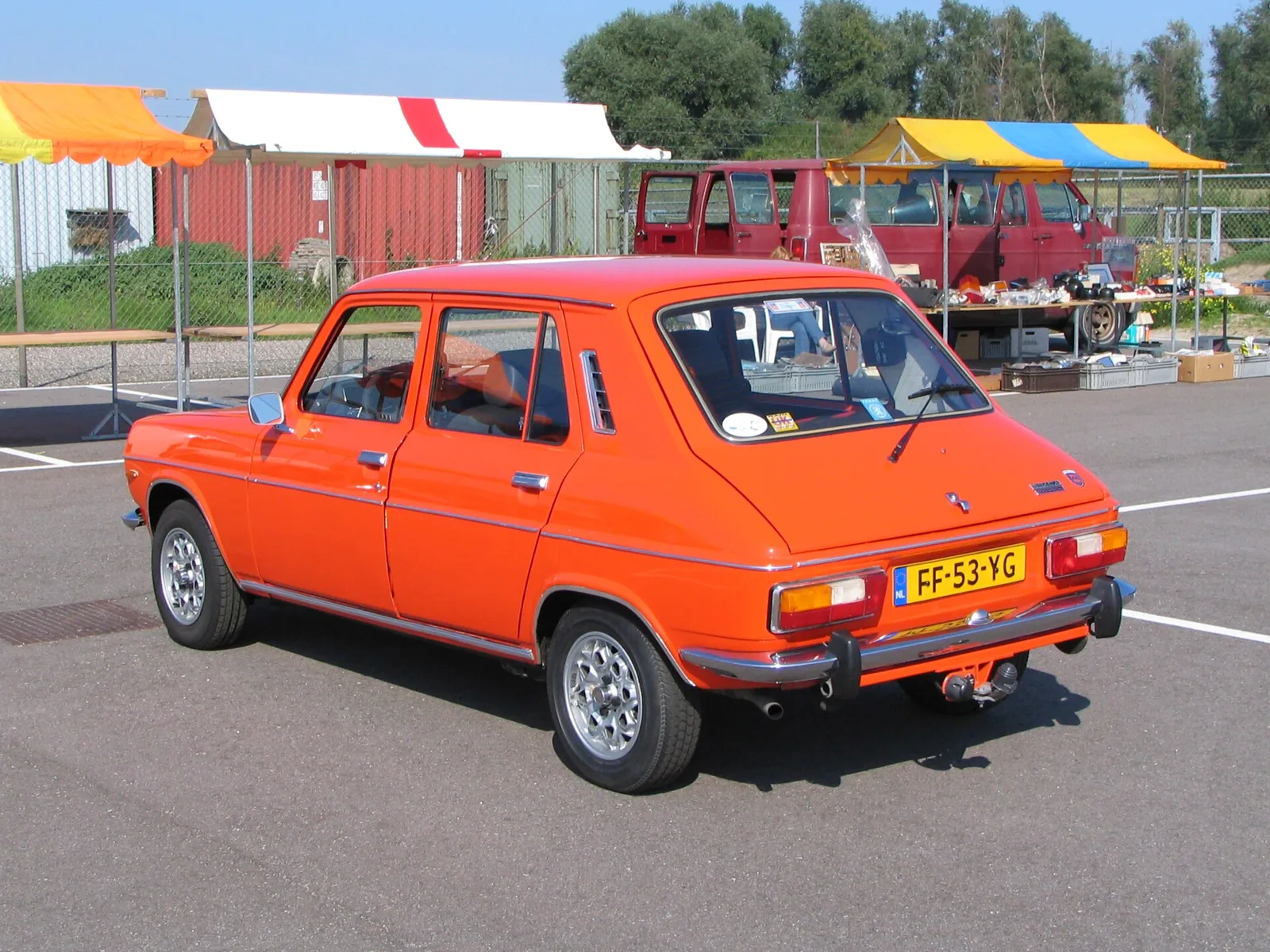
Built from 1967 by Simca, the 1100 combined a transverse engine, front-wheel drive and folding rear seats, and its layout shaped small cars for decades.
The Simca 1100 was a French compact family car built from 1967, mainly as a front-drive hatchback with a transverse engine. Simca built more than two million cars before the Chrysler Horizon replaced it, and the Ti of 1974 has a strong claim to be the first hot hatch.
Built by Simca from 1967 until 1982 and, for vans, until 1985, the 1100 was a range of small French cars built around the hatchback. The 1200 name was used for the Spanish-built version. It combined a transverse front-wheel drive layout with a unibody, and the design set a pattern that many small cars followed for decades.
What was the Simca 1100?
Simca's 1100 was a range of French small cars with a C-segment hatchback at its core. A compact estate and popular delivery vans sat alongside it, and the range ran for more than 15 years.
There was even a very early hot hatchback in the range, along with a family crossover, the Matra Simca Rancho. The hatchbacks were eventually replaced by the Simca-Talbot Horizon.
A 1967 hatchback that brought transverse engines and front-wheel drive into the mainstream of small cars.
Why was the 1100 so significant?
The 1967 Simca 1100 mattered because it combined many modern design features in affordable cars with a wide choice of engines. It was among the first unibody family hatchbacks and compact estates to pair a transversely mounted engine with front-wheel drive.
Its suspension was modern too, with double wishbones at the front and semi-trailing arms at the rear, plus anti-roll bars. Disc brakes, rack and pinion steering and folding rear seats added to the practicality of a car that stayed compact outside.
The front-wheel drive hatchback range was a top seller across Europe. It was said to have influenced Volkswagen to change its rear-engined, air-cooled range for front-engined, front-drive, water-cooled cars, which led to the Mk 1 VW Polo, Golf and Passat.
How did the 1100 set a blueprint for small cars?
At just under four metres long, the Simca 1100 set the blueprint for European and Japanese C-segment hatchbacks. Most of the core design traits of those cars were defined by the 1100 from that point on.
The car was reportedly studied closely by Volkswagen when the company was designing the Golf. Volkswagen had built rear-engined, rear-wheel-drive vehicles for nearly 25 years before that work began, which made the 1100 a useful reference.
How did the 1100 come about?
The 1100 was the result of Project 928, started in 1962 and finalised by engineers Philippe Grundeler and Charles Scales. The design followed Simca's market research in the early 1960s, which showed rising popularity for front-wheel drive cars with better comfort and space use.
In spring 1962 Simca organised a project for a new launch platform for a range of front-drive cars. It was to include saloons, estates and light commercial vehicles, all fitting France's 6CV tax class between the Simca Mille and the Simca 1300 saloon.
In 1963 Chrysler took a controlling interest in Simca. It approved the project in 1964 and set a production target for summer 1967, a tight schedule that required a new transmission and a larger version of the rear-engined Simca 1000 engine.
Where was the engine placed?
Both transverse and longitudinal engine placement were tested, and the transverse design was approved in 1963. Few designs outside Fiat had a transverse engine with an end-on gearbox and driveshafts of unequal length, yet the 1100 was among the first.
The engine was slanted to allow a lower bonnet. The engine, gearbox and suspension were carried on a subframe, so the unibody was relatively unstressed, and the body was welded to the frame rather than bolted.
How much bigger was the 1100 than the Simca 1000?
The new 1100 grew by a modest 15 cm (6 in) in length, but its wheelbase was 30 cm (12 in) longer and it was more than 10 cm (4 in) wider and taller. That gave it much better interior seating space than the barely shorter Simca 1000.
The 1100 measured 3.94 m (12.9 ft) in length. Its engine grew to 1,118 cc from the 944 cc unit of the 1000, and later models added the 1,204 cc Simca 1200 and the 1,294 cc Simca 1300.
What were the engines and gearboxes?
The car used Simca Type 315 petrol OHV Poissy engines of 944, 1118 and 1294 cc, depending on year and market. The four-speed manual gearbox gave room for five people, while a three-speed semi-automatic used an electronically activated clutch.
The transmission configuration was the same as the one Fiat introduced on the 1964 Autobianchi Primula. The engine on one side and transmission on the other became a layout copied on almost every front-wheel drive hatchback that followed.
The engine range ran from 45 PS at 944 cc to 75 PS at 1294 cc, with a Swedish-market 1.3 litre rated at 66 PS (49 kW). A stroked 1118 cc unit became the 1.2-litre Simca 1204 for the UK market in 1971.
What were the Break and estate models?
The Break, or four-door estate, was no longer than the hatchback. It was simply boxier, which made it more spacious and practical for families who needed luggage room.
The 1967 range included three- and five-door hatchbacks, an equal-length wagon and a delivery van. The wagon was a two-door until 1970, when four doors were introduced.
Was the 1100 an early hot hatch?
Yes. One of the cars with the strongest claim to be the first hot hatch was the Simca 1100 Ti, available from 1974. It offered 82 horsepower, over 40% more than the standard 58 hp, and it lifted the top speed past 160 km/h (100 mph) for the first time.
The Ti reached 169 km/h (105 mph) and took 12 seconds to reach 0-60 mph (97 km/h). It was based on the 1100 Special, introduced in 1970, and it introduced features that later hot hatchbacks adopted.
Those features included six headlights with foglights, front disc brakes, front and rear spoilers, alloy wheels and a matte black grille. The only paint choice was red, which made the car easy to spot.
How did the Renault 5 Alpine compare?
Another early hot hatch was the Renault 5 Alpine, called the Gordini in the UK because Chrysler owned the Alpine model name there. It went on sale in May 1976, two months before the VW Golf GTi.
The 1100 Ti was never sold in right-hand drive for the UK market. Its status as the first hot hatch therefore rests on its European sales.
What were the light commercial variants?
Three light commercial variants were offered: a two-door wagon-based panel van, a high top van and a car-based pick-up. In France and some other countries they were sold as the Simca 1100 Fourgonnette.
In the UK the low-roof panel van was called the VF1, short for Voiture Fourgonnette. The high-roof van, sold from December 1972, was the Simca VF2, and an even higher roof introduced for 1978 became the VF3. A pick-up arrived in December 1975.
In the UK the commercial models later took the Dodge nameplate after 1976, and they became Talbots after 1979. In Sweden they were sold as the Simca Fixaren, meaning the fixer, and fitted with a 66 PS (49 kW) version of the 1.3 litre engine.
A two-seater commercial version of the three-door hatchback, the 1100 AS, was offered to French customers from December 1976. Its 50 PS (37 kW) engine qualified it for a considerably lower tax rate, which was aimed at businesses and companies.
How well did the 1100 sell?
The 1100 sold strongly from the start, with 138,242 vehicles made in 1968, the first full year of production. Simca's overall output rose from 251,056 cars in 1967 to 350,083 in 1968, and the slightly smaller Simca 1000 kept nearly identical volumes in those two years.
Production peaked in 1973 with nearly 300,000 Simca 1100s. It then fell quickly, to over 142,000 in 1977 and 72,695 in 1978, the year the Chrysler Horizon launched.
Volumes dwindled to below 20,000 in 1981, the last year of production in France. Spanish production continued until 1982 for the car and 1985 for the van, and the total across all markets reached 2.2 million cars.
What replaced the Simca 1100?
The replacement was the C2 project, unveiled at the end of 1977 as the Chrysler Horizon, which Chrysler called its world car. It was a large success in the United States, where it was sold as the Dodge Omni and the Plymouth Horizon.
In Europe the Horizon was briefly sold as the Chrysler Horizon in the UK and the Simca Horizon elsewhere. After Peugeot took over Chrysler Europe it was rebranded as a Talbot, and the 1100 remained in production alongside it in France until 1982.
How did the 1100 fare in America?
Chrysler formed the Simca-Rootes Division in the United States in 1966. Its network counted 850 dealers for Simca products and 400 for Rootes, and the outcome disappointed.
In late 1969 Chrysler moved its Rootes and Simca products to its Chrysler-Plymouth Division. The Simca 1204 was imported to the United States through 1971, sold next to the Plymouth Cricket, and Simca left the US market in 1972.
Which crossover came from the 1100?
The Matra engineering firm used the 1100 chassis to create an early, light family crossover, variously named the Talbot Matra Simca Rancho. It had a genuinely off-road appearance but was built on the front-wheel drive Simca 1100 basis.
The Rancho showed how far the 1100 platform could be stretched beyond the hatchback and van roles. It remained a small-scale project next to the main range.
What are the key Simca 1100 figures?
| Specification | Detail |
|---|---|
| Length | 3.94 m (12.9 ft) |
| Engine family | Simca Type 315 petrol OHV Poissy |
| 944 cc engine | 45 PS (33 kW) |
| 1118 cc engine | 50, 52 or 60 PS (37, 38 or 44 kW) |
| 1204 cc engine (North America) | 62 hp (46 kW; 63 PS) |
| 1294 cc engine | 62 or 75 PS (46 or 55 kW); 66 PS (49 kW) in Sweden |
| Spanish 1442 cc TI | 85 PS (63 kW; 84 hp) |
| 1100 Ti power | 82 horsepower, against 58 hp standard |
| 1100 Ti top speed | 169 km/h (105 mph) |
| Total production | 2.2 million cars |