From the Intima concept and Beijing debut to engines and CVT gearbox, Russian assembly, facelifts and a 2019 recall.
Built from 2008 to 2015, the Teana J32 was a D-segment saloon with engines from 167 PS to 249 PS and a CVT. It sold more than half a million units, most of them in China, and was made in six countries.
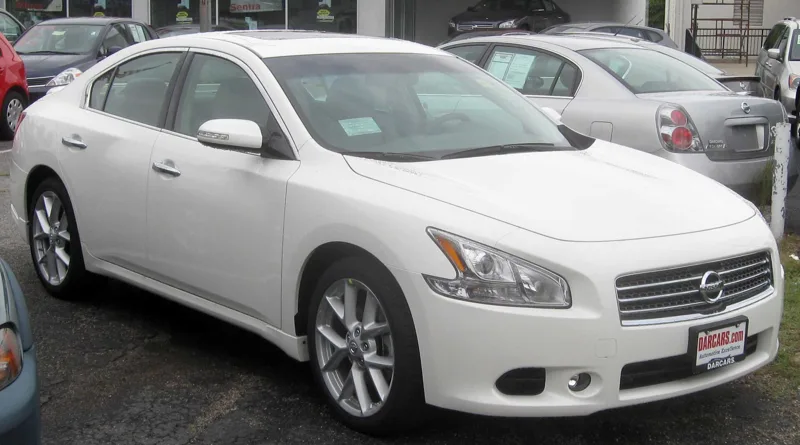
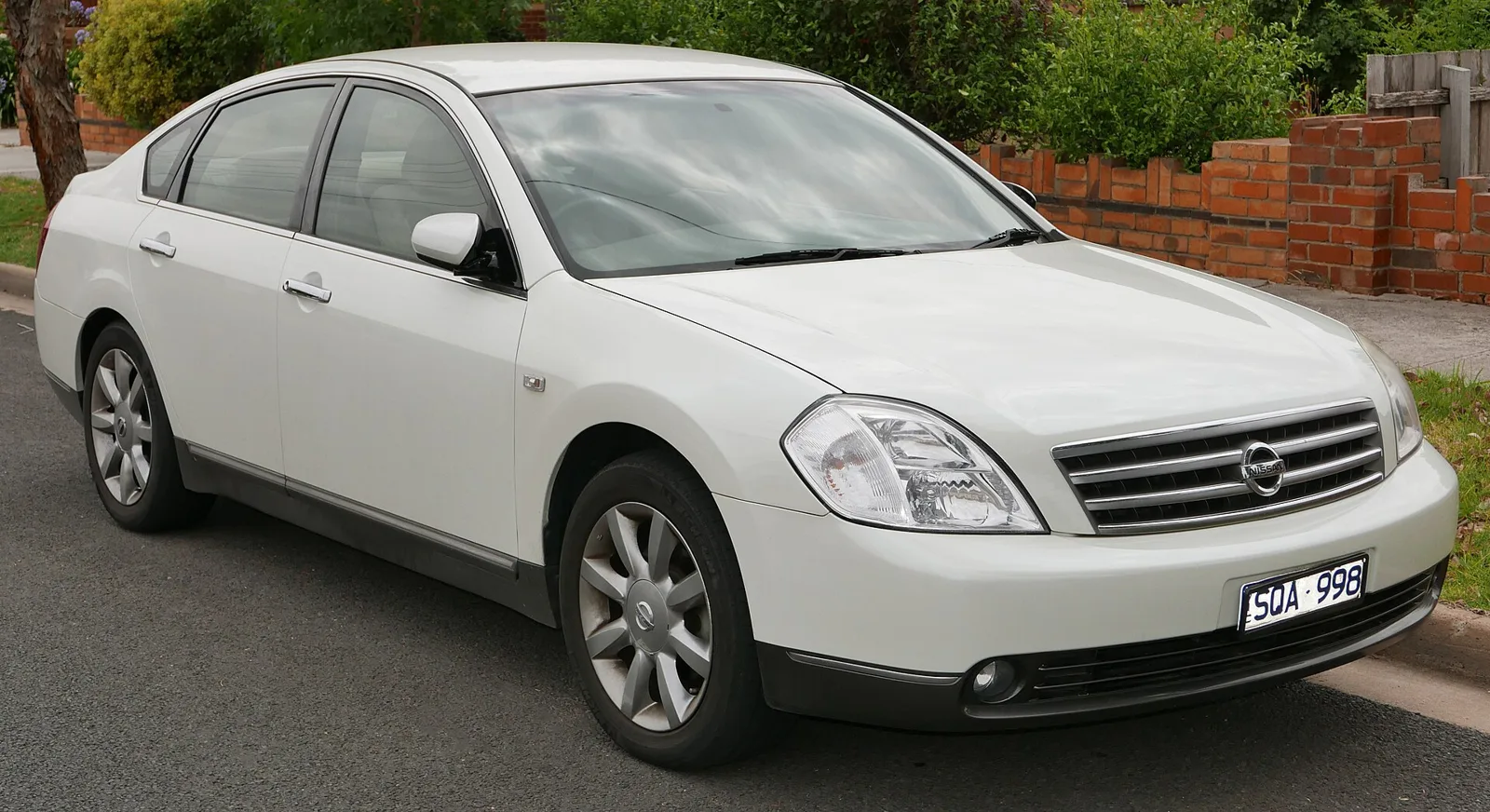
The second-generation Nissan Teana, body code J32, was a D-segment saloon that Nissan built from 2008 to 2015. It replaced the first-generation car, sold in Australia as the Nissan Maxima, and it outsold its predecessor, with most of its sales in China.
Where did the second-generation Teana come from?
The story began with the Intima concept, shown at the Tokyo Motor Show in October 2007 as part of the Modern Living theme. Nissan built it as a four-door saloon whose main exterior feature was a side line running from the headlamps to the tail lamps.
The Intima replaced wing mirrors with cameras that projected images into the cabin, and its windscreen flowed into a panoramic roof. Critics pointed to its resemblance to the Mercedes-Benz CLS, but the concept also previewed a wave-shaped centre tunnel and a front passenger seat that turned outwards to make getting in and out easier.
The production saloon was revealed at the Beijing Motor Show in April 2008, where Nissan president Carlos Ghosn attended. Brochure photographs in Chinese had appeared on a car website earlier in April, making it clear that the new model was the second generation of the Teana.
A four-door saloon from Nissan that outsold its predecessor, with most of its sales in China and a Russian plant among its builders.
How many countries built the Teana?
Manufacturing was set up in six countries: Japan, China, Thailand, Russia, Malaysia and India. Besides Japan, the car began to be assembled in China, where assembly started on 16 June 2008 at a Dongfeng plant, and in Thailand, at a factory in Samut Prakan.
In Russia, assembly was set up at the company's plant in Saint Petersburg in June 2009. The Teana became the first model built there, and the first car off the line was burgundy. Malaysia began production in November 2010 at Serendah, and from late 2010 until January 2015 the car was assembled in India near Chennai, using small-unit assembly.
Prices varied widely across these markets. Japanese sales began on 7 June 2008 at 2,467,500 to 3,948,000 yen, while Thai buyers paid from 1,179,000 to 1,649,000 baht and Malaysian buyers from 138,000 to 248,500 ringgit.
How big was China for the Teana?
China took most of the second generation's sales, about half a million cars, and it was also where the previous generation had been produced. Assembly of the new car began there on 16 June 2008.
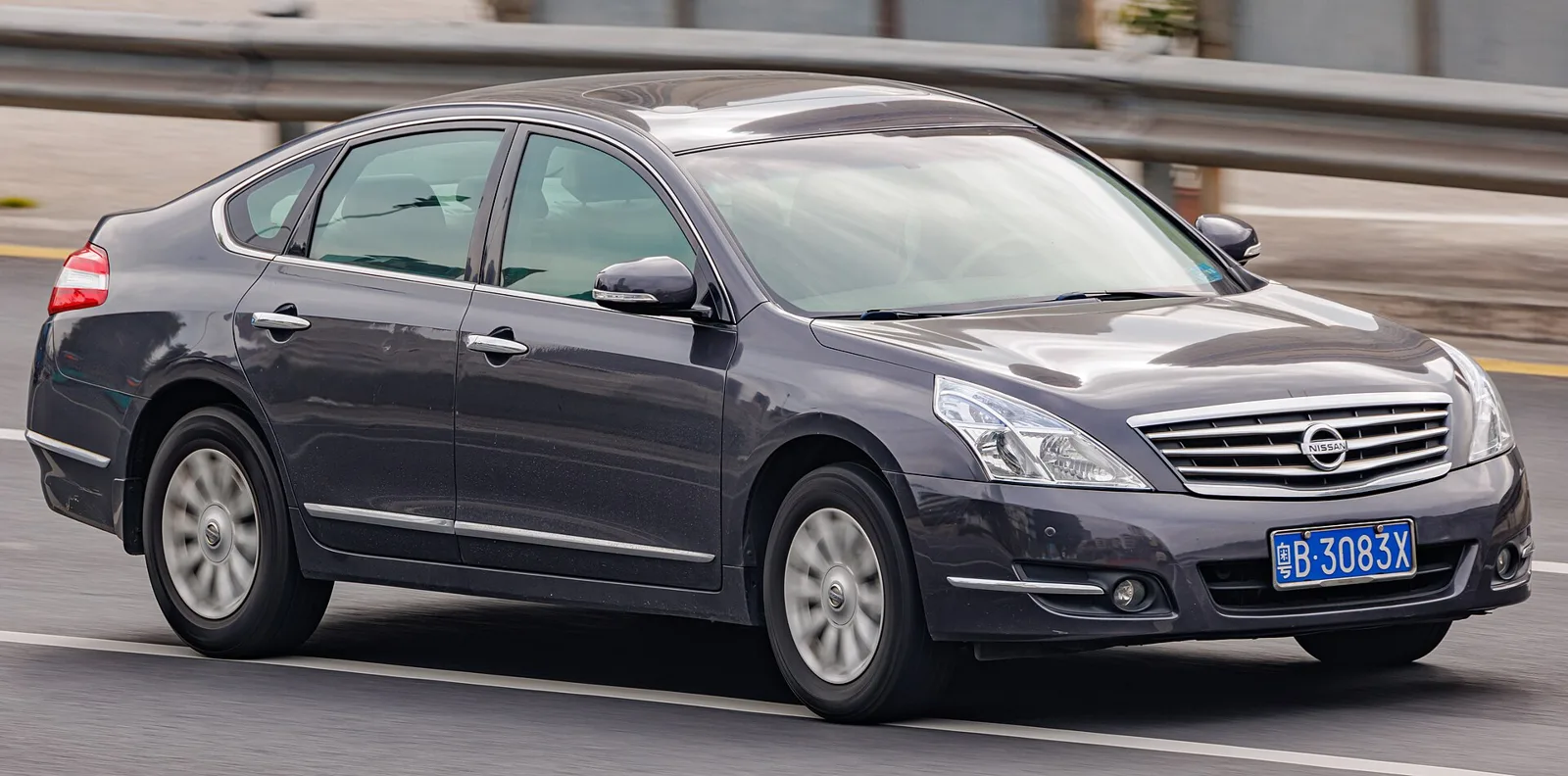
A facelift for the Chinese market was presented in December 2010.
What changed in the facelifts?
The Chinese facelift arrived at the Guangzhou Motor Show in December 2010. It brought projector-type headlamps, a trapezoidal grille with a frame, a revised front bumper and tail lamps with fewer red lenses. Inside there were no serious changes.
The Japanese update came in July 2012 and was far smaller, with new wheel discs and tail lamps. Inside, a black-and-white display replaced the orange one on the instrument panel, and a new 250XL trim joined the line-up.
The third generation, based on the fifth-generation Nissan Altima, went into production from 2013.
How was the Teana designed inside and out?
The second generation kept the single body style of its predecessor, a four-door saloon, and updated the look with a more dynamic front and a side line that ran the full length of the body. Many features of the first-generation interior were retained, and the centre console was split in two, with a 7-inch main screen above the radio and climate controls.
The centre tunnel, like the Intima concept, is wave-shaped, but it ends between the front seats rather than running through the whole cabin. Top trim added a passenger ottoman seat with an electrically operated footrest, and rear passengers had controls for the audio, seat heating and rear-window blind in the centre armrest.
What trim levels and special versions were offered?
In Russia the Teana was offered from the Elegance+ trim up to Premium. Elegance+ included leather upholstery, electric and heated front seats, two-zone climate control, a CD changer and the Nissan Intelligent Key. Premium added the ottoman seat, xenon headlamps, ventilated front seats, navigation and metallic paint.
An SV special version went on sale in April 2013, based on the Premium and Premium+ models. It had front and rear spoilers and 17-inch wheels, and it was priced from 1,392,000 to 1,553,000 roubles.
In Australia the Maxima came in three trims. The base ST-L had xenon headlamps, LED tail lamps and 17-inch wheels from 33,990 dollars. The ST-S added rear parking sensors, a rear spoiler and heated front seats from 37,990 dollars, and the top Ti, at 46,990 dollars, came with 3D satellite navigation, a 7-inch display, a rear camera and a panoramic roof.
Teana specifications at a glance
| Specification | Detail |
|---|---|
| Platform | Nissan D, shared with the second-generation Murano and fourth-generation Quest |
| Base engine | 2.5-litre I4 QR25DE, 167 PS (123 kW) at 5,600 rpm |
| Mid engine | 2.5-litre V6 VQ25DE, 182 PS (134 kW) at 6,000 rpm |
| Top engine | 3.5-litre V6 VQ35DE, 249 PS (183 kW) |
| Gearbox | Continuously variable transmission, the only option |
| Drive | Front-wheel drive; all-wheel drive on the Teana Four |
| Ground clearance | 135 mm (150 mm on the Teana Four) |
| Front suspension | Independent MacPherson type |
| Rear suspension | Independent, coil-sprung, multi-link |
| Brakes | Disc front and rear, with the front ventilated |
| Airbags | Up to six in the top trim |
How was the Teana engineered?
The Teana sat on the Nissan D platform, which it shared with the second-generation Murano and fourth-generation Quest. Front-wheel drive was the norm, but a Teana Four with an all-wheel-drive system, using a multi-plate clutch to drive the rear wheels, was built for Russia.
The engine range had three units, from the base 2.5-litre four-cylinder through a 2.5-litre V6 to the 3.5-litre V6 at the top. Every version used a continuously variable transmission, the only gearbox the car was offered with. Ground clearance was 135 mm, rising to 150 mm on the Teana Four.
Was there an all-wheel-drive version?
The Teana Four, an all-wheel-drive version, was also produced for Russia.
Ground clearance was 150 mm on the Teana Four, compared with 135 mm on the standard car.
How safe was the Teana?
ABS and ESP were standard even in the base trim, and the top trim had up to six airbags. The Australian version already had six airbags, active head restraints and dynamic stability control in its base trim.
Only the Japanese JNCAP body crash-tested the car. Its 2009 results gave the Teana 89.8% for driver protection and 90.7% for front passenger protection.
How did critics rate the Teana?
Reviewers liked the interior comfort, the suspension and the handling. They criticised the lack of steering-wheel reach adjustment and a not very comfortable driver's seat. The Russian magazine Avtorevu tested six D-segment saloons in 2011, the Teana among them.
In that test the Teana Four was the quickest car in acceleration and shared first place on points with the Citroen C5, scoring 840 points. A second test in 2009 pitted it against the Skoda Superb, Toyota Camry and Honda Accord, and the Teana proved quickest to warm its driver's seat, which reached 20 degrees in five minutes.
The Superb had the bigger boot, because the Teana could carry long items only through a hatch in the rear seat row. Taken together, the reviews were positive but mixed, praising space, comfort and ride while flagging the seat and steering adjustment. Drive magazine liked the car too, but its CVT stayed stuck on one note under full throttle. In Singapore the Dutch magazine Autoweek found the car generally positive, with tyre noise the main disappointment. It gave the car 3.5, with 4 out of 5 for reliability and comfort and 3 out of 5 for performance and value.
Was the Teana part of a recall?
Nissan recalled a wide range of models in January 2019, the Teana among them. The affected cars had been built between January 2004 and November 2012, and the reason was the airbag inflators supplied by an outside firm.
In high temperature and humidity, the ammonium nitrate inside those inflators could break up when the airbag fired, sending fragments towards the driver or passenger.
What did Autech and Mitsuoka add to the Teana?
The tuning firm Autech made the Teana Axis, which had a new grille, bumper trims, side sills, exclusive 17-inch wheels and a new exhaust. The cabin had heated leather seats, a dashboard and doors trimmed in black washi paper, and a leather-covered steering wheel and gear lever. It launched from 3,108,000 to 4,641,000 yen.
In November 2010 the Japanese maker Mitsuoka began small-series assembly of the Galue, a sixth-generation saloon built on the second-generation Teana body. Its nose was redrawn in the style of British Rolls-Royce cars, while the rear got new tail lamps and a bumper. Plans called for five to ten cars a month, priced from 3,680,000 to 5,284,000 yen.
How well did the Teana sell?
The second generation outsold its predecessor. China took about half a million of the cars and Russia around 50 thousand, but India was a weak market, with only 1,135 cars sold there.
How did the Russian campaign sell the car?
In 2009 Nissan launched a Teana campaign for the Russian market with the slogan asking why a car should turn itself inside out and then need to prove anything. The commercial showed the car literally turned inside out, with the interior spilling outwards and the doors flipping over.
A dedicated promotional website explained each advantage through video alone, on the basis that the car needed no written argument. The car's own short slogan was Luxury in the details.