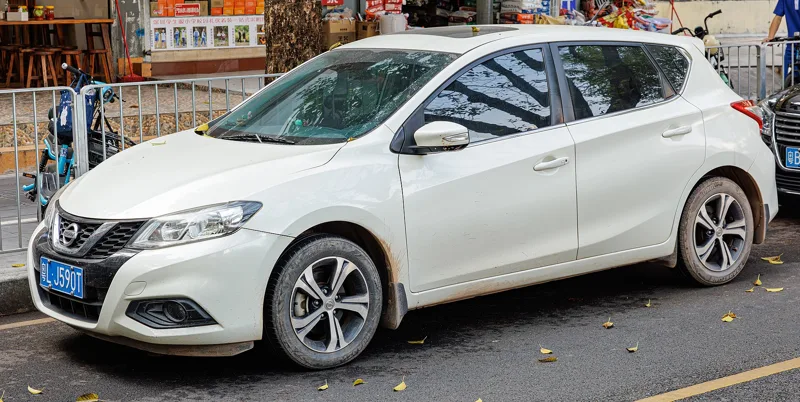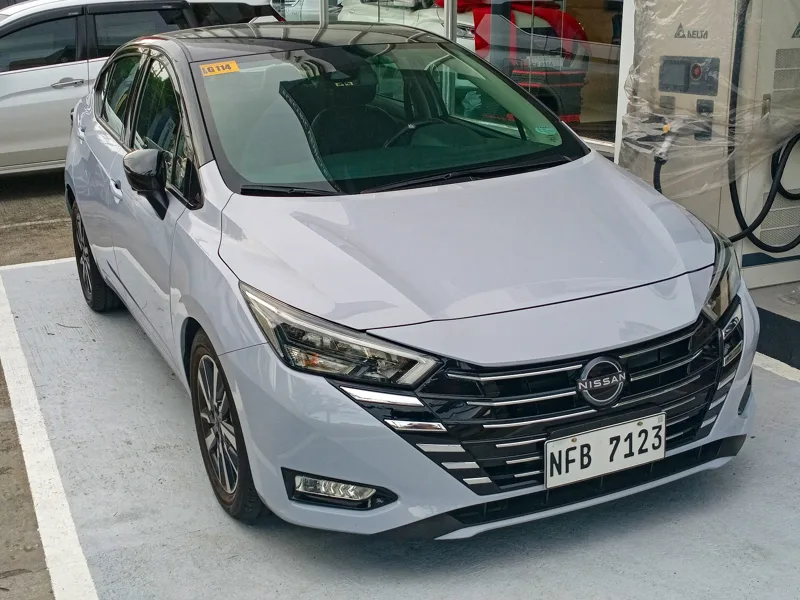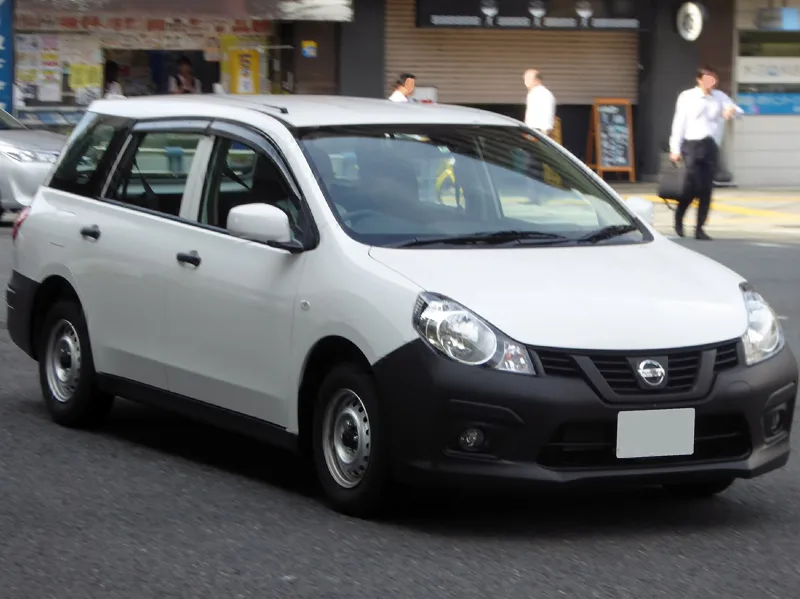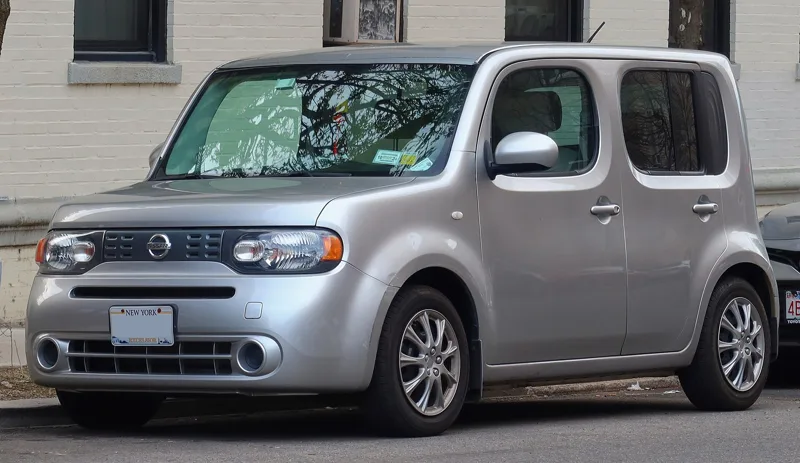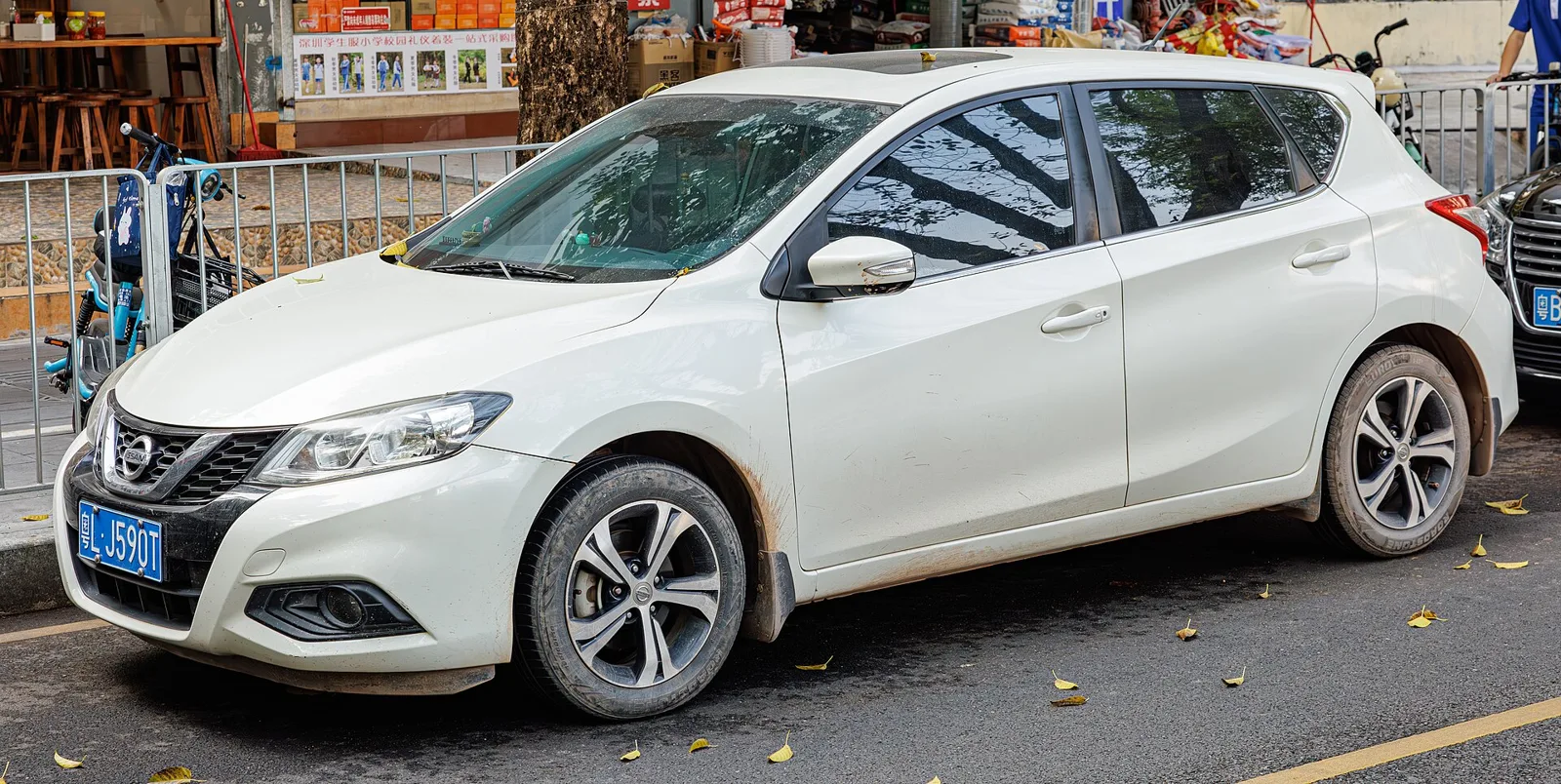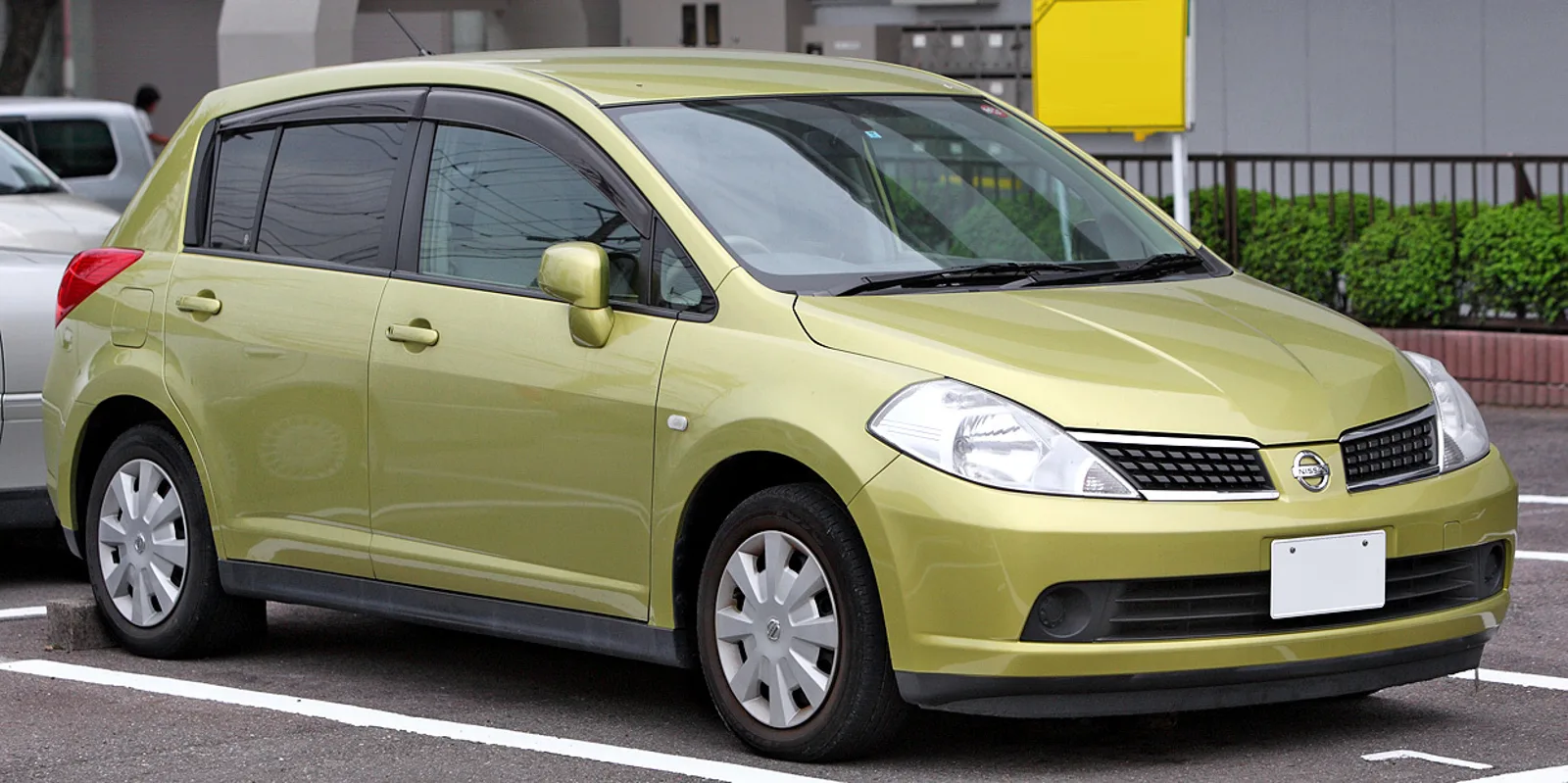
A Renault-Nissan alliance hatchback and saloon from 2004, with Autech variants, Chinese and Taiwanese versions, a racing Tiida and a 2008 restyle.
The Nissan Tiida C11 was a C-class hatchback and saloon built from 2004 to 2018. Its concept, the C-Note, appeared at Tokyo in 2003, and the Japanese launch came in September 2004.
The first-generation Nissan Tiida was a C-class five-door hatchback and four-door saloon, built by Nissan from 2004 to 2018 within the Renault-Nissan alliance. It began as the C-Note concept at the Tokyo Motor Show in 2003. By 2010 it was sold in 190 countries, and more than 1.2 million were built at a single plant in Mexico.
Where did the Tiida come from?
The Tiida grew out of the C-Note concept, first shown in October 2003. Some publications wrongly took it for the next Almera or the next Sentra, but it was a five-door hatchback built on the Nissan B platform, which Nissan developed with its alliance partner Renault.
Several media outlets compared the concept's front, and especially its radiator grille, with that of the second-generation Renault Megane, which was new at the time. The Russian magazine Avtorevu also saw a resemblance to the Megane in the profile of the door opening, and the editors said the rear recalled the Peugeot 307.
Praised for its roominess and criticised for its dull design, it still reached 190 countries by 2010.
What did the C-Note look like inside?
The concept was 4,240 mm (166.9 in) long, and its side windows were set almost vertically to give a sense of space inside. The side lines running from the front headlamps into long rear lamps were rounded, so the body would not look boxy.
The interior used a light beige trim. The company said the front seats were comparable with those of large saloons, and the rear bench could slide longitudinally by 240 mm (9.4 in). A 7-inch monitor and an infotainment system dominated the centre console, while wood texture covered the dashboard, the seat sides, the centre tunnel and the door panels. The steering wheel had three spokes, and three large dials sat on the instrument panel.
How did the Tiida launch in Japan?
The Tiida went on sale in Japan as a five-door hatchback on 30 September 2004, at prices from 1,428,000 to 1,764,000 yen. It was announced on 2 September 2004 together with four other models, the Murano, Fuga, Lafesta and Note, and it was sold through both the Blue Stage and Red Stage dealer networks.
The company hoped to sell about 5,000 hatchbacks a month. The name comes from the English word tide, which in English covers both the rising and the falling of the sea. The Tiida was also set to replace the Sunny on the home market.
Shuji Matsumoto, who was responsible for production planning, said the engineers had looked at rivals from Mazda when designing the car, namely the Verisa and the Axela, which is the Japanese name for the Mazda3. A saloon followed on 28 October 2004 under the name Tiida Latio. Latio is formed from the English word latitude, and its prices ran from 1,323,000 to 1,795,000 yen. Sales were planned at 3,000 saloons a month.
What did Autech add to the Tiida?
Autech, a Nissan division, produced a tuned hatchback called the Autech Tiida Axis. It had a different front bumper and radiator grille, and its prices ran from 1,837,500 to 2,026,500 yen at launch.
The inside of the Axis was reworked completely. Its seats were trimmed in natural brown leather, and the front panel was finished in wood. In June 2007 a black upholstery option was added to the brown, and the Axis price at that time varied from 1,934,100 to 2,189,250 yen.
What were the Enchante versions for disabled drivers?
Autech also built three special versions, the Tiida Enchante and the Tiida Latio Enchante, which were intended for people with disabilities. Each one changed how a disabled occupant could get in or out, or how a disabled driver could operate the car.
The first, the Enchante Slide-out Lift Front Passenger's Seat, had a front passenger seat that turned towards the door and slid out, operated by a remote control or buttons on the seat. The Swivel model used the standard Tiida passenger seat, which turned and moved mechanically. The Driving Helper replaced the pedal assembly with a powered lever for a disabled driver.
For the hatchback, the disabled-access models were priced from 1,995,000 to 2,058,000 yen with the special seat, from 1,635,750 to 1,695,000 yen with the standard seat, and from 1,805,000 to 1,985,000 yen with the lever instead of pedals. The saloon versions ran from 1,848,000 to 2,215,500 yen, from 1,569,750 to 1,937,250 yen and from 1,835,000 to 2,015,000 yen.
What changed in the 2005 and 2008 updates?
The first update came on 21 December 2005 and focused on the environment. CO2 emissions from the HR18DE engine were reduced, and the cars earned the certificate '2005 Standard 75% Emission Reduction Level (SU-LEV)', which entitled them to benefits under the Japanese green tax.
The bigger restyle came on 28 January 2008 and touched every version. The front bumper was new, the radiator grille changed from a striped design to a cellular one, and the rear gained updated lamps and a modified bumper. Four new paint options arrived: Silky Beige, Brilliant Silver, Champagne Gold and Pacific Blue. The final pair was offered on the hatchback alone.
Under the bonnet the HR15DE engine and the CVT were updated to cut fuel use and CO2, which raised the level of green tax benefit. The 1.8-litre engine gained a new 6-speed manual gearbox, and the electric power steering was retuned. By then sales had slipped, and the plan called for about 2,500 hatchbacks and 1,800 saloons a month.
Price and update timeline
| Date | Change | Hatchback price | Saloon price |
|---|---|---|---|
| 30 September 2004 | Japanese launch | 1,428,000 to 1,764,000 yen | Launched 28 October 2004 at 1,323,000 to 1,795,000 yen |
| 21 December 2005 | Environmental update, SU-LEV certificate | 1,459,500 to 1,911,000 yen | 1,323,000 to 1,900,500 yen |
| 28 January 2008 | Major restyle and new gearbox option | 1,459,500 to 1,795,500 yen | 1,323,000 to 1,827,000 yen |
| 1 October 2008 | Safety update with Intelligent Key | 1,687,350 to 2,007,600 yen | 1,687,350 to 2,086,350 yen |
| 16 August 2010 | ECO driving mode and Plasmacluster Ion air conditioner | 1,499,400 to 1,858,500 yen | 1,399,650 to 1,890,000 yen |
What was the Nismo Tiida S-Tune?
The Nismo Tiida S-Tune was the sporty version, built by the Nissan division Nismo. A prototype, the Tiida S-Tune PROTO, was shown at the Tokyo Motor Show in January 2008, and the production version followed in September 2008 under a similar name.
The engine was essentially unchanged, apart from a new stainless-steel exhaust. The main changes were visual, with new body kits for better aerodynamics, and 16-inch forged aluminium wheels with six spokes. The suspension received stiffer shock absorbers and springs, which improved handling in corners.
Was there a driving school Tiida?
Autech built a training version of the Tiida Latio saloon for driving schools, and it went on sale on 10 September 2008. Its main difference was a modified front passenger seat for the instructor, which had a built-in lift to reduce fatigue during long lessons.
The training car used a special version of the 1.6-litre HR16DE engine with a 5-speed manual gearbox, which made the engine easier for beginners to start and gave smoother movement at low speeds. A version with the HR15DE engine was also offered, priced at 1,715,700 yen, while the HR16DE version cost 1,726,200 yen.
How did the Tiida sell in China?
The saloon was presented for the Chinese market on 19 April 2005, at prices from 119,800 to 159,800 yuan. It was assembled at a plant in Huadu, Guangzhou, and it was called Nissan Yida in addition to its usual name.
Nissan expected a great deal. The car was meant to strengthen competition in its segment, and at least 40 thousand cars were to be sold in 2005. Before the premiere the saloon had already taken 5,000 pre-orders. The hatchback followed in August 2005 under the name Qida, with launch prices no different from the saloon's.
The updated saloon and hatchback were shown at the Guangzhou motor show in November 2007. They gained a radiator grille in the style of the mid-size Murano crossover, along with four airbags and curtain airbags as standard. The Tiida Technology Edition followed in December 2008 at 132,800 yuan, with a 7-inch colour LCD screen, a DVD entertainment system and a reversing camera with parking assistance.
A survey carried out in early 2008 by an independent research group found the Tiida the most attractive car for Chinese buyers in the affordable mid-size category.
When did the Tiida reach Taiwan?
The Taiwan launch was announced in December 2005 and took place on 8 June 2006, with the hatchback and saloon introduced together. Saloon prices ran from 499,000 to 670,000 Taiwan dollars, and hatchback prices from 599,000 to 680,000 dollars. Up to 1,800 cars a month were planned.
The Taiwanese division, Yulon Nissan, released updated Tiida and Livina models on 15 October 2010. The main addition was an Eco Driving head-up display that showed fuel consumption as a green, yellow or red strip. Nissan's tests said such displays cut fuel use by 11% and reduced daily CO2 emissions by 320 kg.
The sporty Tiida Z went on sale in March 2011 at 619,000 Taiwan dollars, with better aerodynamics, different air intakes, side skirts and a rear spoiler. A limited Mr. Tiida followed on 2 June 2011, with a checked pattern on the bonnet, rear pillars, seats, door panels and spoilers. Only 500 were made.
Did the Tiida race?
A racing version of the Tiida competed in the China Circuit Championship from 2006 to 2010, and it won several times.
Which special editions were sold?
Special and limited versions appeared throughout the car's life in Japan. In April 2005 Nissan announced a version with suede seat upholstery and a wood-effect front panel, and in April 2006 the Modern Collection arrived with interior trim in the Weimaraner colour, named after a breed of dog.
A limited series came on 27 May 2008 with the Car Wings HDD infotainment system and automatic air conditioning. It was offered in any trim at a price 446,250 yen above the usual (from 1,617,600 to 1,827,000 yen), and sales were originally to end in late September 2008. On 30 June 2011 a further special version, the 15M SV and 15M FOUR SV, added the ionising air conditioner and cost 78,750 yen more, at 1,596,000 yen for front-wheel drive and 1,779,750 yen for all-wheel drive.
How was the Tiida received?
Reviews were mixed. Publications praised the roomy interior and the quiet engines, which gave good performance, while they criticised the dull, undistinguished design and the handling, which was not the best.
Car and Driver, an American magazine, described the car as clumsy, since it looked small beside rivals on that market. In 2011 the Versa also appeared on a list of the 25 least safe American cars, despite earlier crash tests that gave the opposite result. A marketing scandal involving the actress Kim Cattrall is also linked with the car.
What came after the first Tiida?
The second generation was presented at the Shanghai Motor Show in April 2011, and its hatchback went on sale in China on 30 May 2011. The update of 16 August 2010 was the last one for the Japanese model. From 2012 the new model reached Taiwan.
The next-generation saloon was released in Japan on 5 October 2012, while the first-generation saloon remained in production until May 2018. The company then removed it from its official website.