A front-wheel drive family car from Soviet AvtoVAZ that sold across Europe, Australia and Canada before exports faded in the late 1990s.
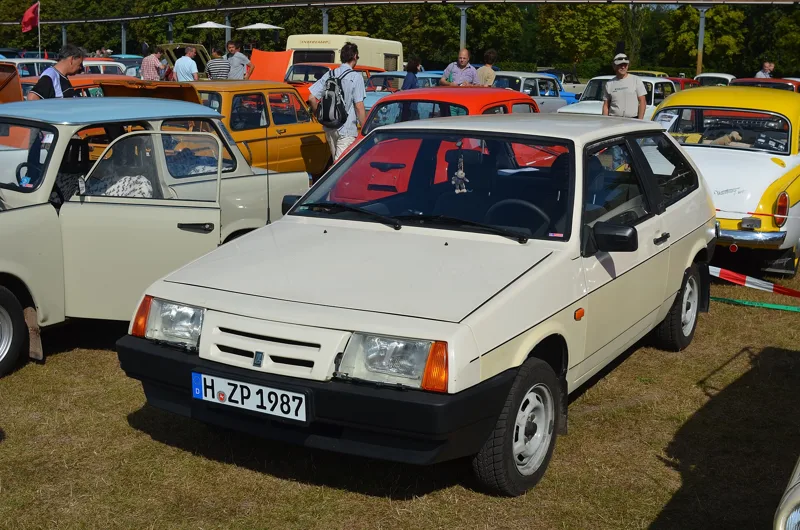
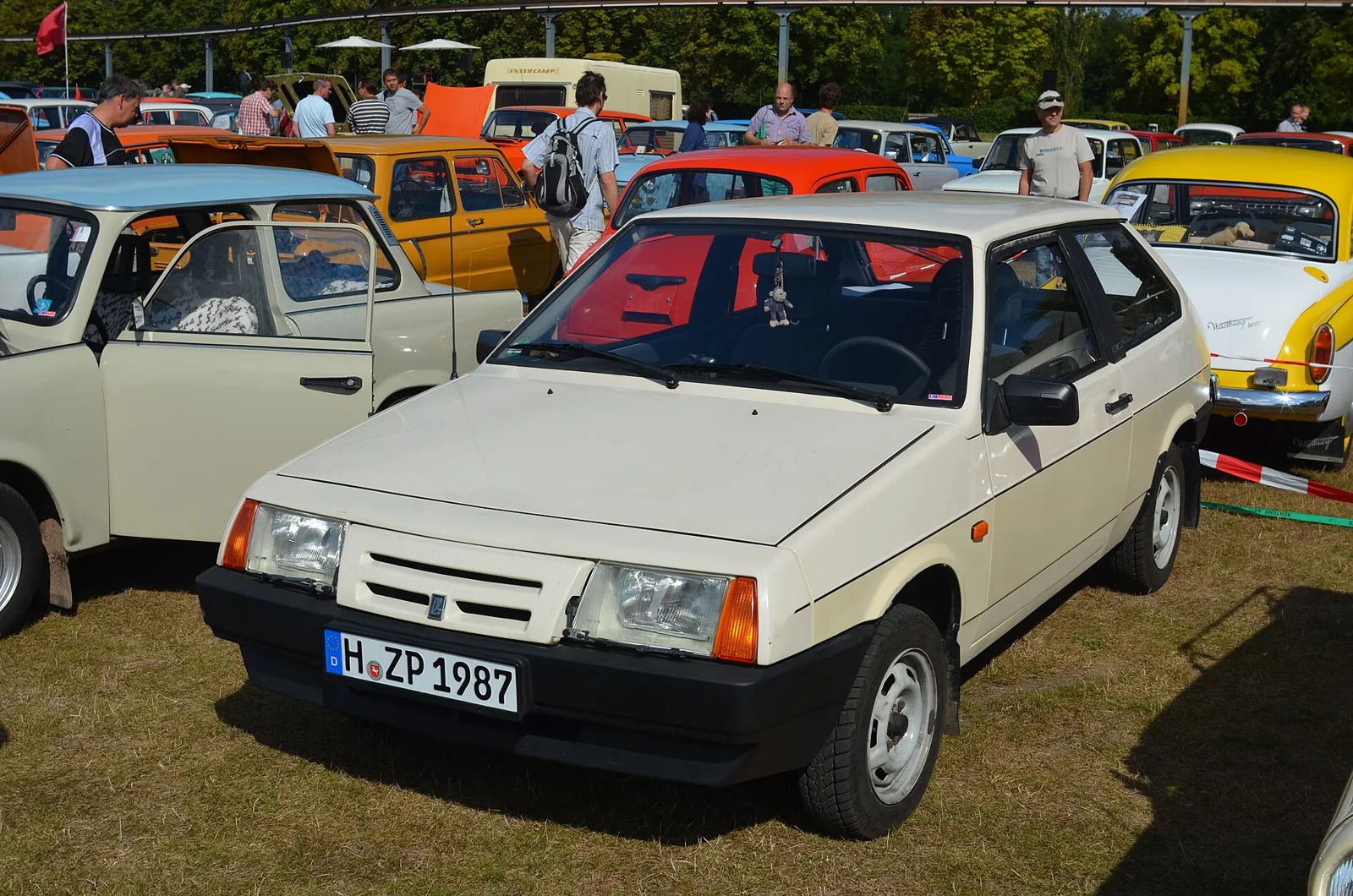
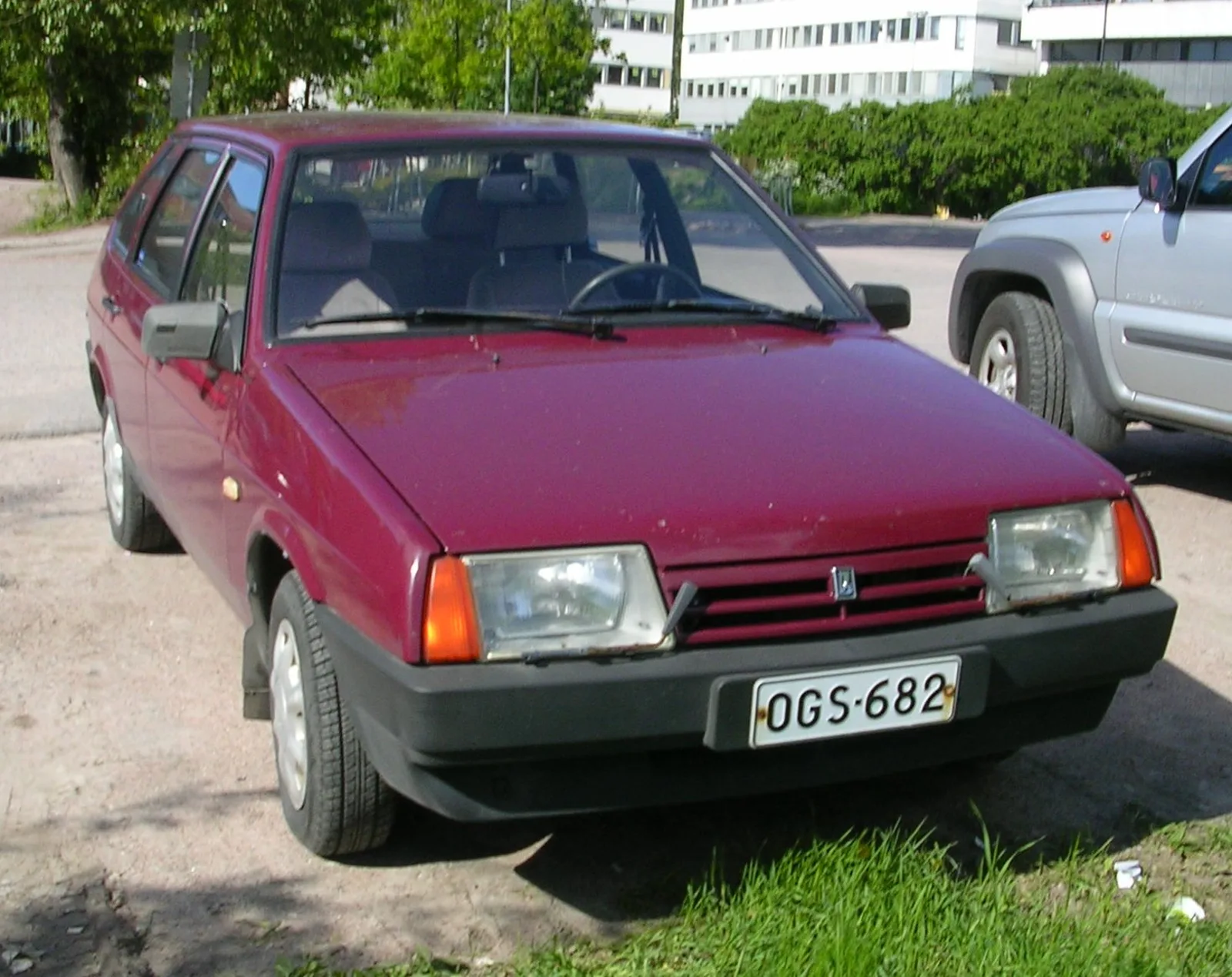
The Lada Samara, known as the VAZ-2108 at home, was a small family car built by AvtoVAZ from 1984 to 2013. It was the first front-wheel drive serial car built in the Soviet Union since the LuAZ-969V. Export versions were sold across Europe, Canada, Australia and the UK until the late 1990s.
Known at home as the VAZ-2108, the Samara was a compact family car from AvtoVAZ's Lada brand, built between 1984 and 2013. Its front-wheel drive layout broke new ground for Soviet series production, and the car was aimed at the mainstream Western European market where the older Zhiguli models looked dated.
Its story runs from a Soviet design programme to a British launch in 1987, a Finnish-built EuroSamara and a long afterlife on the home market. Over the years VAZ kept revising the car, and it was finally dropped in December 2013.
Where did the Samara come from?
VAZ decided to build the Samara on 16 September 1978, aiming at strong sales in Western European export markets. An earlier Ladoga three-door prototype preceded it, and the first VAZ-2108 prototype was completed on 31 December 1979.
At home the car was called the Sputnik until 1991, and the export name came from the Samara River, a Volga tributary. Russian buyers more often called it the Vos'merka, or Eighth, after the last digit of the model code.
A front-wheel drive family car that sold from Western Europe to Australia before exports collapsed in the late 1990s.
What engines did the first Samara use?
The launch cars used a belt-driven 1,288 cc inline-four making 65 hp (48 kW), with a four-speed gearbox. A 1,099 cc unit and a 1,499 cc unit followed, and by 1987 the 21083 used a 72 hp (53 kW) 1,499 cc engine with a five-speed box.
Porsche consultants helped with the cylinder head, and Solex worked on the carburettors. Top speeds were 87 mph (140 km/h) for the 1.1, 92 mph (148 km/h) for the 1.3 and 97 mph (156 km/h) for the 1.5. Power on the 1.5 later rose to 75 hp (55 kW).
How did the Samara's suspension and steering work?
The front suspension used MacPherson struts and the rear used a torsion bar. Rack and pinion steering was fitted, which the company counted as another Soviet first. The layout was front-engined and front-wheel drive, with a four or five-speed gearbox.
The steering and suspension package gave the car a more modern feel than the Fiat 124-based Zhiguli models it was meant to replace. The Samara was the second autonomous VAZ design after the Niva SUV.
What did the 21099 saloon add?
The 21099 saloon arrived in 1989 with a new bonnet, grille, wings and a 200 mm (7.9 in) longer rear overhang. It also had an improved dashboard, and its front styling was later adopted on the hatchback in 1992 and the 2108 in 1994.
Fuel injection came later, to meet emissions rules in export markets. Full production of the 21099 began in December 1990, and the saloon was positioned as the premium model compared with the hatchback.
Which special models were built?
The rally and speciality cars were the most unusual Samaras. A Wankel 2108-91 with two 654 cc rotors was sold in Russia only. A rear-engined Appelsin 4x4 rally car appeared in 1985, and the 1987 Samara-EVA was mid-engined with a turbocharged 1,860 cc engine making 300 hp (221 kW).
The Wankel car was popular with police as a pursuit vehicle, thanks to its 200 km/h (124 mph) top speed, though reliability problems kept numbers small. It reached 0-100 km/h in eight seconds. The Samara S-Proto followed in 1989 with 350 hp (257 kW).
The Samara T3 raced the 1990 and 1991 Paris-Dakar rallies, with Jacky Ickx at the wheel. It finished seventh in class in 1990 and fifth in 1991, and it used a Porsche flat-six rather than any Samara engine.
How did the Samara reach export markets?
Export sales reached far afield, from Australia to Canada, and across most of Europe and the COMECON bloc. Its build quality was better than most Eastern European models, which helped it stand out in those markets.
Local dealers decided many versions and fittings. The saloon was sold under other names, including Sagona in France, Diva in Belgium, Forma in Germany and Sable in Australia and New Zealand.
How did the Samara do in Britain?
UK sales began in November 1987 at 4,795 pounds, a price that undercut the Peugeot 309 and Ford Escort 1300. The Motor magazine test scored the car above five out of ten in most areas, praising its equipment and cornering while criticising the interior.
The Samara remained on sale until 4 July 1997, when the decision was made to withdraw from Great Britain. It became the most popular Lada in the UK during the 23 years the brand was sold there, though it came bottom of the 1996 and 1997 JD Power surveys.
Why did Samara exports fade in the late 1990s?
VAZ faced financial hardship in 1996 and 1997, and exports began to halt. The Samara left Canada after the 1997 model year, and exports to Australia and Britain ended around the same time. GM's reluctance to sell fuel-injection kits was a major obstacle.
Parts shortages, tax problems and the disorder of Russia in the mid-1990s made right-hand-drive production no longer feasible. The collapse of the export effort left the home market as the car's main outlet.
What was the EuroSamara?
A better-finished version for Europe, badged the EuroSamara and in some markets the Samara Baltic, was put together in Finland by Valmet Automotive at Uusikaupunki. Production ran from mid-1996 to July 1998, with 14,000 cars made from 85 percent Russian parts.
The EuroSamara was an attempt to keep a foothold in Europe after the export problems began. It showed what VAZ could achieve with a better specification and a partner's production line.
How did the Samara sell in Australia?
The Samara arrived in Australia in July 1988 as a three-door and a convertible. About 6,000 cars were modified by Peter Brock's Special Vehicles operation in 1988 as the Samara Sedan Brock Delux, which cost about A$3,000 more than the base model.
In 1990 the range was pared down to a single five-door, the Lada Cevaro. The three-door returned as the Volante in 1994, and the four-door became the Sable. Imports had ceased by 1996.
What did the Samara 2 change?
The Samara 2, sold from 1997, was a lightly facelifted car with a 77 hp (57 kW) single-point injection engine and a better gearbox. The four-door became the 2115 and was built at VAZ's special vehicles unit, while full production on the Togliatti main line began in 2000.
In January 2007 an upgraded Samara 2 used the 1.6-litre VAZ-11183-20 engine first seen in the 2110. The sedan was stopped in December 2012, and hatchbacks were built until the end of 2013.
How did the Samara fare in safety tests?
A 2109 scored 2.7 points out of 16 in a 2002 frontal test by the Russian ARCAP programme, which showed a durable body but limited passive safety. Two years later the 2114 five-door earned half a star out of four.
The results show how a car designed decades earlier could remain competitive at home while falling short of modern passive safety expectations. Those scores helped explain why the Samara struggled in the Western markets it had targeted.
How did the Samara compare with its rivals?
The Samara was pitched against the Renault 9, Volkswagen Golf, Ford Escort Mk III, Opel Kadett and Volvo 340, which were its main competitors. Those cars set the bar for European family hatchbacks of the time, and VAZ knew it had to match them on quality as well as price.
The higher price pitched the Samara against stiffer West European competition, and that was the heart of its difficulty. The British small car market had split into a mainstream segment and a budget segment, and the aging Samara found itself caught between the two.
What trim levels did the Samara offer?
Trim levels varied widely by market, and many features seen in Western Europe were actually importer upgrades. For 2003 there were three levels, Standard, Norma and Luxe, and each one was tuned to suit the three-door, five-door and sedan bodies.
The Norma grade added tweed seat covers with pockets in the front seats, trim for the boot and an anti-glare visor with a mirror. The Luxe grade added a headlamp cleaning system, exterior mirrors with an anti-dazzle effect and tinted windows on the hatchback.
Second-generation cars came in two grades. Norma included steel wheels, an immobiliser, central locking and front electric windows, while Luxe added a trip computer, velvet seats and heated front seats.
What were the Samara's technical specifications?
The Samara was a front-engine, front-wheel drive car with MacPherson struts at the front and a longitudinal arm and cross beam arrangement at the rear. Steering was rack and pinion, and the brakes were power-assisted, with discs at the front and drums at the rear.
Bore and stroke varied by engine. The 1.1 had a 76.0 mm bore and a 60.6 mm stroke, while the 1.5 used an 82.0 mm bore and a 71.0 mm stroke. Compression ratios ran from 9.0:1 to 9.8:1, and the fuel recommended was regular unleaded at 87 octane.
What happened to the Samara after 2000?
Full production in Togliatti began in 2000, and the classic 2109 and 21099 continued at ZAZ in Ukraine as of 2004. From May 2007 the car was also built in Kazakhstan by Azia Avto, which kept the old design alive in markets still attracted by its price.
While the Lada 110 and the Lada Priora took much of the Samara's market share at home, the car kept a clear price advantage and steady demand. That mix of age and affordability kept it on the road long after its Western exports had disappeared.
Specifications at a glance
| Version | Key figures |
|---|---|
| Launch engine (1.3) | 1,288 cc inline-four; 65 hp (48 kW); four-speed gearbox |
| 21083 (1987) | 1,499 cc; 72 hp (53 kW); five-speed gearbox |
| 21081 (1987) | 1,099 cc; 53 hp (39 kW) |
| 1.5 (later) | 72-77 hp (53-57 kW) at 4,800 rpm; 75 hp (55 kW) after the update |
| Wankel 2108-91 | 2 x 654 cc rotors; 140 hp (103 kW) at 6,000 rpm; 200 km/h (124 mph) |
| Samara 2 (1997) | 1,499 cc; 77 hp (57 kW); single-point fuel injection |
| Tyres | 165/70x13 steel-belted radials on 13-inch wheels |