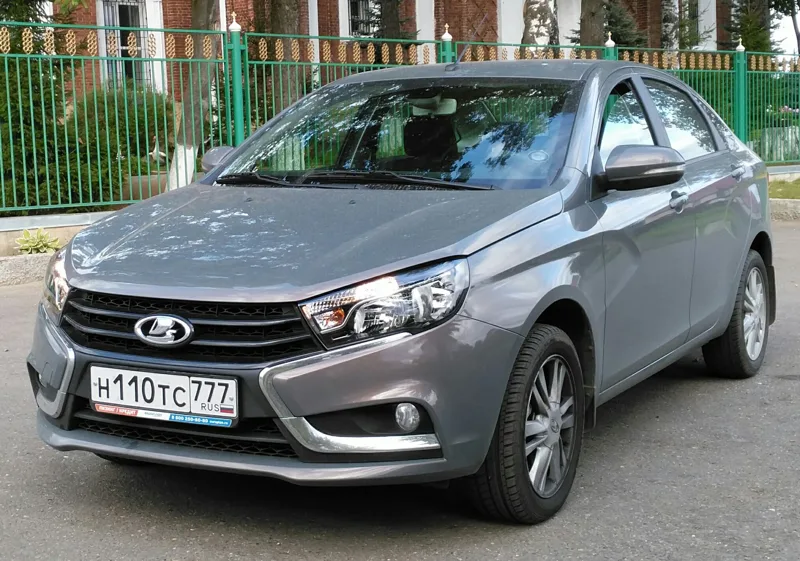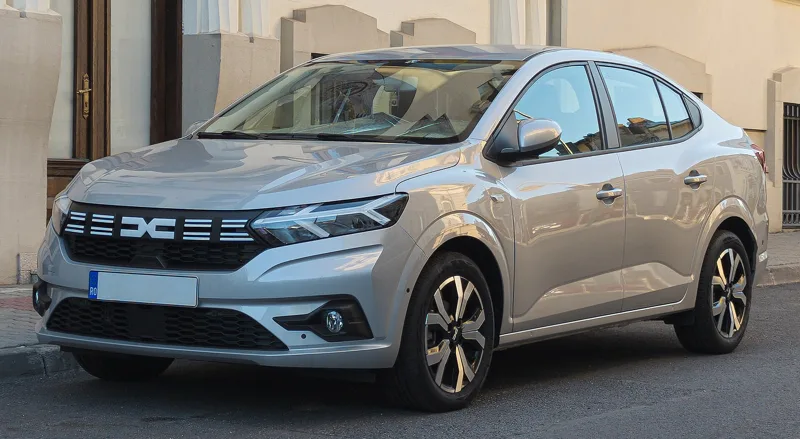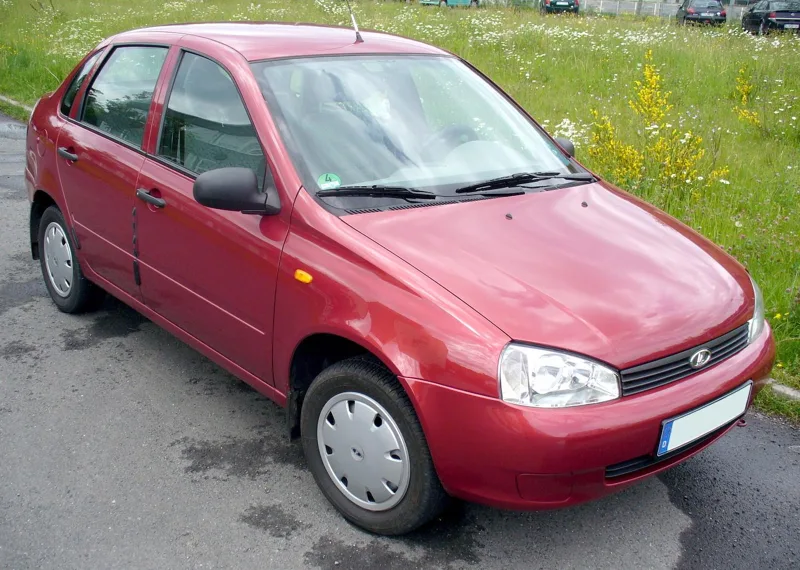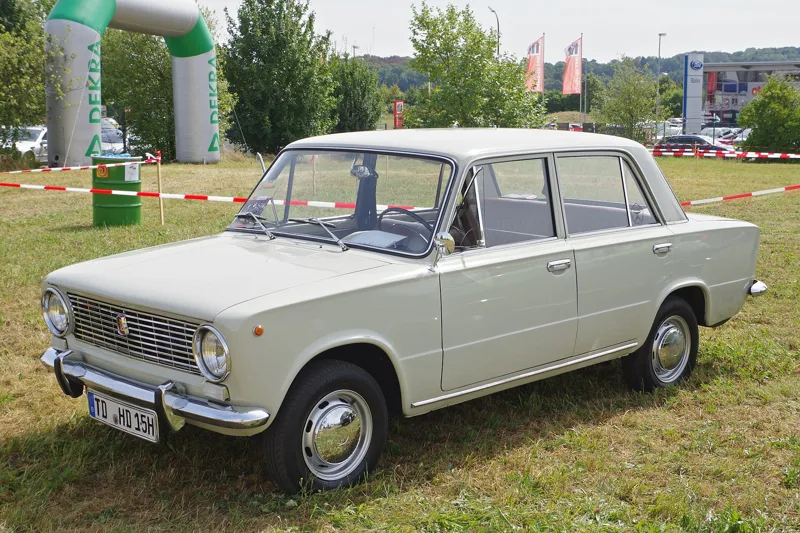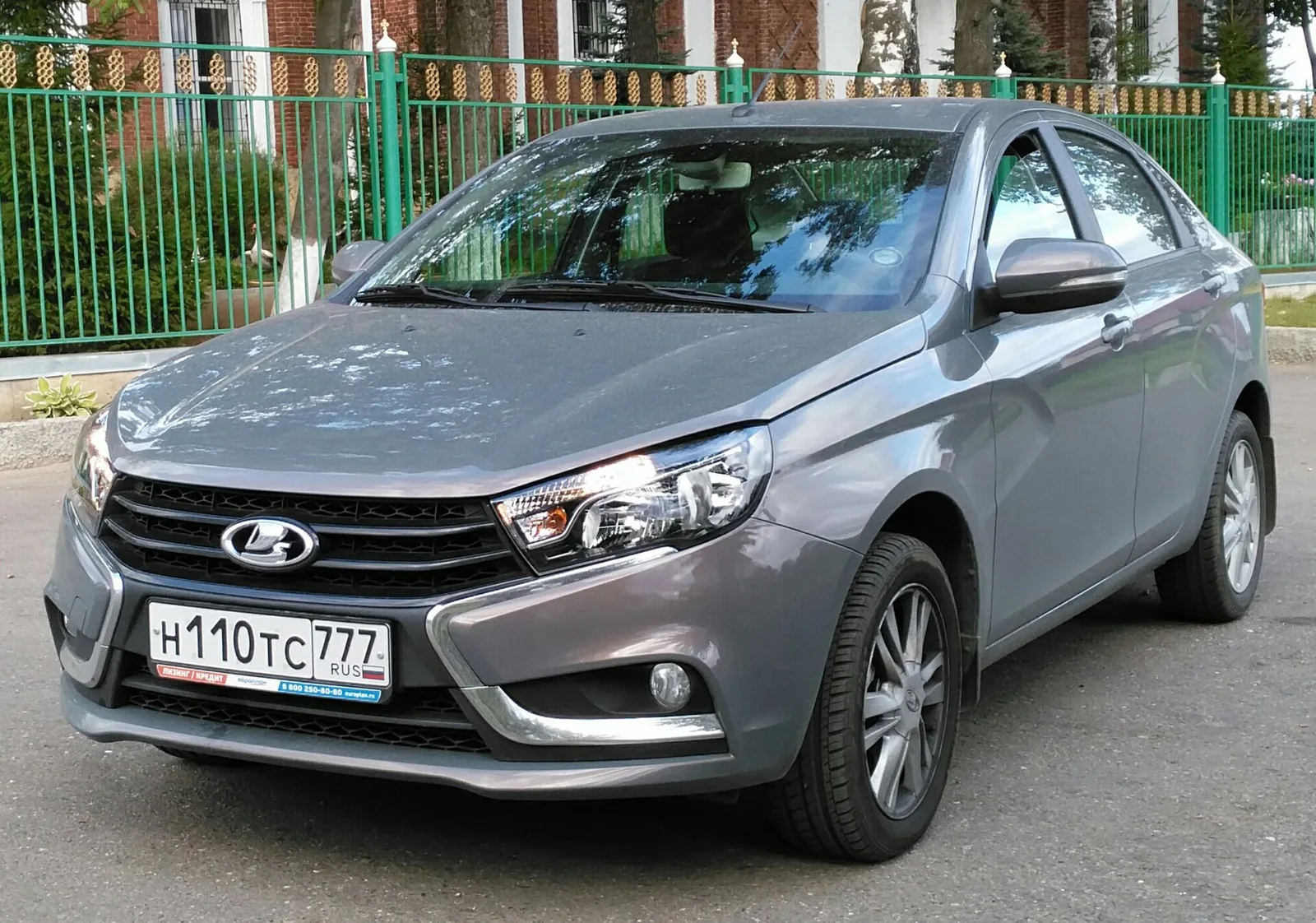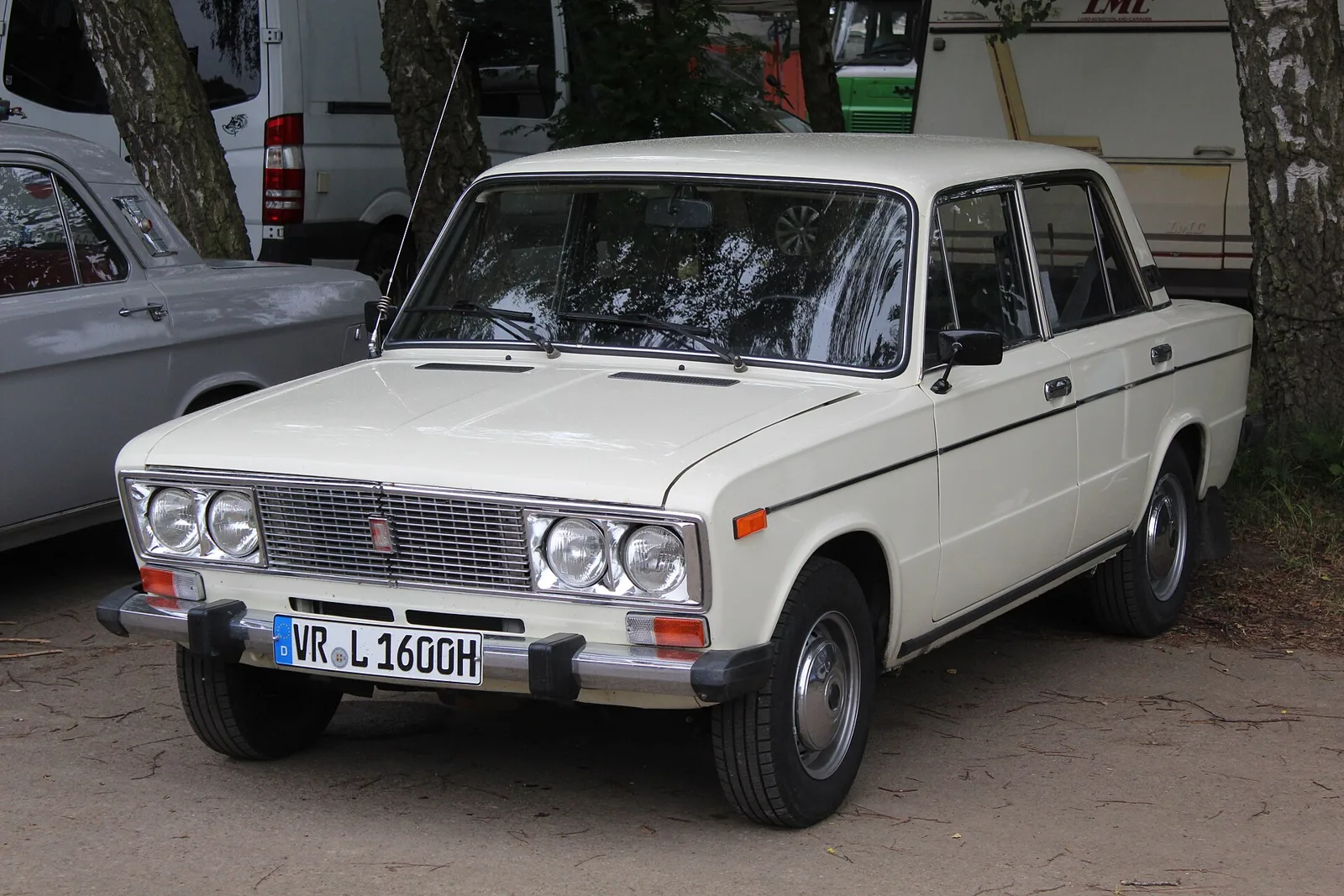
A saloon that outlasted its own factory, a compact car born from Porsche aerodynamics work and an estate that is a Dacia in all but badge.
The VAZ-2106 is a Soviet-designed saloon built from 1976 to 2006 that derived from the VAZ-2103. The Lada 110 is a compact car launched in 1995. The Lada Largus is an estate built since 2012 that is essentially a rebadged Dacia Logan MCV.
The VAZ-2106 stayed on sale for 30 years, from 1976 to 2006, and for the last five of them the factory that created it was no longer building it. It is one of three very different Ladas here: a Soviet saloon that outlived the Soviet Union, a compact car that Porsche engineers helped to shape, and a Renault-developed estate built in Tolyatti.
What is the VAZ-2106?
Soviet-era VAZ created the 2106 Zhiguli, a four-door saloon, and after the Soviet Union broke up it was built by Izhevsk Avto in Russia and Anto-Rus in Ukraine as well. Abroad it was the Lada 1600 or Lada 2106, and Russians nicknamed it the Shestyorka, meaning the sixth one.
VAZ's own plant stopped building it in 2001, after 25 years, and production carried on at Izhevsk for the last five. That longevity made it one of the most successful Lada models. For many buyers it was the best blend of comfort and status within reach in the Eastern Bloc, because the pricier, more luxurious GAZ and ZIL cars were meant first for party members and state officials.
Why the 2106 replaced chrome with plastic
The 2106 grew out of its predecessor, the VAZ-2103, and was created as an alternative to it because chrome elements were expensive and complex to produce. Chrome was cut back sharply, although the 2103 was not finally discontinued until 1984. Like the 2103 it was a four-seat, four-door saloon, but it had a more powerful engine of Lada's own design: a single-overhead-cam inline four of 1,568 cc making 78 hp (57 kW).
The engine was assembled from existing parts. Its pistons came from the VAZ-21011's 1,294 cc engine and its crankshaft from the VAZ-2103's 1,452 cc one. It was only marginally more powerful than the 2103's, but torque rose from 76 to 86 ft.lbf (103 to 117 N.m), making the car easier to drive. It topped out at 93 mph (150 km/h), and the sprint from 0 to 62 mph (0 to 100 km/h) took 16 seconds.
| Model | Engine | Output |
|---|---|---|
| VAZ-2106 (1976) | 1,568 cc | 78 hp (57 kW) |
| VAZ-21061 (1979) | 1,452 cc | 75 hp (55 kW) |
| VAZ-21063 (1979 to 1993) | 1,294 cc | 64 hp (47 kW) |
Launch, changes and the Niva link
The 2106 debuted in December 1975, and went on to be the most popular and most numerous VAZ product. Compared with the 2103 it had a smaller grille with plastic headlight surrounds, different bumpers and wider taillights with reversing lights, a new feature for VAZ. Inside it was almost the same, but it was the first VAZ with height-adjustable front headrests, and its steering wheel carried classic Russian ornaments and a Lada logo on the leather centre.
In 1976, as the newest model in the VAZ range, it served as the base for the prototype that became the VAZ-2121 Niva, the Lada Niva 1600, the following year. The Niva borrowed its 1600 cc, 75 hp (55 kW) engine, its lights, mirrors, headrests, steering wheel and instruments.
The 21061, with the 2103's 1,452 cc engine, and the cheaper, less powerful 21063 followed in 1979. The 21063 disappeared in 1993, and the 21061 became the sales leader, helping to make the 2106 the top-selling Lada. In Canada it was sold from late 1978 or early 1979 as the Lada Signet, officially VAZ 21061-37, until 1984. The 21061-41 variant, with Canadian bumpers and fittings but European indicators and tail lights, is one of the rarest of the series.
The 2106 was severely restyled in the second half of the 1990s, when its chrome elements were cut back further. The mirrors had already turned black in the first half of the 1980s, and a black plastic grille with a new Lada badge arrived. Chromed bumpers and Fiat 124 door handles stayed until the very end. Inside, the ageing Fiat 125 steering wheel gave way to a newer one, the wood-effect dashboard became black and modern seats replaced the old folding ones.
Rallying, a long drive and a safety verdict
Rally-prepared 2106s produced up to 135 hp (99 kW) from 1,294 cc and up to 150 hp (110 kW) from 1,570 cc, and a turbocharged sixteen-valve 1.8-litre delivered 240 hp (177 kW). In 2017 an old VAZ-2106 in the Banjul Challenge crossed twelve European and African countries in 15 days, from Saint Petersburg to Banjul in the Gambia, and was given to local residents when it finished; its four travellers flew home.
Modern tests are not kind to the design. In 2002 the IZhmash version earned zero stars out of four in Russia's ARCAP safety assessment. The reviewers called the result unsurprising, saying the car was outdated by then, with construction going back to the 1960s.
A saloon that outlived its own factory, a Porsche-assisted compact and a Dacia estate in Lada clothes.
What is the Lada 110?
Built by AvtoVAZ between 1995 and 2009, the Lada 110, or VAZ-2110, is a compact car with two close relatives, the Lada 111 estate and the Lada 112 hatchback. In 2007 the Lada Priora took over from the 110 family as a largely restyled and modernised version of it.
From Porsche input to production
The prototype, known as the 300 series, was created in 1987, and its aerodynamics were optimised in Zuffenhausen in Germany by AvtoVAZ and Porsche engineers working together. The monthly magazine Za Rulem published the first photographs in November 1990, and AvtoVAZ showed the car at its Tolyatti factory in 1991. Series production was pencilled in for the next year, but an economic crisis halted the project, and the first car came off the line on 27 June 1995.
The 110 had a 1.6-litre engine of about 90 hp (67 kW), initially with 8 valves and later with 16, and it weighed around 1050 kilograms (2315 lb). It came with electric windows, a trip computer, power steering and galvanised body panels, and fuel-injected cars had electronic engine management. New taillights and a new dashboard arrived in early 2006. The car sold very well at home, and it remains a favourite with taxi drivers in the Southern Federal District, who value its balance of price and quality.
Three trim levels were offered: Standard, Normal and Luxe. Standard included a clock, heated rear windows, power door and trunk locks, an immobilizer, body-colour bumpers and front head restraints. Normal added powered windows, anti-dazzle exterior mirrors and rear head restraints. Luxe added heated front seats, a trip computer, fog lights, electric heated mirrors, a spoiler with integral brake lights and tinted windows.
A tuner's favourite
The five-door hatchback in particular became a favourite for styling, both amateur and professional. Tuning firms from Tolyatti sold body kits, and several of the results reached the official AvtoVAZ catalogues. The Lada 110M, from AKS, Autostyle and Motorica, was treated as a restyled version of the original, and Super-Avto developed a 1.8-litre engine of its own design along with a lengthened sedan, the VAZ-21108 Premier. Pit-Stop built the Grand Rally and Rally Sport, Arsenal-Auto the Sprint, and Motorica a sporting VAZ-21106 with a 135 PS (99 kW) Opel engine. Enterprise worked with AvtoVAZ on the Consul and the four-wheel-drive Tarzan-2, a raised Lada 111 on a separate frame.
The Lada 111 estate
The Lada 111, or VAZ-2111, was the estate version, made from 1998 to 2009. It was the country's first front-wheel-drive car with that body style. The rear seat folded in a 2:3 ratio, and luggage space grew from 490 to 1,420 litres. A rear door and front-wheel drive gave a low loading height. Weight rose by 20 kg (44 lb) and the centre of mass sat higher, so the ride was smoother than the sedan's but the handling in corners was not as good.
Versions differed mainly by engine, with a 1.5-litre 8-valve in the basic car, 16-valve units in higher trims, and fuel injection and a catalytic converter on the 2111 and 2112. A carburettor car, the VAZ-21111, ended in 2002. From autumn 2004 the 1.6-litre 21112 (8 valves) and 21114 (16 valves) took over. Other variants included a four-wheel-drive 2.0-litre 150 hp Opel-engined 21116, and the Tarzan-2 and Pilgrim, which put the 21111 body on a separate ladder chassis with Niva mechanicals. Bogdan still makes the estate at Cherkasy as the Bogdan 2111.
The Lada 112 hatchback
The Lada 112 was introduced in 1999 and looked a little more modern and plusher than traditional Ladas. With a 1.5 to 1.6-litre inline four of about 90 hp (67 kW), it could reach 185 km/h (115 mph) and accelerate from 0 to 100 km/h in 12 seconds. It had a five-speed gearbox and rear drum brakes, and weighed between 1,050 and 1,230 kg (2,315 to 2,712 lb). A three-door 112 Coupe replaced the Lada Nadezhda on the pilot production lines and was dropped in 2008, when the Priora hatchback launched.
Abroad, on the track and in crash tests
Lada discontinued the 110 in 2007, but Bogdan kept building it for Ukraine as the Bogdan 2110 until 2014, and production in Egypt lasted until 2015. In 2008 the Russian Bears Motorsport team entered 110s in the World Touring Car Championship with Viktor Shapovalov and Jaap van Lagen. Team LADA Sport began 2009 with three 110s, for van Lagen, Kirill Ladygin and Shapovalov, and swapped them for the newer Prioras during the season.
The Lada 110 fared no better in the 2002 round of the same ARCAP programme, with zero stars. The reviewers found that injury figures stayed within safe values, the interior was well thought out and the body was very rugged, beating the Hyundai Accent, Suzuki Baleno, Nissan Almera, Ford Escort and Mitsubishi Lancer. But the belt squeezed the chest too hard, and they recommended airbags and up-to-date belts with pretensioners and force limiters.
What is the Lada Largus?
Since 2012 AvtoVAZ has built the Largus, a compact estate sold in Russia and the CIS. Under the skin it is a rebadged first-generation Dacia Logan MCV, a Renault design, and it began as a joint project with Renault and Nissan.
After the VAZ-2104 left production in 2012, AvtoVAZ had no cheap, roomy estate. The Kalina and Priora estates cost much more. It was AvtoVAZ's first joint venture with Renault-Nissan, backed by $550 million, and part of a plan for five Russian-built models on the Dacia B0 platform. Total production in 2012 was expected to reach 27,000 cars, mostly Largus.
Production began at a ceremony in Tolyatti on 4 April 2012, with sales from 16 July 2012. The panel van reached showrooms in August 2012 and the Cross in 2015. The car was built in a full-cycle production unit. Equipment included air conditioning, ABS, twin front airbags, hands-free phone connection and an MP3 player, and it seated five or seven. The only significant changes from the original were the grille, front bumper, quarter panel lining and headlights.
Engines and versions
Both versions had a choice of two 1.6-litre petrol engines with a five-speed manual: an 8-valve with 84 hp (62 kW) and a 16-valve with 105 hp (77 kW). In 2021 an updated Largus came as the Universal and the Cross, with the van renamed the Furgon, and the same engines gaining a little power to 90 and 106 hp (66 and 78 kW).
The passenger estate, the R90, is offered with five or seven seats. The boot holds 560 litres in the five-seater and only 135 litres in the seven-seater. The F90 is the cargo van with solid metal rear and side panels. The Cross, originally the Largus 'XV, comes in five- and seven-seat forms, and in 2016 AvtoVAZ presented a Cross Black Edition, with black wheels, roof and mirrors.
Lada also sells special models based on the Largus: wheelchair vans, cargo trucks, refrigerated vans, workshop vehicles, ambulances, non-emergency stretcher transport and taxis. A compressed natural gas version began production in January 2019, though it was suspended temporarily in 2021.
The electric Largus
Experimental production of an electric e-Largus began in Izhevsk in December 2022. Plans call for a passenger version and a commercial van. Russian-made components account for 50% of the car. Its electric motor makes 110 kW (150 hp) and can take it up to 145 km/h.
Is the Largus still being developed?
The e-Largus is planned for both passenger and commercial versions, though production so far is experimental. The Largus CNG, which began in January 2019, was temporarily suspended in 2021.