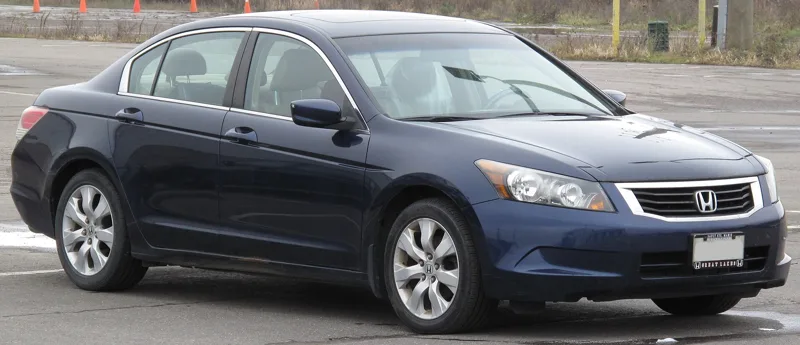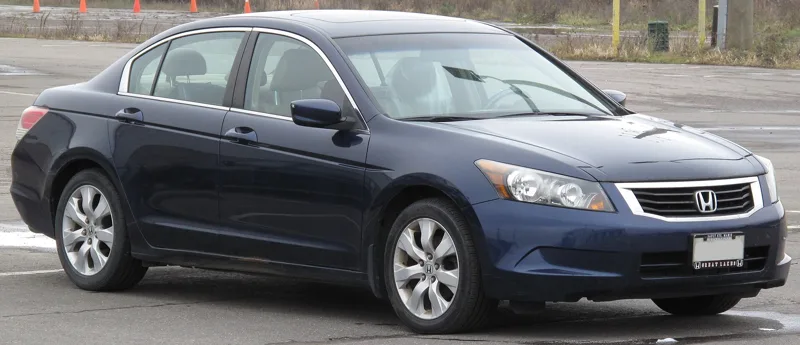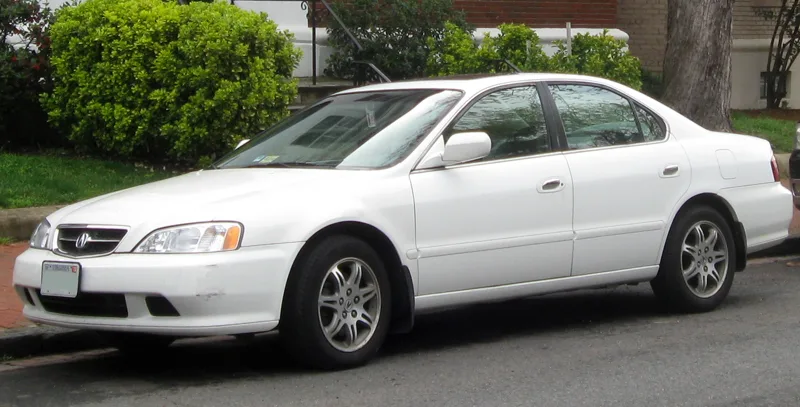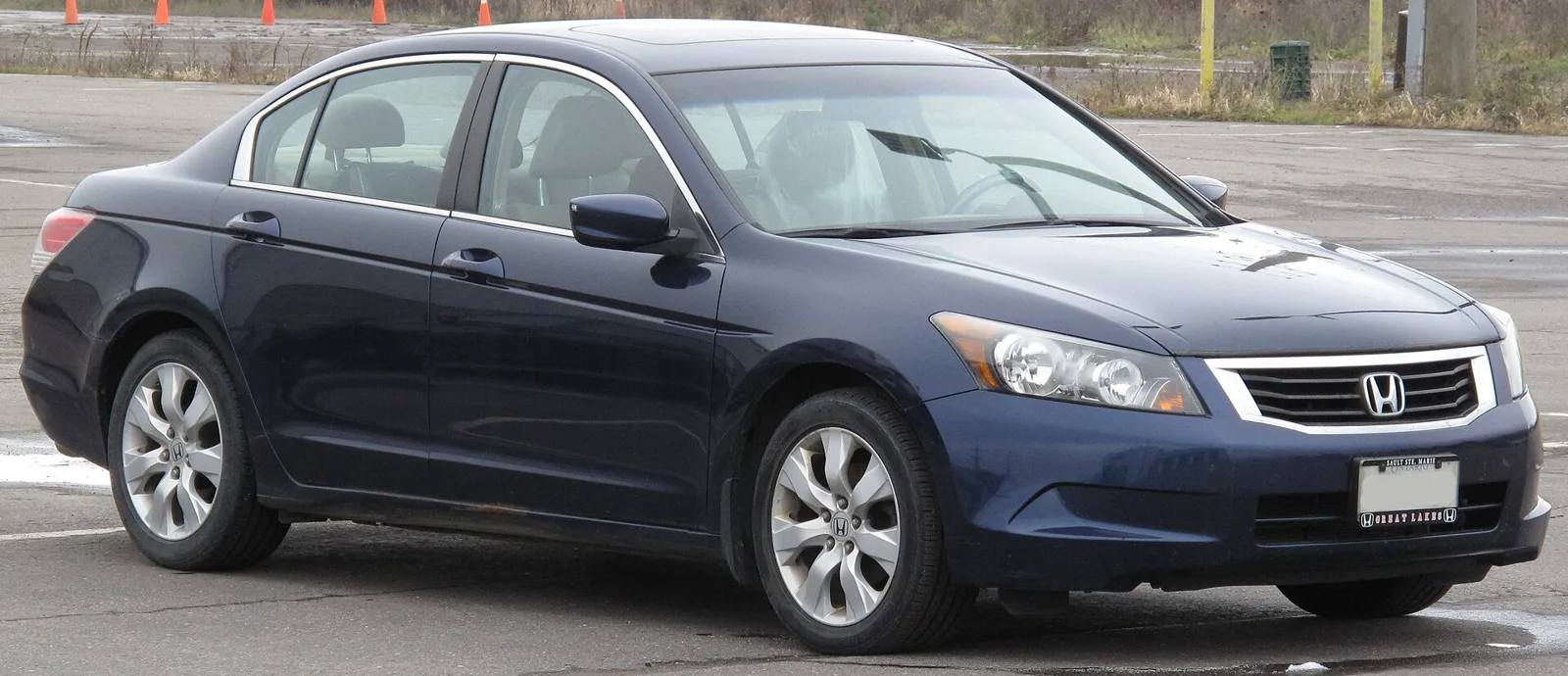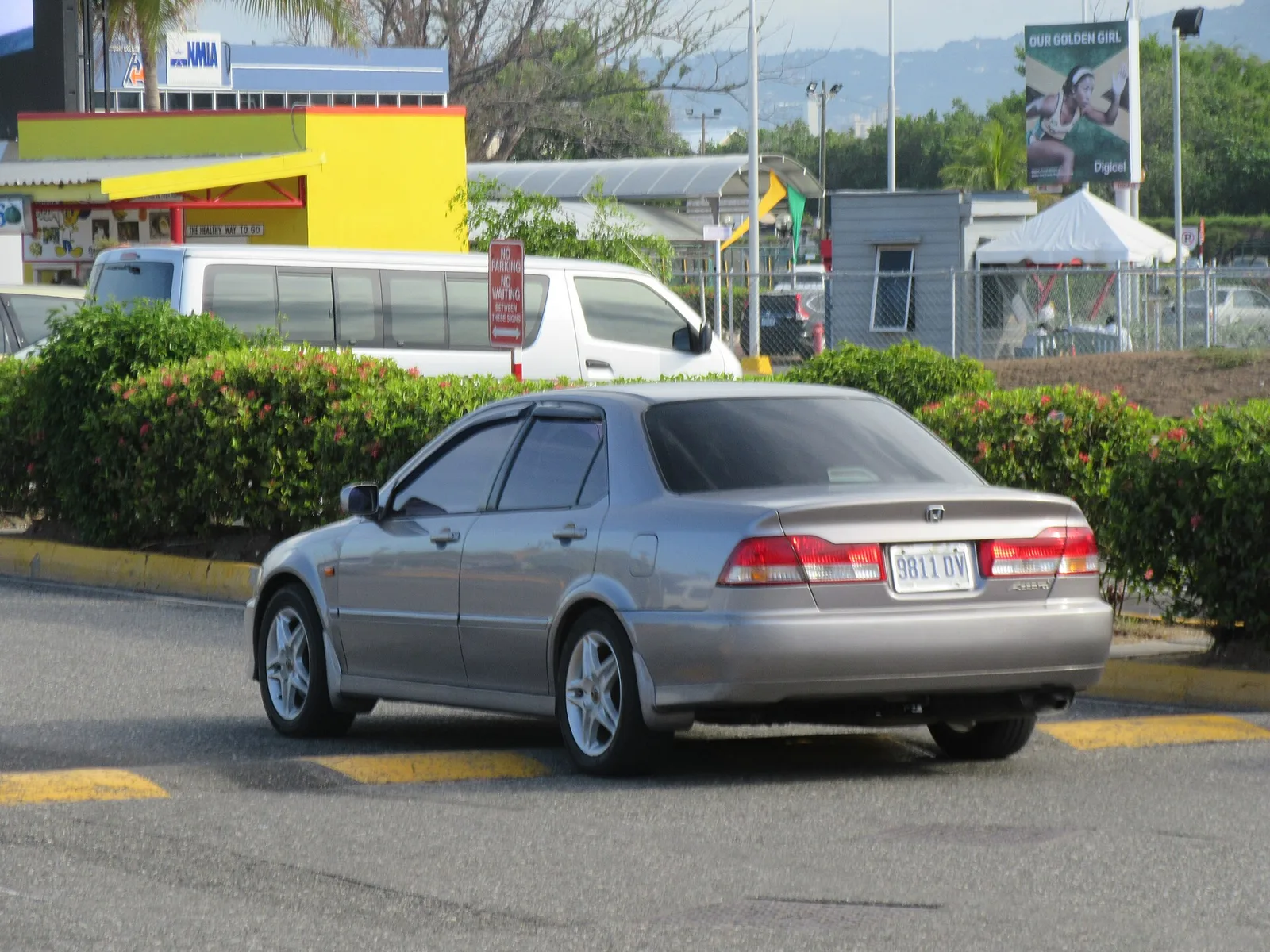
Three separate models, Euro R and Type R performance versions, and an airbag recall that outlived production.
Built from 1997 to 2002, and in Europe until 2003, this generation came in several body styles across three markets. Two performance cars, the Euro R in Japan and the Type R in Europe, came out of the same family.
The sixth-generation Honda Accord was sold as a sedan, a coupe, a 5-door hatchback in Europe and a wagon in Japan. It was built from September 1997 until 2002, and in Europe until 2003.
It is remembered for two performance versions, the Euro R in Japan and the Type R in Europe, and for an airbag problem that lingered long after production ended.
Why did Honda split the Accord into three models?
Honda created separate cars for Japan, North America and Europe, because each market wanted something different. The Japanese car stayed compact for tax reasons, while the American Accord became the largest Accord to date.
Wagons and coupes were the first casualties of the split. The wagon was dropped in North America, and the coupe left the Japanese range.
Three separate Accords for three markets, and two performance cars that outlived the family they came from.
Wagons, coupes and the Torneo
The Japanese models were introduced on September 4, 1997, and they became narrower than the previous generation. Returning to the compact tax bracket was the main point of that change.
In Japan a near-identical sibling, the Torneo, replaced the Ascot and Rafaga. Honda also kept the Accord's identity abroad through badge engineering, and the last generation to be badge engineered as the Isuzu Aska was this one.
How long did the car take to develop?
Development of the F/G platform began in January 1993, during the final work on the CD Accord. A sedan design by Shinji Takashima and Toshihiko Shimizu was chosen in January 1995.
Design patents were filed on March 8, 1996, and development ended in March 1997. Sedan mass production began in August 1997, with customer deliveries from September 23, 1997.
The coupe, styled by Don Herner under lead designer Eric Schumaker, followed a separate timetable. Its production began in September 1997, and it went on sale on November 4, 1997.
What was the Japanese Accord SiR like?
The SiR-T had a 2.0-litre F20B engine and a five-speed manual only, rated 200 PS (147 kW; 197 hp) at 7,200 rpm. It made 196 N-m (145 lb-ft) at 6,600 rpm, and it sat at the performance end of the Japanese range.
The SiR automatic used S-Matic with a sequential manual shift mode, letting drivers shift through the gears with up and down actions. Its output was lower, at 180 PS (132 kW; 178 hp) at 7000 rpm.
The Wagon SiR and the H23A engine
The SiR wagon carried the only 2.3-litre H23A DOHC VTEC engine in Honda's line-up. It made 200 hp, or 190 hp with all-wheel drive, at 6,800 rpm.
Bore and stroke measured 87 mm (3.4 in) by 95 mm (3.7 in), a longer stroke than the H22A used elsewhere. That longer stroke helped the H23A deliver its torque lower in the rev range.
What made the Euro R special?
The Euro R used a red-top H22A making 220 PS (162 kW; 217 hp) at 7,200 rpm and 221 N-m (163 lb-ft) at 6,500 rpm. Its 5-speed manual came with a helical Torsen limited-slip differential, which helped it put power down.
The SiR-T gave way to the Euro R in 2000, which made the Euro R the successor to the SiR-T in the performance role.
Honda England had built the idea first, a lightened track car of around 1200 kg that was pitched at Subaru and Mitsubishi's Evo. Honda Japan followed in 2000 with the Euro R, so the Japanese car came from that European lead.
What did the Euro-Rx change?
The 2002 model was named the Euro-Rx, and it was the final version of the Euro R. It gained factory rear privacy glass, a titanium gear knob and a red-checker interior option.
The Euro-Rx also brought an upgraded ECU, which cured cold-start hesitation on acceleration.
Practical details inside the car
Honda made cabin air filters standard across this generation, and they sat behind the glove compartment in every market. It was one of the practical changes that made the car easier to live with day to day.
Some models came with standard leather seats and an 8-way power driver seat, so the top-spec cars offered more comfort than the base models without any extra fuss.
How did the American Accord differ?
The American Accord came only as a sedan and a coupe, and it was the largest Accord to date. Wagons were not offered in North America after the change, which made the US car a clearly separate model from the Japanese range.
Coupe styling and the NSX touch
The 1998 coupe was the first to get its own front fascia, wheels and body panels, so it was no longer a two-door sedan in disguise. That separation helped the coupe fit into local Accord ranges in other markets.
Its tail lights resemble those on the NSX, a detail that gave the coupe a sharper look than the sedan. Coupe styling came from Don Herner, with Eric Schumaker as lead designer.
Which engines and trims did US buyers get in 1998?
The 1998 sedan came in DX, LX, LX-V6, EX and EX-V6 trims, while the coupe was offered in LX, LX-V6, EX and EX-V6. The DX used a 2.3 L four rated 135 bhp (101 kW), and the LX and EX used a VTEC four rated 150 bhp (110 kW).
The V6 was a 3.0-litre SOHC VTEC rated 200 bhp (149 kW) and 195 lb-ft (264 N-m), a unit derived from the Acura 3.0 CL. All V6 models came with ABS and an automatic transmission.
Four-cylinder cars came with a five-speed manual as standard, with a four-speed automatic optional, while the SE was available only with the automatic. The DX Value Package added a radio-cassette, air conditioning and cruise control, and in Canada that package was the base model.
Special editions and the 2000 facelift
The Special Edition returned for the 2000 and 2002 model years, with alloy wheels and optional leather trim.
In September 2000 the American coupe and sedan received a facelift, and every V6 gained traction control that could be switched off. It was the first Accord to carry such a system.
Why was the European Accord different?
The European Accord was shorter than the Japanese and American versions, and it came as a saloon and a 5-door hatchback. Its styling set it apart from the other markets, and it was built as a joint project with the Rover Group.
That Rover link produced the Rover 600 alongside the Honda Ascot Innova. Europe also got the basic S, the SE and the ES, with the ES later renamed SE Executive.
The European engines were smaller than the American V6. A 1.8 L F18B VTEC made 138 hp (103 kW), and a 2 L F20B6 VTEC made 145 hp (108 kW). The Type-V F23Z5 sat at the top of that range.
Europe kept the car in production until 2003, a year after the Japanese and American cars ended in 2002. That longer run gave the European car an extra chance to find buyers.
The Type-V arrived in 2001 with leather as standard, and it carried the F23Z5 VTEC engine, the largest unit in the European range. The Sport model added a spoiler and colour-coded side skirts.
What did the Type R offer in Europe?
The Type R was sold only in European markets, and it was largely identical to the Japanese Euro R. Its engine made 212 PS (156 kW; 209 hp) at 7,200 rpm, compared with 220 PS (162 kW; 217 hp) for the Euro R.
Its torque was 222 N-m (164 lb-ft) at 6,700 rpm. Sales across Europe totalled 3,789 Type R cars, and 2,081 of them were sold in the UK.
How did Honda respond to V6 transmission complaints?
The V6 models suffered transmission failures that led to class action lawsuits against Honda. No formal recall was issued in the US, but the company extended warranties. Four-cylinder cars were affected too, though to a lesser degree.
Honda extended the warranties on the 2000 and 2001 models to seven years or 109,000 miles (175,000 km). That step eased pressure on owners.
How big was the airbag recall?
Honda recalled about 1.7 million cars for airbag concerns after November 2008. Its driver airbags could deploy with too much force in collisions.
Honda said 2,430 faulty airbags had been installed as repairs to customer vehicles after collisions. The company then broadened its search, because it could not track every car that had received a flawed unit.
At the February 2010 expanded recall, Honda said the airbags had been involved in 12 incidents, including one fatality. As of February 2018, 24 deaths and 240 injuries had been attributed to the affected airbags worldwide.
The NHTSA had 37 million vehicles under recall for airbag replacement, a figure that reflects how widely the problem spread.
Australia and the Thai connection
In Australia the sixth-generation Accord went on sale in December 1997, initially imported from the United States. For a time Australian buyers received cars built in another market altogether.
In 1999 the Accord became the first Honda in Australia to be imported from Thailand, which marked the start of Thai supply for the country. The March 2001 facelift also dropped the option of a manual transmission, leaving automatics as the only choice.
Nighthawk Black arrived with that facelift and was the first black Accord offered in Australia. It was a small change, but it gave the car a more distinctive look in the showroom.
New Zealand and the Thai factory
The 1998 Accord was also assembled in New Zealand at the very end of the country's CKD car production. Import tariffs on built cars were abolished, which made local assembly uneconomic.
About 1,200 examples of the mid-sized US sedan version were built before the Honda New Zealand factory closed. Its paint shop and equipment were shipped to other Honda assembly units, mainly in Asia.
Small numbers of Accords were then imported right-hand drive from the US, until supply switched to Thailand. The Thai factory now supplies New Zealand, and it also ships to Australia and elsewhere in Southeast Asia.
In the Philippines only the sedan was offered, in VTi and VTi-L trims. Both models could be ordered with a manual or an automatic, which gave Philippine buyers a choice that the New Zealand and Australian lines did not always offer.
Key figures for the sixth-generation Accord
| Specification | Detail |
|---|---|
| Production | September 1997 to 2002; Europe to 2003 |
| Japanese introduction | September 4, 1997 |
| Euro R | 220 PS (162 kW; 217 hp) at 7,200 rpm; 221 N-m (163 lb-ft) at 6,500 rpm |
| Type R | 212 PS (156 kW; 209 hp) at 7,200 rpm; 222 N-m (164 lb-ft) at 6,700 rpm |
| SiR-T | 200 PS (147 kW; 197 hp) at 7,200 rpm; 196 N-m (145 lb-ft) at 6,600 rpm |
| V6 | 3.0-litre SOHC VTEC, 200 bhp (149 kW); 195 lb-ft (264 N-m) |
| Wagon SiR engine | 2.3-litre H23A DOHC VTEC; 200 hp, or 190 hp with AWD |
| Warranty extension | Seven years or 109,000 miles (175,000 km) on 2000 and 2001 V6 cars |
| Airbag recall | About 1.7 million cars since November 2008 |
| European Type R sales | 3,789 units; 2,081 in the UK |