A Soviet executive saloon that was modernised for half a century, from the 1956 GAZ-21 through the 3102 and 3110 to the Siber, then revived in 2024 on Chinese platforms.
The Volga was a Soviet executive saloon built from 1956 to replace the Pobeda, modernised through the GAZ-21, GAZ-24, 3102 and 3110 until 2009, with the Chrysler-based Siber in 2008 to 2010. The name returned in 2024 on Chinese-based models.
A car designed in the 1960s was still rolling off a Russian production line in 2009. That is the story of the Volga, the executive saloon GAZ introduced in 1956 to replace the 1946 Pobeda, kept alive through the Brezhnev years, the Soviet collapse and the 1998 financial crisis, and finally retired in 2010. The name returned in 2024, this time on cars based on Chinese designs.
Why was the Volga created?
The brief for a successor to the GAZ-M20 Pobeda was issued in 1951, and the first pre-production batch left the works on 10 October 1956. Because the car served the Soviet nomenklatura, it became a cultural symbol of its time as well as a vehicle. Several generations followed, each one a modernisation of what came before rather than a clean-sheet design.
The weakness of that approach showed in the end. GAZ found it ever harder to keep the ageing design competitive once the market economy arrived. Bo Andersson, the company's chief executive at the time, chose to end the Volga range in 2010.
A Soviet status car that outlived its own design by decades and returned on imported bodies.
How did the first-generation GAZ-21 evolve?
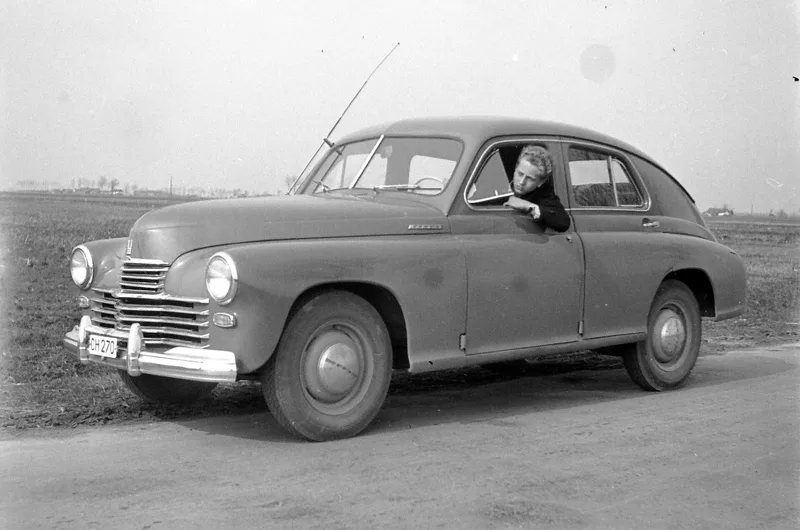
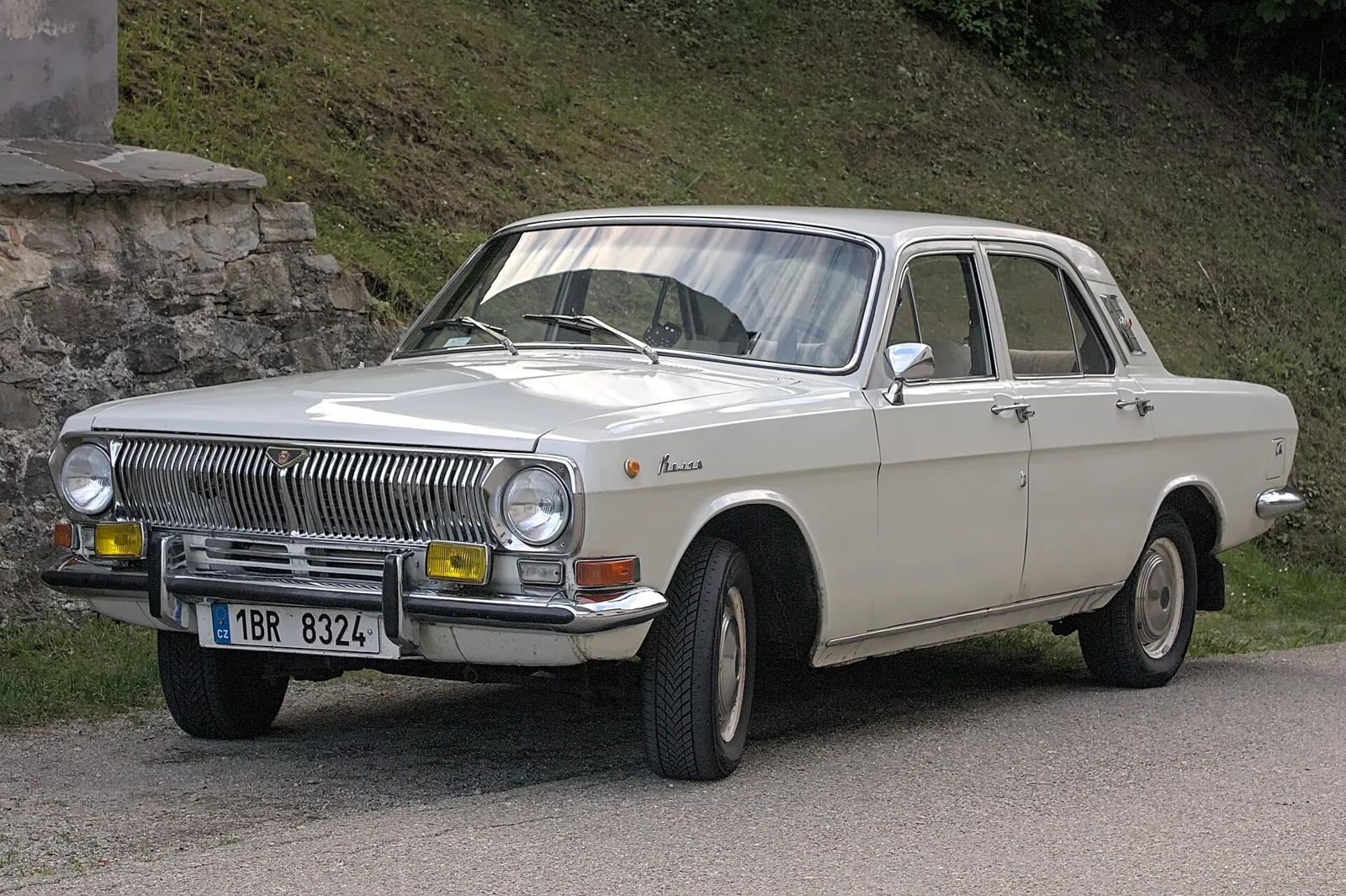
The first generation was originally called the GAZ-M-21 and was built in three distinct series. Between 1956 and 1970 GAZ built 639,478 of them, with improvements made continuously through the run. The Star, as the first series was nicknamed, ran from the end of 1956 to 1958.
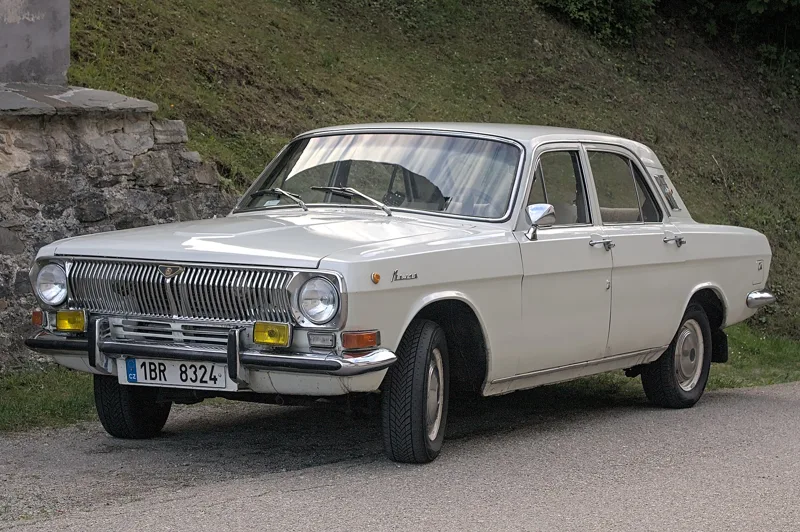
The second series carried a grille with 16 slits and was nicknamed Akula, the Shark. In 1962 the third series arrived with a grille of 36 slits, which prompted the nickname Kitovy Us, or Baleen, and stayed a Volga trademark for decades. A fourth series was rejected, and the third and final GAZ-21 stayed in production until 15 July 1970.
The M in the original name pointed to Vyacheslav Molotov, namesake of the plant. Following the downfall of his career the plant was renamed in 1957, and the letter was gradually removed from the car from 1965.
Two derivatives sat alongside the saloon. A custom-assembled estate, the GAZ-22, was introduced in 1962. Rarer still was a V8-engined car developed for the 9th Directorate of the KGB, which used it as an escort vehicle for motorcades.
Specifications and versions at a glance
| Model | Years | Notes |
|---|---|---|
| GAZ-21 | 1956 to 1970 | 639,478 built across three series; estate GAZ-22 from 1962 |
| GAZ-24 | 1970 to 1985 | Four-cylinder and manual gearbox in the base model; V6 prototype of 2,990 cc and 120 PS (88 kW; 118 hp) not built |
| GAZ-24-10 | 1985 to 1992 | Took over features developed for the 3102; nearly one and a half million of the GAZ-24 family built up to 1992 |
| GAZ-3102 | 1982 to 2008 | GAZ-24 platform and body with own fascia, interior, engine and chassis |
| GAZ-3110 | 1997 to 2004 | New body panels on the GAZ-24 central shell, Gazelle chassis and powertrain |
| GAZ-31105 | 2004 to 2009 | Second stage of the 3110; long-wheelbase 31055 from 2006 |
| GAZ-3111 | 1998 to 2004 | Retro design after the GAZ-21; 428 pre-production cars |
| Volga Siber | 2008 to 2010 | 2.0 litre with 141 hp or 2.4 litre with 143 hp; about 9,000 built |
| Volga C40, K30 and K40 | 2024 | Changan-based plan, postponed and then cancelled |
| Volga C50, K40 and K50 | 2026 onward | Geely-based models |
Why did the GAZ-24 take so long to replace?
Work on the replacement for the GAZ-21 began in 1961, and the new car was meant to last seven to ten years, through the 1970s. It was already behind schedule before its 1968 premiere. After Alexey Kosygin's economic reform of 1965 the Soviet Union slipped into what came to be called the Era of Stagnation, and the GAZ-24 became one of that era's defining objects, in looks and in engineering alike.
Concept sketches gave the new car a more angular, rigid profile than the GAZ-21. GAZ planned a modernised four-cylinder engine and manual gearbox for the base model, but one prototype carried a V6 giving 120 PS (88 kW; 118 hp) from 2,990 cc (182 cu in). Prototypes followed in 1966, and certification came a year later. The V6 showed promise, yet for economic reasons it was judged unfeasible for mass production.
A first batch of 24 cars came together in 1968, yet the GAZ-24 only displaced the GAZ-21 on the conveyor on 15 July 1970. For all its imposing looks it was 75 mm (3.0 in) shorter and 120 mm (4.7 in) lower than the car it replaced, although its wheelbase grew by 10 mm (0.39 in). Versions were now identified by numbers rather than letters.
The original design brief called for retirement by 1978, yet GAZ had to update it instead. There was a light refresh in 1977, and the GAZ-24-10 of 1985 borrowed several features first engineered for the GAZ-3102, its intended successor. Counting the 24-10, nearly one and a half million of these Volgas came off the line up to 1992. Most went to the nomenklatura; taxi, police and ambulance fleets took the bulk of the rest.
How did the GAZ-3102 come about?
The 3102 was a product of compromise. A genuinely new third-generation Volga never reached the line, partly because Viktor Polyakov, the minister for the automotive industry, made no secret of favouring the new VAZ giant, and the rival AZLK 3-5 project died the same way. In 1973 GAZ settled on a cheaper route. It would keep the skeletal body sections and platform of the GAZ-24, which avoided the costly business of replacing the press tooling, and swap most of the mechanical parts, the body panels and the interior.
Manufacture began in 1981 and the official launch followed in 1982, though stagnation in the late Brezhnev years had delayed it repeatedly. The car carried its own fascia, interior, engine and chassis. From 1982 until 2008 it was built alongside other Volgas, but in smaller numbers. It first had a line of its own and many distinct features; by 1997 its differences from the later Volgas were external only.
The KGB and other government bodies were the first users, through 1983, and the public could not buy one until the Soviet Union had collapsed. That scarcity gave the 3102 a prestige in Russia that outranked even the Mercedes cars favoured by the privileged, and let GAZ sell it at a markup.
The status did not last on every car. In 1992 the first tooling for GAZ-24 panels fell apart, so GAZ put 3102 panels on the cheaper GAZ-24 underpinnings. The GAZ-31029 that resulted was built in twice the numbers and to half the standard, and a status symbol became a disposable workhorse.
What came after the GAZ-3102?
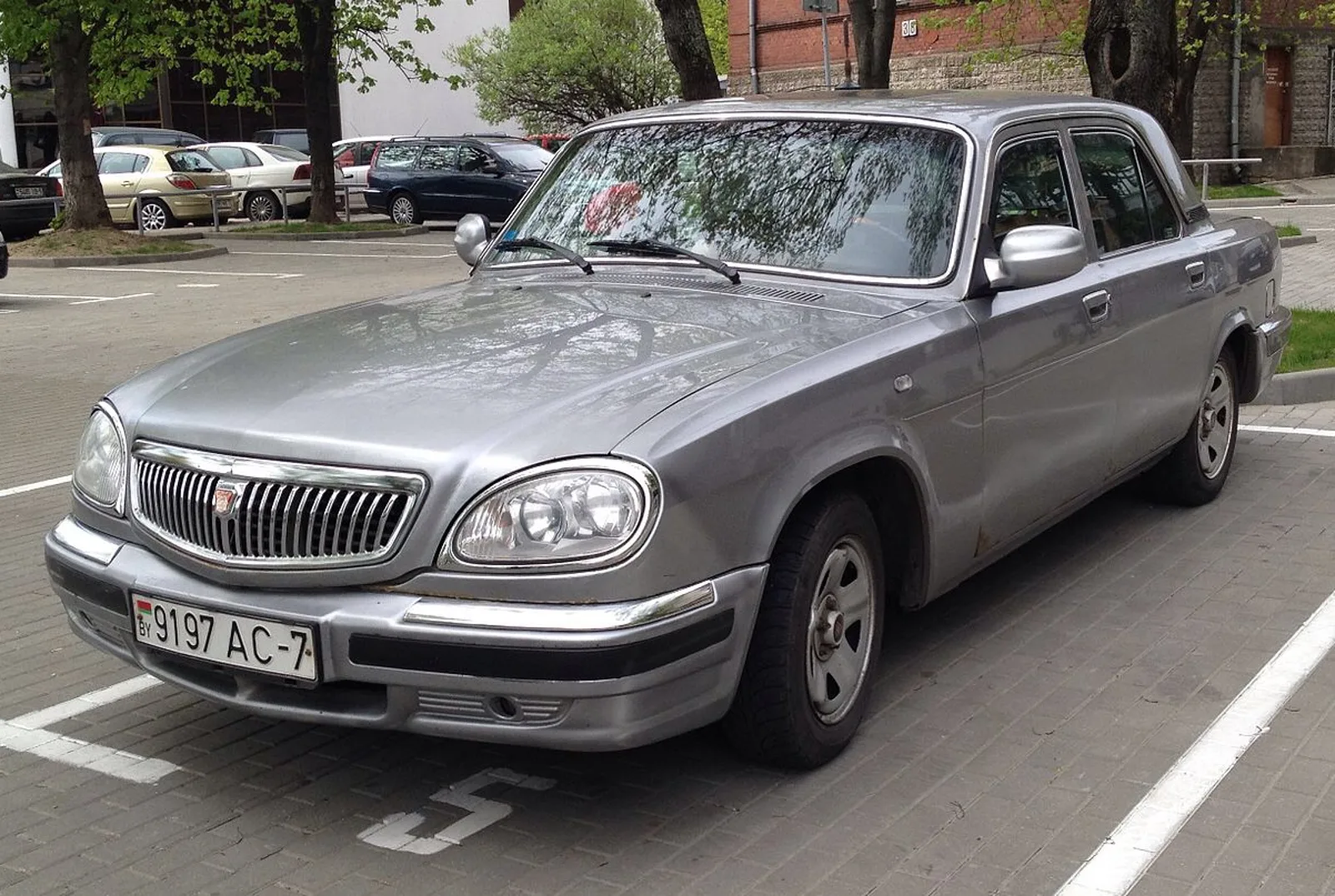
The GAZ-3110 was meant as a stopgap until GAZ's own light commercial vehicles, the Gazelle and the Sobol, entered production. Demand for the 31029 proved stubborn, so in 1997 GAZ created original body panels while keeping the GAZ-24 central shell. That removed the visual mismatch of the 31029. Under the skin sat the chassis and running gear created for the new Gazelle range, itself planned around the aborted GAZ-3103, 3104 and 3105 Volgas. The financial crisis of 1998 put many foreign cars beyond the reach of Russian businesses and public bodies, and the 3110 turned into a necessity, not merely a cheap alternative.
The GAZ-31105 was the second stage of the same modernisation. The name applied to cars built from January 2004, although the mechanical changes had arrived almost a year earlier and some exterior changes were offered in separate batches. In 2006 came the long-wheelbase GAZ-31055 luxury version, and the cars also began to receive Chrysler engines. A light facelift followed in 2007, along with a ZMZ engine meeting Euro III. The second generation then retired in 2009 after forty years.
Which Volga concepts never reached production?
Between the big programmes sat a string of cars that stalled. The GAZ-3105 was a concept from the late 1980s for a successor to both the 3102 and the GAZ-14 Chaika limousine. It was never part of the Volga family, since it was to run on the Chaika's line, and economic problems stopped it in the 1992 to 1996 period.
In 1995 NAMI designed a luxury car for GAZ on the 3102, intended to take on the expensive Western cars flooding the market after the Soviet fall. The NAMI Prestige had a smoother exterior, white leather, air conditioning, electric windows and adjustable mirrors. The production upgrade would have cost the factory too much, and it was never built.
The cheaper replacement for the 3105 was the 3103 and 3104, shown at MIAS-1998, where it won the Design-98 award. To keep the car short, the engine was pushed further back, which left an extended asymmetric gear housing on the left side. The interior drew on Audi for inspiration, and the car was large and full of electronics for an economy model. The 3103 was to be front-wheel drive and the 3104 all-wheel drive. Only a few were made because the economy could not support full-scale production.
The GAZ-3111, planned from 1998, was a retro car modelled heavily on the GAZ-21. ABS, power steering, climate control, an automatic gearbox and leather were standard, with V6 and V8 engines. Production was scheduled for 2000, yet Oleg Deripaska, who now owned the factory, disliked its looks, and the high price held back interest. Just 428 cars came out of the pre-production batch.
The smallest Volga of all was the GAZ-3115 of 2003. Moskvitch had gone bankrupt in 2002, leaving Russia without a domestic D-segment car, and GAZ tried to fill the gap with a sharper-styled saloon on multi-link independent rear suspension, with disc brakes and ABS. To keep costs down it had no automatic gearbox and few electronic aids. GAZ expected a price around $9000 to $10000, then began to doubt whether the car could compete with European rivals. The project was cancelled in favour of truck assembly.
How did the Volga Siber come about?
In December 2005 RusPromAvto, the parent of GAZ, announced that the Volga saloons would be wound down across two years, with production ending in 2007. The company said it would concentrate on trucks, buses and commercial vehicles. In the same announcement it introduced the long-wheelbase Volga 311055. By summer 2006 GAZ had reversed course, promising further investment in styling and technology and keeping the saloons going as retro or historical models.
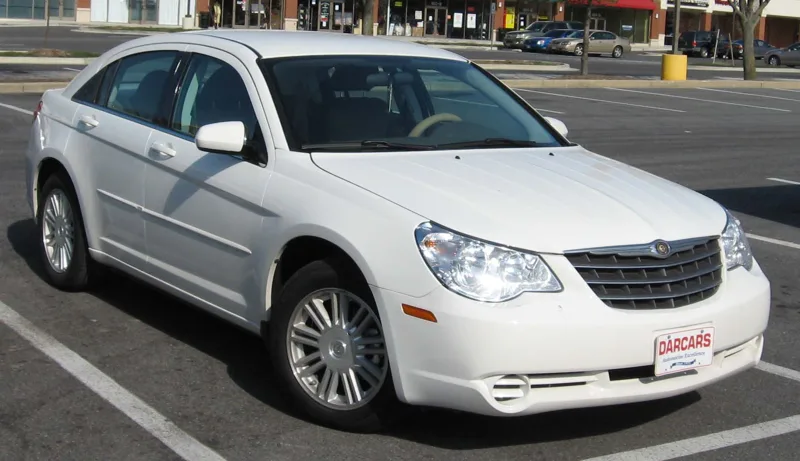
Early in 2006 GAZ also signed a deal with DaimlerChrysler for the tooling and intellectual property of the Chrysler Sebring, and it said at first that the Volga name would not go on the new car. The Siber, unveiled in August 2007 and shown at that year's Moscow International Automobile Salon, was the result. It used the superseded platform and tooling of the second-generation Chrysler Sebring and Dodge Stratus. The British studio UltraMotive reworked the grille and headlights, with stiffer suspension and more ground clearance the only other changes.
Two trim levels were offered. The Comfort could be had with a 2.0 or 2.4 litre engine, and the Lux only with the 2.4. The base car had a 2.0 litre engine of 141 hp, air conditioning, airbags for driver and passenger, ABS, traction control, halogen headlamps, power steering, an adjustable steering column, an electrically adjustable driver's seat, a six-speaker audio system, heated folding mirrors and a self-dimming rear-view mirror. It had only a single-use spare tyre. The Lux added the 2.4 litre engine with 143 hp, leather trim, front fog lamps and an anti-theft system.
A pilot batch on 28 March 2008 opened production, and a steady rate was reached by 25 July. On the eve of volume production Vladimir Putin toured the factory with guests from Michigan. The plan was 20,000 Sibers in 2008 and 40,000 in 2009, with output eventually rising to the plant's capacity of 100,000 a year. Fleet sales began on 29 August 2008 to government employees and businesses, among them Sberbank.
The assembly tooling had been taken apart in Detroit, shipped to Russia and put back together in a layout approximating the former Chrysler plant. Workers took a professional training programme abroad, and engineers from Magna International helped with the transfer. The Siber was the first car built in the new plant.
Parts were mostly imported at first. Russian-made parts went in only where they were as good as the imports, and the goal was to reach 50 per cent local content. Lamps, bumpers and some panels were made in Russia from the start; the engines and electronics came from Saltillo in Mexico, and the remaining parts from the United States.
The timing was poor. The Siber appeared as the financial crisis of 2008 began, demand fell, and only 2,500 were built in 2009. About 9,000 were produced before the Siber ended in November 2010, well short of the 20,000 first-year target. A frontal crash test by the Russian ARCAP programme in 2008 gave it 7.2 points out of 16 and two stars out of four.
The older GAZ-31105 ended that summer. In 2010 the passenger car assembly side of the GAZ factory was bought by Volkswagen Group Rus, which began building the Skoda Octavia in the plant, later adding the Skoda Yeti and the Volkswagen Jetta.
Why did the Volga return with Chinese partners?
Once the invasion of Ukraine began in 2022, the great majority of foreign makers pulled out of Russia and choice on the market shrank. Rumours that GAZ was looking for Chinese partners were confirmed in 2023 by Denis Manturov, the first deputy prime minister. The cars were to be assembled locally by a passenger car company owned by GAZ.
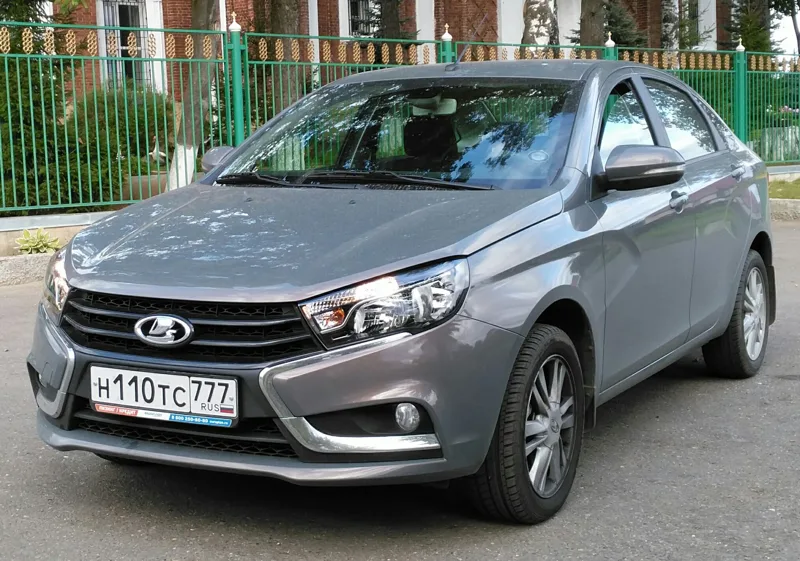
GAZ showed the Volga C40 sedan in March 2024, built on the Changan Raeton Plus. The K30 crossover took the Changan X5 Plus as its base and the K40 SUV the Changan UNI-Z. It aimed to assemble 100,000 cars a year, with production planned by the end of 2024. That was postponed and eventually cancelled, although plans went far enough for prototypes to receive temporary number plates for testing in December 2024.
In September 2025 industry reports said the partnership had moved to a different Chinese maker. February 2026 brought a reshaped programme: a Special Investment Contract running ten years, agreed with the Ministry of Industry and Trade, a licensing tie-up with Geely, and a commitment of more than 60 billion rubles for localisation. On 2 June 2026 GAZ revealed the C50 sedan, based on the Geely Xingrui, the K40 crossover (Geely Boyue L) and the larger K50 (Geely Xingyue L).