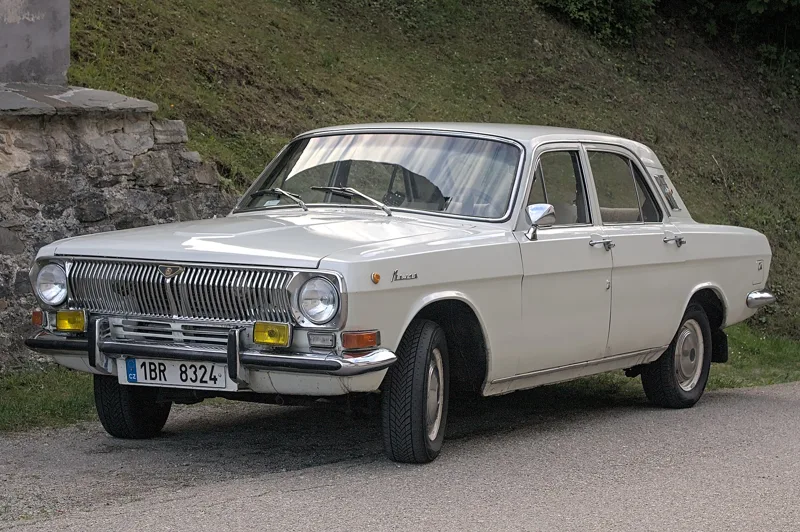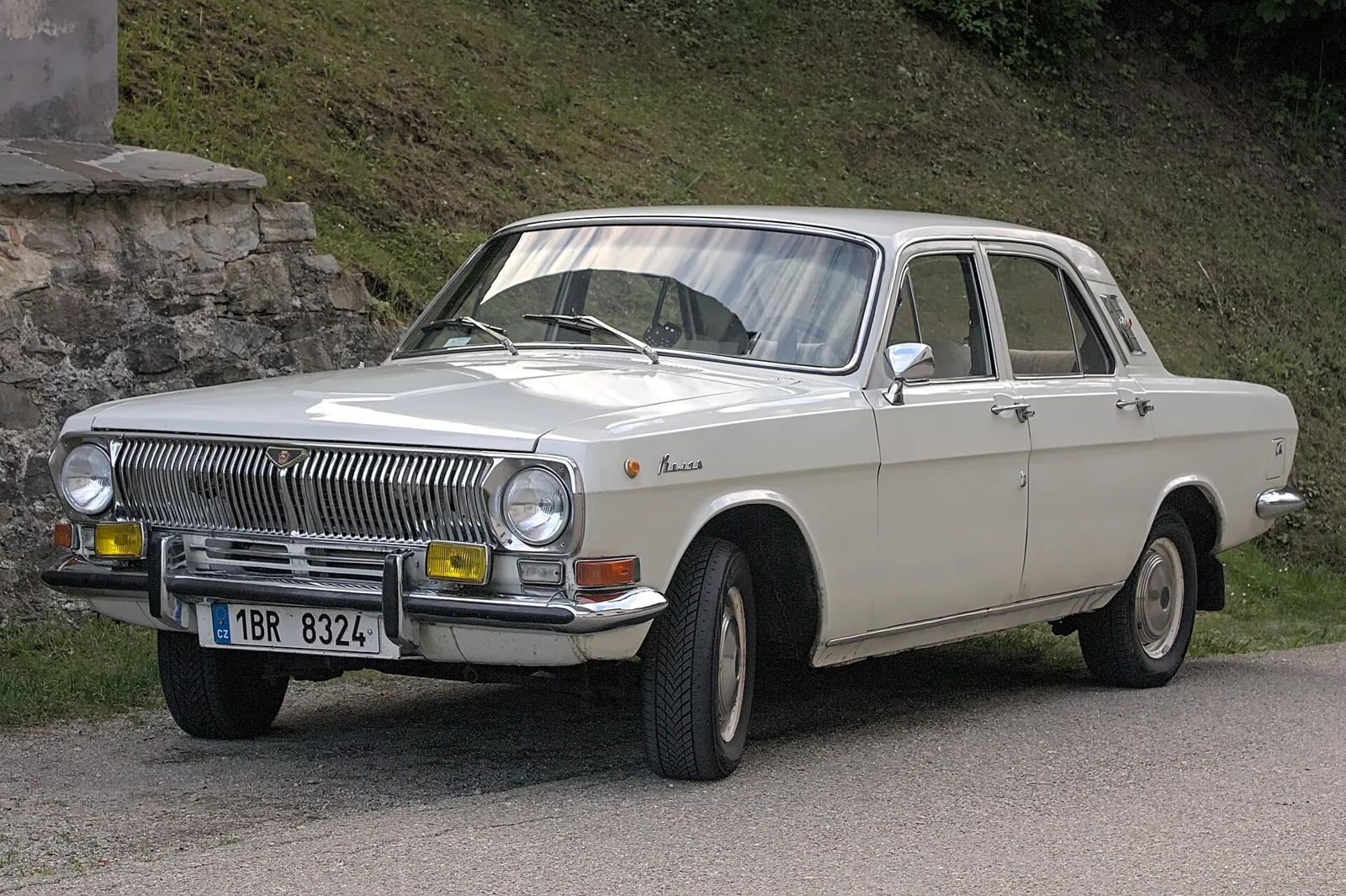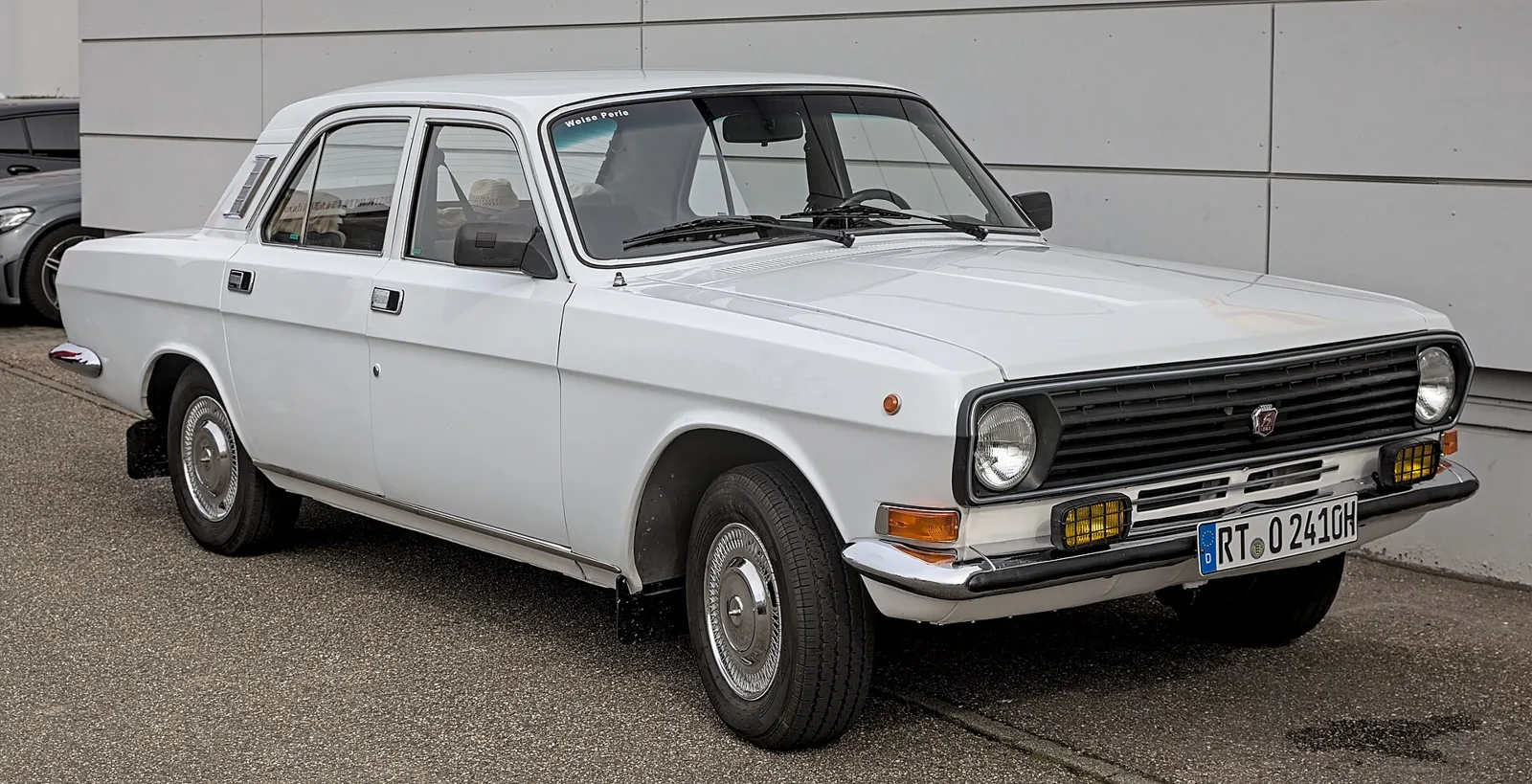
A Gorky-built stopgap with the GAZ-3102's mechanical contents under the old GAZ-24 body, built from late 1985 until 1993.
Built from late 1985 until 1993, the GAZ-24-10 was a Gorky-made Volga that paired the GAZ-3102's mechanical parts with the GAZ-24 body. It was a stopgap caused by a political veto, and 417,481 examples of its modifications were built in total, with the GAZ-31029 replacing it in 1992.
The GAZ-24-10 Volga was a Soviet mid-size car built at the Gorky Automobile Plant from late 1985 until 1993. It was a modernised GAZ-24 that took its mechanical contents from the GAZ-3102, a model a political veto kept out of wide production. Outwardly it stayed close to its predecessor, and it was built as a stopgap, yet it kept a reputation for build quality and reliability.
Its history is a story of delay. The GAZ-24 had been expected to pass the baton to a new car by 1980. The replacement, the GAZ-3102, passed state trials in 1978, and then waited years before it reached series production. The car that went into mass production was the GAZ-24-10, which put newer hardware inside the older body.
Why was the GAZ-3102 kept out of wide production?
A political veto kept the GAZ-3102 out of wide production. Its suppliers had been preparing for a planned assembly-line scale of 70 thousand a year, but the car was held back. A pilot batch appeared in February 1981, and series production began in April 1982, yet the handover from GAZ-24 to GAZ-3102 kept stalling.
The holdup came from the brakes and from the instrument panel. Disc brakes were a first for a GAZ car of this class, and the suppliers struggled with both quantity and quality. The rejection rate reached 80%, and output never rose above 2-3 thousand a year. Even so, the car found favour at the top, and the 31st Volga became a car of elite, general's status.
The minister was then told, at the highest level, that a car used by officials and generals could not also work as a taxi. The 31st model was therefore held back in quantity. The factory's capacity was already in place and its experience had grown, so the engineers faced a practical question: what could be done with the GAZ-3102's mechanical contents if the body stayed the old one?
A stopgap with the GAZ-3102's mechanical contents under the old GAZ-24 body, born of a veto on large-scale production of its successor.
How was the GAZ-24-10 put together?
The GAZ-24-10 was built in stages. The modernised engine and running gear came first, shown at the Avtoprom-84 exhibition and put into series in 1985. The interior followed later that year, and the exterior was settled in April 1986. The transitional cars of 1985 are sometimes unofficially called GAZ-24M, and the car then reached its final form.
The staged approach avoided long bureaucratic delays over certification and acceptance commissions, and that also explains the name. The GAZ-24 index was kept, and the suffix -10 was added under a single standard for designating technical products. Every variant followed the same logic, so the taxi GAZ-24-01 became the GAZ-24-11, and the estate GAZ-24-02 became the GAZ-24-12.
The engineers were, in short, reusing a proven body and a newer set of mechanical parts. The GAZ-3102 body and chassis had themselves been created on the basis of the GAZ-24, so most units and parts were standardised, and the technical side proved easy.
The naming rule was applied to every version, down to the small series of cars built for the Committee for State Security, where the GAZ-24-24 became the GAZ-24-34.
What changed on the outside?
Visually the GAZ-24-10 stayed close to the GAZ-24. Its outer door handles were injury-safe units taken from the GAZ-3102, and part of its interior came from the same car. Compared with the GAZ-24 it lost the quarter-lights in the front doors and the rear parking light. Two more bits of trim disappeared: the chrome boot-lid strip and the Volga wing badges.
A black plastic radiator grille followed a year after production began. Exterior panels from the GAZ-3102 were planned in a simplified form, but even that plan was rejected, so the car settled into its final look in April 1986. Its designers were, in effect, working inside an old shape and making the most of it.
Why was prechamber ignition dropped?
Prechamber torch ignition was the main novelty of the new ZMZ-4022.10 engine. A spark plug lit a rich mixture in a small prechamber, and the flame fired through two narrow nozzles into the main chamber to ignite the lean charge. Tuning the three-chamber K-156 carburettor for it was exhausting, and the nozzles kept clogging with soot, so the idea was dropped for the utility car it had been meant for.
The engineers had every reason to chase the idea. Torch ignition made the engine more economical, and it was the technical centrepiece of the GAZ-3102's engine. The trouble was practical: the features that made it clever also made it fussy in everyday service.
The engine built for that utility car was the ZMZ-4021.10, which kept a die-cast block and was intended for the GAZ-24-11 taxi. Its thermostat sat in a different place from the torch engine's, because the prechamber engine gave off more heat and needed its hot-coolant discharge kept open at low circulation.
Another engine was the ZMZ-402.10, which appeared on the GAZ-24-10 prototype shown at Avtoprom-84. It combined the chill-cast block of the ZMZ-4022.10 with the cylinder head of the ZMZ-4021.10, adapted for AI-93 petrol. Chill casting had returned, so the block was no longer the die-cast unit used on the ZMZ-24D.
How did the carburettors and emissions controls work?
The K-126GM became the main carburettor of the GAZ-24-10, kept from the predecessor because the planned K-156 was refused for mass production and the K-151 was not yet available in quantity. Its second-chamber venturi grew from 24 to 26 mm after the 1977 change to closed crankcase ventilation, and an econostat replaced the adjustable economiser. The air flap was cut back, so it covered only the primary chamber.
The K-151 was a K-156 without the prechamber section. It kept semi-automatic cold starting, an autonomous idle system and a pneumatic economiser for the primary chamber. Its main jets flowed 610 cc/min, a little less than the K-156's 620, and its large venturis measured 23+26 mm, where the K-156 used 23+27+5. It was more complex than the K-126 family, which fitted most cars, and its supplier only later received a new order for it.
Emissions were handled by several add-ons. Exhaust gas recirculation worked on a warm engine but neither at idle nor at full load. The forced idle economiser cut the fuel supply to the carburettor idle channel when the accelerator was lifted above 1,050 rpm. The stepped air intake system, a second feature of the prechamber ZMZ-4022.10, admitted air past the carburettor during engine braking, saving fuel on the overrun and shortening the braking distance. Recirculation and forced idle proved far more modest in effect than prechamber ignition and that intake system, but the ZMZ-4021.10 with the K-151 passed all its tests.
The idle needed the most attention. Routing the small crankcase branch into the inlet manifold added air, which meant a richer mixture at idle. On the ZMZ-24D the idle had been 450 rpm, but with the reworked K-126GM the idle had to be raised to 575-625 rpm to keep running stable.
Every added system needed its own adjustment, and that was the root of the trouble. The crankcase branch needed a richer mixture, the idle needed more speed, and the toxicity screw was added to keep operation stable. Each fix created a new variable for the person doing the tuning.
What was the toxicity screw for?
The toxicity screw was a second adjusting needle valve for air in the transfer channel. It set how rich the mixture ran, and that set the output of carbon monoxide. Because the enrichment could only be tuned properly with a gas analyser, the rated idle spread for the ZMZ-402.1 widened to 550-650 rpm.
What did the engine changes gain?
Torch ignition made the engine almost 15% more economical, since a lean charge burned right through in the cylinders. The reworked ZMZ-4022.10 also gained a rated 10 PS over the ZMZ-24D, and its emissions were said to meet Euro norms that arrived a decade later.
The distribution of power was quite different as well, which gave a tangible improvement in the car's dynamic figures.
Why did the car matter in its home market?
It filled a gap that politics had created. Taxi operators, official users and export buyers all relied on the GAZ-24 family, and the GAZ-24-10 kept that family working while the GAZ-3102 waited. Its value lay in practical service rather than novelty.
Taxi work was the car's real market. Roughly a third of GAZ-24 production went into the taxi trade, and the GAZ-24-11 and GAZ-24-17 carried the trade in petrol and gas-engined forms. Estates were used as goods transport by various organisations, which widened the family's reach beyond the taxi rank.
The wider world had moved on too. The 1973 oil crisis pushed carmakers toward lighter, more economical designs, and by the early 1980s the GAZ-24 looked old beside newer models. It also fell short of tightened safety, economy and emissions standards, which made export harder over time.
What were the GAZ-24-10 specifications?
| Item | Detail |
|---|---|
| Production | Late 1985 to 1993 |
| Total built | 417,481 examples of all modifications |
| ZMZ-4021.10 engine | 90 PS (66 kW; 89 hp) |
| ZMZ-2401 engine | 85 PS (63 kW; 84 hp) |
| Valve lift (ZMZ-4021.10 over ZMZ-24D) | 9.5 mm raised to 10 mm |
| Exhaust valve diameter (ZMZ-4021.10 over ZMZ-24D) | 36 mm grew to 39 mm |
| Main carburettor | K-126GM; K-151 from 1987 in limited numbers |
| Idle speed (K-126GM with closed crankcase ventilation) | 575-625 rpm |
| Fuel | AI-93 petrol for the ZMZ-402.10 head |
| Coolant (ZMZ-24D) | Tosol A-40 antifreeze after 1975 |
Which versions did the GAZ-24-10 family include?
Beside the basic saloon, the family included a petrol taxi saloon, the GAZ-24-11, and a gas-engined taxi saloon, the GAZ-24-17. The estate taxi was the GAZ-24-14, while the basic estate was the GAZ-24-12. An ambulance, the GAZ-24-13, completed the main range.
Many small-series models also existed. The most unusual was a V8-engined car nicknamed the catch-up car, known as the GAZ-24-34. Its name came from the same numbering rule, and it stayed a rarity rather than a production model.
Who bought the GAZ-24 family?
Almost a third of GAZ-24 cars went to taxi services, and estates worked as goods transport for various organisations. Ambulances were also built on the car's base. Many posts still carried an entitlement to an official car, yet the GAZ-3102 was 'not in keeping with status', so the GAZ-24 kept serving them.
Private ownership remained rare, and resale on the secondary market turned into heavy speculation, a clear case of the USSR's shadow economy. Even on the export market it had devoted customers: in Eastern Europe and in the developing states allied to the USSR, although export became harder over time.
What was the car's reputation?
Drivers valued the GAZ-24 for its capacity, reliability, off-road competence and simple upkeep. Those qualities kept it in service long after its design was judged outdated. Build quality also stayed relatively high.
Those qualities were practical rather than glamorous. The car used familiar parts, and several of its systems had been tried on earlier engines, such as the closed crankcase ventilation used on the ZMZ-21. A reputation like that is built over years of ordinary service, not on a single spec sheet.
Its engineering was more mixed. Forced idle and recirculation systems proved less effective than prechamber ignition, and the carburettor and emissions arrangements proved less reliable than the designers had hoped. The car was a sensible answer to a political problem, but it was never a technical landmark.
What replaced the GAZ-24-10?
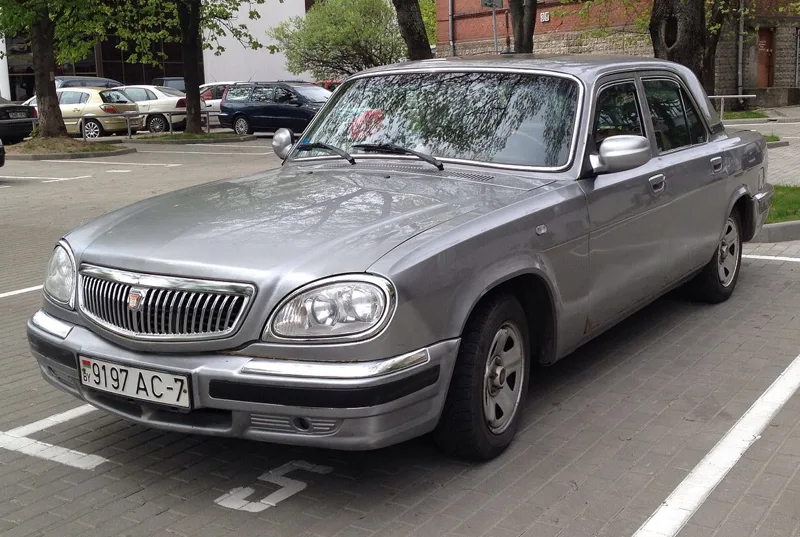
The GAZ-31029 succeeded the GAZ-24-10 in 1992. It was also a stopgap modernisation, and this time it was based on the GAZ-3102. The sequence confirms the pattern that defined the whole programme: a faster route to production, paid for by a car that looked older than it was.
For anyone reading the history now, the GAZ-24-10 is best understood as a bridge. It linked the GAZ-24 that the market knew with the GAZ-3102 that politics had held back, and it did so with a set of engineering choices that were practical rather than spectacular.