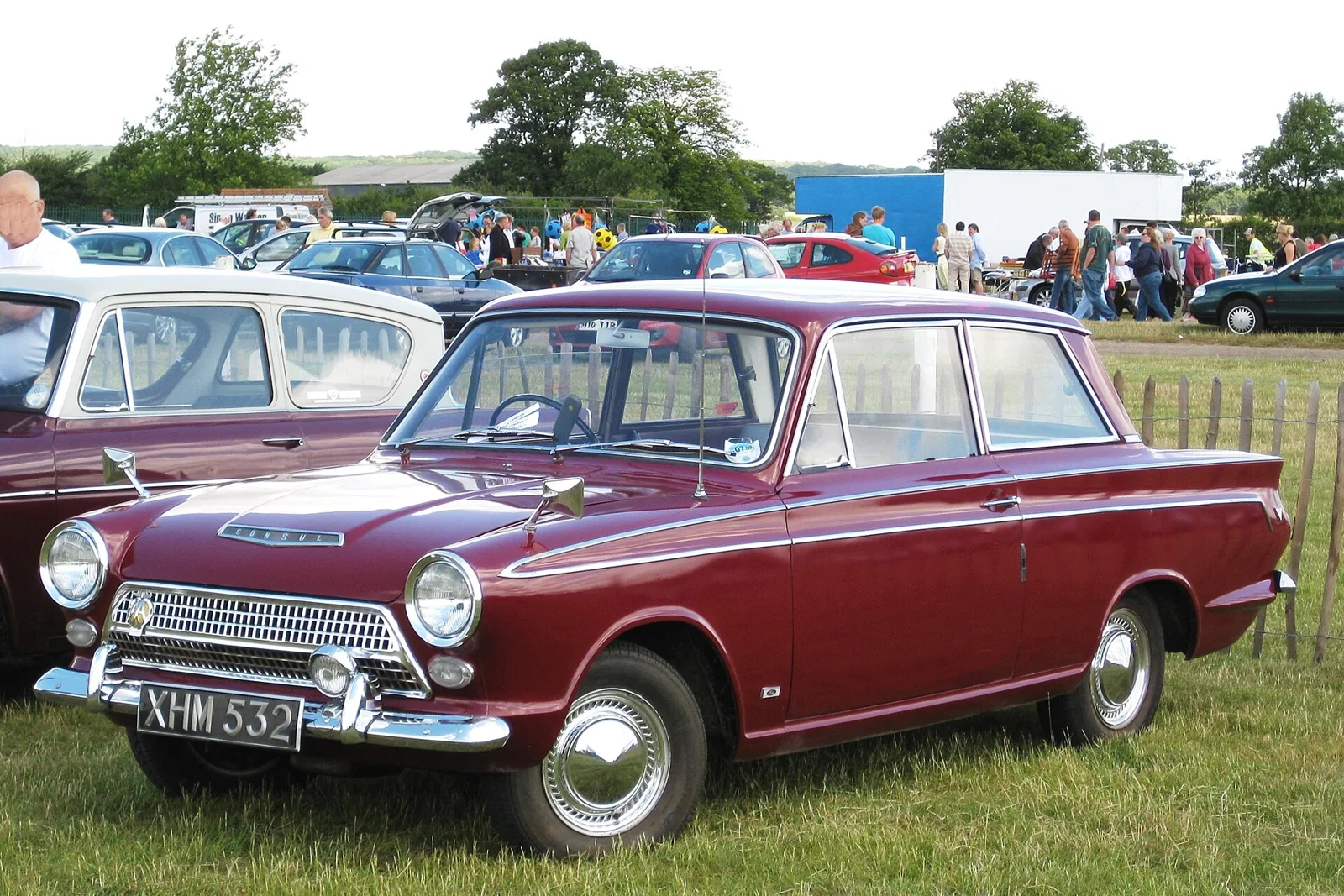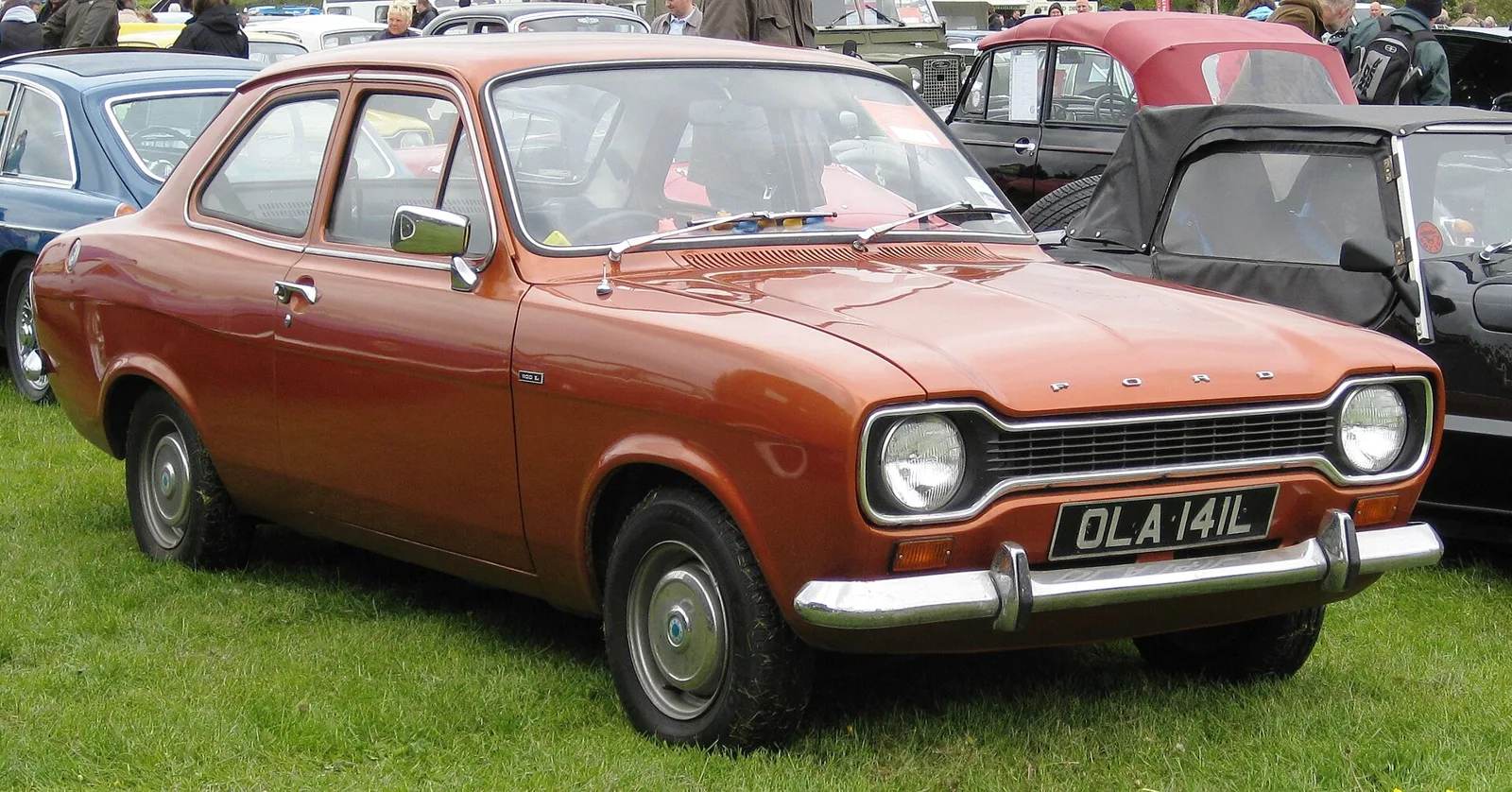
Built to replace the Anglia, launched in Brussels in 1968 and sold from Europe to Japan, the first Escort passed the two-million mark in 1974.
The Ford Escort Mk1 was the first generation of Ford's Escort, a C-segment car built from the late 1960s until 1975. Designed to replace the Anglia, it was made at Halewood in England and at Genk in Belgium, and it passed the two-million mark in June 1974.
Ford's Escort reached its two-millionth unit in June 1974, a milestone that no Ford model outside the United States had matched by then. The first generation was built at Halewood in England and, from September 1968, also at Genk in Belgium.
The car was designed to replace the Anglia and sold well in parts of Western Europe, though the United Kingdom was its stronghold. It was also exported widely, with production in Israel, Taiwan, New Zealand and Australia.
Why did Ford build the Escort to replace the Anglia?
The Escort was designed to replace the Ford Anglia, a successful but ageing model. Ford presented the car in Ireland and the United Kingdom at the end of 1967, then at the Brussels Motor Show in January 1968. Cars built for continental Europe initially differed slightly, with different front suspension and steering and brakes with two hydraulic circuits.
Production began at Halewood during the last months of 1967. For left-hand-drive markets it started in September 1968 at the Ford plant in Genk, Belgium. Early in 1970 continental production moved to a new plant on the outskirts of Saarlouis, in West Germany. The Genk-built cars also had wider wheel rims.
Halewood built the first cars, but Genk and Saarlouis carried the Escort across Europe.
Design and styling
The car carried the styling cues of its time. A subtle Coke-bottle waistline, inspired by Detroit design, ran along the body, and the front grille took a dog-bone shape, possibly the car's main styling feature. The same Coke-bottle style was later presented on the larger Cortina Mark III, launched in 1970.
At launch the range was a two-door saloon. The De Luxe had round headlamps and rubber floor covering, while the Super added rectangular headlamps, carpets, a cigarette lighter and a water temperature gauge. A two-door estate came at the end of March 1968, and a pick-up followed in April 1968.
The four-door saloon, a body style the Anglia never offered in the United Kingdom, arrived in 1969. The estate had a larger clutch of 7.5 in (190 mm) diameter and stiffer rear springs than the saloon.
Where was the Escort built?
Halewood in England built the first cars from the last months of 1967. From September 1968 the Genk plant in Belgium handled left-hand-drive production, and in early 1970 continental output moved to a new plant near Saarlouis in West Germany.
New Zealand built its cars at Seaview in Lower Hutt, Ford Australia built its own, and Israel received kits for local assembly.
Chassis, steering and gearbox
Its front suspension used McPherson struts, and the rear was a simple live axle on leaf springs. Steering was rack-and-pinion, a first for a small Ford, and the car kept conventional rear-wheel drive. Buyers chose between a four-speed manual gearbox and a three-speed automatic.
Which engines did the Escort Mk1 use?
The first Escort came with petrol engines in two sizes, the 1.1 L (67.1 cu in) and the 1.3 L (79.3 cu in), and a 940 cc (57.4 cu in) unit was sold in some export markets, such as Italy and France. The engines belonged to the Kent Crossflow family, also used in the North American Ford Pinto. Diesels were rare in small family cars, and the Escort initially had only petrol engines.
Engines at a glance
| Engine | Capacity | Notes |
|---|---|---|
| Standard petrol engines | 1.1 L (67.1 cu in) or 1.3 L (79.3 cu in) | Kent Crossflow family |
| Export petrol engine | 940 cc (57.4 cu in) | Sold in Italy and France |
| 1300 GT engine | Improved 1.3-litre (79.3 cu in) overhead-valve unit | Weber carburettor and extra gauges |
| Twin Cam engine | 1,558 cc (95.1 cu in) | Eight-valve head made by Lotus |
| Alan Mann racing engine | 16-valve Ford FVC | More than 200 hp (149 kW) |
Why was Britain the Escort's stronghold?
Britain was the Escort's stronghold, where the Austin-Morris 1100, the national best-seller of the sixties, was beginning to show its age. Ford's own Cortina had grown in size and price beyond the niche in which it was first launched.
The Escort's main rivals in Britain were the Vauxhall Viva and, from its appearance in early 1970, the Hillman Avenger of the Rootes Group.
When did the Escort reach two million?
Ford announced its two-millionth Escort in June 1974, six years after its British presentation. The company said 60% of those two million cars had been built in Great Britain, a milestone no other Ford model outside the United States had reached by then.
West German output ran at a slower pace, at around 150,000 a year, and fell to 78,604 in 1974. That year was the last of production for this first generation in West Germany. Many German-built cars were exported, especially to Benelux and Italy.
How did German buyers see the Escort?
West German buyers found the Escort narrow and uncomfortable next to the established Opel Kadett, although the two could be compared on selling price. Technically it looked primitive beside imported rivals such as the Fiat 128 and Renault 12. Later Escort generations were part of a segment that the original model had avoided.
Across the wider European market, Escort sales always trailed the General Motors products, the Kadett and its successor, the Astra.
Production outside Europe
In New Zealand, Escorts were built at Ford's Seaview plant in Lower Hutt, starting with 1.1 and 1.3 litre versions. A four-door saloon followed in 1970. Mexican-built 1.6 versions were also imported in 1973 and 1974, when the government temporarily freed import licences during a shortage of new cars. Estate versions were mostly imported.
In Australia Ford built the first generation from 1970 to 1975, as two-door and four-door saloons and a two-door van. About 67,146 cars were built there, a figure said to mean an 85% increase in Australian car production.
Israel was different, because production was limited to assembling CKD kits of British origin, which began in April 1968. The first-generation Escort was put together by Automotive Industries Upper in Nazareth, with the local distributor Israel Automotive Corp. A total of 14,905 units were assembled, including 105 Escort 400 pick-ups. The last MK I, a light green two-door 1100 cc, was built on 14 November 1975.
In Japan the first-generation Escort was imported by Kintetsu Motors from the United Kingdom. It was sold with 1.3 litre engines and GT equipment, alongside the Ford Cortina and Capri, and only as a four-door saloon. It was also the only generation of the Escort sold in Japan. Its sales were helped by Japanese size rules and by an engine layout that lowered the annual road tax for buyers.
The 1300 GT, Sport and 1300 E
The 1300 GT used an improved 1.3-litre overhead-valve cross-flow engine with a Weber carburettor and improved suspension. It added a rev counter, a battery charge indicator and an oil pressure gauge to the instruments.
The same engine was used in the Escort Sport, which received a widened front spoiler. That spoiler came from the advanced AVO department's range, but it belonged to the equipment of the basic models. Later an executive version, the 1300 E, appeared with the same 13-inch wheels and flared spoilers, but in a luxury category with wood trim on the dashboard and door panels.
Motorsport and the Twin Cam
The Escort Twin Cam was built for homologation in Group 2 of the World Rally Championship. Its eight-valve, twin-camshaft head came from Lotus and was fitted to a 1.5-litre block with a larger bore than usual, giving 1,558 cc (95.1 cu in). The engine had first been developed for the Lotus Elan.
Twin Cam production, first at Halewood, was phased out as the Cosworth RS 1600 took over. Alan Mann Racing ran a Twin Cam in the British motor racing championship in 1968 and 1969, fitted with a 16-valve Ford FVC engine of more than 200 hp (149 kW) that was used in Formula Two. Its driver, Frank Gardner, won the title in 1968.