A reworked R-body saloon from a company close to insolvency, with V8 engines, Fifth Avenue trim and a poor quality record.
Chrysler built the New Yorker of 1979 to 1981 as a transitional car, reworking an older platform while the company fought for survival. Sold mainly in North America, it used V8 engines, a three-speed automatic and optional Fifth Avenue trim, and its quality record was marked by many defects.
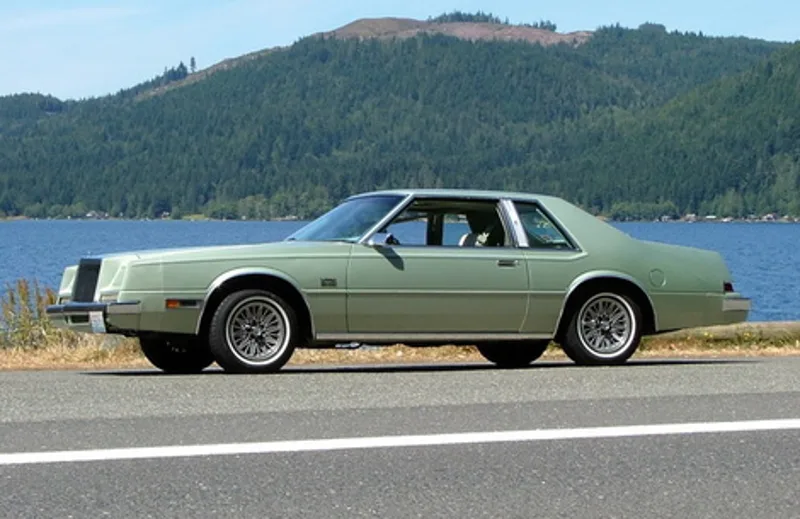
The Chrysler New Yorker of the 1979 to 1981 model years was a four-door notchback saloon built on the R platform, a reworked version of Chrysler's old B platform. Chrysler sold it under its own name, mainly in North America, and it was the company's flagship in those years. It was among the largest series-production cars of its generation and competed with the Lincoln Continental and Cadillac's DeVille.
Weak engines, heavy decoration and frequently faulty assembly are why these cars are regarded as typical examples of the Malaise Era.
Why did Chrysler build a stopgap full-size car?
Chrysler planned to move its whole range to compact front-drive K-car models for the 1980s, so its large cars were transitional from the start. To keep costs as low as possible, it did not develop a new platform. Instead it reworked the B platform, first seen in 1962, and called the result the R platform.
The oil crisis of 1973 hit the heavy American full-size models, some of which were up to six metres long and weighed over 2.5 tonnes empty. General Motors and Ford responded in 1977 and 1978 with cars 300 to 400 kg lighter than their predecessors. Chrysler, economically weakened, kept building its C-platform cars into the late 1970s.
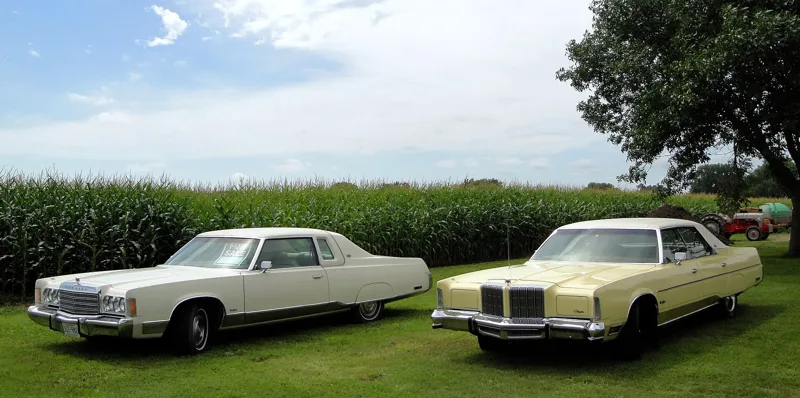
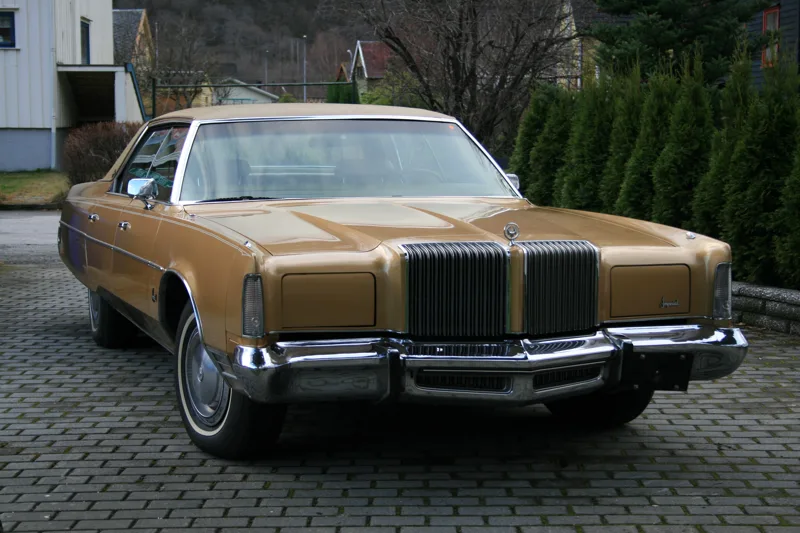
The previous generation had arrived in 1974 as the Imperial LeBaron. After the Imperial brand was dropped in 1975, the same car carried on as a Chrysler, unchanged in looks and engineering, and the C platform stayed in use through 1978 with the Newport and New Yorker.
The R-body family appeared in early 1979. The Chrysler Corporation was in serious financial difficulty by then, coming close to insolvency in 1979 and 1980 and kept going only by government-backed loans.
A stopgap flagship built on a reworked platform, sold while its maker struggled to survive.
Where did the New Yorker sit in Chrysler's range?
Within the core Chrysler brand the New Yorker was the top version, while the Newport was the simpler model. Both shared the same technical parts, but only the New Yorker had its own front and rear design and a much better level of equipment. Dodge sold a sibling as the St. Regis.
Plymouth's Gran Fury was a stripped-down version aimed mainly at fleet buyers, and it reached showrooms a year behind the others.
Body and styling
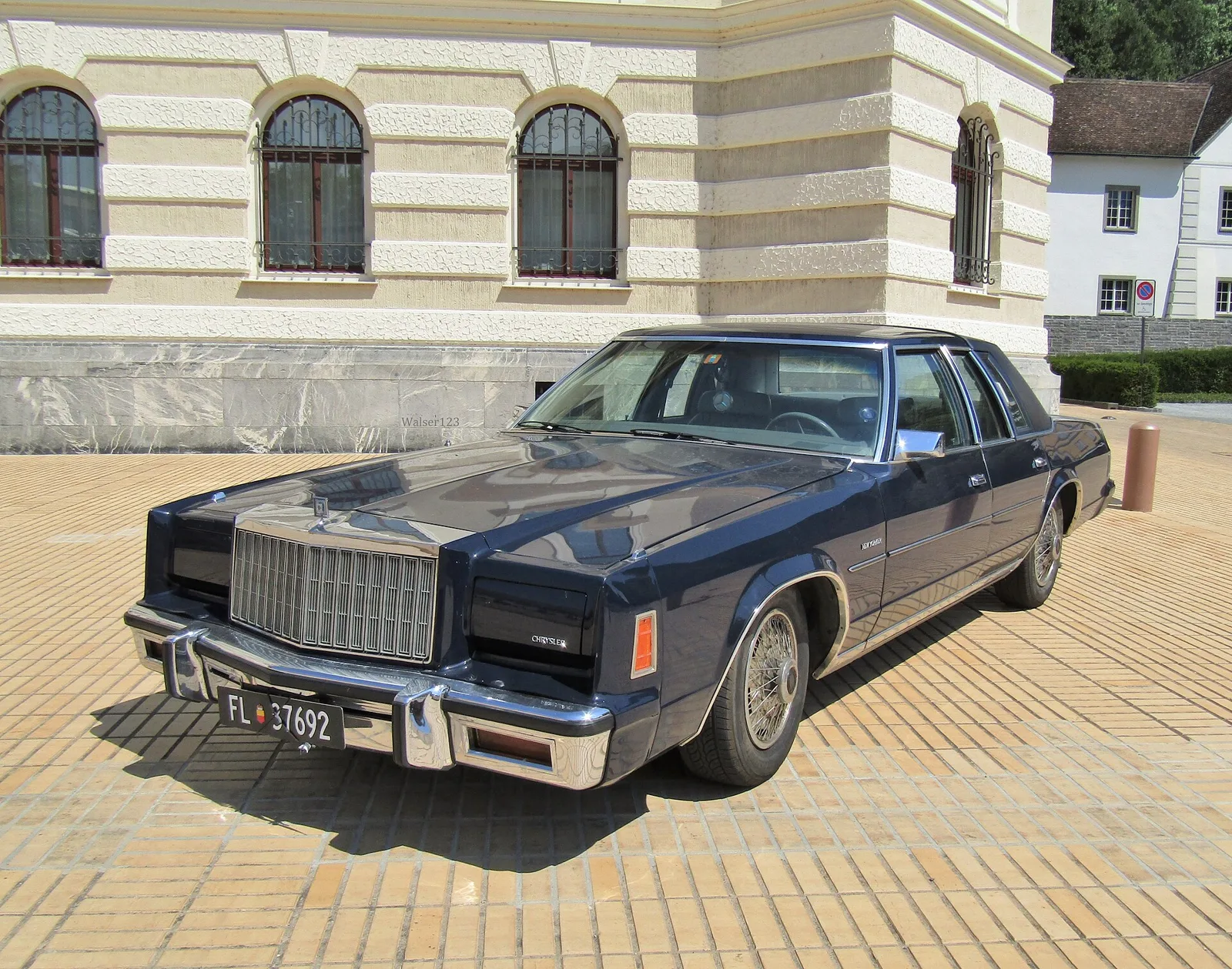
The New Yorker came only as a four-door notchback saloon. Chrysler called its fixed-B-pillar body a pillared hardtop, a label that is, strictly speaking, contradictory. No two-door coupe or large estate was offered. The body shell matched the Newport, the St. Regis and the Gran Fury, so the front and rear styling and the trim set the car apart.
Several features were unique to this car. Its headlamps hide behind flaps painted in body colour when switched off, and its C-pillar carries vinyl meant to imitate a landau roof. A light band runs the full width of the rear, and the number plate is built into the bumpers. The small rectangular side window was called an opera window in advertising.
Designers kept the boot and bonnet long to make the car look large despite shorter dimensions. At 33 mm (1.3 in) longer than the Newport, it became the largest series-production US car once the old Lincoln Continental had been discontinued.
Engines, chassis and transmission
Every New Yorker was a V8. Chrysler fitted only the LA small-block family, and the Slant Six straight-six offered in other R-body models was absent. A 5,210 cc (318 cu in) small block was available throughout the production run, and a 5,898 cc (360 cu in) version was added for 1979 and 1980.
The 1979 cars used the larger engine as standard, while 1980 and 1981 cars came with the smaller one. Output shifted from year to year as emissions and fuel economy requirements tightened. The engines sat longitudinally at the front and drove the rear wheels through a three-speed TorqueFlite automatic.
The chassis came largely from the old B-body cars. Front torsion bars, a design introduced back in 1957, sat beside a rigid rear axle on leaf springs, with discs at the front and drums at the rear.
How fast was the New Yorker?
The 122 PS (120 hp) version of the 5,210 cc V8 reached 159 km/h (99 mph) and went from 0 to 100 km/h in 15.2 seconds. The strongest engine, a 198 PS (195 hp) 5,898 cc unit offered only in 1979, raised the top speed to 187 km/h (116 mph) and brought the sprint down to 10.6 seconds.
What did the Fifth Avenue Edition add?
The Fifth Avenue was Chrysler's counterpart to the Lincoln Continental Williamsburg Town Car, and it used the standard New Yorker's mechanicals. Its additions were trim only: imitation side vents in the front wings, specially shaped Chrysler badges, thicker carpets and specially etched rear glass. The package raised the price by US$1,300 in 1979 and by US$1,500 in 1980.
Fifth Avenue colours by year
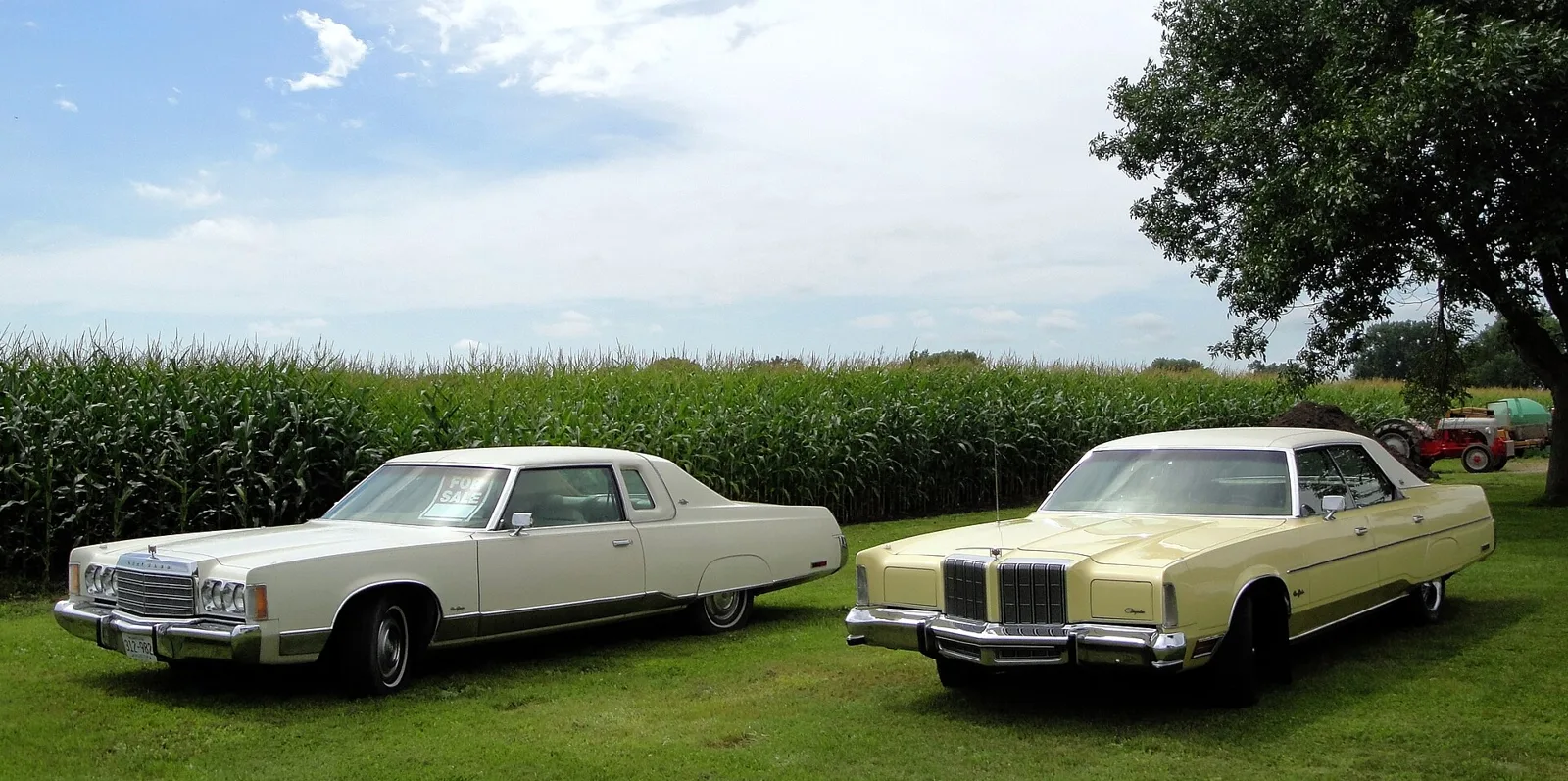
Each model year brought a different exclusive finish. The 1979 car came in a two-tone scheme called Creme and Beige, with the landau roof in a darker shade than the body. In 1980 buyers could pick Champagne, which followed the previous year's pattern, or Maroon, a brown used on roof and body alike, with the vinyl embossed to look like crocodile leather.
The 1981 finish combined a brown named Mahogany for the roof, boot lid and bonnet with a dark silver lower body.
Why did the New Yorker suffer from quality problems?
The R-body cars were developed too quickly and too carelessly, and they were tested too little before reaching production. An internal company study concluded that not one vehicle left the line free of faults. It counted 1,077 defects per 100 vehicles, so the average car arrived with eleven.
The defects arrived at the same time as financial trouble, and rumours of insolvency in 1979 and 1980 weighed on demand for big Chrysler models.
Prices and production
The New Yorker listed at US$10,026 in its first model year, US$3,000 above the Newport. A Cadillac Sedan DeVille cost about US$2,000 more than the New Yorker, while the Lincoln Continental of 1980, based on the Panther platform, asked US$4,000 more.
Production covered about 73,500 cars over three years. The 1979 model year accounted for 54,640 of them, 1980 saw 13,513, and the final year produced 5,431. Chrysler built them at its Lynch Road Assembly plant in Detroit, the same site that had made the Dodge Monaco and Plymouth Fury until 1978.
What came after the R-body New Yorker?
From 1983 Chrysler separated the two names. The New Yorker name went to a well-equipped version of the front-drive K-car family, while the Fifth Avenue became a deliberately conservative upper-midsize car with rear-wheel drive, built on the old M platform. Both were discontinued in 1988 and 1989, and from 1990 to 1993 a longer, better-equipped New Yorker Fifth Avenue returned.
The R-body car stayed in the range until 1981, and its production fell during a period of severe economic crisis for Chrysler. In the 1982 model year a rear-drive model from the M platform briefly carried the New Yorker name, and the first front-drive New Yorker generation arrived in 1983.
The R-body generation was therefore designed as a transitional car, a bridge to the front-drive compacts Chrysler had planned for the 1980s.
Specifications at a glance
| Specification | Detail |
|---|---|
| Model years | 1979 to 1981 |
| Body | Four-door notchback saloon, pillared hardtop |
| Engines | 5,210 cc (318 cu in) V8; 5,898 cc (360 cu in) V8 in 1979 and 1980 |
| Transmission | Three-speed TorqueFlite automatic |
| Top speed | 159 km/h (99 mph) with 122 PS (120 hp); 187 km/h (116 mph) with 198 PS (195 hp) |
| 0 to 100 km/h | 15.2 seconds with 122 PS; 10.6 seconds with 198 PS |
| Length | 33 mm (1.3 in) longer than the Newport |
| List price, first model year | US$10,026 |