A personal luxury coupe with a waterfall grille, a Hooper tail and a fuel-injected 5.2-litre V8, built in 12,385 examples.
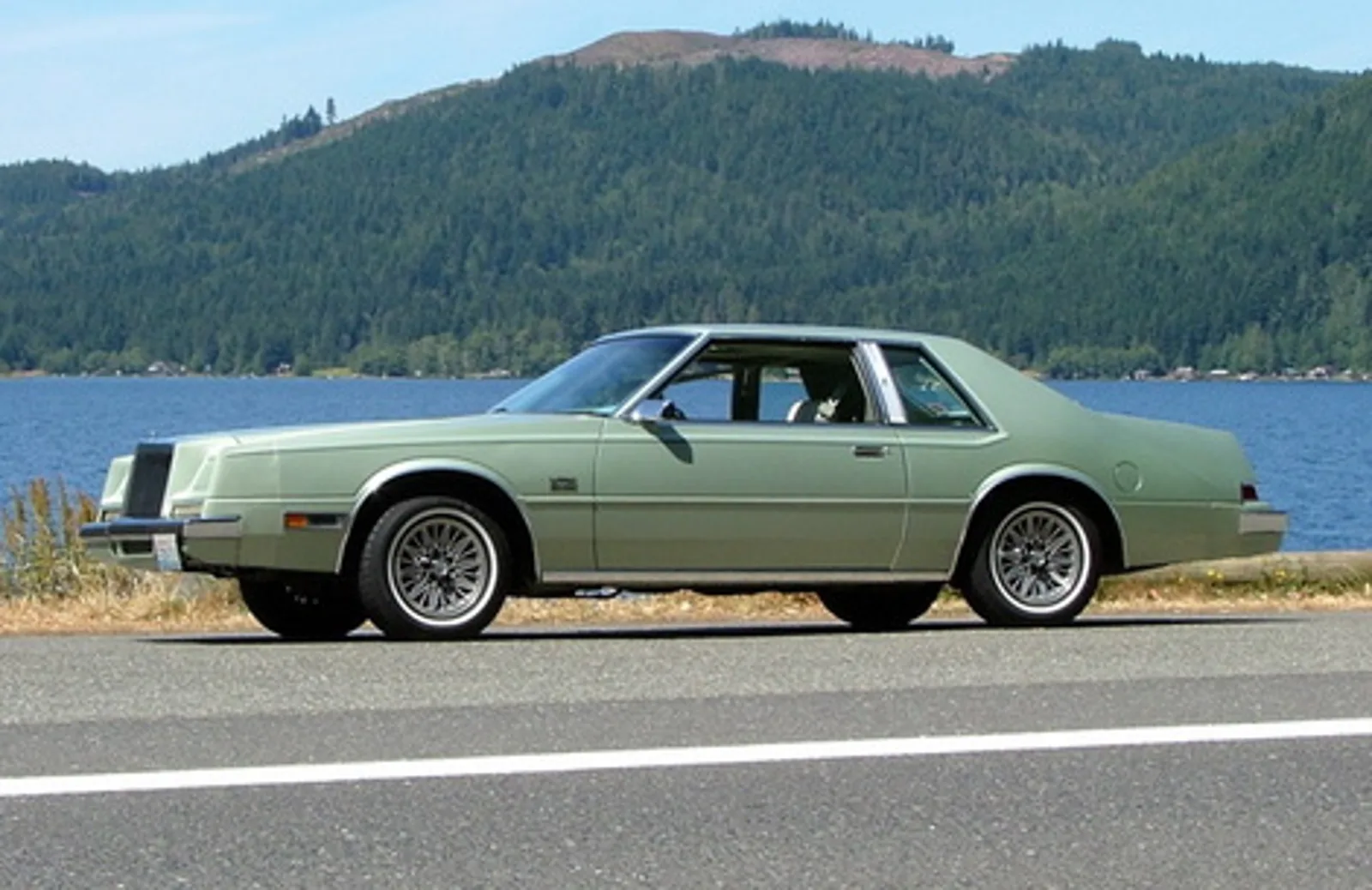
The Imperial was a personal luxury coupe that Chrysler offered in North America from 1981 to 1983. Built on the J platform shared with the Cordoba, it had a 5.2-litre V8 and a Hooper-style tail, and production came to 12,385 cars.
Chrysler brought back a famous name in 1981 and put it on a car that sold poorly. The Imperial coupe looked unlike anything else in its class, with an exposed waterfall grille and a tail borrowed from British coachwork. Its fuel injection and its weight made it harder to love, and today it is a sought-after classic in the United States.
Where did the Imperial name come from?
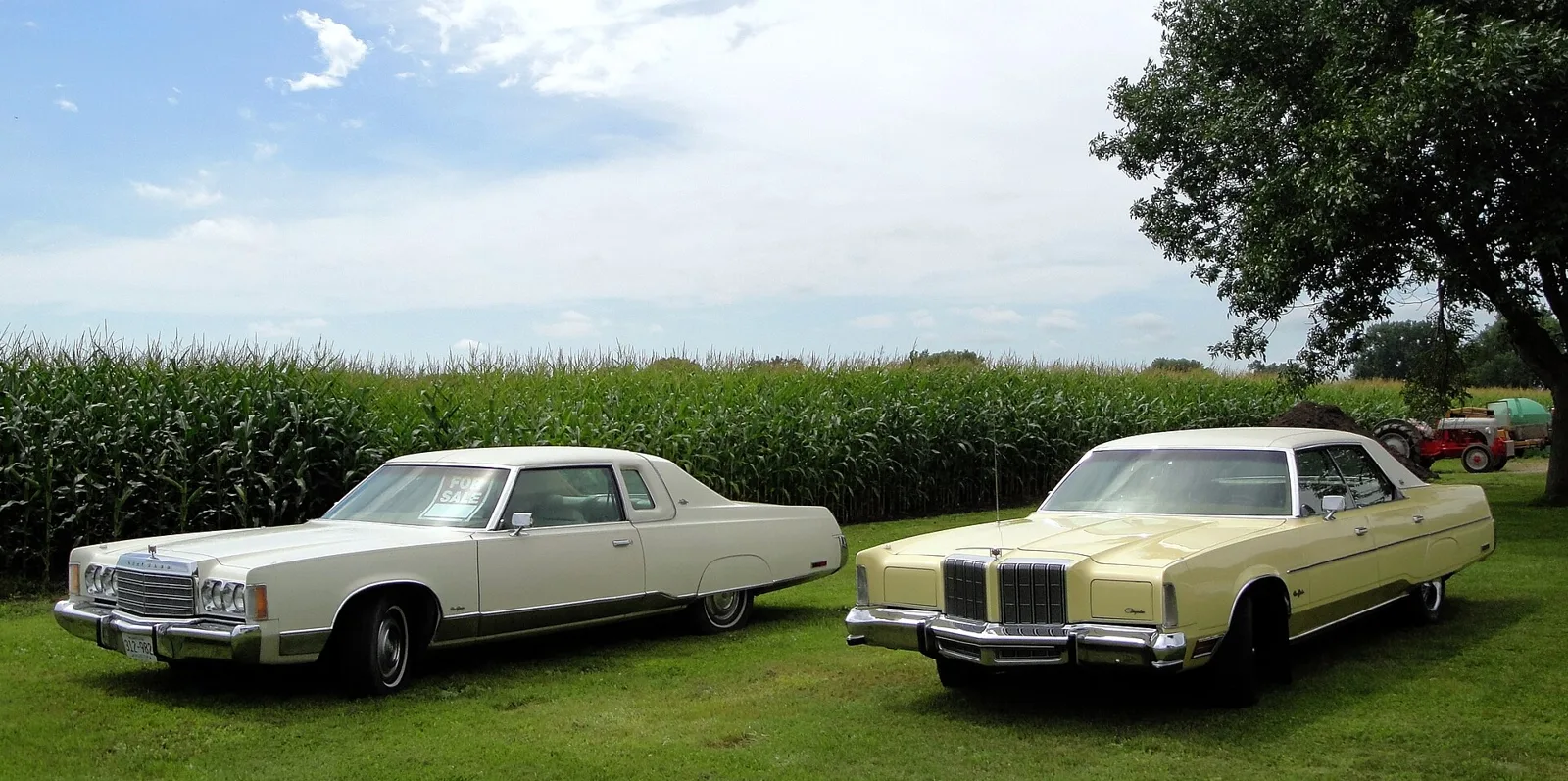
Chrysler's most exclusive cars carried the Imperial model name for decades, and from model year 1955 Imperial became an independent make. Its sales rarely matched those of Cadillac and Lincoln, and the last Imperial generation, from 1974, was little more than a richly equipped Chrysler New Yorker.
Imperial stood for the top of the Chrysler range. From model year 1955 the marque stood on its own under the Chrysler umbrella, meant to compete in the upper segment with Cadillac from General Motors and Lincoln from Ford. For 20 years it stayed Chrysler's leading brand, but it never managed to make its mark against its rivals.
Except in 1959 and 1960, Imperial sold well below Cadillac and Lincoln. Part of the reason was that buyers kept calling them Chrysler Imperials, so the badge never built a history of its own. The cars also looked and felt close to the cheaper Chrysler, Dodge and Plymouth models, and that resemblance grew over time.
After 8,800 Imperials were sold in 1975, Chrysler dropped the brand. For three more years the old models were sold on as Chrysler New Yorker Brougham at clearly lower prices.
The Chrysler Corporation's priciest car of 1981 was a coupe with a waterfall grille, a Hooper tail and an injection system that proved unreliable.
What led Chrysler to build the Imperial coupe?
Chrysler came close to insolvency in 1979, a crisis usually blamed on slow reactions to the oil shocks of the 1970s and a late start on smaller, thriftier cars. Lee Iacocca, a former Ford manager, took over in autumn 1978 and stopped the unprofitable C-platform and B-platform models at once.
Iacocca also pushed the compact, front-wheel-drive K-Car, which went on sale in autumn 1980 and did much to save the company. The large Imperial coupe appeared at the same time as the small car. Iacocca saw a contradiction in that, and before launch he publicly distanced himself from the Imperial, saying the project had been approved by earlier management and was too far along to stop when he arrived.
The project had started under the name La Scala. Only shortly before the launch did management decide to revive the Imperial name.
How was the Imperial styled?
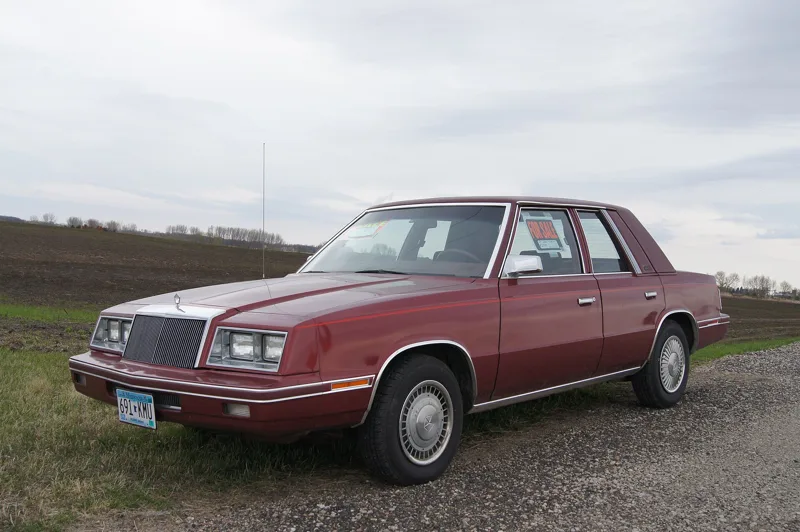
The Imperial was styled by Chrysler stylist Steve Bollinger, on the glass, doors and front wings of the Cordoba, with a new nose and tail. Its recessed headlights hid behind body-coloured covers when switched off, and the nose traced back to a 1976 styling study.
The front overhang was lengthened with an add-on section. The grille carried vertical chrome bars, a so-called waterfall grille. The idea for it came from the Le Baron Turbine Car, a styling study by the Chrysler designer Bob Marcks that rode on the Cordoba's B-body. Tom Tjaarda, an American designer living in Italy, also worked on the car for a time.
The rear had a Hooper tail, in which the C-pillar line ran out into the flanks so the boot looked tacked on. The shape borrowed from classic British luxury cars, especially the early post-war Rolls-Royces that the coachbuilder Hooper had bodied in that form.
By the early 1980s the bustle back, modelled on the Hooper Empress Line and Razor Edge designs, had become the mark of the priciest models at all three American carmakers. The second-series Cadillac Seville, shown in autumn 1979, was the best known, and Lincoln followed soon after with its small Continental. Chrysler later claimed its own stylists had got there first, but said money had kept the Imperial from reaching the market before the Seville.
What was under the Imperial's skin?
The Imperial shared the suspension of the Cordoba, which in turn matched the design of the mid-size Aspen and Volare. Its key difference was the engine, a 5.2-litre (317 cu in) V8 that had powered many Chrysler models since the early 1970s, now paired with electronic fuel injection as standard.
The injection system was not tested thoroughly before launch, and it proved very unreliable in everyday use. Workshops were often overwhelmed by the complicated electronics. From 1981 Chrysler offered to convert the cars back to a conventional carburettor under warranty, and many owners took up the offer.
Others chose the larger 5.9-litre (360 cu in) V8, which was no longer fitted to new cars at the factory. That option was also a popular choice.
The Imperial had disc brakes at the front and drum brakes at the rear, unlike the 1974 and 1975 models, which had discs on all four wheels. It was also 250 kg (551 lb) heavier than the Cordoba it was built from. Fully fuelled, it weighed more than 2,000 kg (4,409 lb), because of thicker steel in some areas and more sound-deadening material.
How was the Imperial equipped and sold?
Fully equipped from the factory, the car had power windows and power seats, air conditioning and an adjustable steering column. The only extra-cost option was an electric sunroof, known as a moonroof, and the car was sold through a restricted network of 416 US and 42 Canadian dealers.
Buyers could choose Mark Cross leather or cloth at no extra cost, along with one of four cassette radios and a choice of wheels or hubcaps. That made the Imperial the first American car of recent history to be delivered fully equipped and with no paid extras.
Dealers had to apply for the right to sell the Imperial and meet special requirements. The car was built in Chrysler's small-series plant at Windsor in Canada, alongside the Cordoba and Mirada. Chrysler said assembly was carried out only by workers with at least 25 years of company service, and every car was to pass a simulation test and a test drive of 5.5 miles.
Marketing aimed the car at above-average educated men over 50. Its rivals were the Continental Mark VI and the front-wheel-drive Cadillac Eldorado.
How many Imperials were built?
Chrysler planned 25,000 Imperials but built only 12,385 over three years, from August 1980 to April 1983. Output fell from 8,113 in 1981 to 2,717 in 1982, and only 1,555 cars were completed in the first four months of 1983.
Output sank steadily across the period. Only three months, September to November 1980, reached four-digit figures. In every other month production was in the low hundreds, and sometimes in the tens.
The Imperial listed at 18,690 US dollars in 1981, the most expensive passenger car of the Chrysler Corporation. The New Yorker saloon, built on the R platform, sold for 10,982 US dollars that year, while the plainer Newport was 8,032 US dollars. At 5,880 US dollars in basic form, the Plymouth Reliant, a new volume car for the group, came in at under a third of the Imperial's price.
Against its direct rivals the Imperial was also dearer: 17,237 US dollars for the Continental Mark VI coupe and 16,871 US dollars for the Eldorado, both in 1981. Many of their equipment items were extra-cost, so with comparable kit both rivals ended up costing more than Chrysler's coupe.
What did the critics say?
American reviewers tested the Imperial through 1980 and 1981. They praised its quiet cabin and a suspension that was soft without being spongy, but they found the power steering lacking in feel.
Harder critics called it an old-fashioned car, or a luxury toy for people who were not very interested in cars. One described its styling as Darth Vader, and others pointed to an outdated small-car chassis and a new fuel-injection system that was too demanding even for Chrysler.
Did the Imperial race?
A few Imperials took part in NASCAR races between 1981 and 1985. The drivers were Buddy Arrington, Rick Baldwin, Cecil Gordon and Maurice Randall, and one Imperial finished sixth in the summer race of 1982 at Brooklyn, Michigan.
Who else built Imperials?
The factory sold the Imperial only as a two-door coupe, with no convertible and no vinyl roof styled like a convertible's. Independent workshops such as Global Coach in 1981 and Carelli Autoworks in 1983 converted some cars to convertibles at customers' request.
Several four-door saloons also came out of independent workshops, some with a short wheelbase and some with a longer one. In 1983 the Swiss maker Felber upgraded an Imperial coupe for a customer, keeping the exterior unchanged and reworking the interior.
What was the Frank Sinatra Edition?
The Frank Sinatra Edition, also called Imperial FS, was a special Imperial named after the singer and entertainer. It arrived in June 1981 in Glacier Blue paint, a light blue meant to recall Sinatra's eye colour, with blue leather or blue cloth seats.
Sinatra was a personal friend of Chrysler boss Lee Iacocca and helped market the coupe early on. A television advert in early autumn 1980 showed him selling a brand-new Imperial to the actor Gregory Peck.
The FS2 variant brought a modest centre console bearing the Sinatra logo, plus a particular radio, and buyers also got 16 cassettes of his best songs. In the 1981 model year, which ran from June to September, 170 FS cars were built, and 326 in 1982. Glacier Blue remained available in model year 1983, but the Sinatra name had been dropped by then.
Imperial coupe specifications
| Specification | Detail |
|---|---|
| Built | August 1980 to April 1983 |
| Platform | J platform, shared with the Cordoba and Mirada |
| Engine | 5.2-litre (317 cu in) V8, electronic fuel injection |
| Optional engine | 5.9-litre (360 cu in) V8 |
| Brakes | Front discs, rear drums |
| Weight | More than 2,000 kg (4,409 lb) fuelled; 250 kg (551 lb) more than the Cordoba |
| 1981 price | 18,690 US dollars |
| Production | 12,385 cars |
| Dealers | 416 US and 42 Canadian |
Where did the Imperial appear on screen?
A four-door saloon based on the Imperial shows up in the film Auf dem Highway ist wieder die Hoelle los. Burt Reynolds and Dom DeLuise play amateur racers who use the car in an illegal Cannonball race.
The saloon is painted in a military colour. To explain away their speeding, the two claim that the American army is secretly carrying nuclear fuel in the car.