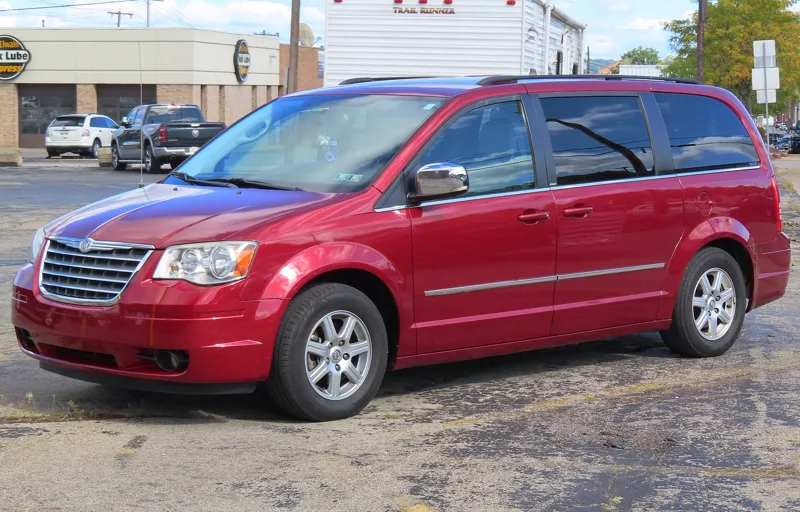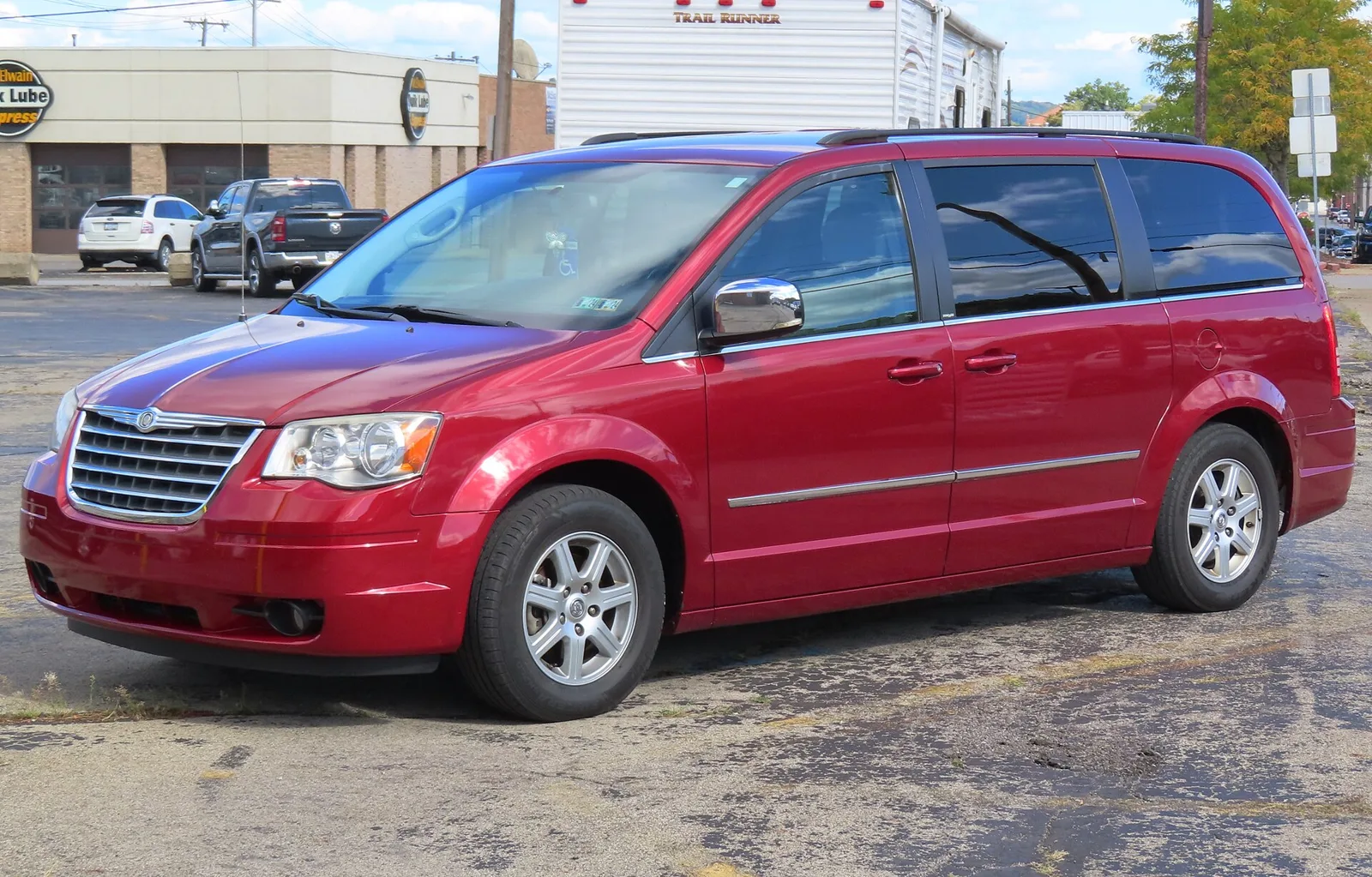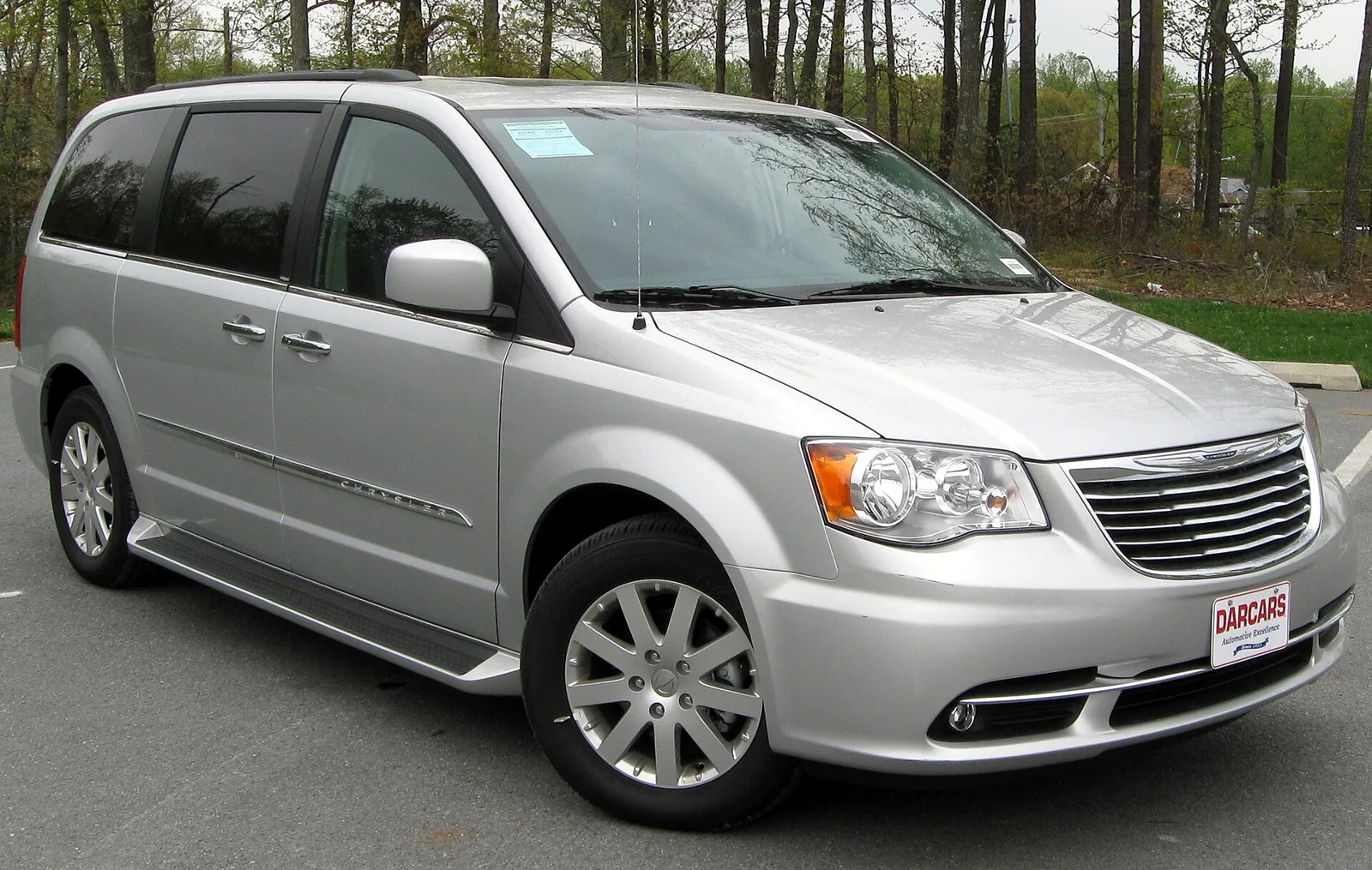
A completely new 2008 design that reached showrooms as the Dodge Grand Caravan, Town & Country and Volkswagen Routan, and stayed in production until 2020.
Launched as 2008 models, the RT vans were a clean-sheet design sold under six badges. Volkswagen's Routan joined the line in 2008, a 2011 refresh brought the Pentastar V6, and the Dodge Grand Caravan ran until August 2020.
Chrysler's fifth generation of minivans, the RT platform, arrived as 2008 models. It was a clean-sheet design, and it went out under six badges before the Grand Caravan ended in August 2020.
Few minivan generations wore so many names. The same basic van carried Chrysler, Dodge, Ram, Lancia and Volkswagen badges in different markets, and its story includes rental fleets, a short-lived Volkswagen version and a crash-test result.
Why did Chrysler drop the short-wheelbase minivan?
Chrysler dropped the short-wheelbase version when it introduced the 2008 minivans at the 2007 Detroit Auto Show, leaving only long-wheelbase models. Chrysler executives said the change let them add features that most minivan buyers wanted, although the short van cost about $2,000 less.
The short-wheelbase van had been a major seller, accounting for half of all Canadian sales. It also offered a four-cylinder engine with improved fuel economy, so buyers lost a cheaper, thriftier option.
Dodge filled part of the gap with the Journey. It sat on nearly the same wheelbase but was styled as a crossover rather than a minivan, so Dodge kept a family vehicle on that wheelbase.
Six badges, one clean-sheet design, and a Grand Caravan that kept selling until 2020.
How different was the RT design from the one before it?
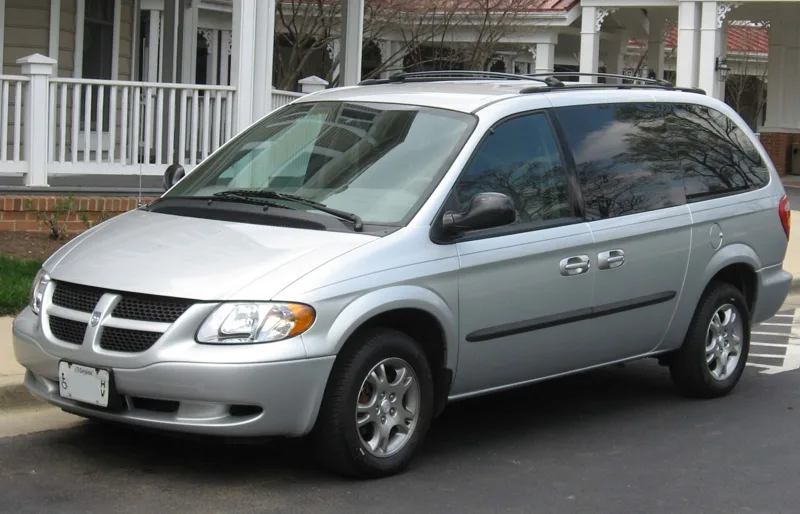
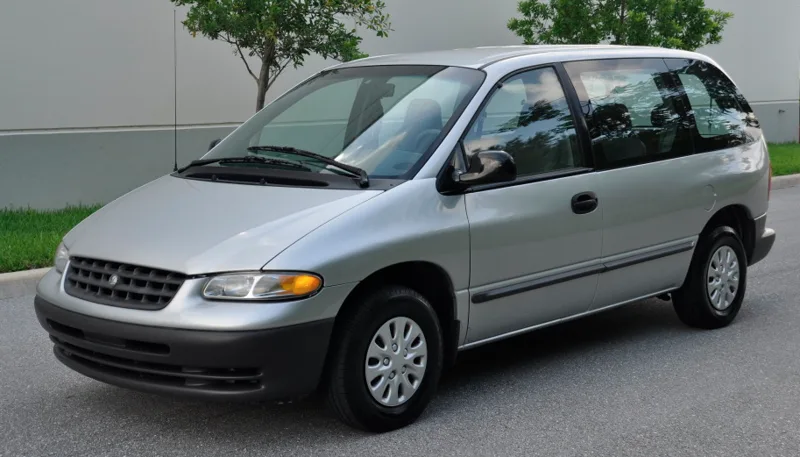
The RT was a completely new design that shared few components with the previous model. Its rounded styling, which had first appeared on the NS vans of the late 1990s, gave way to a boxier look styled by Ralph Gilles, and standard electronic stability control and side curtain airbags arrived as well.
Chrysler moved the gear selector from the steering column to a higher spot on the centre console, and the transmission controls sat on the dashboard. Power windows came to the sliding doors, which matched rivals such as the Toyota Sienna and Honda Odyssey.
Much of the new equipment was aimed at families in the back seats. MyGIG was a stereo with a built-in hard drive for recording, storing and playing music. Rear passengers got video screens in the second and third rows, and an optional overhead console added LED map lights and halo ambient lighting.
A dual DVD system was available for the rear. SIRIUS Backseat TV offered three channels of children's programming, and powered second-row windows completed the rear package.
How did the Stow 'n Go and Swivel 'n Go seats work?
Stow 'n Go seats carried over from the previous generation and came standard. Swivel 'n Go was an optional system on higher-end models, and it turned two full-size second-row seats to face the third row, with a detachable table between them.
Swivel 'n Go kept the third-row arrangement from Stow 'n Go, but the second row had to be taken out of the van by hand. Buyers who chose it got a table and a face-to-face layout at the cost of that extra work.
Which names did the RT minivans sell under?
Depending on the market, the RT vans appeared as a Dodge, a Chrysler, a Lancia, a Ram or a Volkswagen. Dodge's version was the Grand Caravan, Chrysler's was the Town & Country in some places and the Grand Voyager in others, and Ram sold a cargo model. The Town & Country name was used in the Philippines and across Central and South America.
The Grand Voyager name covered all other markets. From 2011, continental Europe received the Lancia Voyager instead.
What was the Volkswagen Routan?
The Volkswagen Routan was a seven-seat rebadged version of the RT minivans, with revised styling, content and suspension tuning. Built alongside the Chrysler and Dodge vans at Windsor Assembly, it went on sale in the United States in September 2008 after its debut at the 2008 Chicago Auto Show.
The deal began as a partnership between Volkswagen and DaimlerChrysler in 2005. Volkswagen had no minivan for the United States or Canada, because the Eurovan had been discontinued in 2003, and building the Routan at Chrysler's plant avoided the cost of developing a family-sized van from scratch.
The Routan carried a rebranded version of the MyGig hard-drive audio and navigation system, which Volkswagen called Joybox. It had neither Stow 'n Go nor Swivel 'n Go, and its second row used the Easy Out Roller Seat system. Chrysler or Dodge parts could convert it to either Chrysler layout.
By 2009 the minivan family as a whole ranked as the 13th bestselling automotive nameplate worldwide, with more than 12 million sold.
Volkswagen had projected that the Routan would win at least five percent of the US minivan market, which meant 45,000 of the 700,000 minivans then sold. After 29,000 Routans had shipped to US dealers, Volkswagen asked Chrysler Canada in January 2009 to pause production for February. By July 2009, only 11,677 had sold.
Volkswagen halted production at Chrysler's Windsor, Ontario plant in 2012, although its contract ran to 2014. There was no 2013 retail model, and the 2013 Routan went to fleet buyers, with 2,500 built by Chrysler during the calendar year.
Analysts were not surprised. Buyers had little reason to pick the Routan over a Grand Caravan or Town & Country, and its base price of nearly $28,000 sat well above the $21,000 Grand Caravan. Its equipment list was also shorter than the upscale Town & Country's.
What did the 2011 refresh change?
The 2011 mid-cycle refresh was a major update to both styling and functionality. It brought a restyled exterior and interior, a new wing logo and standard SafetyTech, including blind-spot monitoring. It also replaced all three older V6 engines with the Pentastar 3.6-litre, and the Swivel 'n Go seats were dropped. The Chrysler versions also moved above Dodge in trim.
The suspension was heavily retuned. Both Dodge and Chrysler vans gained a larger front sway bar and a new rear sway bar, with a higher rear roll centre, revised spring rates, a new steering gear, altered front camber and a lower ride height. The changes dramatically improved handling on both brands.
The cabin changed too. A dual DVD system could play different media at the same time, FLO TV added 20 channels of live programming, and a one-touch fold-down made the third row easier to reach. A new steering wheel put radio, cruise and phone controls on the rim, and the trim moved to softer materials with LED ambient lighting.
The Grand Caravan wore a double-crosshair grille, while the Town & Country received a new chrome grille. Both vans gained the Pentastar as their only powertrain, with a six-speed automatic.
What engines did the RT minivans use?
The original RT vans launched with a 3.3-litre V6 as standard, a 3.8-litre V6 on mid-level models and a 4.0-litre SOHC V6 at the top. The 2.4-litre four was dropped, and export models could also take a 2.8-litre diesel four. The 3.3 was not offered in Europe.
Buyers who wanted the most power had to choose the top-level 4.0-litre, while the 3.3 stayed standard on the base vans.
Transmissions were split as well. The 3.3-litre came with a four-speed Ultradrive automatic, while the other engines used a six-speed 62TE automatic. In 2011 the 3.3, 3.8 and 4.0 were all dropped in favour of the Pentastar 3.6-litre V6, which also used the 62TE.
The Pentastar simplified the range. One V6 and one gearbox covered every RT model, and the Ram C/V cargo van used the same 3.6-litre engine with its six-speed automatic.
How did the RT perform in safety testing?
The 2010 Dodge Grand Caravan earned a five-star rating in several categories in the US National Highway Traffic Safety Administration's New Car Assessment Program crash tests. The RT range included stability control and curtain airbags from launch, and SafetyTech, with its Blind Spot Monitoring and Rear Cross Path Detection, became standard in 2011.
Five stars was the top rating in that programme, and the Grand Caravan earned it in several categories.
What did the rental market do to RT values?
Rental companies took a large share of the early cars. Dodge sold about a third of its 2010 Grand Caravans to rental fleets between January and October 2010, and the cars that came back later pushed used prices down.
Between July and October, the number of returned ex-rental 2010 Grand Caravans jumped fourfold. Used 2009 and 2010 Dodge minivans lost as much as 20 percent of their value over the same period.
What happened to the Grand Caravan after 2016?
The 2017 Chrysler Pacifica replaced the Town & Country, and the Dodge Grand Caravan was due to end after 2016. Instead it was kept on sale unchanged beside the Pacifica, and it lasted until August 2020. A simpler lineup of three trims carried it through its final year.
Fiat CEO Sergio Marchionne said at the 2018 Detroit show that there might be a successor, a Caravan-like vehicle built on the Pacifica architecture. Its replacement was the Chrysler Voyager, an entry-level Pacifica with pricing and features similar to the Grand Caravan's.
The end date slipped. Dodge first announced a May 2020 finish, then pushed it back three months to 22 August. In Canada, a Pacifica-like version was sold as the Chrysler Grand Caravan.
Final-year Grand Caravans came in SE, SE Plus and SXT trims, and the fleet-only GT was dropped. For 2020 the SE Plus gained Super Stow 'n Go second-row buckets, an in-floor storage bin, an eight-way power driver's seat and a black interior with Cranberry Wine stitching. The base SE lost its alloy wheel option, and a compact spare became optional on every trim. A Blacktop Package was also available.
What was the Ram Cargo Tradesman?
The Ram Cargo Tradesman, also called the Ram C/V Tradesman, debuted for the 2012 model year and replaced the Dodge Grand Caravan C/V. It was based on the Dodge Grand Caravan but had solid metal in place of its rear windows and a flat load floor.
It offered 144.4 cubic feet (4,090 L) of interior storage, a 1,800 lb (820 kg) cargo payload and towing of up to 3,600 lb (1,600 kg). The 3.6-litre Pentastar V6 and six-speed automatic came with it. The C/V Tradesman ended after the 2015 model year in favour of the ProMaster City.
RT minivan specifications at a glance
| Item | Detail |
|---|---|
| Launch | Model year 2008, shown at the 2007 Detroit Auto Show |
| Generation | Fifth of six Chrysler minivan generations |
| Engines, 2008 to 2010 | 3.3 L V6 standard; 3.8 L V6 mid-level; 4.0 L SOHC V6 top-level; 2.8 L diesel four on export models |
| Transmissions, 2008 to 2010 | 3.3 L with four-speed Ultradrive; other engines with six-speed 62TE |
| Engine from 2011 | Pentastar 3.6 L V6, 283 hp, six-speed 62TE automatic |
| Volkswagen Routan | Seven seats, rebadged RT, built at Windsor Assembly |
| Ram C/V Tradesman | 144.4 cu ft (4,090 L) storage; 1,800 lb (820 kg) payload; towing up to 3,600 lb (1,600 kg) |
| Final Grand Caravan | Ended 22 August 2020, in SE, SE Plus and SXT trims |