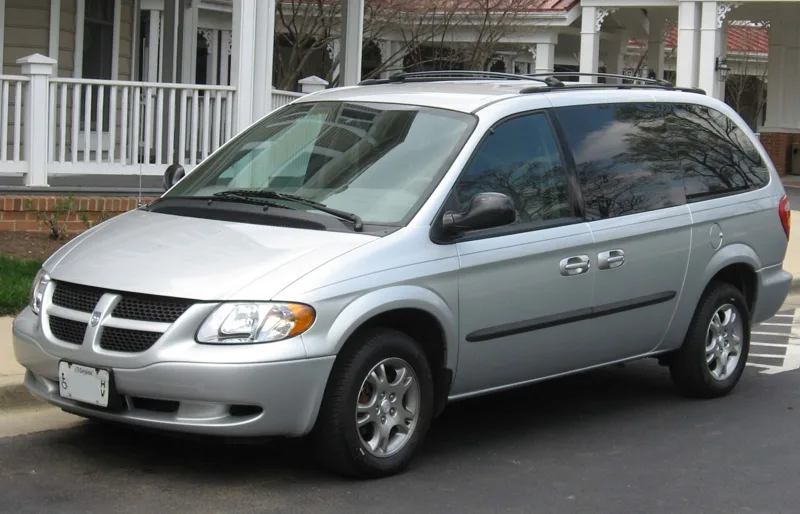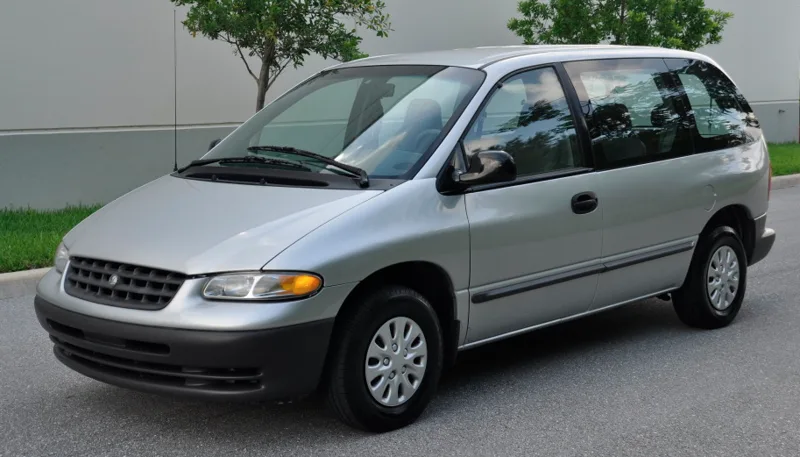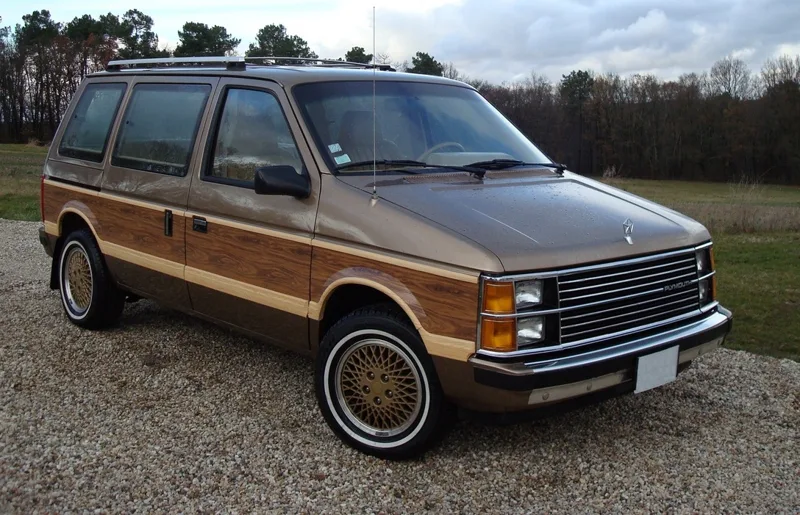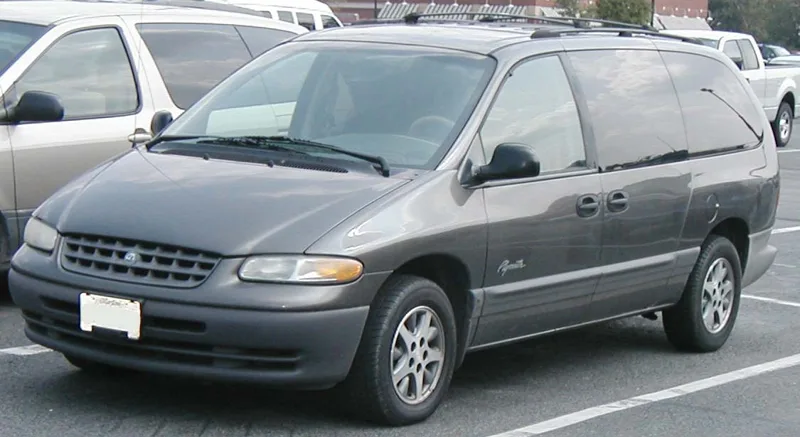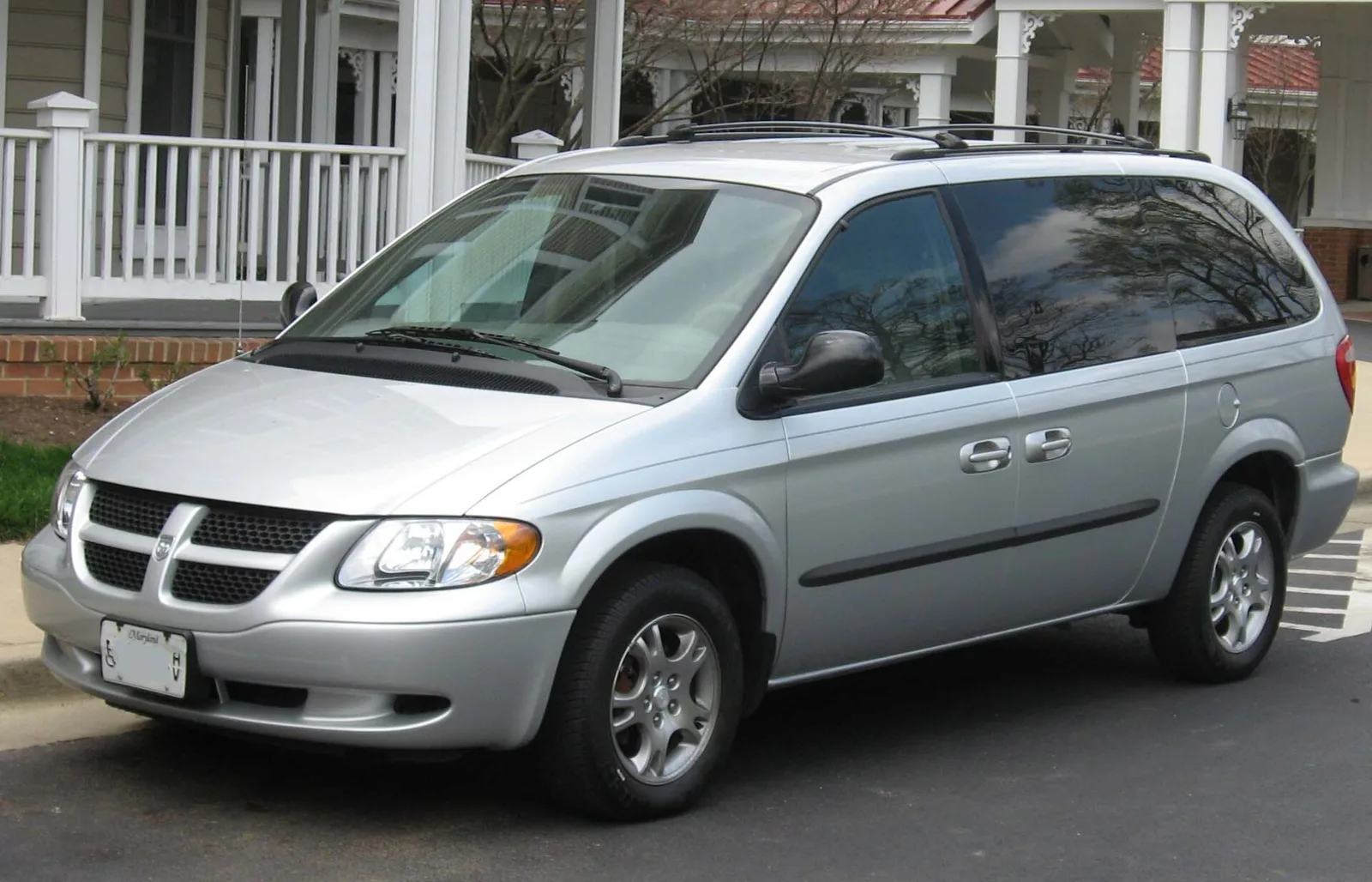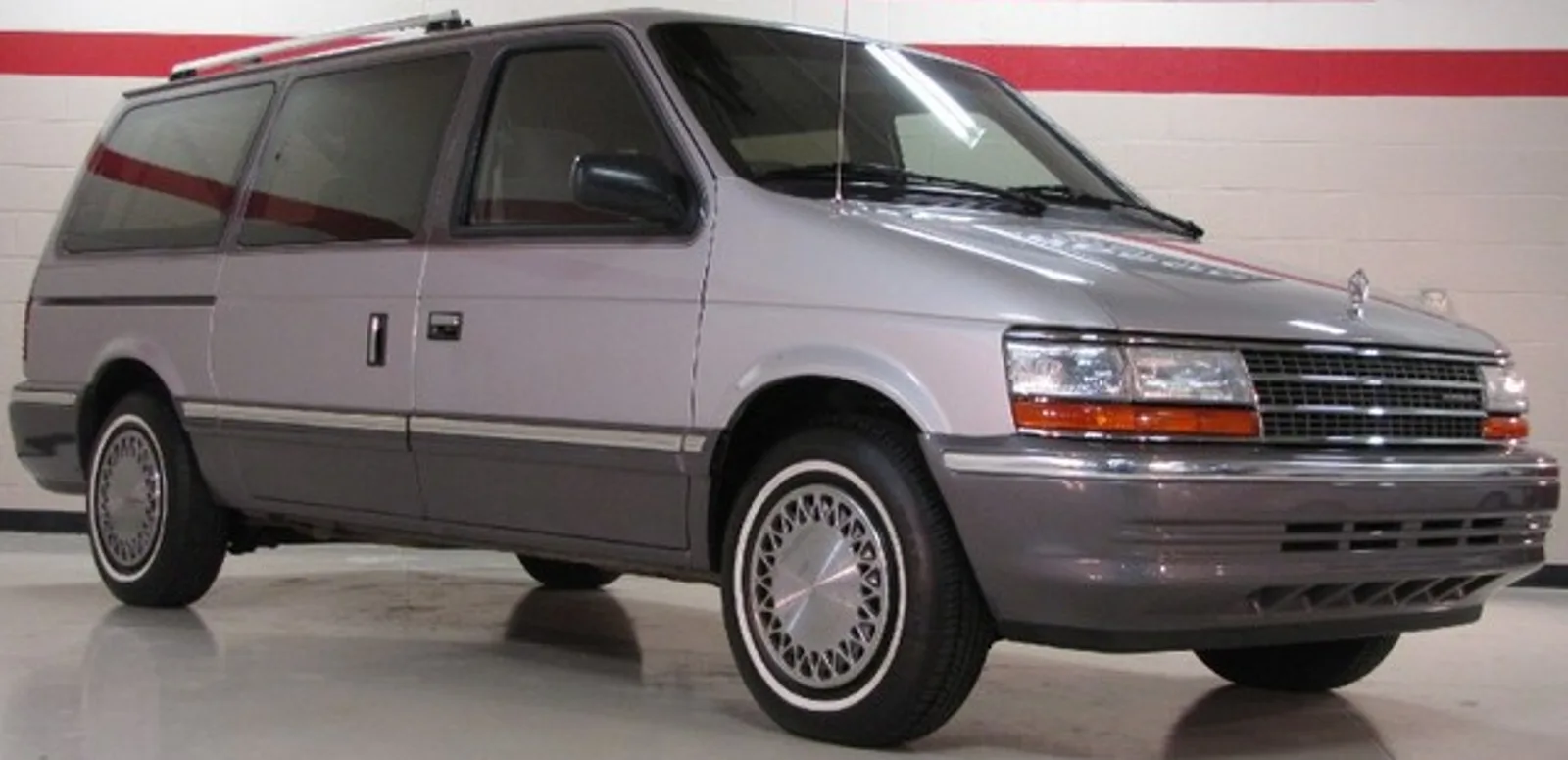
Chrysler's second-generation minivan, sold from 1991 to 1995, added airbags, a new body and an electric TEVan prototype before the NS redesign arrived.
Built from 1991 to 1995, the AS minivans introduced a driver airbag, all-wheel drive as an option and a new body with a drag coefficient of 0.39. They were replaced by the NS platform for 1996.
Chrysler's second-generation minivans, the AS platform, were sold from 1991 to 1995 in North America and Europe. They were an extensive revision of the first-generation vans. The first minivans with a driver-side airbag arrived in 1991, and the Chrysler line offered all-wheel drive as an option for the first time.
The AS generation also caught the start of a new decade. Woodgrain trim was falling out of favour, an electric prototype called the TEVan was built, and the range was replaced for 1996 by the NS platform, the first complete redesign since the minivans arrived in 1984.
What was the AS platform?
The AS platform was a substantial revision of the first-generation S-platform chassis and body. It kept a 112.0-inch wheelbase on standard vans and 119.1 inches on the Grand vans, and it was structurally unrelated to the discontinued K-cars.
Dodge, Plymouth and Chrysler sold the range under their own divisional names. The Dodge Caravan and Plymouth Voyager nameplates returned in short-wheelbase and Grand forms, and the range, introduced in November 1990, came with five-passenger seating on base vans.
Seven-passenger seating was standard on higher trims, including the SE, LE, ES and LX variants and every Town & Country. The layout gave buyers a clear ladder of equipment from the cheapest van up to the flagship.
The first minivans with a driver airbag, sold from 1991 before the NS redesign arrived.
How did the AS minivans get airbags and safety upgrades?
Driver airbags arrived in 1991 and passenger airbags in 1994, which made Chrysler the first to put a passenger airbag in the minivan segment. Integrated child safety seats came in 1992, another first, and the 1994 revision added dual airbags and four-wheel ABS disc brakes.
The safety equipment was the main story of the generation. Driver and passenger airbags, optional integrated child seats and four-wheel ABS brakes all arrived within a few model years, and other makers later introduced child seats of their own in various forms.
The 1994 mid-cycle revision was aimed partly at federal safety standards for 1998 cars, although the whole range was officially classed as a light truck. Side impact beams went into the front and sliding doors, and Chrysler worked on making the vans quieter with better fit and finish.
Child seats changed too. In 1994 the integrated child safety seats were modified to allow a recline position, which made them closer to a standard car seat. All outboard seats also received three-point seatbelts in 1991, a change mandated by federal passive safety rules.
Which engines did the AS minivans use?
The standard engine was a naturally aspirated 2.5-litre four rated at 100 hp. It was fitted to standard-wheelbase passenger vans and all cargo vans, while a Mitsubishi 3.0-litre V6 rated at 142 hp was an option on short-wheelbase vans.
The Chrysler 3.3-litre V6 was introduced in 1990 with 150 hp, rising to 162 hp in 1994. It was standard on the Grand Voyager, Grand Caravan, Town & Country and all-wheel drive vans, and it was offered as a second option on short-wheelbase vans.
The 2.5-litre Turbo I was the lone engine not carried over from the 1990 line. For 1994 the 3.8-litre V6 from the Chrysler Imperial arrived, and a larger-bore 3.3 was tuned for more torque while keeping the same 162 hp.
The 3.8 was the engine of choice for the flagship: standard on the Town & Country and AWD vans, and an option on the Grand Voyager and Grand Caravan. The 2.5 and 3.0 used a three-speed TorqueFlite automatic, while the 3.3 and 3.8 used a four-speed Ultradrive.
The five-speed manual was deleted for 1991, then returned for 1992 to 1994 on base-trim and cargo vans. It was the last manual transmission offered in North America for the generation.
How did the AS body change?
The second generation brought an extensive redesign of the exterior, lowering the drag coefficient from 0.43 to 0.39. Only the front doors and the sliding door carried over from the first-generation S-platform vans.
The front fascia changed the most. The front fenders were redesigned, the hoodline was lowered and the grille became smaller and sleeker. Composite headlamps returned, wrapping into the fenders, and wraparound plastic bumpers replaced steel and rubber-ended units to lessen rust.
The door handles carried over from the 1984 to 1990 vans in 1991, and in 1992 they were replaced by a larger design fitted flush with the body. At the rear, the liftgate was redesigned and the rear window enlarged, while a centre third brake lamp appeared at the base of the glass.
The 1994 exterior update was minor, mainly front bumpers that differed by trim and revised side trim.
What was the AS interior like?
The interior was completely redesigned from the first generation. The dashboard was reconfigured to fit a driver airbag, with a new steering wheel and primary and secondary controls moved within closer reach of the driver.
Dodge and Plymouth vans had two different analogue instrument panels, while the Chrysler Town & Country had a digital panel as standard. A glovebox was added to the dashboard for the first time on the model line, and the underseat storage drawer returned as well.
For 1994 a passenger airbag was added. It replaced the passenger knee bolster and moved the glovebox, and the dashboard also received larger HVAC vents.
Which models did the AS range offer?
Dodge marketed the Caravan, Plymouth the Voyager and Chrysler the Town & Country. The Dodge and Plymouth vans offered base, SE and LE trims, and the top trim was the ES on the Caravan and the LX on the short-wheelbase Voyager.
Dodge and Plymouth were starting to separate in style. The Caravan adopted Dodge's crosshair grille, while the Voyager returned a restyled Plymouth eggcrate grille. The Caravan had a four-spoke steering wheel and the Voyager a two-spoke, although the interiors were otherwise largely shared.
The LX gained a colour-keyed two-tone exterior in place of woodgrain, and the ES was given nearly monochrome trim. ES Caravans came with white-painted wheels and lacked a stand-up hood ornament, with a body-colour Pentastar on the hood instead.
Woodgrain was disappearing from the range. It became a delete option on the Town & Country in 1992 and was removed from the Caravan for 1994. The Mini Ram Van was replaced by the Dodge Caravan C/V, although the Ram Van name stayed in the Netherlands.
What made the Chrysler Town & Country the flagship?
The Town & Country became a permanent member of the range and its flagship, built only on the long-wheelbase body. It came with alloy wheels, body-colour mirrors, tufted leather and a crystal Pentastar hood ornament, and it was the only version of the generation with a digital instrument panel.
It also had Quad Command seating, which replaced the second-row bench with bucket seats matching the front row. Woodgrain had been linked to the nameplate since the 1940s, but from 1992 it became a delete option, replaced by a gold pinstripe and a Town & Country script on the fender.
For the 1994 model year, a Town & Country with a body-colour grille was introduced alongside the woodgrain side trim, giving buyers a choice of look without losing the flagship status.
What was the Chrysler Voyager in Europe?
Outside North America Chrysler sold the Voyager under its own name, because it did not own the rights to the Dodge or Plymouth brands. Sales began in Europe in 1988, and the Voyager was largely related to the Dodge Caravan in trim.
Production moved from St. Louis to Eurostar in Austria in late 1991. In January 1992 a 2.5-litre VM Motori diesel arrived in the Voyager, which was the only diesel the generation offered, since North American vans never had one. Some Voyagers wore Plymouth's Eggcrate grille.
In 1992 Chrysler began producing the Voyager and the Dodge Mini Ram Van in Graz, Austria, to supplement exports from the United States. The factory was part of the Eurostar joint venture between Chrysler and Steyr-Daimler-Puch.
Was there an Eagle minivan?
Chrysler's Eagle brand considered a minivan based on the AS platform, but it never reached production. Test shots showed a nearly identical Voyager with a Jeep-style grille carrying an eagle head emblem.
Eagle sold the Summit Wagon as its minivan alternative instead. The same vehicle appeared under Dodge and Plymouth badges as the Colt Vista, and Mitsubishi sold it as the Expo LRV.
Did Chrysler build a CNG minivan?
Chrysler started producing a compressed natural gas version of its minivan in 1994, after CNG prototypes derived from the Dodge Ram Van were built in 1992. It used the 3.3-litre V6 and the four-speed Ultradrive, and the engine valvetrain was modified for the new fuel.
Four high-pressure CNG tanks took the place of the spare tyre well and the gasoline tank. The conversion involved several modifications to the van beyond the engine.
What was the TEVan?
The TEVan was a battery electric minivan developed by Chrysler and the Electric Power Research Institute. It was first unveiled as a concept in 1992, and between 56 and 80 were built from 1993 to 1995, almost exclusively for fleet buyers. An exact production total is not recorded, so the figure is a range.
Its name came from the T-115 codename used for the Chrysler minivans and the EV work, and it was based on a standard-wheelbase five-passenger Dodge Caravan. A separately excited GE DC motor rated at 27 hp, with a 65 hp maximum (48 kW), drove a two-speed front transaxle with Hi, Lo, Reverse and Park.
Two battery packs were offered. The nickel-cadmium pack was a 180-volt system made of 30 six-volt batteries in six removable pods under the floor, and it delivered over 50 miles (80 km). The nickel-iron pack delivered over 60 miles (97 km), and the owner's manual gave a range of 80 miles (130 km).
The battery pack weighed 820 kg (1,800 lb), which took the curb weight to 2,295 kg (5,060 lb). The on-board charger accepted 120 V and 240 V AC inputs, and up to 220 V three-phase at 40 A. An 8.8 kW three-stage ceramic heater, electric air conditioning with R-134a, regenerative braking and an AM/FM stereo were all fitted.
Chrysler's successor to the TEVan was the EPIC, which was based on the third-generation minivans.
AS minivan engines at a glance
| Engine | Where fitted | Output |
|---|---|---|
| 2.5 L inline-four | Standard on standard-wheelbase passenger and all cargo vans | 100 hp, naturally aspirated |
| 3.0 L Mitsubishi V6 | Option on short-wheelbase vans | 142 hp |
| 3.3 L Chrysler V6 | Standard on Grand models, the Town & Country and AWD vans | 150 hp, rising to 162 hp in 1994 |
| 3.8 L V6 | From 1994, from the Chrysler Imperial | - |
| 2.5 L VM Motori turbodiesel | Austrian-built Voyagers from January 1992 | - |