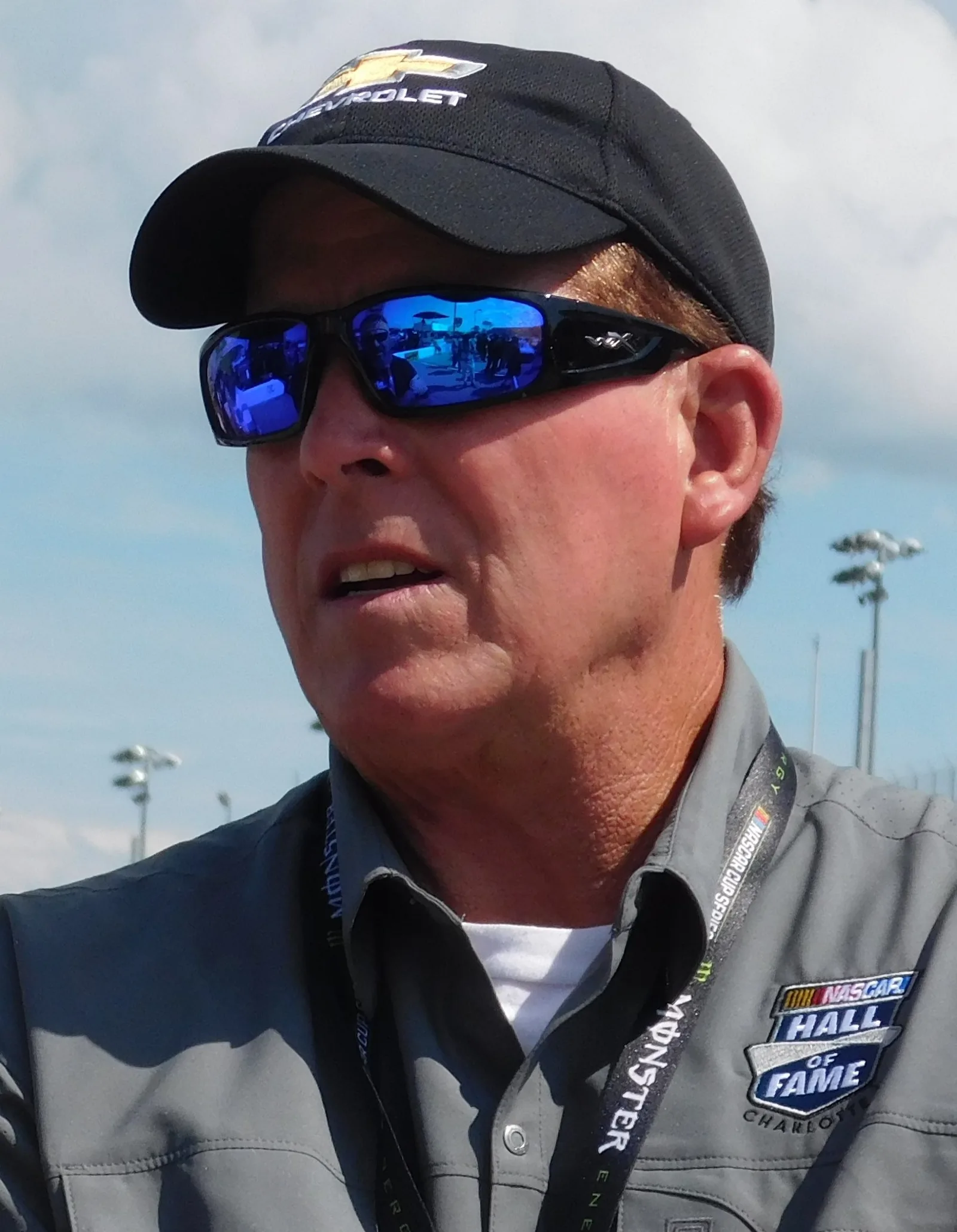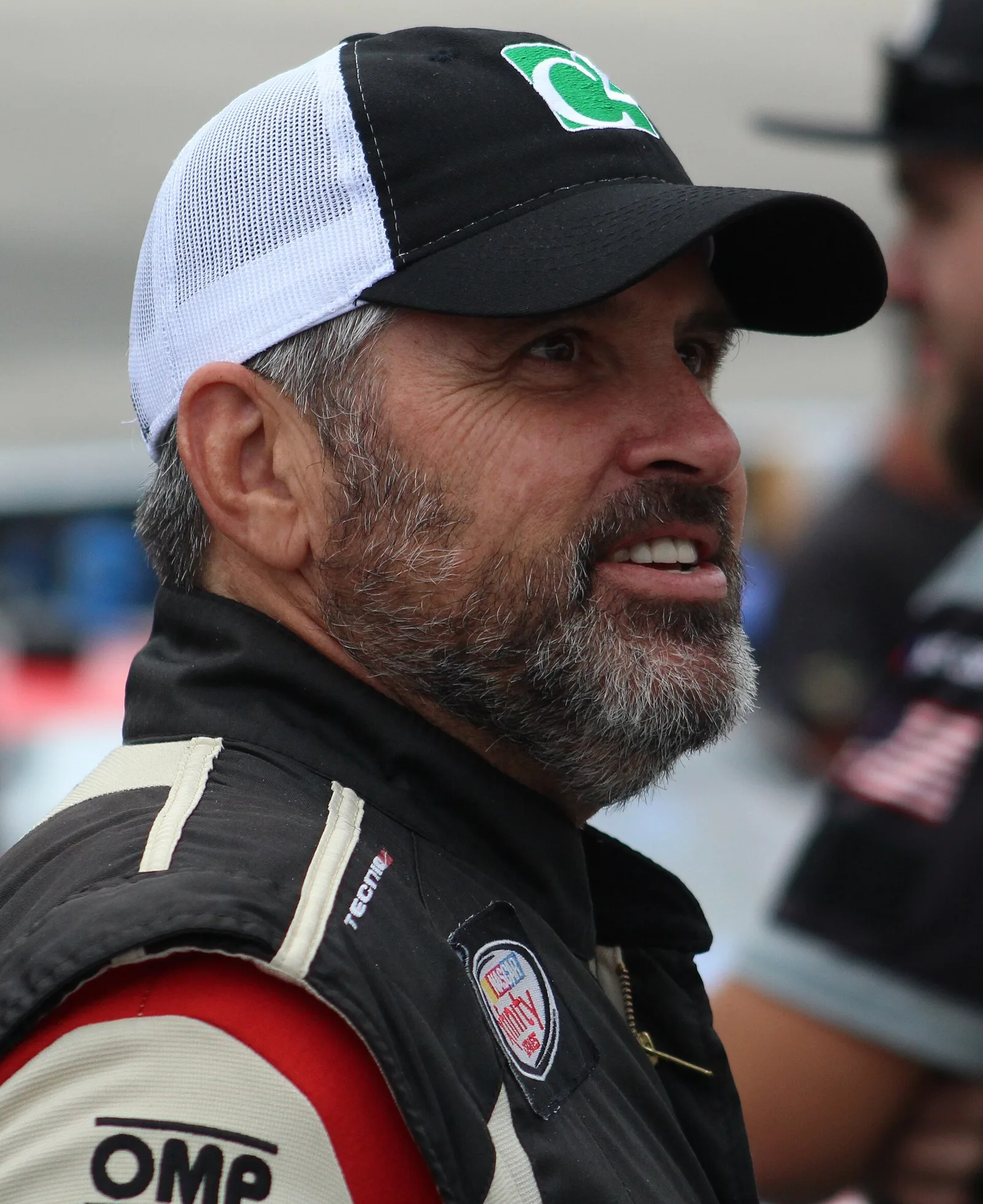
The 2000 Busch Series champion by a record margin, Green later drove for several Cup teams, spent years in part-time work and retired in 2021.
Jeff Green is a former NASCAR driver and crew chief from Kentucky who won the 2000 Busch Series championship by 616 points. He raced full-time in Cup for several teams in the early 2000s and later worked as a start-and-park driver. He retired in May 2021.
Jeffrey Lynn Green is an American former stock car driver and crew chief who spent most of his career in NASCAR's Busch and Cup series. He won the Busch Series championship in 2000 by a wide margin, then took the wheel for several Cup teams before a long period of part-time starts. He retired from driving and crew chief work in May 2021.
Who is Jeff Green?
Green was born on 6 September 1962 in Owensboro, Kentucky, the youngest of three brothers. Mark and David Green also became NASCAR drivers, and David won the 1994 Busch Series championship. Jeff and Mark founded The Green Foundation in 2002, a nonprofit that helps people with serious injuries and life-threatening illnesses.
Green now lives in Davidson, North Carolina, with his wife Michelle. His son Tyler also works in the sport, as a spotter on Cup weekends. Those family ties run through the sport, and the Green name has been on NASCAR results sheets for three decades.
A Busch Series champion whose later years were a patchwork of start-and-park races, ending in a crew chief role in 2021.
How did Green start in stock car racing?
Green won the 1990 track championship at Nashville Speedway USA. He took fifteen wins in 22 races that year and finished off the podium only once in the whole season. A late-season approach from the team owner John Boatman brought him to the Busch Series race at Richmond, where he started 23rd and finished 22nd.
Between 1991 and 1994 his NASCAR work was sporadic, including Busch races and a pair of Cup starts for Sadler Brothers and Junior Johnson in 1994. In 1995 he became a full-time Busch driver for Dale Earnhardt, Inc., and after two consecutive top-five points finishes he made two Cup starts for DEI the following year.
He moved to the unsponsored No. 8 Chevrolet for Diamond Ridge Motorsports at the end of 1996, and his first career race victory came at Las Vegas. He made twenty Winston Cup starts for Diamond Ridge in 1997, driving the No. 29 Cartoon Network Chevrolet Monte Carlo, and finished just behind his brother David in the Rookie of the Year voting.
How did Green dominate the Busch Series?
Diamond Ridge released Green during 1998, and he finished that season in Felix Sabates' No. 46 Winston Cup car, racing in 22 of 33 events. His focus then turned back to the Busch Series, where he finished in the top two of the standings in each of the next three seasons.
He finished second in the 1999 standings, 280 points behind Dale Earnhardt Jr., after three wins in the No. 32 Kleenex Chevrolet for Progressive Motorsports. In 2000 the team became the No. 10 Nesquick and Nestle Chevrolet at ppc Racing, and Green was the clear favourite once Earnhardt and Matt Kenseth left for the Winston Cup Series.
His 2000 title came by 616 points over his ppc teammate Jason Keller. It stood as the largest margin in series history until 2006. He also scored fourteen consecutive top-ten finishes, five wins, and a record 25 top-five finishes in a single season. With David's 1994 title, the brothers became the first pair to win NASCAR championships.
After the 2000 season he switched to Ford and was again the title favourite in 2001. A 14-point lead over Kevin Harvick evaporated after a string of poor finishes, and he finished 124 points behind Harvick in the end. Over his three full seasons in the Busch Series he recorded thirteen wins and 72 top-ten finishes, the most of any driver in that period.
What was Green's record in the Cup Series?
Green went to the Winston Cup Series with Richard Childress Racing, where his first full season in 2002 brought four top-five finishes and six top-tens. He finished 17th in the points, and his best result came in the New England 300, where he took second behind Ward Burton. He stayed inside the top twenty for the rest of that year.
He started the 2003 season on pole for the Daytona 500, and he had a seventh-place finish at Texas Motor Speedway. Beyond that he struggled, crashed twice and failed to finish higher than 20th in most races. After an incident involving his teammate Harvick at Richmond, Richard Childress Racing dismissed him on 5 May.
Two days later Dale Earnhardt, Inc. signed him to drive its No. 1 Pennzoil Chevrolet, but he finished no better than sixteenth in twelve races before John Andretti replaced him. He then drove Petty Enterprises' No. 43 Dodge for the rest of the season on a race-to-race basis. His best finish with that team was 16th at Dover, and he ended the year 34th in points.
Green signed for a full-time seat at Petty Enterprises for 2004. He had four top-fifteen finishes that year, including seventh in the Subway 500, but he failed to finish in eleven races. His 30th-place points finish is the lowest of his full-time seasons, and Petty Enterprises announced in November 2005 that Bobby Labonte would replace him.
In 2006 he moved to Haas CNC Racing in the No. 66 Best Buy Chevrolet, with Robert Barker as his crew chief. He crashed midway through the Daytona 500 after Dale Jarrett clipped his right rear, and he called the episode a rookie mistake. He recovered to finish 21st in points at one stage and eventually ended the season 28th.
What was Green's best race in 2006?
His standout race of 2006 came at Talladega, where he started 35th in the UAW Ford 500 and finished seventh. That result ended a streak of roughly seventy races without a top-ten finish. His full-season points finish that year was 28th, with Haas CNC Racing.
The rest of his Cup results were less consistent. In 2007 he posted three sixth-place finishes with Haas CNC, but the team released him with four races left in the season.
How did Green's part-time years unfold?
From 2008 onwards Green worked mostly as a part-time driver across the Nationwide and Cup series. In 2008 he tried four Cup races with the Wood Brothers and Front Row Motorsports and failed to qualify for any of them. He did qualify for three Nationwide races in the No. 31 Key Motorsports Chevrolet, and his best finish was 28th.
The 2009 season brought more of the same, with rides for Day Enterprise Racing, MSRP Motorsports, MacDonald Motorsports and Key Motorsports. His best result that year was 21st at Nashville Superspeedway. In 2010 he drove for TriStar Motorsports on a start-and-park basis, and he also ran a few Cup races for Latitude 43 Motorsports and Gunselman Motorsports with a best finish of 24th.
Start-and-park became the pattern of his later years. In 2011 he was a start-and-park driver for TriStar, and in 2012 he took the No. 10 truck, then stepped into the No. 14 as an interim driver after Eric McClure was injured. His best finish in that spell was 17th at Dover International Speedway.
He made his final attempts at Cup races in 2015, driving the No. 30 for The Motorsports Group in place of the fired Ron Hornaday Jr. He qualified 33rd and finished 40th at Richmond, which was the team's best finish of that season. He failed to qualify in his next two attempts, and those were the last three Cup races he tried.
What did Green do in the Xfinity Series after 2015?
He joined Rick Ware Racing for the 2016 season opener at Daytona, where engine trouble left him 36th. He returned to the team at the Subway Firecracker 250 and finished seventh, his first top-ten finish in eleven years. He avoided a number of wrecks that afternoon, including a last-lap incident in which he spun polesitter David Ragan.
In 2017 he moved to B. J. McLeod Motorsports full-time, but he was replaced after four races at Phoenix and made only a few starts for the team afterwards. In the weeks he was not driving for McLeod, he started and parked for RSS Racing.
In 2018 he ran most of the season for RSS, mainly as a start-and-park driver in the No. 93. The only two races he completed were at Daytona and Talladega. In 2019 he competed in the first half of the season before rotator cuff surgery ended his year in July, and he then served as the team's crew chief for the rest of the season.
How did Green's career end?
Green's last Xfinity start came at Pocono Raceway in 2020, where he retired after 17 laps. In 2021 he moved from the Xfinity Series to RSS Racing's part-time ARCA car, driven by Kyle Sieg. He announced his retirement from driving and crew chief work on 21 May 2021, after Sieg's part-time ARCA schedule had ended.
His final NASCAR race was as crew chief for Kyle Sieg's Xfinity Series debut at Dover.
What were the most notable conflicts of Green's career?
His first major confrontation came at Richmond in 1998. After a crash with Ted Musgrave, Green climbed out, pointed at Musgrave under caution, and ran to the other team's pit area before an official restrained him. His team owner then urged his other drivers to wreck Musgrave for the rest of the race.
His rivalry with Kevin Harvick grew during their time as teammates at Richard Childress Racing. At the 2003 Pontiac Excitement 400 Harvick ran into the back of Green's car, and Green publicly criticised the team afterwards. Richard Childress Racing then ended his contract the next day.
In 2005 he feuded with his old high-school friend Michael Waltrip, and the two made contact several times at Martinsville and Darlington. NASCAR ordered them to stop, although no penalties were issued. In 2006 he also crashed with Jimmie Johnson in the Chevy Rock and Roll 400 and was sent to the garage for the rest of the race.
Career summary by series
| Series | Years | Key results |
|---|---|---|
| Busch and Nationwide Series | 1990 to 2014, part-time after 2008 | 2000 champion by 616 points; thirteen wins across 1999 to 2001 |
| Winston Cup and Cup Series | 1994 to 2015, mostly part-time after 2007 | Second at the 2002 New England 300; pole for the 2003 Daytona 500 |
| Xfinity Series | 2016 to 2020 | Seventh at the Subway Firecracker 250 in 2016 |
| IROC | 2001 | Took part in the 25th season of the series |