A Renault-engined Enstone design with a banned suspension idea, a shelved double-DRS system and one winning afternoon in Abu Dhabi.
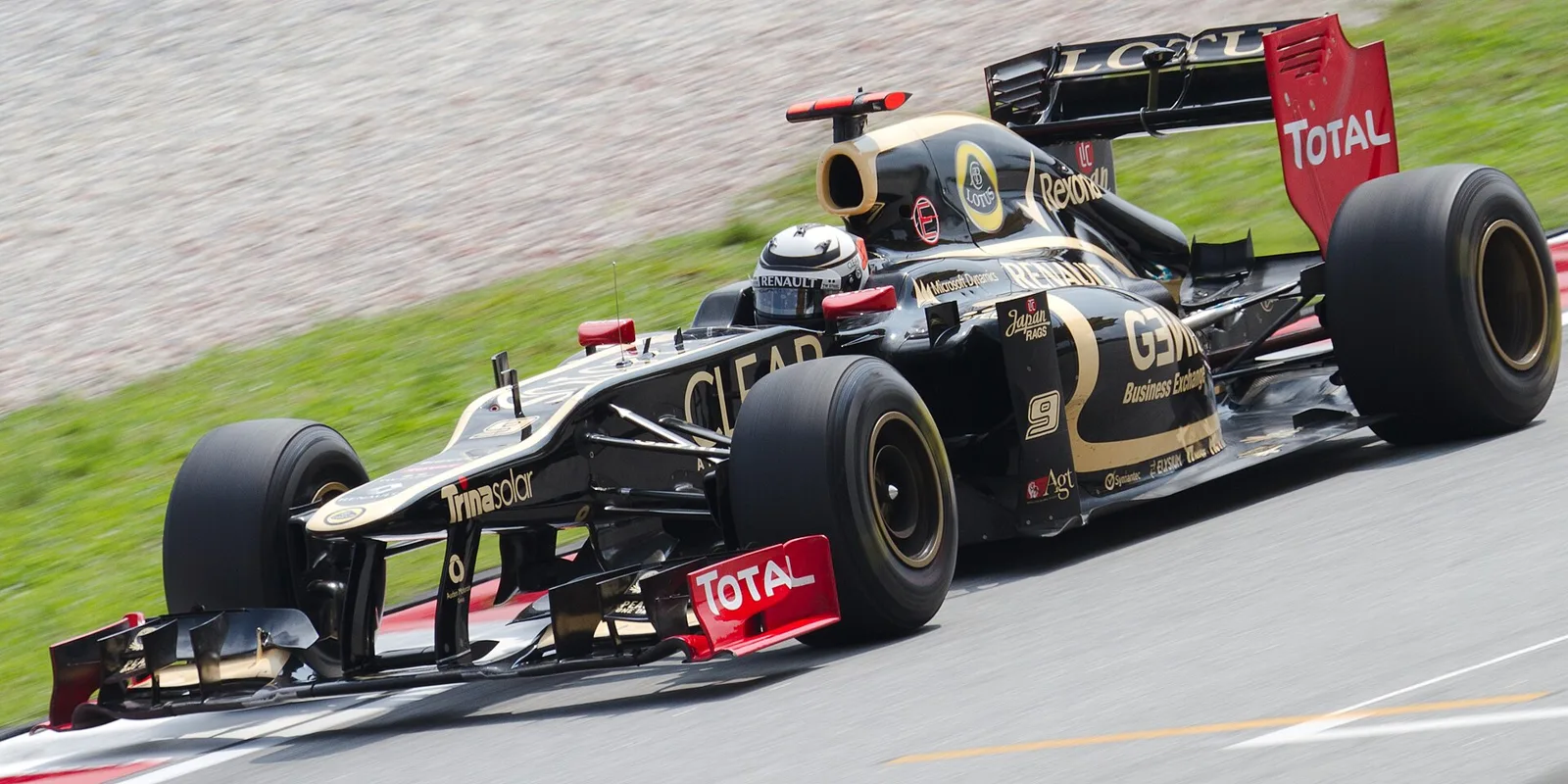
The E20 was Enstone's 2012 contender, a car that had begun life as the Renault R32. Driven by Raikkonen and Grosjean, it took one victory, in Abu Dhabi, and helped the team finish fourth in the constructors' standings across the whole season.
The Lotus E20 was built at Enstone for the 2012 season, the first car from that base to carry the Lotus name. Its year was undermined by a banned suspension idea, a double-DRS project that never raced and a run of first-corner incidents. One win in Abu Dhabi and nine podiums from twenty races was the reward.
What was the Lotus E20?
The E20 was a 2012 Formula One car from the Enstone-based Lotus F1 Team, originally known as the Renault R32. Kimi Raikkonen and Romain Grosjean drove it, Renault kept supplying the engines, and the team finished fourth in the constructors' table that year.
James Allison, the technical director, headed the chassis work alongside Tokunaga, Tolliday, Chester and de Beer. The team unveiled the car online on 5 February 2012. It was the twentieth Formula One car designed at Enstone since 1992, and its name honoured the site and the people who had built the team there over two decades.
Raikkonen was the 2007 World Drivers' Champion, back in Formula One after a two-year absence. Grosjean was the reigning GP2 champion, also returning after two years away. The pairing gave the team strong names, but the E20 had to prove itself on track.
A car with real pace, one winning afternoon in Abu Dhabi and a double-DRS idea that never made it to a race.
What went wrong in pre-season testing?
The second pre-season test at Barcelona ended early for Lotus. Grosjean reported an odd feeling in the chassis on the first morning, and the team withdrew from the rest of the test. The fault was traced to the mounting of the upper front wishbone, and the problem was fixed before the season began.
Grosjean had been driving chassis E20-02 when the problem surfaced. The team offered no official diagnosis at first, and the press speculated about the front suspension. Simulations then showed that chassis E20-01, which had been prepared for the test, carried the same flaw, so Lotus withdrew from the remainder of the programme.
The fix arrived in time for the season, and the team went on to race the car as planned. The episode did, however, show how little slack there was in the preparation of a new chassis.
Why was the reactive ride height system banned?
The E20 had been planned with a reactive ride height system, which used hydraulic cylinders to hold the car steady under braking. The FIA first approved it, then reversed course and ruled it illegal under Article 3.15, so the 2012 cars never ran it.
Lotus and its predecessors had been developing the idea since January 2010. Article 3.15 says a device that influences aerodynamics must not move relative to the car's sprung mass. The regulator decided this system existed mainly to improve aerodynamic performance, which put it in breach.
The teams were told on 20 January 2012. The decision wiped out much of the work that had gone into the project and removed one of the car's planned features before the first race.
What was The Device, and did it race?
The Device was Lotus's version of double-DRS, a rear-wing system that also cut front downforce. It followed the arrangement Mercedes had used on its W03 in 2012, and Lotus never raced it that season. Its first race came only in 2013.
Lotus argued that the Mercedes device was a moveable aerodynamic device and filed a protest under the same Article 3.15 used against the E20's own system. The FIA rejected the protest, which left the way open for Lotus to build its own version.
Two days after the Hungarian Grand Prix, the teams agreed to ban double-DRS for 2013. Lotus had planned to introduce The Device at Spa, but heavy rain in practice caused a delay. Grosjean's Italian Grand Prix ban and Jerome d'Ambrosio's inexperience at Monza pushed the plan back further.
The team tried the system during Friday practice in Japan, then shelved it until the November young driver tests because it was unhappy with progress. Raikkonen admitted the system made setup far harder. The concept passed to the E21, and the system was never raced in 2012.
How did the exhaust help the car?
The team introduced a Coanda-effect exhaust at the Korean Grand Prix, once The Device had been set aside. The idea used the curved bodywork at the rear to steer exhaust gases and create a low-pressure area over the diffuser. McLaren and Ferrari ran similar systems.
Lotus had considered launching the E20 with a Coanda exhaust but chose a conventional layout. The team judged that a car it understood and could rely on mattered more at the start of the year than mastering a complex effect.
How did rivals handle the same problems?
Rivals reached similar ideas by different routes. Mercedes ran a double-DRS on its W03 rear wing, Red Bull Racing introduced its own variant at Singapore and Japan, and McLaren and Ferrari both used Coanda-effect exhausts. The double-DRS idea was the one that the teams voted to ban for 2013.
Red Bull's variant was credited with helping Sebastian Vettel to two race wins, giving the team a real edge in the closing phase of the year. Lotus had been unable to bring its own version to the grid with the same timing, which left it reacting to rivals rather than setting the pace.
Lotus's protest against the Mercedes system failed, yet the decision still cleared the way for Lotus to build its own version. The Device still never reached a race in 2012, which meant the protest's outcome gave Lotus a route it could not yet use on track.
Season review
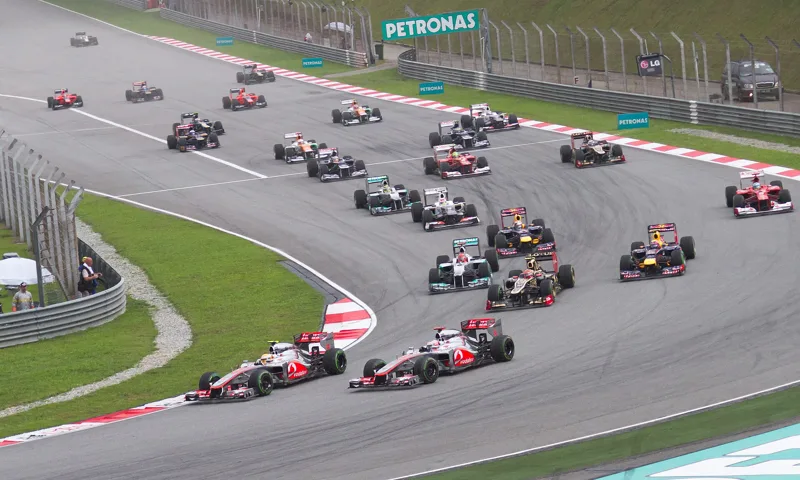
Grosjean's qualifying pace stood out early. He lined up third for the Australian Grand Prix, but he collided with Pastor Maldonado on lap two and retired. Raikkonen had started 17th and finished seventh.
Results then fluctuated. Both drivers reached the top ten in qualifying at Malaysia and China, but a penalty, contact with Michael Schumacher and poor tyre management cost them places. Grosjean scored his first points in China.
The breakthrough came in Bahrain, where both drivers finished on the podium behind Sebastian Vettel. Raikkonen repeated the result in Spain with third place after a daring strategy, while Grosjean was fourth. Canada gave Grosjean second place, a finish he had not believed possible until the closing laps.
The middle of the season was more mixed. Grosjean crashed on the first lap at Monaco, Raikkonen recovered to finish fourth in Germany, and Grosjean's first-lap clash at Spa brought a one-race ban. Raikkonen took third there.
| Round | Result highlight |
|---|---|
| Australia | Grosjean third on the grid, retired after contact |
| Bahrain | Both drivers on the podium behind Vettel |
| Spain | Raikkonen third, Grosjean fourth |
| Canada | Grosjean second |
| Europe | Raikkonen second behind Alonso |
| Hungary | Grosjean third, Raikkonen second |
| Belgium | Raikkonen third |
| Singapore | Raikkonen sixth, a second ahead of Grosjean |
| Korea | Fifth and seventh |
| India | Raikkonen seventh, Grosjean ninth |
| Abu Dhabi | Raikkonen wins, the team's only victory |
| Brazil | Raikkonen tenth, the team's final point of the year |
Singapore and Japan produced little for the team. Raikkonen finished sixth at Singapore, a second ahead of Grosjean, and at Suzuka Grosjean was caught up in a first-corner melee, made contact with Mark Webber and took a ten-second stop-go penalty.
How did the drivers compare?
Raikkonen was the steadier scorer, with points in most races of the second half of the season and the only win. Grosjean could qualify strongly, including third in Australia and the front row in Hungary, but he was repeatedly caught up in first-corner trouble.
The first-corner record was the defining storyline for Grosjean. He had eight first-lap incidents from fourteen starts in 2012, and Red Bull's team principal Christian Horner described him as dangerous to himself and others.
Raikkonen, by contrast, had a strong qualifying session in the United States despite struggling for grip in practice. A clutch problem and one pit stop cost him a podium there, but the pattern of solid finishes through the second half of the year kept the team in the points.
Did the E20 win a race?
Yes, once. Raikkonen moved up to second at the start at Abu Dhabi and inherited the lead when Lewis Hamilton's McLaren suffered an electrical fault. He held off a late challenge from Fernando Alonso and claimed Lotus's first win of the year.
The result came six months after the team had hoped for a win. Grosjean's afternoon was far worse: early contact forced a pit stop, he recovered to fifth, then retired after a clash with Sergio Perez that pushed him into Mark Webber.
The United States and Brazil races brought little reward. Raikkonen finished sixth and Grosjean seventh in the US, while Brazil produced a single point for Raikkonen in tenth.
What became of the car's later years?
The E20 kept a second life after its racing career. Robert Kubica ran it in Renault R.S.17 livery through 2017, and Aseel Al-Hamad drove a celebratory lap before the 2018 French Grand Prix. It returned in Alpine A522 livery in 2022, and wore Alpine A525 livery in 2025.
Al-Hamad and Abbi Pulling drove the car for demonstrations in 2022. Each outing kept the E20 in front of fans long after the season that produced its one win.
What is the E20's legacy?
The E20 is remembered as a car whose potential was clear but whose results lagged behind it. Its legacy lies in the stories around it: a banned ride height system, a double-DRS project that never reached the grid and an exhaust layout that arrived mid-season.
Together these episodes show how much the 2012 campaign was shaped by regulation disputes and engineering decisions made away from the track. The Abu Dhabi win remains the team's highlight of that year.