From a 1964 team entry to 1980s McLaren dominance, a Red Bull title in 2021 and a 2026 return as Aston Martin's works partner.
Honda's Formula One story began in 1964 as a works team. Its engines later powered title-winning cars for three different teams, and it returns in 2026 as Aston Martin's works partner.
Honda has been part of Formula One as an engine maker and team owner since 1964. It has built V12, V10, V6 and hybrid power units, and it has won titles with Williams, McLaren and Red Bull. Its record includes six constructors' and six drivers' championships as an engine supplier.
What is Honda's Formula One record?
Honda is a Japanese automotive manufacturer that has taken part in Formula One for various periods since 1964. It has been an engine maker since 2015, producing RA Series Hybrid power units. As an engine manufacturer it has won six constructors' and six drivers' championships and more than 80 Grands Prix, ranking fifth in the sport's history.
A Japanese engine maker that won six constructors' and six drivers' titles as a supplier, then returned to take a fresh works role in 2026.
How did Honda's first era go?
Honda entered Formula One in 1964, just four years after producing its first road car. Its all-Japanese factory team built its own engine and chassis for the RA271, something only Ferrari and BRM had done among the teams still running in 1962. In only its second year Honda won its first race, with Ginther's RA272 at the 1965 Mexican Grand Prix.
The RA300 won the 1967 Italian Grand Prix in its first race, driven by John Surtees, and the press nicknamed it the Hondola because Lola had helped with its chassis. The following year the RA302 crashed fatally at Rouen-Les-Essarts, killing driver Jo Schlesser. Together with difficulties selling road cars in the United States, that led Honda to withdraw at the end of 1968.
When did Honda return as an engine supplier?
Honda returned in 1983 as an engine supplier for Spirit and stayed for a decade, teaming with Williams from 1983 to 1987, Lotus in 1987 and 1988, McLaren from 1988 to 1992 and finally Tyrrell in 1991. Its first world championship race came at the 1983 British Grand Prix, where Stefan Johansson qualified 14th for Spirit.
Rosberg gave Honda its first win as a supplier at the 1984 Dallas Grand Prix. By the end of 1985, when Nigel Mansell and Rosberg won the final three races of the season, it was clear that Honda had the engine to beat.
What made the 1988 McLaren-Honda so dominant?
The McLaren-Honda partnership of 1988 was the peak of Honda's supply years. Honda built an all-new V6 turbo, the RA168E, for the reduced fuel limit and boost limit, and the MP4/4 chassis, designed by Steve Nichols, carried Alain Prost and Ayrton Senna to a near-perfect season. The team claimed 15 pole positions in 16 races, 13 of them for Senna.
McLaren-Honda also won 15 races, 8 for Senna, a new season record, and 7 for Prost. The team scored a record 199 points, 134 ahead of second-placed Ferrari. Prost scored more points than Senna over the season, but under the rules only the best 11 results counted, and the title went to the Brazilian.
Which world titles did Honda engines win?
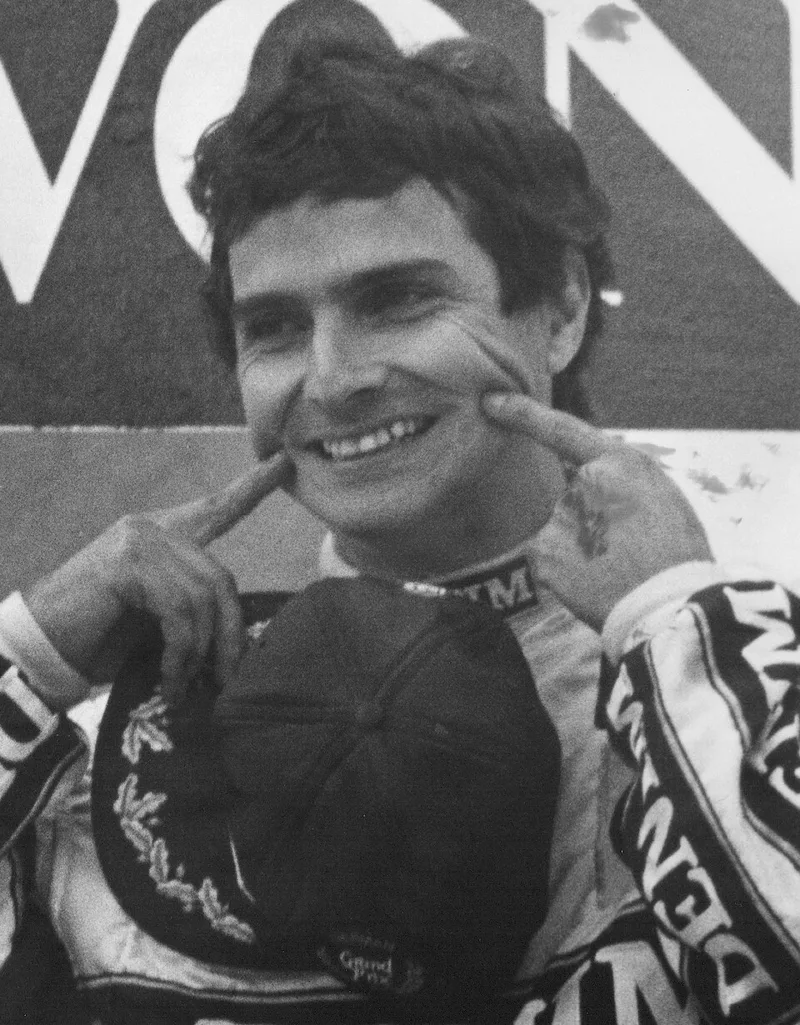
The engine maker's run of six straight constructors' titles came two with Williams, in 1986 and 1987, and four with McLaren, from 1988 to 1991. It also won five consecutive drivers' championships: Nelson Piquet in 1987, Ayrton Senna in 1988, 1990 and 1991, and Alain Prost in 1989.
Mansell recalled in a 2011 interview that Honda was making and developing four to six totally different engines in a single season. The 1989 RA109E V10 took 10 wins and 15 pole positions, and the RA121E V12 gave Senna his third world championship in 1991.
How did Honda's engine era compare across its years?
| Era | Role | Headline result |
|---|---|---|
| 1964 to 1968 | Works team and engines | First win at the 1965 Mexican Grand Prix; withdrawal after 1968 |
| 1983 to 1992 | Engine supplier | Six constructors' and five drivers' titles with Williams and McLaren |
| 2000 to 2008 | BAR, then Honda Racing F1 Team | BAR-Honda second in 2004; Button wins in Hungary in 2006 |
| 2009 | Brawn GP | Constructors' and drivers' titles after the management buy-out |
| 2015 to 2017 | McLaren power unit | Sixth in 2016 with 76 points; split after 2017 |
| 2018 to 2021 | Red Bull-owned teams | Verstappen wins the 2021 title |
| 2022 to 2025 | Honda RBPT supply | Titles in 2022, 2023 and 2024 |
| 2026 | Aston Martin works partner | Full-scale return under the new regulations |
How did Honda's Mugen years work?
From 1993 to 1998 Honda's only presence was through Mugen Motorsports, a closely related but independent partner. Its engines went into cars from Footwork, Lotus, Ligier, Prost and Jordan, and those machines had won four Grands Prix by the close of 1999. By 1998 the engines were effectively Honda works units.
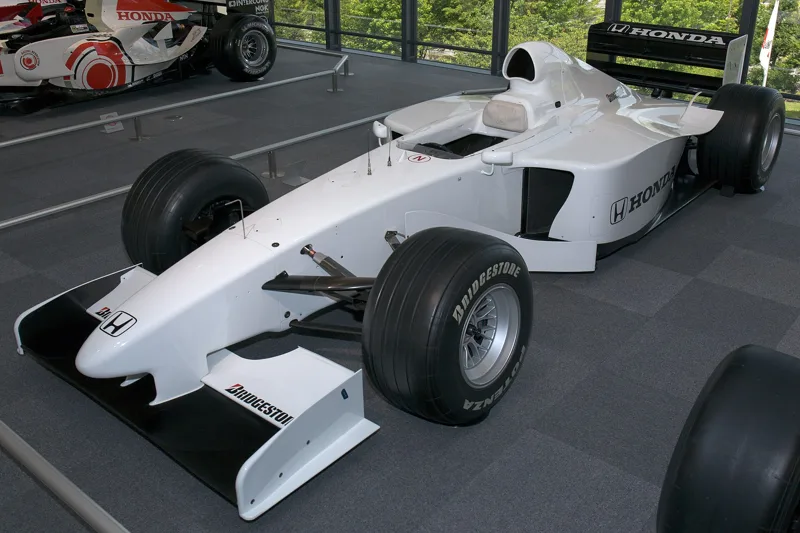
In 1998 Honda seriously considered entering as a constructor and hired Harvey Postlethwaite as technical director and designer. A test car, the RA099, was built by Dallara and tested during 1999 with Jos Verstappen at the wheel. The team impressed at test sessions, but Postlethwaite suffered a fatal heart attack at one of them, the project was shelved and Honda chose to return as a full works supplier to BAR in 2000.
What were the RC100 and RC-F1 cars?
Honda engineers also built several Formula One cars as an unofficial side project, the RC100 and RC-F1 series. The early versions used the V12 engines fitted to McLarens, and the final evolution switched to a Mugen-built V10.
How did Honda's team owner years go?
Honda returned in 2000 and supplied free engines and factory support to British American Racing. BAR-Honda finished second in the 2004 Constructors' Championship. In September 2005 Honda bought the remaining 55% of the team and ran it as Honda Racing F1 Team from 2006.
In 2006 Jenson Button won the Hungarian Grand Prix from 14th on the grid, and the team finished fourth in the constructors' standings with 86 points. The 2007 car was weaker, and the team finished eighth, with a best result of fifth at the Chinese Grand Prix, courtesy of Button.
How did the 2007 Earth Car come about?
For 2007 the tobacco sponsorship ended with the ban on tobacco advertising, and Honda unveiled a new livery on 26 February 2007 on the RA107, showing planet Earth against black space. The car was the first Formula One design by former HRC motorcycle designer Shuhei Nakamoto.
The web address of the environmental site myearthdream.com appeared on the rear wing, and Honda later won an environmental award for its Earth Car campaign. The car lacked pace, and Button and Barrichello qualified 14th and 17th in Melbourne. Honda's first point came at the French Grand Prix with Button's eighth place.
Why did Honda leave Formula One in 2008?
Honda announced in December 2008 that it would exit Formula One with immediate effect, citing the financial crisis. It had been unwilling to keep funding the Brackley team, which had a budget of 300 million dollars and a staff of 700.
The team was saved by a management buy-out led by Ross Brawn and Nick Fry, and it entered 2009 as Brawn GP. Jenson Button and Rubens Barrichello stayed on, with Mercedes engines. Brawn won the 2009 championship in its only season before Mercedes bought the team.
What changed in Honda's power unit for 2017?
For 2017 Honda redesigned the whole power unit, moving the turbo, compressor and MGU-H so that the turbo and compressor overhung each side of the block. Honda called the design high risk, and it took until the eighth round in Azerbaijan for the team to score.
Honda's partner McLaren had its own problems with the power unit's packaging, and the two companies announced their split in September 2017. The 2017 season still ended with the team scoring regularly in the latter part of the year.
How did the McLaren years end?
Honda returned in 2015 as a works power unit supplier to McLaren. The first Honda power units were uncompetitive and unreliable, and the team finished ninth in the constructors' championship that season. Honda improved for 2016, when the team scored 76 points and finished sixth, with a fastest lap at Monza.
The 2017 design proved slow to show results, and the team finished ninth. The relationship with McLaren had soured, and in September 2017 the two announced a split at the end of that year.
How did the Red Bull partnership win the title?
Honda was the works partner to Toro Rosso from 2018, when Pierre Gasly finished fourth in Bahrain, and Red Bull Racing switched to full-works Honda for 2019. Honda's first podium of its return came when Verstappen finished third in Australia in 2019.
Verstappen won the 2019 Austrian Grand Prix, Honda's first win in the V6 turbo-hybrid era. In 2021 the RA621H proved highly competitive, and Verstappen won the title in the final race at Abu Dhabi. It was Honda's first championship in thirty years, and Verstappen became the first Honda-powered champion since Senna in 1991.
How did the Honda RBPT engines perform from 2022 to 2025?
The Honda-designed engines were badged Red Bull Powertrains in 2022, and Honda returned as a named supplier from 2023. Multiple reports said the unit was around half a second faster per lap than the Renault engine Red Bull would otherwise have used.
In 2022 Verstappen scored a record 15 of Red Bull's 17 wins. He took a second straight drivers' crown after a win in Japan, Honda's home race, and the team locked up the constructors' title in the United States. At the 2023 Hungarian Grand Prix Red Bull won its 12th consecutive race, breaking the McLaren record from 1988. That also broke Honda's own record, because the 1988 MP4/4 used the RA168E.
What happened to Honda after the 2021 withdrawal?
Honda announced in October 2020 that it would withdraw at the end of 2021, to focus on carbon neutral road vehicles. Red Bull then agreed a deal for Honda-designed engines to be built and supplied through Honda RBPT until the end of 2025. The Honda-designed engines won titles in 2022, 2023 and 2024.
In May 2023 Honda confirmed a full-scale return for 2026, supplying its hybrid power units to Aston Martin as a works team. The electric element will provide 50% of the power output, and sustainable fuels play a key role in the regulations that drew it back.