A Friday lost to weather, a chaotic start to the race and Max Verstappen's climb from 16th set the tone for Lewis Hamilton's win in Shanghai.
Lewis Hamilton won the 2017 race in Shanghai from pole, with Sebastian Vettel second for Ferrari. Verstappen finished third after starting 16th, in the second round of the season held on 9 April. Hamilton led every lap and set the fastest lap of the race.
The 2017 Chinese Grand Prix took place on 9 April 2017 at the Shanghai International Circuit, the second round of the season. Lewis Hamilton led from start to finish for Mercedes, Sebastian Vettel was second for Ferrari, and Max Verstappen completed the podium after starting 16th. The weekend was shaped by weather and safety arrangements long before the race began.
Who won the 2017 Chinese Grand Prix?
Lewis Hamilton won the race from pole, taking his 54th Formula One victory and his fifth at Shanghai. He had already dominated qualifying, and he led the race from the first corner onwards. Vettel finished second for Ferrari, while Verstappen's charge took him onto the podium.
The win was also Mercedes' 65th in their 150th race. With Vettel second, Hamilton and the Ferrari driver went into the third race of the season level in the Drivers' Championship on 43 points each. Mercedes had overtaken Ferrari in the Constructors' Championship by the end of the afternoon.
A washed-out Friday, a safety-first hospital plan and a Saturday race that Hamilton controlled from pole to flag.
Why was Friday practice almost lost?
Friday's sessions were badly affected by low cloud, rain and smog. The first session was red-flagged after only 20 minutes of running, and the second was abandoned altogether. Hamilton and Vettel had no running at all on Friday, so the weekend's running had to be squeezed into what remained.
The problem was medical rather than mechanical. Safety rules require that an injured driver with a neurological condition can reach a hospital within 20 minutes, either by helicopter or by ambulance. The medical helicopter could not land at the hospital, which was 38 km from the track, and an ambulance could not reach it in time, so the cars were not allowed on track.
Verstappen set the fastest time of the Friday at 1:50.491 in wet conditions. Hamilton called for a change of schedule so that every session could be run, but the organisers refused. A rescheduled race on Monday would have disrupted television schedules and caused logistical problems for the Bahrain race a week later.
Hamilton crossed the track during the second session to greet fans and throw signed caps into the grandstands. He used social media to suggest that the situation gave the new owners of the sport a chance to be proactive and creative, and calls followed for a contingency plan for cancelled sessions.
How did the organisers protect the race?
The FIA put measures in place so that emergency care would not prevent the race from running. A police escort was made available to speed up ground transport, and a specialist neurosurgery team was arranged for Sunday. Those arrangements moved the specialist equipment to Ruijin Hospital, which was five kilometres from the track.
The FIA medical team said it was satisfied that Ruijin Hospital would be easily accessible in all weather conditions and able to provide the required care.
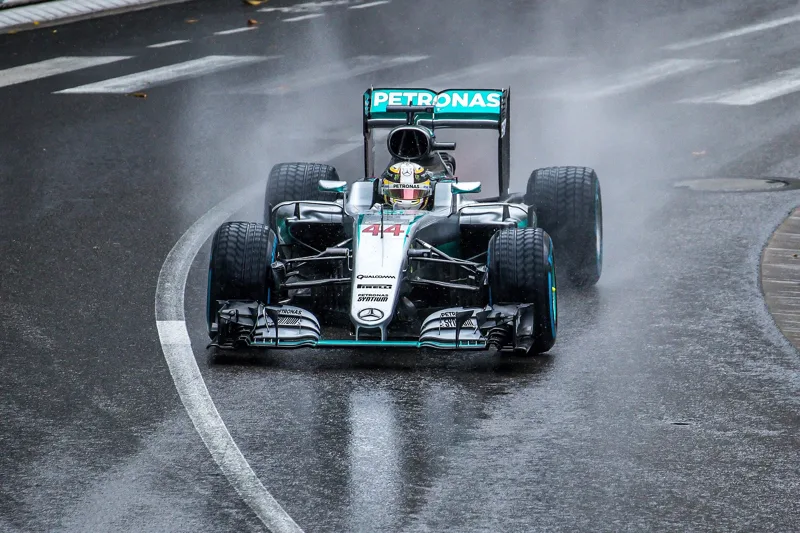
On race morning there was considerable rain, but the start was to proceed under the standard procedure. The track was damp before the race and dried as the day went on. The main straight stayed wetter than the rest of the circuit, a problem that would later catch out Antonio Giovinazzi.
How did Saturday's single practice shape qualifying?
Saturday was dry, but the teams had just one practice session before qualifying instead of the usual three. Most split tyre duties between their drivers and used the session to collect data on longer runs. A forecast of rain on Sunday added another layer of complication to the planning.
Vettel set the session's fastest time at 1:33.336, just 0.053 seconds ahead of Raikkonen. Both times were quicker than Nico Rosberg's pole time from the 2016 race, which was 1:35.402. Felipe Massa was the best of the rest at 1:34.773, ahead of the Red Bull pair.
Red Bull looked quick early on with heavy fuel loads, but it could not match the Ferraris or Mercedes in qualifying simulations. Behind them the competition was much closer. Stroll, Palmer and Sainz were covered by only 0.041 seconds, and the next group of six drivers within 0.362 seconds of each other. Fernando Alonso and McLaren were left at the bottom of the timing sheets with Sauber, at least 2.5 seconds off the pace.
Who was fastest in qualifying?
Hamilton took pole with a lap of 1:31.678 in the final part of qualifying, ahead of Vettel and Bottas. It was his sixth consecutive pole, a run he had begun at the 2016 United States Grand Prix, and his sixth pole at the Chinese Grand Prix. The result was also the 75th pole for Mercedes in 150 races.
In the first part Vettel was quickest at 1:33.078, a fraction over a quarter of a second clear of Hamilton. Hamilton had shaded Raikkonen by less than a hundredth of a second, but the Ferraris were on soft tyres while the Mercedes ran the faster super-soft compound. Daniel Ricciardo was the best of the rest in all three sessions, though around a second off the front.
Romain Grosjean spun at the final corner early in the session, but kept the car off the wall and returned to the pits with ruined tyres. Antonio Giovinazzi was less fortunate. He spun on the astroturf at the outside of the final corner, hit the wall hard and came to rest in the middle of the track, which brought out double waved-yellow flags and stopped any further improvement.
Giovinazzi advanced to Q2 but qualified 15th, and a gearbox change for the rebuild dropped him to 18th on the grid. Palmer and Grosjean had both been trying to beat him when his accident happened, and they were given five-place grid penalties for not reducing speed enough under the double waved-yellow flags. Grosjean disputed the decision with telemetry, while Haas team boss Guenther Steiner argued that his driver could have made it into Q3.
In the second part Raikkonen's late lap of 1:32.181 was the fastest of the session. It was faster than Michael Schumacher's all-time lap record for the circuit, which had been set in 2004. Hulkenberg and Perez posted improved times in the final moments to advance to Q3, while Sainz, Ericsson, Magnussen and Alonso were eliminated.
In the final part Hamilton had an untidy first lap but still set a provisional pole time of 1:31.902. Vettel took second, Bottas followed, and the leading four improved in the later laps without any change in the order. Hamilton's final time of 1:31.678 was the pole, with Vettel 1:31.864 and Bottas just one thousandth of a second behind Vettel.
Massa took sixth, just ahead of Hulkenberg's Renault. Lance Stroll, in only his second race, reached Q3 and took tenth, a major improvement on his 19th place on debut. Stroll partly put the change down to a lighter power steering setting, and he accepted that taking some wrong decisions was part of stepping up to Formula One.
How did the start unfold?
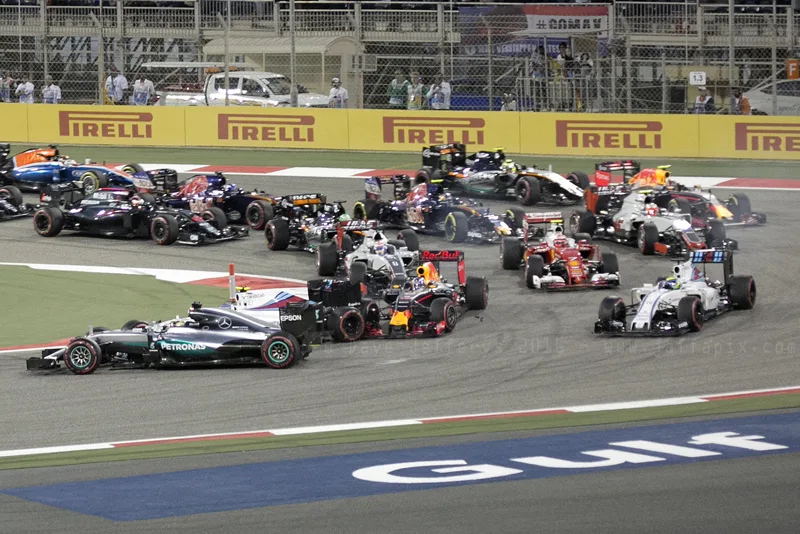
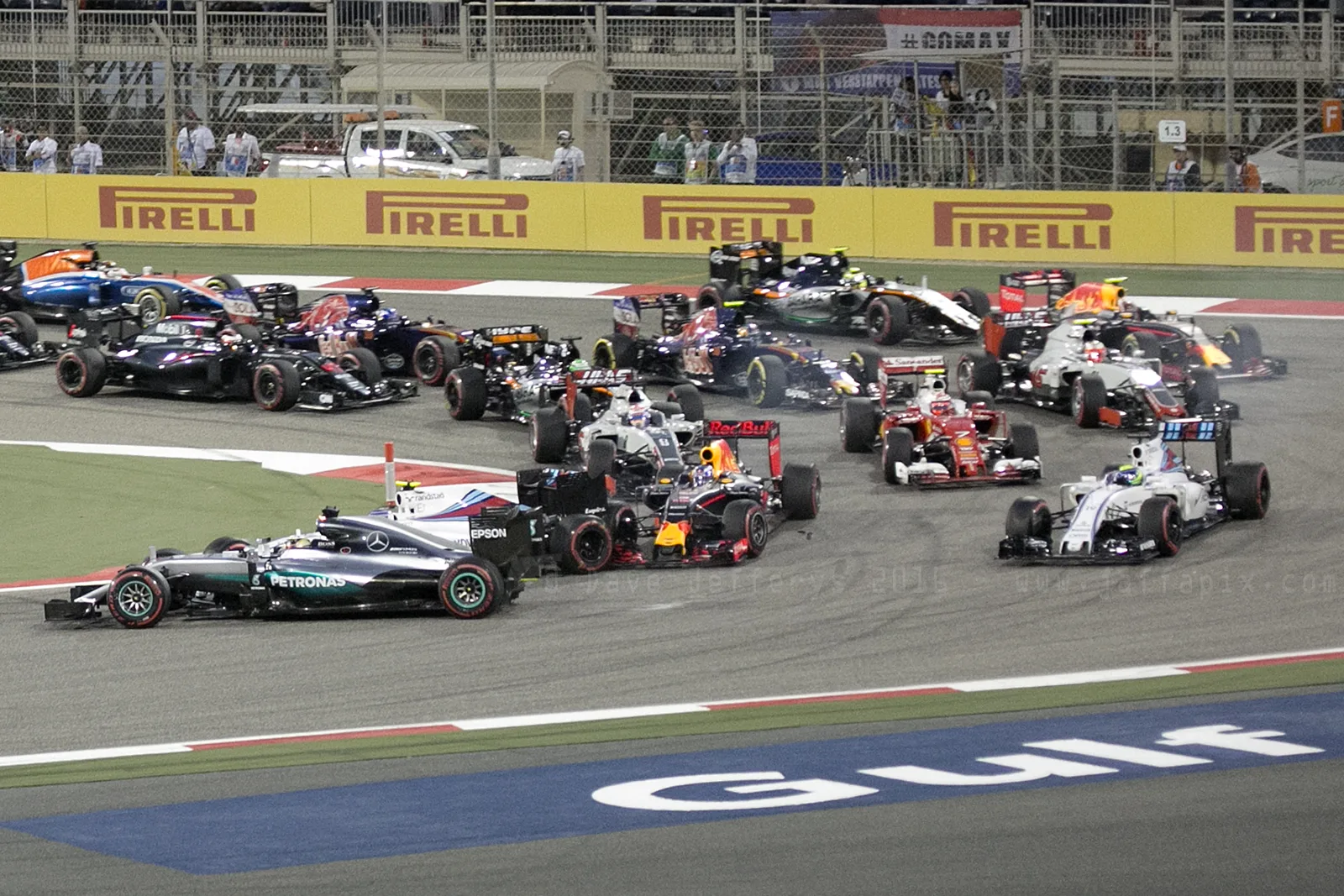
Hamilton made a clean start and was never challenged for the lead. Vettel fended off a bold challenge from Bottas on the outside at turn 1, while Raikkonen lost his place to Ricciardo early in the race. The stewards noted that Vettel had been to the left of his grid slot and investigated him, but no action was taken.
The early action in the middle of the field was the most eye-catching. Verstappen overtook nine cars in the space of two minutes and was named Driver of the Day. Contact between Perez and Stroll then left Stroll spun out and beached in a gravel trap with ruined tyres.
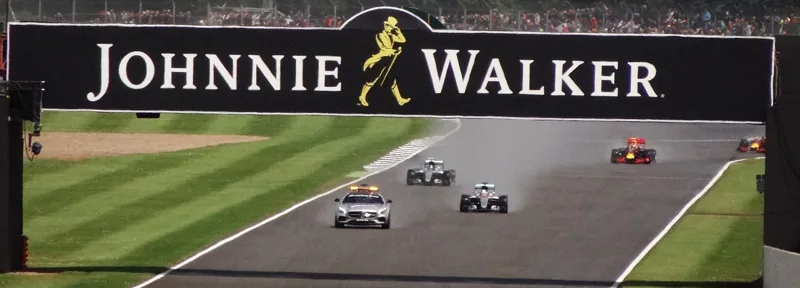
Removing Stroll's car brought out a virtual safety car, and Vettel took the chance to pit for slicks. Just after racing resumed, Giovinazzi crashed heavily on the start-finish straight, his second spin on that straight. Debris and the removal of his car prompted a safety car, and most drivers changed to slicks while it led the field through the pits.
Two penalties followed for Hulkenberg: five seconds for a pass on Grosjean behind the virtual safety car, then ten more for a move on Ericsson behind the full one. Bottas lost control behind the safety car as he worked to heat his tyres, and fell to 12th. He described it as a stupid mistake, and his team boss Toto Wolff criticised him for it.
How did Verstappen climb through the field?
Verstappen made a series of overtakes on the slippery track, and by lap 11 he had passed Ricciardo to take second place, having started 16th. It was the clearest demonstration of his skill in difficult conditions, and the same kind of performance he had shown at the 2016 Brazilian Grand Prix.
By lap 20 Hamilton was four seconds ahead of Verstappen and nine seconds clear of Ricciardo. Vettel overtook Raikkonen on that lap and passed Ricciardo two laps later, and then closed rapidly on Verstappen. The Ferraris could not overtake Ricciardo, which kept them behind the leading pair.
By lap 27 Hamilton had built a lead of 8.5 seconds over Verstappen. On lap 29 Verstappen locked up and let Vettel through for second, leaving him 10.6 seconds behind Hamilton with 27 laps to run. Verstappen pitted for fresh super-soft tyres the following lap and rejoined sixth, behind Bottas.
Why did the late pit stops matter?
Pit stops reshuffled the top five in the second half of the race. Hamilton stopped on lap 37 for soft tyres, while Verstappen used his fresh rubber to attack his way forward. By lap 42 the top five were Hamilton, Vettel, Verstappen, Ricciardo and Raikkonen, and that order held for much of the closing stint.
Verstappen showed great pace on his fresh tyres, quickly passing Bottas and then gaining from the stops of the cars ahead of him. Raikkonen was the last of the top six to stop for tyres, despite repeated complaints of tyre problems. That decision left him behind both Red Bulls.
The Red Bulls closed up and battled for the last podium place over the final laps, but Ricciardo could not pass his teammate. Bottas recovered to sixth, and Sainz, Magnussen, Perez and Ocon completed the top ten.
What records did Hamilton set?
Hamilton set the fastest lap of the race on lap 44 at 1:35.378, which was quicker than Nico Hulkenberg's 2016 fastest lap of 1:39.824. He also became the second driver, after Michael Schumacher, to win five or more races at three different circuits.
The win was Hamilton's 54th in Formula One and his fifth at Shanghai, after 2008, 2011, 2014 and 2015. It was Mercedes' 65th victory in its 150th race, and it lifted Hamilton level with Vettel on 43 points each in the Drivers' Championship.
Hamilton also equalled Alain Prost's career total of 106 podiums. The race was his third grand slam, after pole position, the fastest lap and leading every lap at the 2014 Malaysian and 2015 Italian Grands Prix. He also equalled Jim Clark's record of 11 hat-tricks, which means races won from pole with the fastest lap.
How was the weekend remembered?
The weekend was remembered for its weather and safety arrangements as much as for the racing itself. Friday's cancelled running and the medical rules dominated the early coverage, while Verstappen's climb and Hamilton's dominance shaped the race report. Calls for a clearer contingency plan followed for sessions that could not run.
Stroll's progress was one of the stories of the weekend, and the penalties for Palmer and Grosjean stayed in place. Giovinazzi's weekend ended early after a heavy crash in qualifying and a second spin on the start-finish straight in the race, and his team had to rebuild the car and fit a new gearbox.