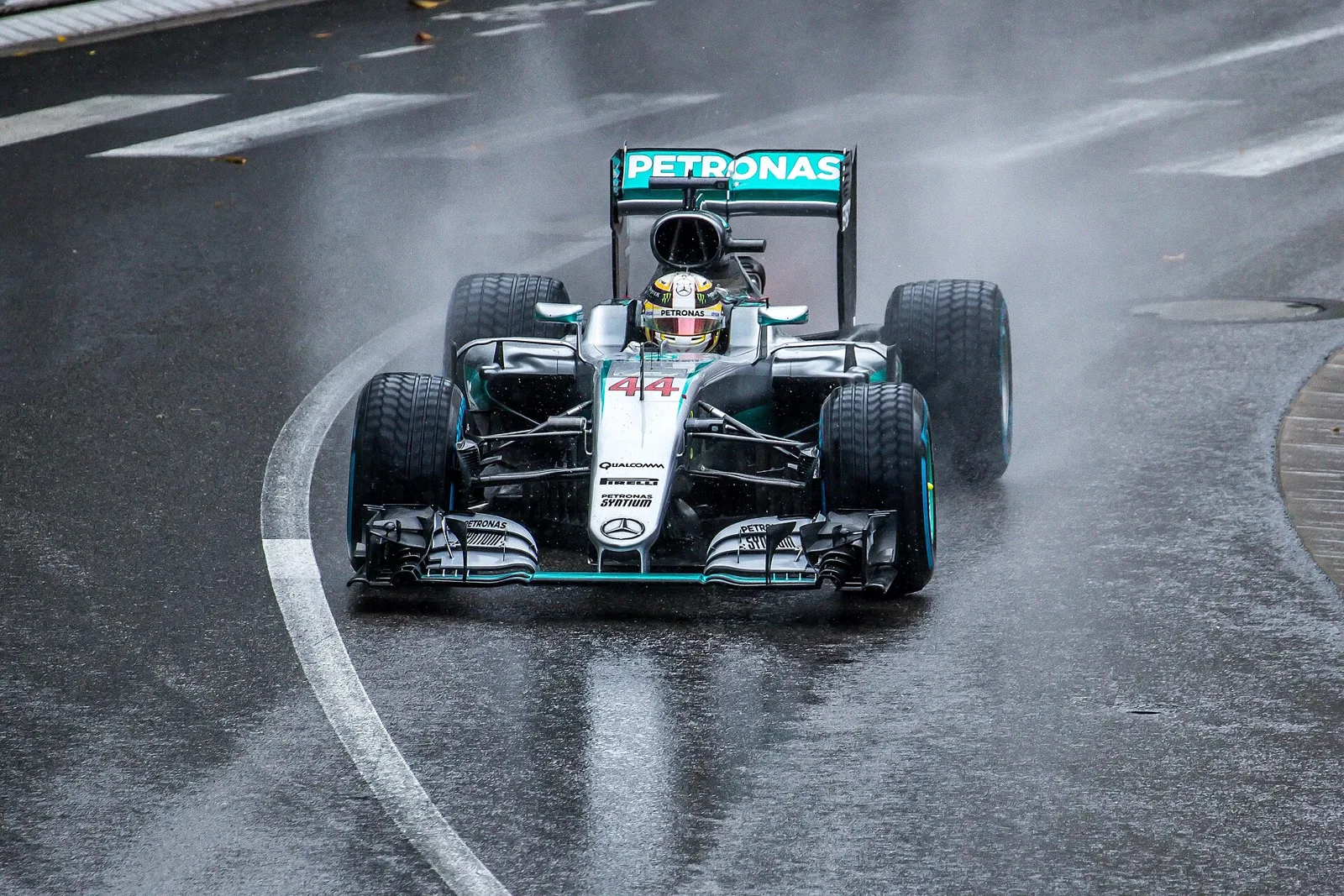
A new qualifying format that drew heavy criticism, a violent Alonso accident, and a Haas debut that scored points on its first outing.
Rosberg won the 2016 Melbourne race for Mercedes from Hamilton and Vettel, after a red flag for Alonso's crash. Haas scored points on debut through Grosjean in sixth, and the new qualifying format was widely panned before the race started.
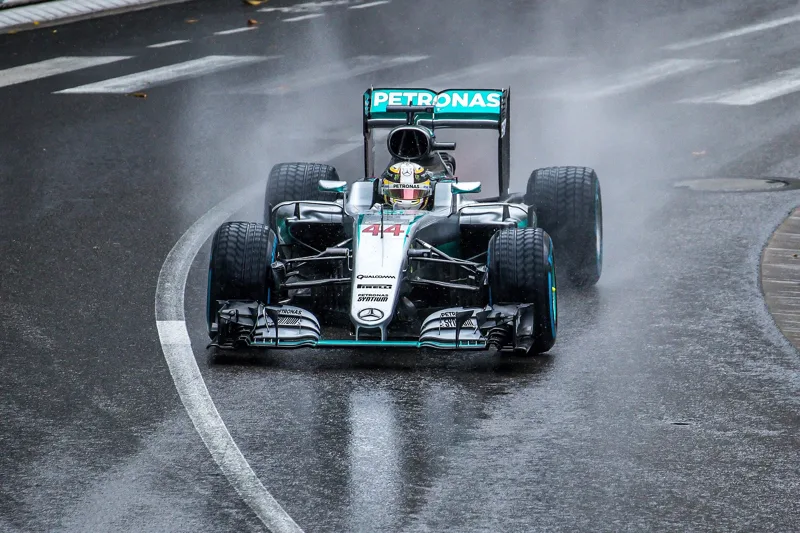
Nico Rosberg won the 2016 Australian Grand Prix in Melbourne on 20 March, the first round of the season. The weekend was defined by a qualifying format that drew heavy criticism, a violent accident for Fernando Alonso that brought out a red flag, and a Haas debut that scored points at the first attempt.
Who won the 2016 Australian Grand Prix?
Nico Rosberg took the win for Mercedes, with his teammate Lewis Hamilton second and Sebastian Vettel third. Romain Grosjean finished sixth in the first race for Haas, and Daniel Ricciardo matched the best finish by an Australian driver at their home event.
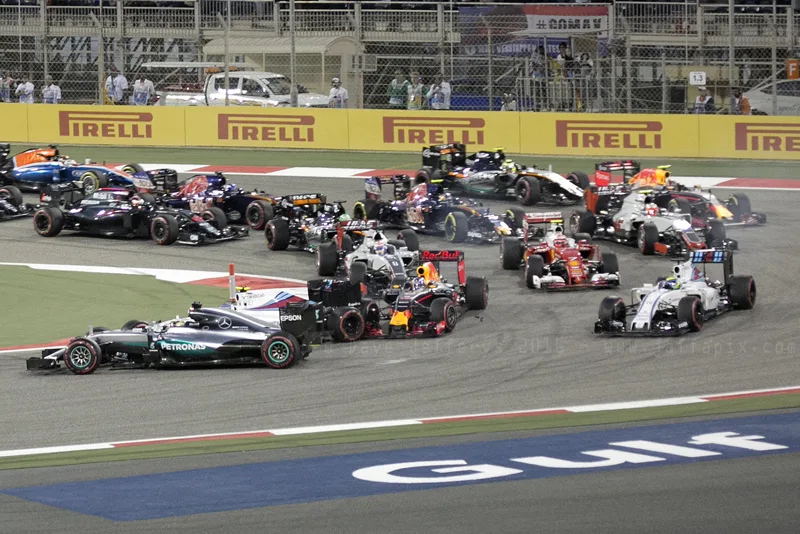
Vettel had led from the start, passing both Mercedes cars into the lead, with Kimi Raikkonen second. Hamilton was forced wide at the first corner and dropped to sixth. The race then changed shape when Alonso's accident brought the race to a halt, and the restart reshuffled the order at the front.
Rosberg was the first front runner to pit, on lap eleven, and Vettel followed two laps later. Rosberg's quicker stop saw Vettel emerge just in front of him, and the Ferrari stayed ahead for a time. Vettel passed Hamilton for second on lap 16, and Raikkonen and Hamilton both pitted on the same lap, which re-established the order.
A new qualifying system that split the paddock, a violent crash and a debut that scored points at the first attempt.
How did the new qualifying format work?
Qualifying kept three parts, but the old rule of eliminating the slowest drivers at the end of each part was replaced. Instead, the slowest driver at any given point was removed every ninety seconds. The first part lasted 16 minutes, the second 15 and the third 14, with the countdown starting several minutes into each session.
All 22 cars took to the track in the first part, and everyone set a time on the super-soft tyre, the fastest compound available. Both Manor drivers were eliminated first after setting only one timed lap each, and both Haas cars followed after failing to cross the line in time. Daniil Kvyat also went out in 18th place, a victim of the same timing pressure.
The second part started with a busy track, but many top drivers did not run a second timed lap after setting a fast time first time out. Both Renault drivers finished 14th and 15th, and both McLarens were eliminated before Bottas missed out on eleventh. Sergio Perez beat his Force India teammate Nico Hulkenberg to ninth place, and that result decided the cut for the final part.
The third part decided pole, and only the two Mercedes drivers set two timed laps. Hamilton took pole, the fiftieth of his career and the first of the 2016 season. Rosberg improved to second on his second run but could not challenge his teammate. The two Ferraris of Vettel and Raikkonen locked out the second row, with Verstappen and Felipe Massa behind them.
Why was the new qualifying format criticised?
The format drew criticism almost as soon as the session finished. Sky commentator Martin Brundle called it unacceptable and urged a swift revision. Toto Wolff and former driver Johnny Herbert were just as harsh, and Christian Horner said the format was not good for Formula One. Niki Lauda, Mercedes non-executive chairman, called it a big mistake.
The main complaint was that drivers had too little time to improve before the clock ran out. Damon Hill pointed out that Hamilton could have taken the chequered flag with four minutes still to go. Rosberg said the format had not worked, while Vettel described it as the wrong way to go. Hamilton joined the criticism but acknowledged the attempt to refresh the format.
Bernie Ecclestone, the commercial rights holder, also spoke out against the change. On race day the teams voted to return to the old qualifying system, but the proposal was rejected by the FIA's F1 Commission, so the new system stayed in place for the race.
What happened in the Alonso crash?
Alonso ran into the back of Esteban Gutierrez at turn three, one lap after the pit stops, and his car was lifted into the air at around 300 km/h (190 mph). It hit the left-hand barrier, rolled several times and came to rest upside down against the barrier, with a peak force of 46G recorded. Alonso walked away with minor injuries.
Debris from Alonso's McLaren and from damaged advertising boards was spread across the track, and the race director chose to red flag the race. All cars came back into the pit lane. Work on the cars was allowed during the break, and Hamilton's front wing was changed. Haryanto ended his race during the stoppage.
The restart order was Vettel, Rosberg, Raikkonen, Ricciardo, Verstappen, Sainz, Hamilton, Massa, Grosjean and Bottas. Grosjean had not yet pitted, so the red flag gave him the chance to change his tyres and save a stop. Both Ferraris were on super-soft tyres, while both Mercedes cars were on mediums that were expected to last the rest of the race.
The stewards took no action against either driver, because they judged the accident a racing incident with no one to blame. Alonso shared that view and said he did not blame Gutierrez. Former FIA president Max Mosley noted that the impact might have been fatal about twenty years earlier, and he praised the safety work carried out since Ayrton Senna's death at the 1994 San Marino Grand Prix.
How did the race unfold after the restart?
Vettel led the restart, but Raikkonen pulled into the pits on lap 22 with fire coming from his airbox and then retired, handing second place to Rosberg. Rosberg then closed on Vettel, who lost time during his own stop, and he took the lead on lap 35. Hamilton hunted the leaders down, but Vettel made a late mistake at the second-to-last corner on lap 55 and lost his chance at second.
Ericsson picked up a drive-through because his team worked on his car inside the final seconds before the restart. He began to slow on lap 40 and retired soon afterwards. Verstappen pitted two laps later, but a slow stop lost him time, and on lap 42 he got past Palmer's Renault.
Palmer, on his Renault debut, held off the two Toro Rosso drivers in the battle for ninth place. Both passed him on lap 42, and he fell back to eleventh. The Guardian praised his drive.
Ricciardo changed tyres and came out fifth behind Massa, and then took fourth. At the front, Hamilton and Vettel closed on Rosberg, with the gap between them coming down, but Rosberg held on. Hamilton moved into second, passing Ricciardo on the main straight to take the position.
Who finished on the podium and why did it matter?
Rosberg won ahead of Hamilton and Vettel, who completed the podium. Rosberg's victory gave Mercedes its fifth consecutive one-two finish, which equalled a record that Ferrari had set in 1952 and 2002 and that Mercedes itself had matched in 2014.
Rosberg's win also carried a family link, coming 31 years on from his father Keke's 1985 victory in the same race. Ricciardo's fourth place equalled the highest finish by an Australian driver at his home event, a result Mark Webber had achieved in 2012.
After the race Rosberg said his team had come close to retiring his car because debris had lodged in a brake caliper. He managed the brake temperatures to secure victory. He also apologised to Hamilton for making contact at the start and forcing him wide.
What was Haas's debut like?
Haas F1 scored points in its first Grand Prix thanks to Romain Grosjean, who finished sixth. The team had changed the floor on Grosjean's car during practice, after his pit lane collision with Haryanto, and Haryanto was given a three-place grid penalty and two penalty points for that incident. It was the first new constructor since Toyota in 2002 to score in its inaugural race entry. Behind Grosjean, Nico Hulkenberg, Valtteri Bottas, Carlos Sainz and Max Verstappen completed the points.
The result gave the new team a strong start in the sport. Grosjean was also named Driver of the Day, after the award had first gone to Haryanto, who retired during the red flag period. The organisers said that multiple votes from the same source were not counted, which led to the change.
Renault also featured in the weekend story, returning as a fully manufacturer-supported team after a four-year absence. Their two cars qualified 14th and 15th in the second part.
What did Verstappen's strategy complaint involve?
Verstappen was unhappy with Toro Rosso's handling of the race, and he complained repeatedly over the team radio. He lost several seconds in a rushed pit stop, and he said he had wanted to pit before his teammate Sainz. He later apologised to his team for the outbursts.
While running behind Sainz when both were trailing Palmer, Verstappen asked for team orders to let him pass his teammate, but the request was refused. He described the team's strategy in unflattering terms, and Sky Sports commentators compared his tone to a sulky teenager.
Results at a glance
| Finish | Driver | Team | Notes |
|---|---|---|---|
| 1st | Nico Rosberg | Mercedes | Win; fifth consecutive one-two for Mercedes |
| 2nd | Lewis Hamilton | Mercedes | Pole position; second after the late stops |
| 3rd | Sebastian Vettel | Ferrari | Led the early laps; mistake on lap 55 |
| 4th | Daniel Ricciardo | Red Bull | Equalled the best Australian finish at home |
| 5th | Felipe Massa | Williams | Finished behind Ricciardo |
| 6th | Romain Grosjean | Haas | Points on debut; Driver of the Day |
| 7th | Nico Hulkenberg | Force India | Points finish |
| 8th | Valtteri Bottas | Williams | Points; qualified eleventh |
| 9th | Carlos Sainz Jr. | Toro Rosso | Points; first top-ten runner to pit |
| 10th | Max Verstappen | Toro Rosso | Points; complained over the radio |
| Retired | Kimi Raikkonen | Ferrari | Fire from airbox on lap 22 |
| Retired | Fernando Alonso | McLaren | Crash after the pit stops; minor injuries |