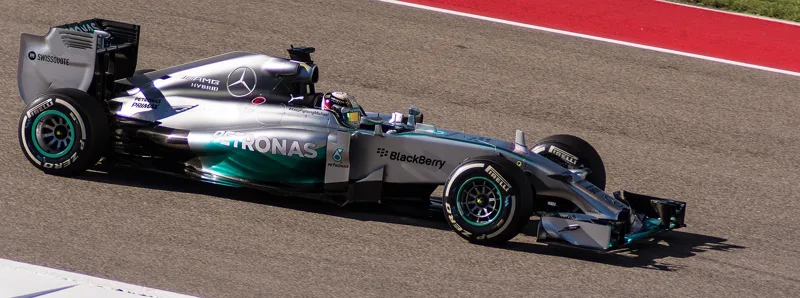
Pole, a higher-powered engine setting and a late push on Rosberg gave Hamilton the 2014 Spanish Grand Prix at Barcelona.
Hamilton converted pole into a Mercedes win at Barcelona on 11 May 2014, with Rosberg second and Ricciardo third. The victory also lifted Hamilton above Rosberg in the drivers table for the first time since the 2012 season, and Mercedes had won every race so far in 2014.
Lewis Hamilton won the 2014 Spanish Grand Prix from pole position at the Circuit de Barcelona-Catalunya on 11 May, with Nico Rosberg close behind and Daniel Ricciardo third. The win also put him back on top of the drivers table, something he had not managed since 2012.
Barcelona was round five of 19, and Mercedes had won every race so far. Hamilton's victory was his fourth in succession, and it came at a track where passing is hard work, so strategy and the balance of the car counted for as much as outright pace.
Who won the 2014 Spanish Grand Prix?
Hamilton won the race in 66 laps from pole, with Rosberg second and Ricciardo third on the podium. It was Hamilton's fourth win in a row and his 26th overall, and it took him to the top of the drivers standings.
The result sent Rosberg down to second in the drivers table, having gone into the weekend as the leader. Mercedes, meanwhile, pulled 114 points clear of Red Bull at the top of the constructors standings, a gap that grew across the afternoon.
Pole, a higher-powered engine setting and a team-mate who never quite got past: that was the Barcelona recipe for Hamilton.
The title fight going into Barcelona
Rosberg had led the drivers table with 79 points, four ahead of Hamilton. Alonso was third on 41, Nico Hulkenberg fourth on 36 and Sebastian Vettel fifth on 33. In the constructors table Mercedes had 154 points, against 57 for Red Bull, 54 for Force India, 52 for Ferrari and 43 for McLaren.
Rosberg had opened the season by winning in Australia, while Hamilton had taken the three races that followed. Hamilton said the momentum would move between the two of them from track to track, and he set out to narrow the gap on the circuits where he felt weaker.
He also thought Red Bull and Ferrari would press Mercedes harder in Spain, since he believed their cars were more aerodynamically efficient. Rosberg was more direct. He said the momentum was with his team-mate, that he had to turn it around, and that he wanted to win and extend his lead.
What changed on the cars and the circuit?
Several teams brought upgrades to Barcelona, and the track itself had been reworked after the 2013 race. Red Bull added a duct near its rear tyres, Ferrari went back to a single-pillar rear wing support, and Force India fitted a new rear wing mainplane and endplates to both cars.
The Red Bull duct was designed to redirect airflow and improve the efficiency of the underfloor, and the team gave Vettel a new chassis to help his pace. Ferrari's single pillar was aimed at cutting airflow disturbance behind the car, which should have meant more downforce and more grip from the bodywork.
McLaren altered its rear bodywork to house a revised rear suspension arm and fitted new front wing endplates. Sauber brought a revised aerodynamic package with a modified front wing and new side-pod fins, while Lotus reconfigured its engine mapping and revised its cooling and bodywork.
The track work was less visible but still real. The turn one kerb was renewed and the verge behind it resurfaced, kerbs at turns nine and twelve were replaced, and the 7 m (23 ft) gravel trap beyond turn 11 gave way to tarmac. On a circuit that leans so heavily on aerodynamic grip, every small gain counted.
Pirelli supplied the medium compound with its white band and the hard compound with its orange band. Teams spent the weekend studying how quickly the hard tyre degraded over longer runs.
How did practice go in Barcelona?
Hamilton was quickest in the opening practice session on Friday, but Vettel lost his second session to a damaged wiring loom, and the teams' longer runs on the hard tyres told a more mixed story. Rosberg was fastest in the final session, on the medium compound.
In the opening session Hamilton set 1:27.023, 0.868 seconds faster than Jenson Button, who had been quickest until Hamilton's lap. Ricciardo, Alonso, Rosberg and Kimi Raikkonen completed the leading group, and the session carried its share of close calls. Van der Garde's brakes failed on the approach to turn one, Sutil ran wide at turn nine and lost control, and Sergio Perez's front-left mirror came loose but stayed on its retaining strap.
The second session brought Hamilton his fastest lap of Friday, 1:25.524, set in rising air and track temperatures. Rosberg was second and Ricciardo third, with the two Ferraris of Alonso and Raikkonen fourth and fifth. Chilton's Marussia had engine trouble early on and a piece of its bodywork came off near the final corner, where a marshal retrieved it.
The stewards then penalised Toro Rosso's Jean-Eric Vergne. He had been released from the pit lane with a right-rear wheel that was not properly attached, and the wheel came off at turn one. The ten-place grid penalty was joined by a fine of 30,000 euros on the team.
The final session on Saturday was held in warmer weather, and teams used it to see how the hard tyres wore over longer runs. Rosberg set the fastest lap of 1:25.887 on the mediums, with Hamilton and Alonso next. Chilton locked a front wheel late in the session and ended up stuck in the outside gravel trap at turn five.
Who took pole and how did qualifying shape the race?
Hamilton took pole at 1:25.232, his 35th of his career and his fourth of 2014. Rosberg started alongside him, and Mercedes locked out the front row for the fourth time this year. Ricciardo was third on the grid, with Bottas fourth after a set-up change.
Qualifying ran in three parts. The first lasted 18 minutes and removed the slowest cars, the second lasted 15 minutes and sorted the cars placed eleventh to sixteenth, and the final 12-minute session settled pole through to tenth. The 107 per cent rule applied in the first part, so every driver had to post a time close to the quickest lap of the session to qualify.
Cars that reached the final part could not change tyres before the start, which meant the set used in that session would run in the race. Teams were allowed to switch to fresh rubber for the third session and then switch back, so the tyre choice was made with the race in mind.
Vettel's session drew the most attention. A gearbox fault stopped him at turn three with less than ten minutes left, and track marshals had to extricate the car while the session stopped briefly. The gearbox change cost him five grid places, and the knock-on effect moved Hulkenberg, who had changed his set-up, up to tenth on the grid.
Perez qualified 11th after slower traffic on his final timed lap forced him to abort it and save his tyres. Kvyat took 12th on the hard compound tyres. Maldonado set no time at all: he lost the rear on the artificial grass at the exit of turn three, struck the inside barrier and damaged his front-right suspension. The stewards allowed him to start after judging that he had stayed within the 107 per cent limit in practice.
Why did the race director warn drivers before the start?
Charlie Whiting, the FIA race director, warned drivers at the pre-race briefing that they could be penalised if their pace and behaviour on the formation lap did not improve. The warning followed complaints that formation laps had been too slow in earlier races in 2014.
Several drivers had complained that formation laps were going too slowly in earlier races, and the warning was aimed at that problem.
The race from the first lap to lap 18
Hamilton made a strong getaway and led into the first corner, with Bottas moving past Ricciardo for third. Rosberg was the nearest challenger in those opening laps. At the end of the first lap Hamilton was 1.1 seconds clear of Rosberg, and Bottas was the same distance further back in third.
Hamilton pushed on from there, stretching his lead to two seconds by the start of lap four and pulling away from the cars behind. Red Bull told Ricciardo to back off from Bottas so that he would not put extra strain on his tyres by running in the turbulent air of the car ahead for long. Ricciardo tried a DRS pass into turn one, Bottas held his line, and by lap eight Ricciardo had accepted the team's advice and fallen back.
Every driver except Vergne began the race on the medium compound. Maldonado and Ericsson made contact on lap three, and the stewards gave Maldonado a five-second stop-and-go penalty, to be served at his first pit stop. Autosport had argued that three stops would be the quickest plan, but drivers who stopped twice would keep better track position.
Vettel was called into the pits at the end of lap 12, after Button had run wide and held him off on track. He fitted hard tyres and emerged 21st, behind Chilton and ahead of Ericsson, with far less traffic to fight. Ricciardo pitted at the end of lap 14 to try to pass Bottas and keep a two-stop plan. Williams chose not to bring Bottas in, keeping him on track to hold a consistent pace without losing rear tyre life.
On lap 16 Kobayashi blocked Vettel before turn nine, and Vettel made the pass at the next corner. Alonso had been asking Ferrari to bring him in because his rear tyres were worn after the battle with Raikkonen. The team waited until lap 16, when traffic opened up enough to make a stop worthwhile.
How did the race finish?
Hamilton's second stop came on lap 43 and handed Rosberg the lead for two laps, but Hamilton soon found his way back to the front. Rosberg closed to within a second by lap 59, and Hamilton responded by switching to a higher-powered engine setting, which kept his team-mate behind to the flag.
The handover was not smooth for Hamilton. His car showed oversteer and then understeer while Rosberg was ahead, and that made the closing laps a careful balancing act. Rosberg kept pressing to the end, but Hamilton held on to take the win.
Race facts at a glance
| Item | Detail |
|---|---|
| Date | 11 May 2014 |
| Venue | Circuit de Barcelona-Catalunya, Montmelo |
| Track length | 4.655 km (2.892 mi), 16 turns |
| Race distance | 66 laps |
| Pole | Lewis Hamilton, 1:25.232 |
| Winner | Lewis Hamilton, Mercedes |
| Podium | Nico Rosberg (second), Daniel Ricciardo (third) |
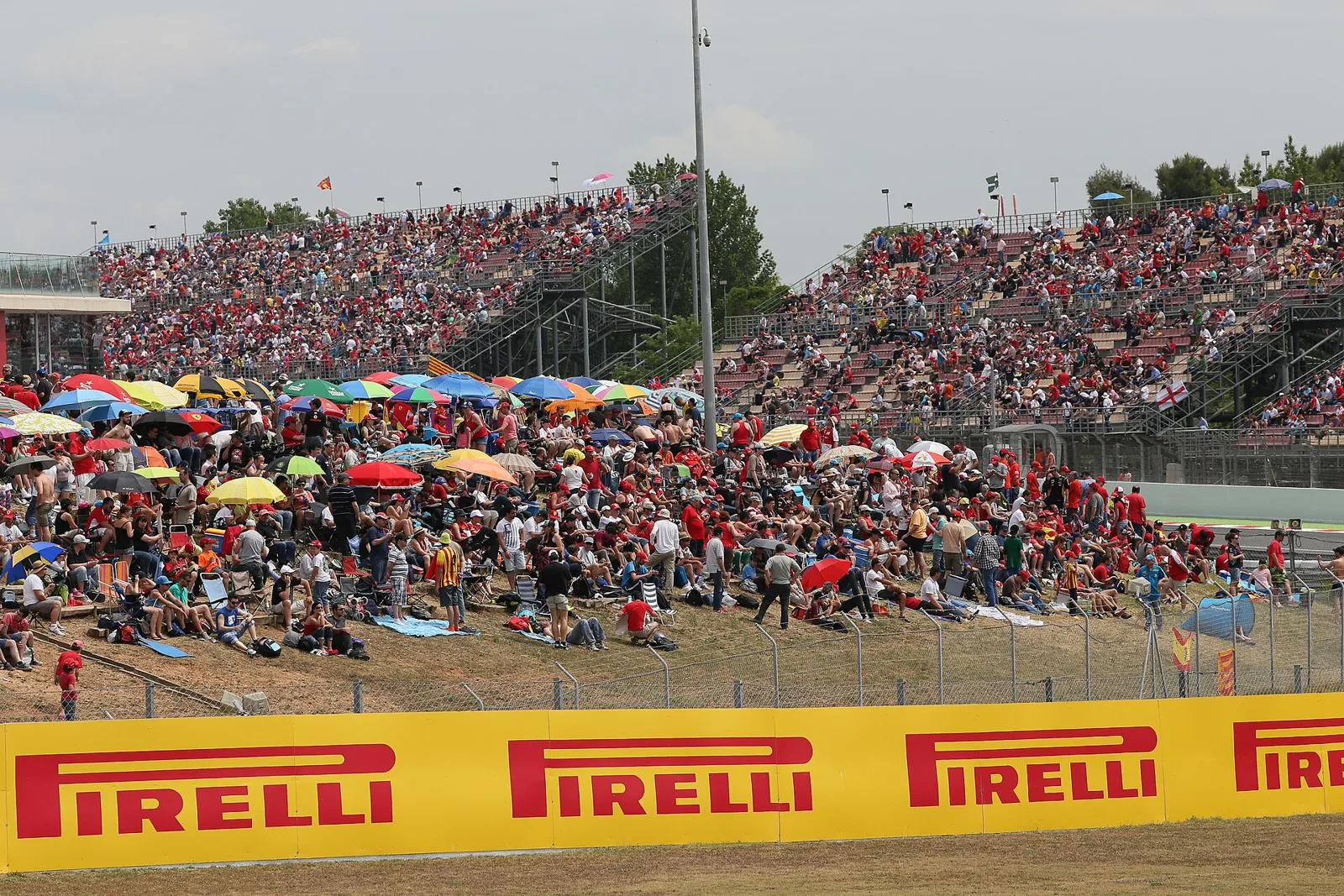
| Crowd | 91,480 |
| Round | Fifth of 19 |
What did the result mean for the championship?
Hamilton moved to the top of the drivers standings with 100 points, his first championship lead since 2012. Rosberg dropped to second, Alonso stayed third, and Mercedes stretched its constructors lead over Red Bull to 114 points with 14 races left.
Vettel moved up to fourth and Ricciardo to fifth, while the points gap between the two Mercedes drivers became the story that the rest of the season would have to resolve. Barcelona showed that when Hamilton's car was right, he could win from the front and keep his team-mate at arm's length.