A Marussia collision brought out the safety car early, Hamilton's rear brakes gave up, and Ricciardo took a first career win at Montreal.
Daniel Ricciardo won the 2014 Canadian Grand Prix for Red Bull from sixth on the grid, taking his first Formula One victory. Rosberg was second and Vettel third, while Hamilton retired with overheating rear brakes at Montreal.
Montreal produced Daniel Ricciardo's first Formula One victory, from sixth on the grid for Red Bull on 8 June. Nico Rosberg finished second and Sebastian Vettel third, while Lewis Hamilton retired after his rear brakes overheated.
It was also the first win for an Australian driver since 2012. Montreal's long straights were expected to suit the Mercedes engine, but the race was shaped by an early safety car and a late fight for the lead.
Who won the 2014 Canadian Grand Prix?
Ricciardo won the 70-lap race from sixth, with Rosberg second and Vettel third for Red Bull. Rosberg had taken pole at 1:14.874 and led the early laps, but Ricciardo's passes in the closing stages and a final-lap safety car turned the race in his favour.
The result took Ricciardo to third in the drivers table, demoted Alonso to fourth and lifted Vettel to fifth. Ricciardo passed Sergio Perez of Force India for second on lap 66, and then Rosberg two laps later, before the final-lap safety car came out after a first-corner accident between Massa and Perez.
A first career win from sixth, a safety car that rewrote the closing laps and a Mercedes pair that could not hold the top two.
What was the title picture before Montreal?
Rosberg led the drivers championship with 122 points after winning Monaco, four ahead of Hamilton in second. Alonso was third on 61 points, Ricciardo seven points behind him in fourth, and Hulkenberg fifth on 47. In the constructors table Mercedes led with 240 points, ahead of Red Bull on 99, Ferrari on 78 and Force India on 67.
Mercedes had won every race up to Montreal, and Rosberg had taken the drivers lead with his win at Monaco. Hamilton's relationship with his team-mate had been strained after the qualifying dispute at Monaco, but both drivers spoke before the event and Hamilton declared that their relationship had been restored.
Rosberg said the fight was him against Hamilton and nobody else, which made it harder but raised the stakes. Hamilton had won in Canada in 2007, 2010 and 2012, and he said Mercedes had built an engine with a very good power curve that would help on the long straights.
What changed on the cars before the race?
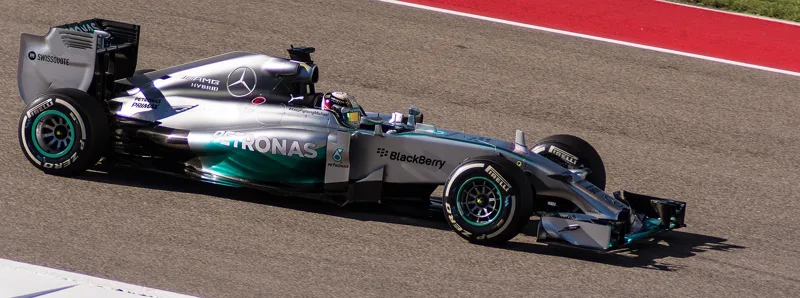
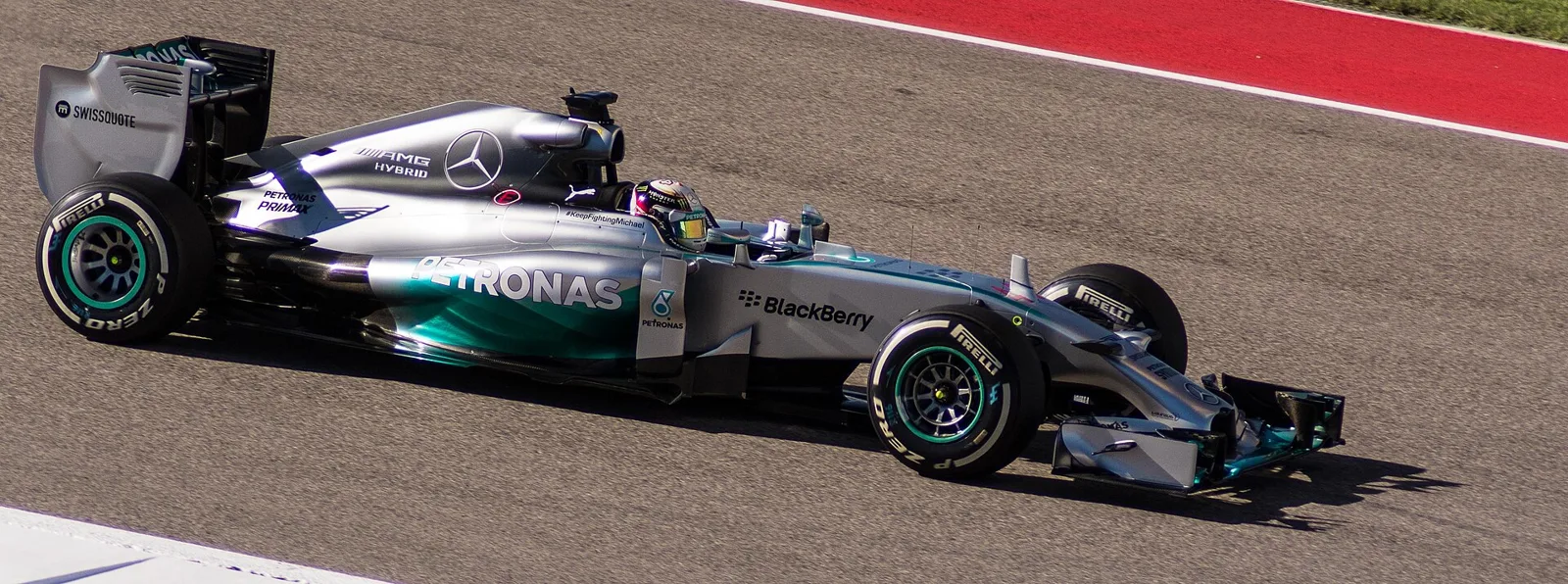
Mercedes fitted fins and turning vanes to the lower front wishbone on its front suspension, along with a change to the rear section of the frontal brake ducts. The aim was to improve airflow and cut drag on the inside of the front wheel. Toro Rosso built new exhaust systems after fractures from possible overheating had caused retirements at Monaco.
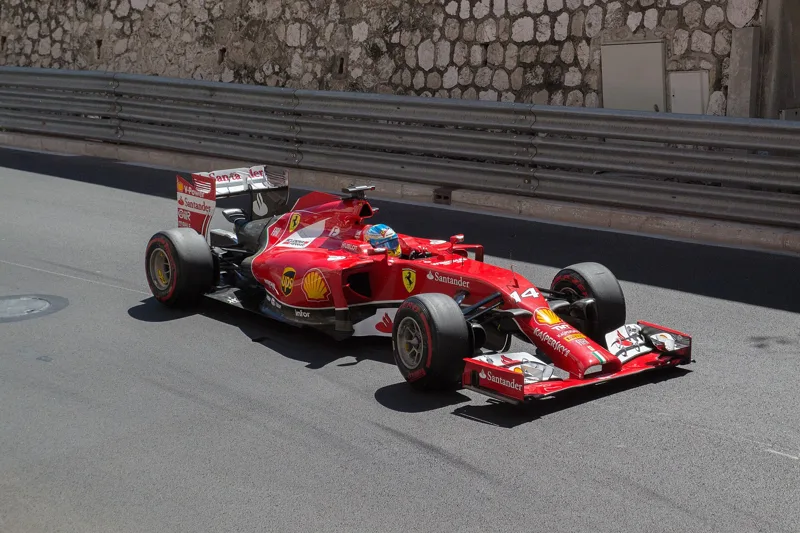
Williams added a duct above its brake discs that sends air from the main duct out towards the caliper. Ferrari tested a tighter engine cover that ran to the inside of the rear tyres, with longer sidepods to cool the F14 T better. McLaren used a rear suspension blocker to replace some of the downforce it lost when its lower rear wing was removed.
How did practice and qualifying go in Montreal?
Alonso was fastest in the first practice session at 1:17.238, ahead of the Mercedes pair. Hamilton then recorded the fastest lap of the second session at 1:16.118, with Rosberg second and Vettel third. In the third session Hamilton set the quickest time at 1:15.610 on soft tyres, with Massa second and Rosberg third.
Ricciardo was reprimanded by the stewards for passing Pastor Maldonado in the pit lane in a potentially unsafe manner, the first reprimand of his season. Bianchi damaged a track rod on his Marussia after hitting the wall at turn four, and he was restricted to three slow laps in the second session by an engine issue.
A red flag stopped the third practice session when Gutierrez lost control under braking through the chicane. He hit a barrier at the exit, and the front of his Sauber was too badly damaged to repair in time for qualifying. The spare chassis had to be built for the race, and Gutierrez missed qualifying.
Qualifying was in three parts of 18, 15 and 12 minutes. The asphalt was 47 degrees C under sunshine. Rosberg took his second pole in a row, his third of 2014 and the seventh of his career, with a lap of 1:14.874. Hamilton was 0.079 seconds slower after driver errors at turns six and eight.
Vettel took more risks in the final seconds and placed third, beating Ricciardo to the grid for the second time in 2014. Bottas was fourth, held back by traffic that affected his front tyre warm-up, and Massa was fifth after a front brake temperature problem locked a wheel at turn one. Ricciardo was sixth.
Alonso and Raikkonen lacked grip and took seventh and tenth, with Vergne and Button between them. Hulkenberg was the fastest driver outside the top ten, followed by Magnussen and Perez. Grosjean was 14th and Kvyat 15th after brake and handling difficulties. Maldonado failed to advance past the first part because of a turbocharger intake problem.
Kobayashi took a five-place grid penalty for changing his gearbox, and Gutierrez started from the pit lane after his gearbox and chassis were changed. Chilton started 18th, Bianchi 19th and Ericsson 21st, after a crash in the first session that stopped the running.
Alexander Rossi, a GP2 driver and Caterham reserve, drove the CT05 in place of Kobayashi in the first practice session, the first time he had done so in 2014.
Chilton's grid spot rested on a lap from his first attempt, since an accident in the first session stopped qualifying. Bianchi could not get out for a second try, because his car failed to start.
Maldonado also received the stewards' first reprimand of the season, for not refitting his steering wheel after leaving his car at the exit of turn three, as the regulations require.
How did the race open and what happened at the start?
The race started under sunny, warm skies. The air was between 27 and 28 degrees C, and the track between 44 and 49 degrees C. Every driver from first to tenth started on supersoft tyres, and most teams except Force India planned two pit stops.
Hamilton made a faster start than Rosberg, who locked up going into the first corner and drifted wide in front of Hamilton as he defended to the right. Hamilton was pushed onto the grass, which let Vettel into second. At turn three Chilton lost control of the rear of his Marussia and oversteered into his team-mate Bianchi, whose car was launched into the air and spun into a barrier.
Bianchi was unhurt, but both Marussias retired. Marshals were needed to clear oil and debris from the circuit, so the safety car came out. The field conserved fuel under it, which helped drivers on one-stop plans. The safety car came in at the end of lap seven.
On lap eight Rosberg pulled away from Vettel, whose Red Bull was slower on the straight. Perez passed Button for tenth into the final chicane on that lap. Ericsson retired in the pit lane on lap nine after a turbocharger connector pipe failed, and Kvyat spun at turn one on lap 10 and fell to the back.
Hamilton used DRS to pass Vettel for second on lap 10 going into the final chicane. Ricciardo was held up behind the two Williams cars, which he could not pass on pace in a straight line. Behind him Vergne held up the Ferraris and Perez, and Perez's supersoft tyres began to degrade around laps 13 and 14.
Ricciardo pitted at the end of lap 13 to undercut the Williams drivers. Williams responded by calling Bottas in for soft tyres on lap 15 and Massa the next lap. Vettel stopped on lap 16 and rejoined ahead of Bottas and Ricciardo, about six seconds behind Hamilton at his stop.
Alonso pitted on the 17th lap and gained enough speed to pass Vergne for seventh. Rosberg came into the pits a lap later, more than two seconds ahead of Hamilton. Hamilton took the lead on lap 18 and kept it through his own stop on lap 19. Rosberg then clipped a kerb on the inside of turn four and lost the rear, but he kept going.
The race turned into a long fight over tyres and fuel. Rosberg led Hamilton, with Perez and Hulkenberg of Force India third and fourth. Kinetic motor-generator unit failures slowed both Mercedes drivers just after halfway, and Rosberg pitted at the end of lap 44. Hamilton was in front during that lap and the next, before his own stop.
Williams' Felipe Massa then led for two laps, and Rosberg regained the lead on the 48th lap. The closing laps were decided by two passes for second. Those passes came in the final laps of a race that had been defined by strategy.
Race facts at a glance
| Item | Detail |
|---|---|
| Date | 8 June 2014 |
| Venue | Circuit Gilles Villeneuve, Montreal, Quebec |
| Track length | 4.361 km (2.710 mi), 14 turns |
| Race distance | 70 laps |
| Pole | Nico Rosberg, 1:14.874 |
| Winner | Daniel Ricciardo, Red Bull, from sixth |
| Podium | Rosberg (second), Vettel (third) |
| Round | 7th of 19 |
What did the result mean for the championship?
Rosberg extended his drivers lead to 22 points over Hamilton, who had retired with overheating rear brakes. Ricciardo moved up to third, Alonso dropped to fourth and Vettel rose to fifth.
Mercedes kept its constructors lead over Red Bull in second, and Ferrari, Force India and McLaren held third to fifth. Twelve races remained in the season, with the title battle now a Mercedes contest on the top step.