A fuel-sample dispute sent Vettel to the back of the grid, and Alonso's second place at Yas Marina cut his championship lead to ten points.
The 2012 Abu Dhabi Grand Prix was the eighteenth round of the Formula One season, held on 4 November 2012 at the Yas Marina Circuit. Kimi Raikkonen won the 55-lap race from fourth on the grid, with Fernando Alonso second and Sebastian Vettel third after starting from the pit lane.
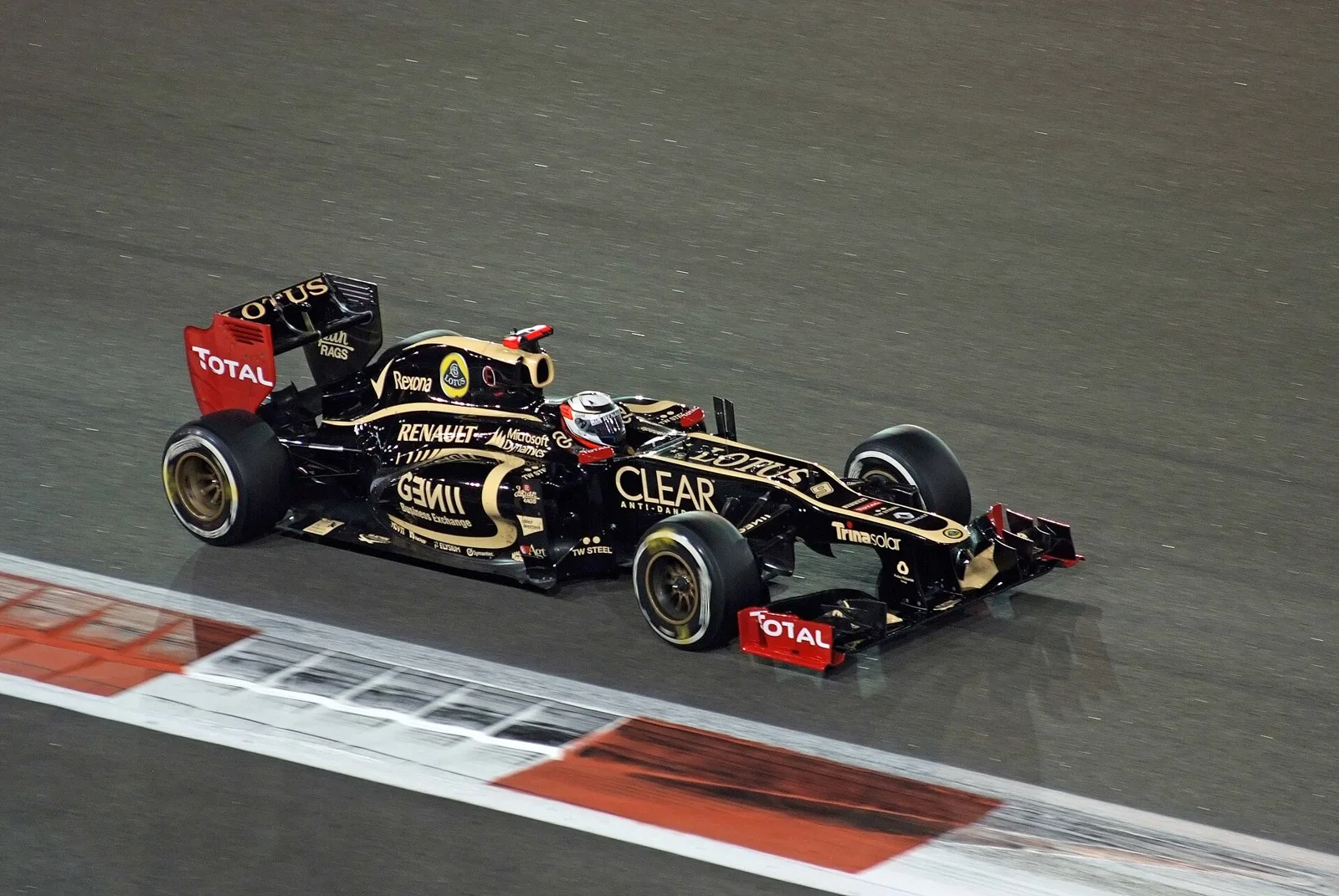
Kimi Raikkonen won the 2012 Abu Dhabi Grand Prix from fourth on the grid, a result that mathematically ended his title hopes but gave Lotus its first win since 1987. Fernando Alonso finished second, reducing Sebastian Vettel's championship lead to ten points. Vettel himself started from the pit lane after a dispute over a fuel sample in qualifying.
What did Raikkonen's win mean for the championship?
Raikkonen finished with 198 points, 57 behind the championship leader Vettel. That gap was too large, given that a maximum of only 50 points could be awarded across the final two races. He was therefore mathematically eliminated, alongside Webber and pole-sitter Hamilton.
Alonso's second place kept Ferrari firmly in the title fight. McLaren, third in the constructors' table, let their hopes slip away, leaving Red Bull and Ferrari as the remaining contenders for the constructors' title.
Red Bull needed only four more points at the next round in Austin to clinch the constructors' championship, which would have been their third title in a row.
A fuel-sample dispute, a radio remark that became a slogan and a Lotus win that mattered for the title.
Where did the championship stand before the race?
Vettel led the drivers' championship with 240 points, ahead of Alonso on 227, Raikkonen on 173, Webber on 167 and Hamilton on 165. Red Bull led the constructors with 407 points, while Ferrari on 316 and McLaren on 306 were fighting over second.
The season had been tumultuous, with seven different drivers winning the first seven races. Raikkonen, Grosjean, Perez and Massa had all finished second at various rounds, and Schumacher and Kobayashi had each finished third.
Alonso had finished second behind Vettel at the Indian Grand Prix and said it was crucial to stay within reach of Red Bull. Vettel, who had won the last four races, still described his lead as vulnerable.
What upgrades did the teams bring to Abu Dhabi?
Ferrari introduced updates to the F2012, including a new front wing with revised main planes, flaps and endplates, along with modified forward bargeboards. The team was permitted to break one of its four allotted curfews on Thursday night so mechanics could fit the parts.
Williams tested a front wing with three small flaps on Friday, but they ran an older specification for qualifying and the race. Mercedes continued to evaluate a double DRS system.
Force India gave Paul di Resta a new chassis after handling problems with his previous monocoque. Caterham revised its exhausts, bodywork, brake ducts and floor to stay in contention with Marussia for tenth place in the constructors' table.
What were the Friday practice times like?
Friday was hot and dry, and lap times were faster as the sun went down. A tailwind gusted between turns eight and nine, and drivers had to allow for it in the evening sessions.
Hamilton set the first session's pace at one minute and 43.285 seconds, three-tenths ahead of Button, with Vettel third and Webber fifth. Alonso sat between the two Red Bulls, and Michael Schumacher, Maldonado, Rosberg, Bottas and Raikkonen completed the top ten.
In the second session Vettel set the fastest lap of the day at one minute and 41.751 seconds, late in the session. Hamilton was second and traded fastest laps with him, Button was third, and Webber fourth despite losing time to a KERS cooling leak.
Grosjean was fifth and his Lotus teammate Raikkonen sixth, with the two Ferraris seventh and eighth and Alonso ahead of Massa.
Perez ran wide at the pit lane entry with twelve minutes of the session left, but avoided the barriers. Maldonado and Perez also finished the session in the top ten.
What happened in Saturday practice?
Conditions stayed hot and dry for the Saturday afternoon session. Hamilton's best time was one minute and 42.130 seconds, set on soft tyres and nearly three-tenths quicker than his teammate.
Vettel spent fifty-five minutes in his garage because mechanics had to fix a brake calliper problem. He managed a single flying lap, quickest through the second sector, and that was enough for third quickest overall.
Grosjean ended the session sixth in the quicker Lotus, even though bleeding his brakes in the pit lane cost him track time. Maldonado had led the timesheets early on before taking seventh, and Alonso, Raikkonen and di Resta completed the top ten.
As the session ended, Webber crawled towards the pit lane and Raikkonen came up behind him, so the Red Bull driver had to take evasive action to avoid a collision.
How did qualifying produce a pole and a fuel dispute?
Qualifying was held on Saturday evening in heat, with air temperatures of 29 to 30 C and a track at 31 C. Hamilton was fastest in all three sessions and clinched his sixth pole of the season in one minute and 40.630 seconds.
Webber was three-tenths of a second slower, and Vettel was third. Vettel was then ordered to stop on his in-lap because his car was short of fuel, and the FIA could not obtain the one-litre sample required for analysis.
As a result Vettel was moved to the back of the grid, and every driver who had qualified behind him moved up one place. Maldonado inherited third and avoided elimination in the second part of qualifying, while Raikkonen, who said his session was good, started fourth.
Vettel had set one minute and 41.073 seconds in Q3, but the stewards excluded that time for the fuel violation. They allowed him to start from the last place, but Red Bull changed his set-up before the race, which breached parc ferme rules and meant he had to start from the pit lane.
How did the race start?
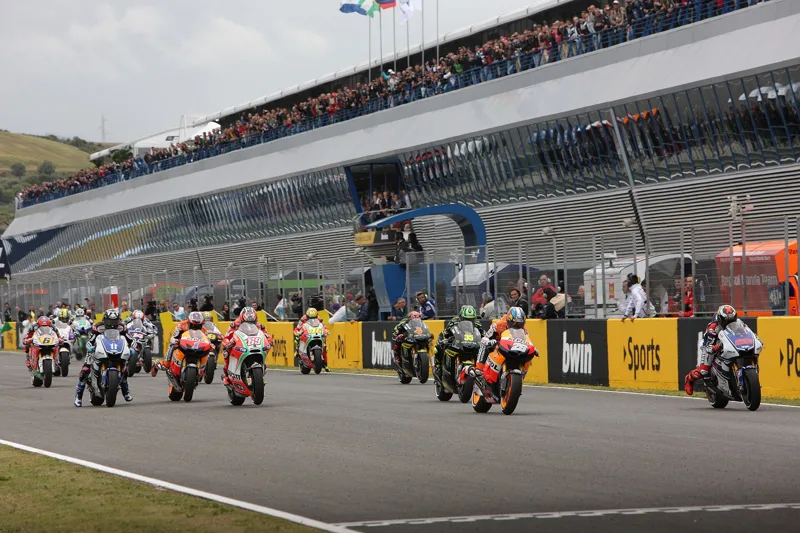
Hamilton kept the lead into the first corner, while Raikkonen made a quick start and passed Webber and Maldonado to take second. Hulkenberg retired after a tangle at the first corner with di Resta, Grosjean and Senna, and di Resta and Grosjean both pitted at the end of the first lap for repairs.
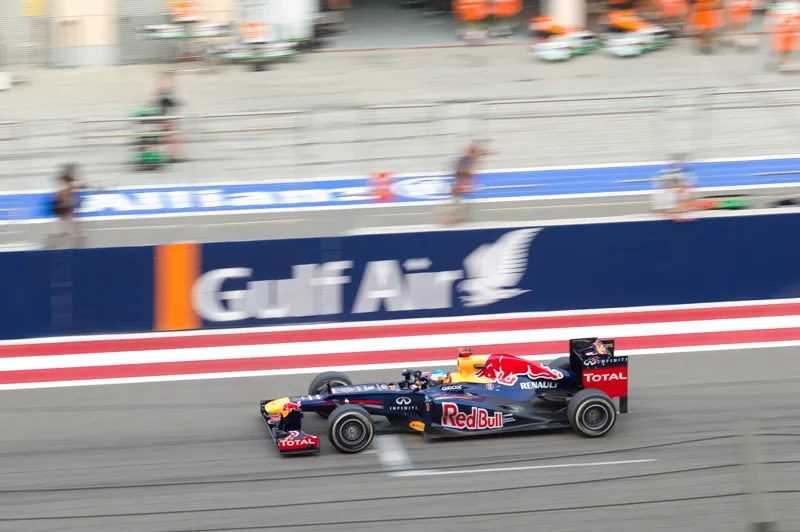
Red Bull started Vettel from the pit lane after changing his gear ratios, suspension and aerodynamic set-up to make overtaking easier. De la Rosa also began from the pit lane after a tyre blanket tangled on his car during the formation lap.
Alonso made a strong start, passing Button and then Webber after a run on the Red Bull out of turn nine. Vettel had early progress through the field, passing the HRTs, the Marussia and the Caterhams, but he made contact with Senna at turn eight, which damaged the endplate of his right-front wing.
Rosberg was overtaking Karthikeyan when the HRT's hydraulic pressure failed and its steering became heavy. Rosberg hit the back of the car and was launched into the barrier, scattering debris across the circuit. Both drivers were unhurt.
How did the lead change hands?
Racing resumed at the end of lap 14, with Hamilton leading Raikkonen. Vettel had hit a polystyrene bollard during the safety car period, which forced him to pit early and meant he could run 42 laps on the soft tyre without a second stop.
Vettel then passed di Resta and de la Rosa, and he went after Grosjean for 17th place before giving the position back after running onto the run-off area. He passed Grosjean again and moved up to eleventh on lap 20, when Vergne let him through.
Hamilton slowed with a fuel pressure problem on lap 20, pulled to the side of the track and handed the lead to Raikkonen. Raikkonen's engineer then gave him the gap to Alonso by radio, and he replied that he knew what he was doing.
The remark was widely covered, and Raikkonen later gave the team T-shirts printed with it. Alonso passed Maldonado in the second DRS zone with the help of his KERS, moving into second place behind the Finn.
What happened in the middle of the race?
Webber tried to pass Maldonado on the outside on lap 23, but the two made contact and Webber spun onto the run-off area, falling to seventh. Button passed Maldonado for third the following lap, while Vettel passed Ricciardo for tenth.
Perez moved in front of Massa for fifth on lap 25. Webber then used DRS on the straight linking turns ten and eleven, ran wide and touched Massa, who spun after hitting the kerb at turn twelve on lap 26.
Massa and Schumacher pitted on lap 27 and rejoined in fourteenth and fifteenth. Alonso had pitted for medium tyres on lap 29, and Perez passed Maldonado for fourth on lap 30. Webber was called in on lap 31, which put Vettel into second, and Raikkonen pitted for medium tyres on lap 32 and kept the lead.
Button set the fastest lap of the race at 1:46.495 on lap 32, while he closed on Alonso and feigned an overtake at turn 21.
Why did Grosjean and Webber retire?
On lap 39 di Resta forced Perez wide at turn 13. Perez then recrossed in front of Grosjean, and the two touched at the next corner, which pushed Grosjean onto the line Webber was taking on the inside. Both cars were damaged and both drivers retired.
The debris brought out a second safety car, which stayed out for three laps while marshals cleared the track.
How did the leading cars finish?
| Driver | Starting position | Race outcome |
|---|---|---|
| Lewis Hamilton | Pole | Retired on lap 20 with a fuel pressure problem |
| Mark Webber | Second | Fell to seventh after contact on lap 23, retired on lap 39 |
| Kimi Raikkonen | Fourth | Won the race |
| Fernando Alonso | Fifth-place pace in practice | Second for Ferrari |
| Sebastian Vettel | Last on the grid, then the pit lane | Third for Red Bull |
Who gained and who lost from the weekend?
Lotus and Ferrari were the clearest gainers. Ferrari narrowed the gap to the leaders to 82 points, and Alonso's second place kept his title challenge alive for another race.
McLaren, third in the constructors' table, saw their hopes slip away. Hamilton's pole did not translate into a finish for him, because he retired on lap 20 with a fuel pressure problem.
For Vettel, third place from the pit lane was enough to protect his drivers' championship lead, which stood at ten points after Alonso's second place. He had won the previous four races, yet he had still called his lead vulnerable before the weekend.
Why did the win matter for Lotus and Raikkonen?
The win was the first for Lotus since Ayrton Senna's victory at Detroit in 1987. It was Raikkonen's first win of the season, and his first since the 2009 Belgian Grand Prix, coming after his return to Formula One at the start of the year.
His radio exchanges were widely reported, and the phrase he used with his engineer became a Lotus slogan. The result gave the team a late moment of success in a season that had been dominated by the leading pair.