Jenson Button took the season opener at Albert Park, Ferrari lost Alonso in qualifying and both HRT cars failed to make the grid.
The 2012 Australian Grand Prix opened the Formula One season on 18 March 2012 at Albert Park. Jenson Button won the 58-lap race for McLaren, ahead of Sebastian Vettel and polesitter Lewis Hamilton, while both HRT cars failed to qualify.
Jenson Button won the 2012 Australian Grand Prix, his third victory at Albert Park, from second on the grid. Sebastian Vettel finished second and Lewis Hamilton third, while Mark Webber's fourth place was the best result by an Australian in the home race since 1984. Both HRT cars failed to qualify, which meant the team missed the race for the second year running.
Why did the 2012 grid have no Italian driver?
Vitantonio Liuzzi could not secure a seat for 2012, and Jarno Trulli was replaced at Caterham during pre-season. The race was therefore the first Grand Prix since the 1973 German Grand Prix without an Italian driver on the grid.
A Grand Prix had never before featured six current or former world champions, and this was the first Australian race with two Australians on the grid.
Several drivers were making their Formula One debuts or first full-time appearances. Charles Pic and Jean-Eric Vergne debuted for Marussia and Toro Rosso, while Romain Grosjean and Daniel Ricciardo came to Australia as full-time drivers for Lotus and Toro Rosso. Ricciardo had never raced at his home Grand Prix before.
Button won the season opener at Albert Park while HRT, unready on the Thursday, missed the race entirely.
What tyres and track changes came with the new season?
Pirelli brought its white-banded medium compound as the harder prime and the yellow-banded soft compound as the softer option. The year before, the prime had been a silver-banded hard tyre.
The circuit had two DRS zones this year, on the main straight and between turns two and three, with a single detection point at turn 14. Thicker astroturf was laid at the exit of several corners to discourage drivers from running beyond the track limits.
Mercedes were also examined by the scrutineers over a radical rear wing on the W03. Charlie Whiting, the FIA's technical delegate, looked at the car on the Thursday before the race and declared it legal.
Why did HRT fail to get its cars ready?
HRT could not finish work on Pedro de la Rosa's car in time for Thursday scrutineering, so the FIA allowed the team until 11 am to complete it. The car passed scrutineering, but it was not ready for the first session.
The team had completed a shakedown of the car for Narain Karthikeyan in Barcelona just two weeks before the race. That left little time to prepare the second chassis for the Australian weekend.
On Friday, HRT finished the first session without a single lap time. Karthikeyan's car cut out on the approach to turn 13 when its oil overheated, and de la Rosa's car was held back by hydraulics problems later in the day.
What happened in the Friday practice sessions?
The first hour of the opening session brought very little running, because the circuit was too wet for slicks but too dry for intermediates. Kamui Kobayashi and the Mercedes pair of Rosberg and Schumacher set the early pace, and Raikkonen managed only eight laps on his return to Formula One.
Jenson Button finished the session fastest, with Hamilton second and Schumacher third. Vettel was eleventh. Massa spun out at turn nine during the session.
The second session was held in wet conditions. Toro Rosso were first out to gather data on wet tyres, and Sergio Perez set the first representative time once a dry line appeared. Kobayashi spun at the final corner, and Karthikeyan came to a halt at turn six after the session had ended.
The third session was warm and sunny, and Rosberg and Schumacher led early on. Grosjean set the fastest time in the final twenty minutes, but Hamilton beat it in the final minute. Vettel spun at turn five shortly after switching to soft tyres.
Christian Horner had said that Red Bull had not done any qualifying simulations, and the team's plans were thrown into disarray when Vettel spun. Webber's fastest lap was then ruined when Schumacher spun at turn nine, and projected lap times suggested HRT would fail to qualify again.
What delayed qualifying in Melbourne?
A six-car pile-up in a V8 Supercars support race left sand and fire-retardant foam at the exit of turn three. The clean-up pushed back the restart of that race by twenty-five minutes, and grit lingered on the surface when qualifying began.
The first qualifying period was marked by heavy traffic, and several drivers were cited for blocking. Narain Karthikeyan was the chief offender, impeding faster cars on three separate occasions.
Heikki Kovalainen and Vitaly Petrov were nineteenth and twentieth, with the Marussias of Timo Glock and Charles Pic comfortably inside the 107% margin. De la Rosa missed the cut-off by 1.2 seconds, and Karthikeyan missed it by 1.4.
Kamui Kobayashi ended Q1 fastest, ahead of Jean-Eric Vergne and Sergio Perez. Felipe Massa was in danger of elimination until a late lap secured his place in Q2.
Who was knocked out in qualifying, and why?
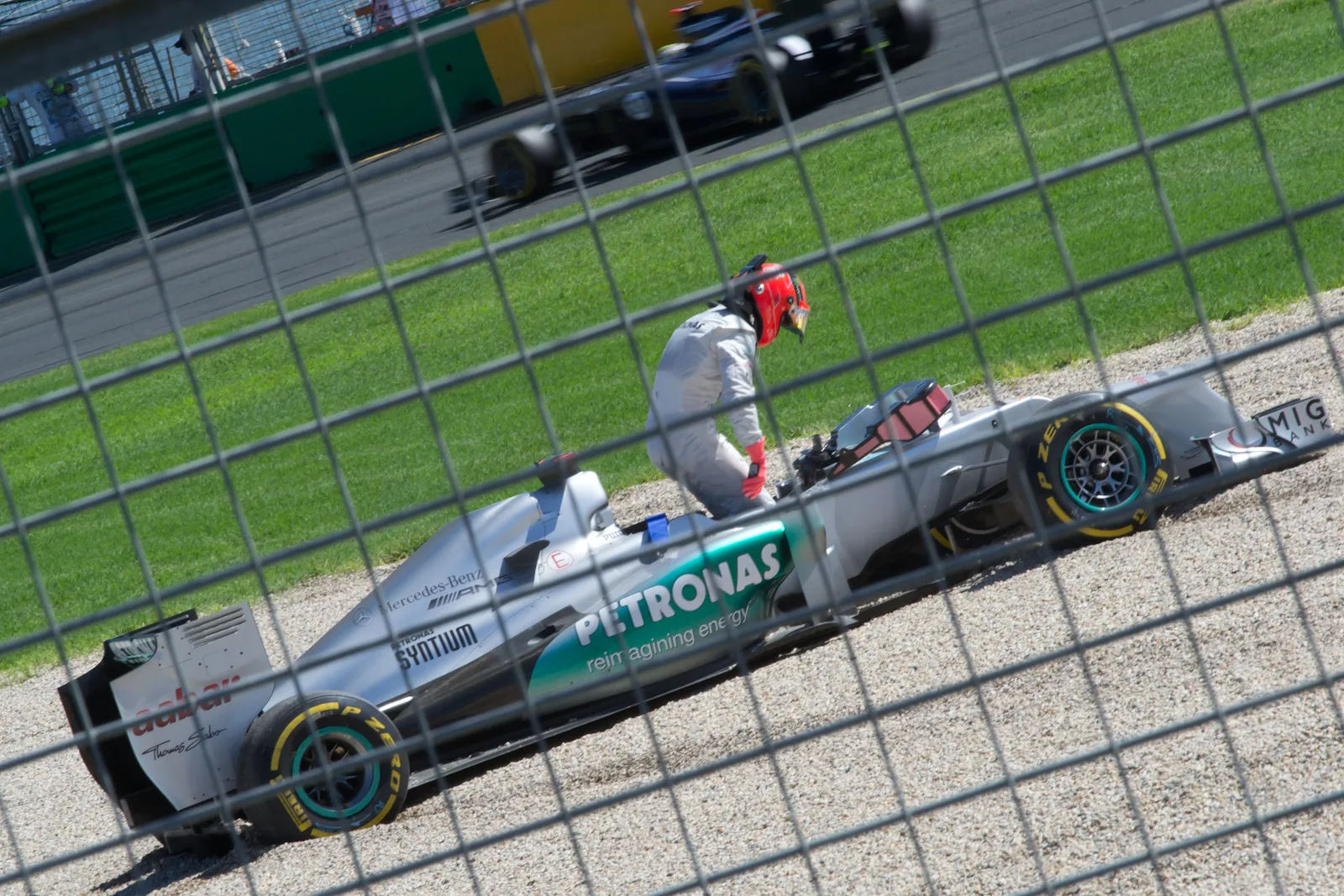
Fernando Alonso spun into the gravel at turn one in Q2 after running across the outer edge of the circuit in the braking zone, and he could not return under his own power. Ferrari had their first failure to get a car into Q3 in a dry session since the 2009 Abu Dhabi Grand Prix.
Eight minutes and twenty-two seconds remained on the clock when his car was removed. Alonso had been third at the time, but he gradually fell down the order and qualified twelfth, while Massa could do no better than sixteenth.
Daniel Ricciardo and Romain Grosjean reached Q3 for the first time in their careers. Kobayashi, despite a fast early lap, finished thirteenth, and Perez finished seventeenth after a gearbox fault prevented him from setting a time.
How did Hamilton take pole?
Hamilton set the only lap under one minute and twenty-five seconds of the weekend to take pole, and nobody beat it in the final session. Button finished a tenth of a second behind him, which gave Britain the front row for the first time since the 1995 Australian Grand Prix.
Schumacher briefly held provisional pole before Hamilton reclaimed it. Grosjean's late lap then put him ahead of Schumacher, who settled for fourth, while Webber took fifth ahead of Vettel.
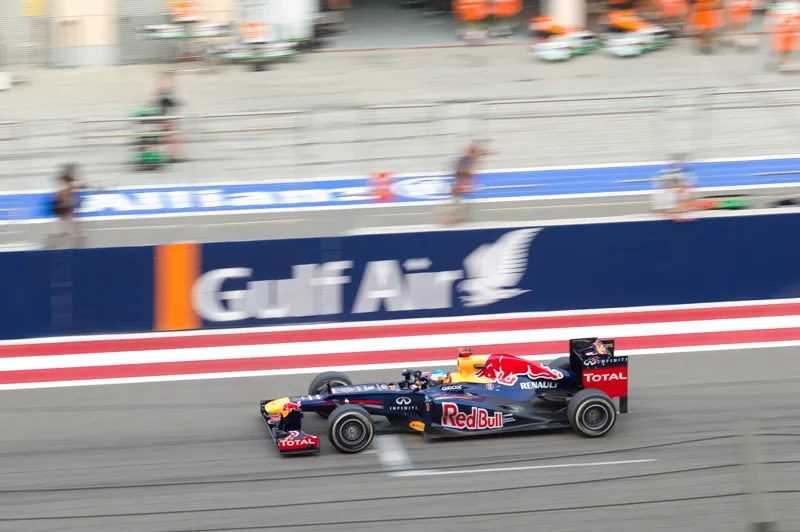
Vettel deliberately left his garage last so he could set the final time of the session, a habit he had developed during the 2011 season. His lap was not enough for more than sixth place, eight-tenths of a second off Hamilton.
Rosberg made a mistake on his first flying lap and a second error on fresh tyres, which dropped him to seventh. Pastor Maldonado was eighth and Nico Hulkenberg ninth.
Qualifying top ten
| Grid place | Driver | Note |
|---|---|---|
| First | Lewis Hamilton | McLaren, the only lap under one minute and twenty-five seconds |
| Second | Jenson Button | McLaren, won the race |
| Third | Romain Grosjean | Lotus, reached Q3 for the first time |
| Fourth | Michael Schumacher | Mercedes, briefly held provisional pole |
| Fifth | Mark Webber | Red Bull, finished fourth |
| Sixth | Sebastian Vettel | Red Bull, left his garage last |
| Seventh | Nico Rosberg | Mercedes, made two errors on his final runs |
| Eighth | Pastor Maldonado | Williams |
| Ninth | Nico Hulkenberg | Force India |
| Tenth | Daniel Ricciardo | Toro Rosso, did not complete a timed lap |
Why did HRT miss the race?
Neither HRT car made the cut-off, which required a time within 107% of Q1's fastest lap. The FIA then ruled that neither could line up for the start, so the team missed the Australian Grand Prix for a second year in a row.
Team principal Luis Perez-Sala had predicted that the team would struggle, and HRT asked for special dispensation on the grounds that the cars were not fully prepared until the final practice session. The stewards did not agree.
Nobody has failed to qualify for a Formula One race since, as of 2026.
Karthikeyan, Alonso and Ricciardo were summoned by the stewards over alleged blocking in the first session, but nobody was penalised.
Red Bull and Lotus asked the stewards to review the original verdict on Mercedes' front wing after qualifying, arguing that it broke Articles 3.15 and 3.18 on DRS and driver-operated devices.
How did the race start?
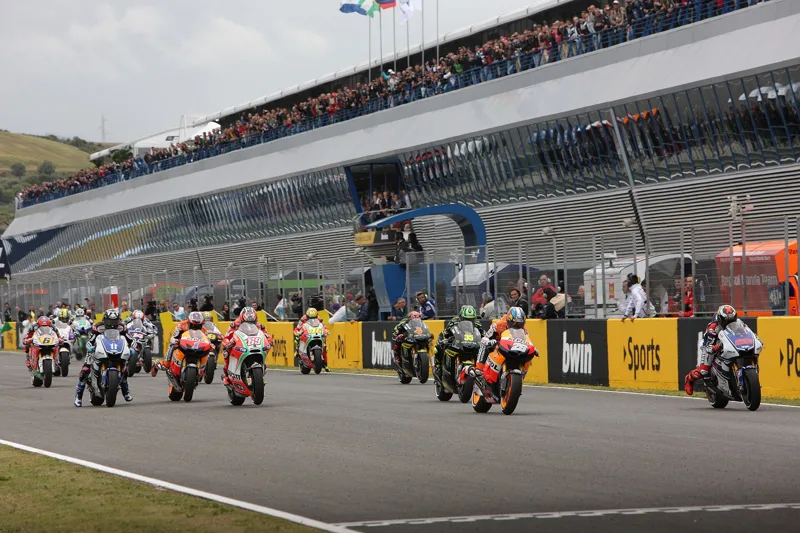
Button made the better start and led into the first corner from second on the grid, with Hamilton slotting in behind him. Grosjean lost three places at the first corner, dropping from third to sixth.
Webber was sandwiched between Vergne and Hulkenberg, and the contact was heavy enough to end Hulkenberg's race. Perez was unable to avoid the rear wing of his Sauber teammate Kobayashi, leaving Kobayashi's car damaged for the rest of the afternoon.
Senna's Williams was turned sideways with two wheels in the air above Ricciardo's front wing. Both cars pitted on lap one, leaving them effectively last, in nineteenth and twentieth.
Grosjean made contact with Maldonado at turn 13, which snapped his steering arm and ended his race. Alonso climbed from twelfth to seventh, and Schumacher retired on lap 10 after running wide while nursing a gearbox problem.
How did the first pit stops play out?
The first stops began with Massa on lap 14, who complained of a loss of grip in his rear tyres. Several drivers pitted around the same time, which foreshadowed a switch to three-stop strategies.
Perez stayed out on the harder prime tyre, aiming for the one-stop strategy he had used through 2011. Button briefly handed the lead to Hamilton, then took it back when Hamilton pitted on the next lap.
Hamilton emerged behind Perez, who was matching Button's pace on older and harder tyres. That position left Hamilton exposed to the third-placed Vettel.
Radio messages also revealed a problem with the blue flags. Raikkonen asked why a blue light was flashing on his steering wheel, and the race engineers later confirmed a malfunction in the computer program that controlled the flags.
Vitaly Petrov retired his Caterham on the start-finish straight after a steering problem, beside the pit wall.
Who finished on the podium and what did it mean?
Button won, Vettel was second and Hamilton third, with Webber fourth. Webber's finish was the strongest showing by a home driver since Alfredo Costanzo's fourth place in 1984, the final year the race sat outside the world championship before 1985.
Button's win was his third at Albert Park. Vettel, the reigning double world champion, took second, while Hamilton's pole did not convert into a win.
The result set the tone for the 2012 season. Its first race had a new mix of winners, and the first Grand Prix of the year was decided by a pole sitter who finished third.
Why is the 2012 race still remembered?
The race is remembered for Button's win at Albert Park, for the two HRT cars missing the race, and for the first all-British front row since 1995. Those three things make it a memorable start to the season.
The first race also gave a glimpse of the season's pattern, with pit stops and tyre choices deciding the order more than qualifying pace did for many drivers.