A rain-shortened IndyCar race at New Hampshire ended with a finishing order rolled back to an earlier lap, a protest and a race director who lost his job.
Ryan Hunter-Reay won the 2011 race at New Hampshire, a rain-shortened IndyCar event decided by an earlier running order. The finish led to protests and to the later removal of race director Brian Barnhart.
The 2011 MoveThatBlock.com Indy 225 was an IndyCar race held at New Hampshire Motor Speedway on 14 August 2011. Ryan Hunter-Reay won after officials rolled the official order back to an earlier lap, a decision that drew protests from two teams and led to the removal of the race director later that year. The race also cut into Dario Franchitti's championship lead.
What happened at the 2011 MoveThatBlock.com Indy 225?
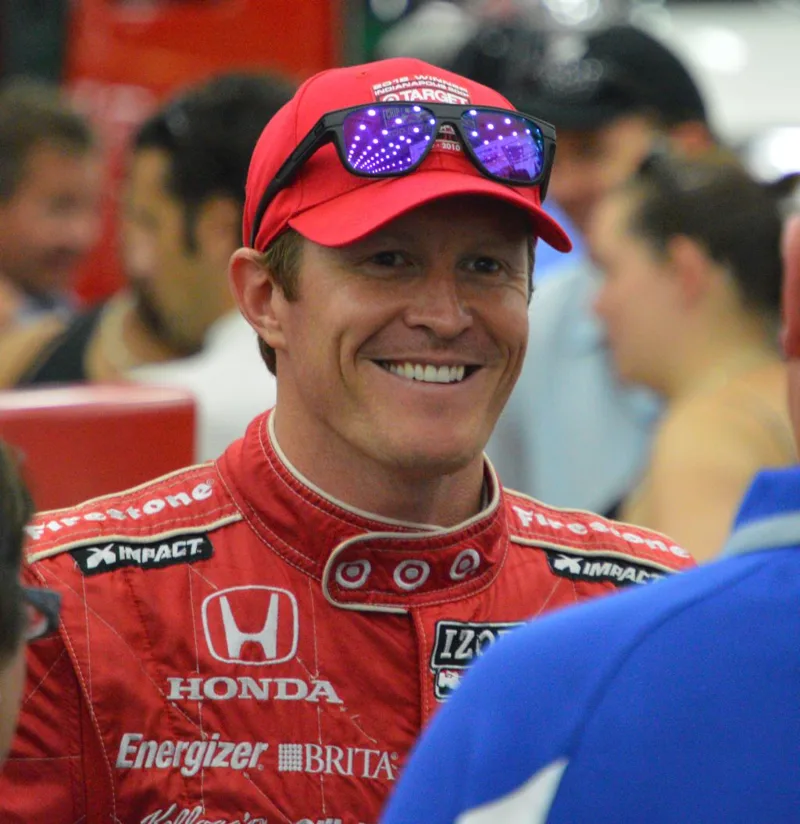
It was the 13th round of the season and the last running of the event, the eighth edition counting four years under CART. Rain shortened it from 225 laps to 215, and the result was decided by the running order on an earlier lap. Hunter-Reay took the win ahead of Oriol Servia and Scott Dixon.
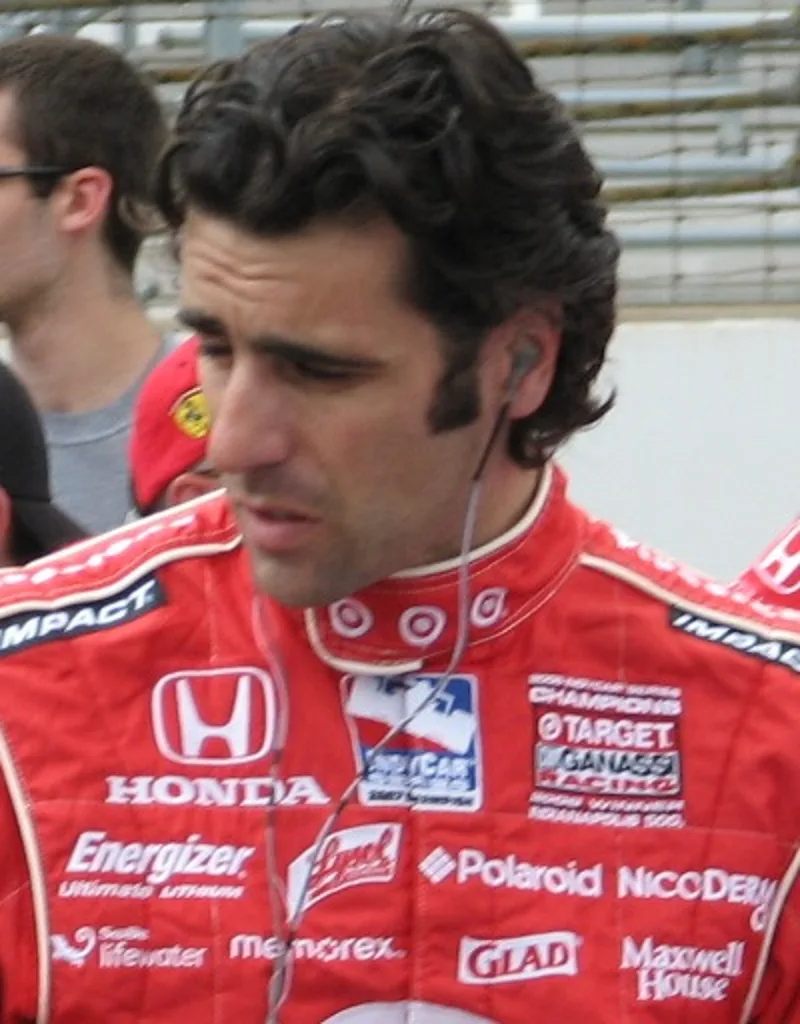
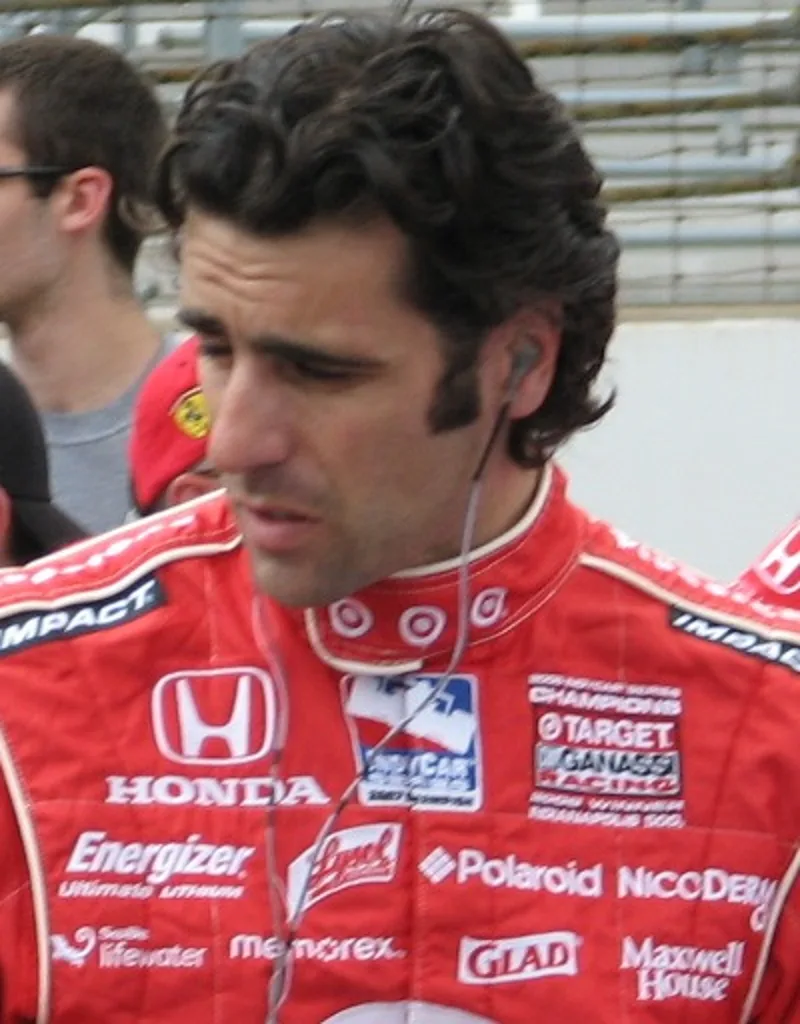
Franchitti entered as the points leader and started from pole, and he led 115 of the first 117 laps. A collision with Takuma Sato on the restart at lap 118 sent him into the inside wall and ended a run of 43 consecutive race finishes that had helped build his advantage.
A race shortened by rain, a restart nobody wanted and a finishing order rolled back to lap 215.
Why did IndyCar return to New Hampshire?
IndyCar came back to the track after a three-year deal was announced during the 2010 Lenox Industrial Tools 301 NASCAR weekend. Speedway Motorsports Inc. chief executive Bruton Smith, track vice president Jerry Gappens and IndyCar chief executive Randy Bernard made the announcement together. The track had dropped the series after 1998 because of low attendance.
The track is a four-turn oval measuring 1.703 km (1.058 mi), with variable banking of two to seven degrees in the turns. CART ran four races there between 1992 and 1995, and the Indy Racing League debuted at the venue in 1996. Gappens said the plan had been in the works since the owners bought the track in January 2008.
The race was originally set for 30 July, but it was moved to 14 August because of schedule changes for the track's NASCAR weekends. MoveThatBlock.com, a real estate website, became title sponsor in June 2011, and Franchitti completed three demonstration laps after the return was announced.
Who was in the field and what cars did they use?
There were 27 cars entered, representing 15 teams. All of the cars used a Dallara IR-05 chassis paired with a Honda Indy V8 engine.
Justin Wilson had fractured a thoracic vertebra in a practice crash at Mid-Ohio, and Tomas Scheckter took his seat in the No. 22 Dreyer and Reinbold car. At Dale Coyne Racing, Alex Lloyd replaced Sebastien Bourdais, who chose not to compete in oval races that season.
Franchitti arrived with 428 points and a 62-point lead over Will Power in the championship. Dixon was third on 335 points, Tony Kanaan had 283, and Servia had 268.
How did practice and qualifying go?
Franchitti took pole with a two-lap time of 43.1976 seconds, his 26th pole of his American open-wheel career and his second of the season. His second lap of 21.5968 seconds broke a track record that Richie Hearn had set in 1996, and the pole also earned him a bonus point.
Servia qualified second, 0.2573 seconds slower, while Kanaan took third and James Hinchcliffe fourth, the best qualifying result of his career. Helio Castroneves started his 200th race for Team Penske, and Graham Rahal's near-spin at the first turn on his opening lap dropped him to 23rd.
Pippa Mann hit the concrete wall in the second turn late in the final practice session, with an impact recorded above 110 g. She suffered a concussion and several bone injuries, and Rahal Letterman Lanigan withdrew her No. 30 car. She was ruled out of competition for four to six weeks.
Practice ran over two sessions on Saturday. The first lasted 75 minutes and Hinchcliffe was quickest at 21.6492 seconds. The second was extended by ten minutes because a support race had left the surface slippery, and Graham Rahal led it at 21.7008 seconds.
How did the race unfold?
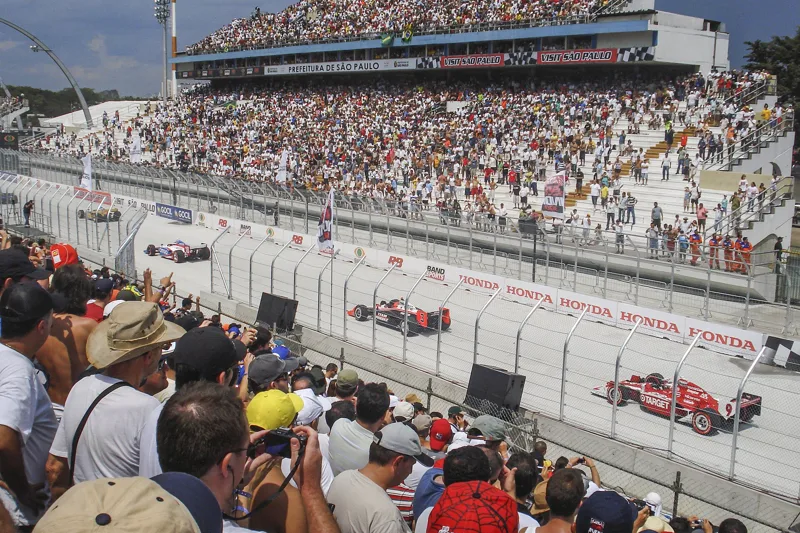
At the start Franchitti took the lead, moving clear of Servia at the first turn. Conway accelerated too hard on cold tyres in the back straight and spun, and Rahal slammed into his car. Andretti damaged his suspension on the wall, and the first caution of the day came out.
Castroneves spun into the guard rail at the exit of turn two on the next lap, but he continued. He rejoined on lap 21 in 24th place, twelve laps behind the leader, after his crew repaired his car. Hinchcliffe passed Hunter-Reay for third on lap 41 and Servia for second five laps later.
By lap 67 Franchitti's advantage over Hinchcliffe had grown to 6.6 seconds. Briscoe later passed Dixon for seventh, and the first round of green-flag stops came soon after. A third caution, for light drizzle on lap 75, led to 32 laps of yellow flags while the track slowly dried.
When racing resumed at lap 107, Franchitti was out front with Sato in pursuit, then Servia, Hunter-Reay and Hinchcliffe. Three laps after that restart, Scheckter and Kanaan both went for the same gap past the lapped Andretti, and Andretti made contact with Scheckter. Scheckter spun into Kanaan, and Kanaan flipped upside down into the barriers, though no driver was hurt.
What was the lap 118 collision?
The lap 118 restart was the turning point. Franchitti and Sato collided on the front straight, and Franchitti spun into the inside wall. Sato repaired his damaged front wing and tyre, and he rejoined in eighth place.
Green-flag racing resumed on lap 125 with Hunter-Reay, Servia, Dixon, Hinchcliffe and Briscoe in the top five. Hinchcliffe later regained fourth from Power, and Patrick passed Briscoe for fifth. Dixon set the fastest lap of the race at 22.3481 seconds.
A pit stop on lap 141 also brought drama. Tagliani's exhaust burst into flames as his crew finished servicing the car, and he had to climb out. No caution was issued for the fire.
Why was the finish controversial?
The official result used the running order from lap 215. Hunter-Reay was declared the winner, even though Servia had been ahead of him when the caution came out. The decision infuriated several teams, which had asked officials to stop the race entirely rather than restart it.
Light rain returned on lap 206 and dampened the track faster during the caution. Officials then restarted the race on lap 218, despite drivers' pleas, and Patrick lost control on the front stretch. Power and Sato spun while avoiding her, and Carpenter's car made contact with Power's right side.
Servia had already passed Hunter-Reay for the lead by the time the yellow flag was shown. Dixon also got by Hunter-Reay for second at the line. Officials placed Servia second behind Hunter-Reay on lap 220, when the red flag halted the race.
Brian Barnhart, the race director since 1997, took much of the blame for letting the race resume. Michael Andretti called it the worst officiating he had seen, and Hunter-Reay, Patrick and Jimmy Vasser also objected to the restart.
Power climbed out of his damaged car, walked into the infield to confront a pit official and displayed his middle fingers to the ABC cameras. The series put him on probation through the season and imposed a US$30,000 fine for unsportsmanlike conduct, a sum he later reduced by making public appearances for the series.
The protest and the hearing
Chip Ganassi Racing and Newman/Haas Racing filed protests within 30 minutes of the official result. Their case was that Servia and Dixon had both crossed the start-finish line ahead of Hunter-Reay, and that the rulebook contained no provision for reverting to an earlier lap.
A three-person panel sat privately in Indianapolis on 23 August. Its members were Gappens, Jeff Stoops and Rollie Helmling, the last a former USAC president. The panel upheld the result on the grounds that Barnhart had the authority to make the decision under the 2011 rulebook.
Newman/Haas co-owner Carl Haas was grateful for the hearing, but the evidence did not persuade the panel to award Servia the win. Marshall Pruett of Speed Channel argued that several scoring rules pointed the other way, and that the electronic record should have governed the result.
Top finishers and key results
| Position | Driver | Note |
|---|---|---|
| 1st | Ryan Hunter-Reay | Fifth career win and first of 2011, decided by the lap 215 order |
| 2nd | Oriol Servia | Had led on track when the caution came out |
| 3rd | Scott Dixon | Fastest lap at 22.3481 seconds |
| 4th | James Hinchcliffe | Best qualifying of his career, fourth on the grid |
| 5th | Will Power | Later placed on probation and fined US$30,000 |
What did the result mean for the championship?
Franchitti kept the championship lead with 443 points, but his advantage over Power shrank to 47 points after his lap 118 crash. Dixon was third on 370 points, and Servia moved to fourth on 308 ahead of Kanaan on 295, with five races still to run.
Randy Bernard backed Barnhart at the next race in Sonoma, though he said the series' rules would be reviewed after the season. In November 2011 Barnhart was let go as race director but stayed on as president of operations. Beaux Barfield, the American Le Mans race director since 2008, replaced him two months later.
Why did the track leave the IndyCar schedule?
The track's leadership had said a viable crowd would have been 35,000 to 40,000. Only 28,000 attended, which left a loss of nearly seven figures according to racing insiders, and the track was dropped from the 2012 schedule.
The circuit has not returned to the IndyCar calendar as of 2026, which makes the 2011 event the last IndyCar Series race held at New Hampshire Motor Speedway.