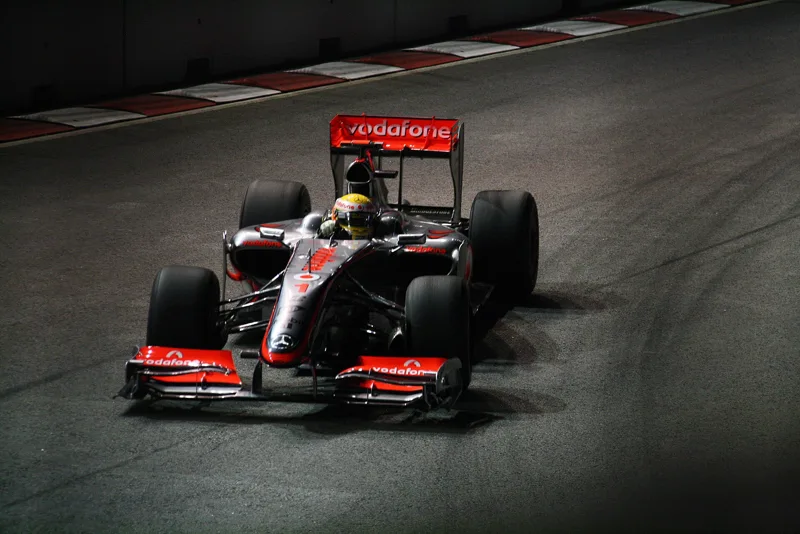
Button took pole and the win at Montmelo, Barrichello finished second, and a first-lap crash removed four cars from a race billed as the season's restart.
Brawn GP's Jenson Button took his fourth win of 2009 from pole at Montmelo, with Barrichello second 13 seconds back and Webber third for Red Bull. Barrichello lost the lead to Button on the second stop, and the race was seen as a restart.
Jenson Button won the 2009 Spanish Grand Prix at Montmelo from pole position, and Rubens Barrichello finished second to give Brawn GP a one-two. It was Button's fourth win of the season, in a race that many teams had treated as a restart after the early rounds.
Why was Barcelona seen as a restart for the season?
Most teams arrived at Catalunya with new developments, and Brawn GP made their first upgrades to the BGP 001 to remain at the front. The race was the fifth round of the season, held on 10 May, and it was widely anticipated as a restart.
A two-tier diffuser adds a second level of channels under the back of the car, helping to draw more air through the floor and generate downforce. Ferrari introduced a new two-tier diffuser on the F60 and reduced the weight of Kimi Raikkonen's car. Ferrari also ran KERS on both cars, despite earlier reliability problems with the system.
BMW Sauber raced without KERS after an aerodynamic update to the F1.09, which included a new nose, front wing, revised sidepods, a new rear wing and a lighter chassis. BMW also decided not to introduce a two-tier diffuser, because they could not exploit its benefit.
BMW had run KERS on Nick Heidfeld's car for the first four races, and on Robert Kubica's car in Bahrain. KERS, the kinetic energy recovery system, stores energy from braking and releases it as a power boost, but its weight counted against the aerodynamic gains the team wanted in Spain.
Force India abandoned KERS to focus on aerodynamic development, a choice that suited a team still building its car around the new rules, although team principal Vijay Mallya said the team might run it later in the year.
Brawn GP's one-two came from a three-stop plan that failed and a two-stop plan that won.
How did the championship stand before the race?
Button led the drivers' championship by 12 points from Barrichello, who was one point ahead of Vettel. The top six drivers came from the top three teams, Brawn, Red Bull and Toyota.
Brawn had a 22.5-point lead over Red Bull in the constructors' table, with Toyota one point further back. McLaren were the only other side in double figures, with thirteen points.
What had changed at turn nine since the previous year?
Heikki Kovalainen crashed heavily at turn nine in the previous year's race, and Mark Webber, a director of the Grand Prix Drivers' Association, which represents drivers' interests at races, said the run-off was too tight. The FIA raised the far side of the gravel trap by 1.5 metres and renewed the gravel, so that cars would be slowed more gradually.
The tyre barriers were improved to stop a car penetrating them again, and kerbing and artificial grass behind turn nine were lengthened by ten metres. Webber had warned in his regular BBC Sport column that a more serious accident could happen without changes.
Practice and qualifying in the dry
Two 90-minute sessions were held on Friday, 8 May, and a third of 60 minutes on Saturday morning. In the first practice session Button set the fastest time of 1:21.799, with Trulli second and Kubica and Heidfeld third and fourth.
In the second session Rosberg was quickest for Williams at 1.21.588, with his team-mate Nakajima second and Alonso third. In the third session Massa led Raikkonen for Ferrari, while the two Brawns were over half a second slower.
Qualifying had three parts, a knockout format in which each part removed the slowest cars until the final session decided pole and the top ten. Raikkonen was knocked out from 16th in the first part, and he later admitted that the fault was his, as he had believed his first lap was good enough to reach the next session. Fisichella, Sutil, Kovalainen and Bourdais also went out in the first part.
Buemi, Hamilton, Heidfeld, Piquet and Nakajima failed to progress from the second part. Button took pole in the final part with 1.20.527, starting his lap two seconds before the session ended, and Vettel was one tenth slower.
Barrichello was third, Massa fourth, Webber fifth, and Glock and Trulli sixth and seventh. Alonso was eighth, Rosberg ninth and Kubica tenth.
How did the race start and what happened on the first lap?
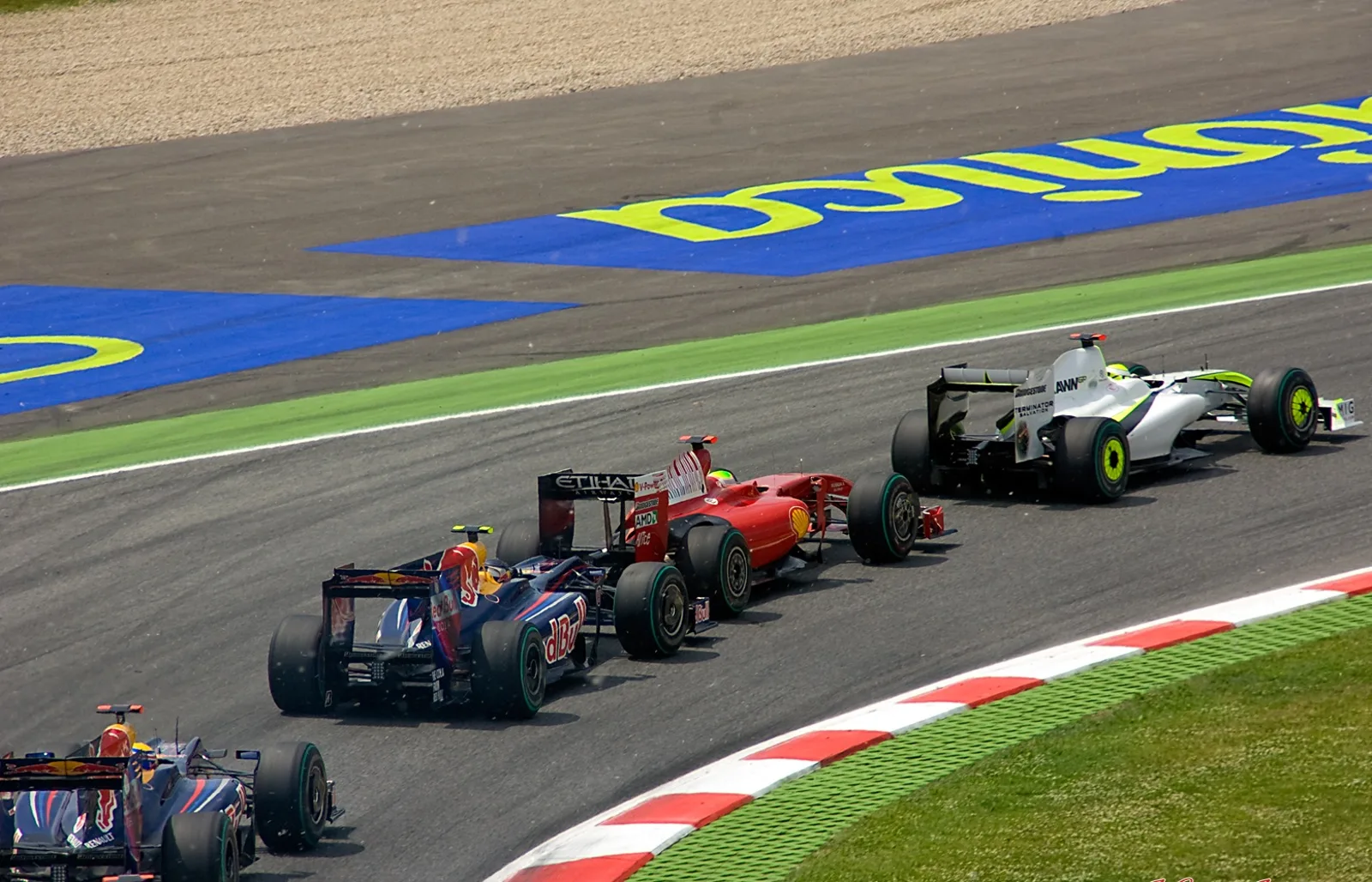
Barrichello made the strongest start and took the lead around the outside of the first corner. Button was second, and Massa gained a place with the help of KERS to take third ahead of Vettel.
Rosberg made a strong getaway from ninth and was alongside Alonso in fifth by the first braking zone. Hamilton had been forced onto the grass at the start by Nelson Piquet, and he had ended up at the back of the field.
On the first lap, Rosberg took evasive action at turn two after being squeezed by Alonso. He forced Trulli into the gravel, and Trulli spun back onto the track and hit Sutil.
Buemi braked hard to avoid Trulli, and Bourdais ran into the back of his team-mate. The first-lap incidents retired Trulli, Sutil and both Toro Rosso drivers, and four laps behind the safety car followed while debris was cleared.
Shortly after the safety car pulled in and the race restarted, Kovalainen's McLaren suffered a gearbox failure and he retired.
How did pit stops and fuel decide the order?
Barrichello pulled away from Button consistently during the first part of the race, but he ran an aggressive three-stop strategy while Button and the front runners were on two stops. A three-stop race means three sets of tyres and more time in the pits, so it only pays off if the car is fast enough between stops. Teams weighed the time lost in each stop against the speed gained from running on fresher tyres and a lighter car, and the fuel load changed how quickly a car could run late in each stint. Barrichello could not create enough of a gap before his second stop, and he lost the lead to Button. Once the rest of the field had made at least one stop, Barrichello was stuck behind Massa and Vettel, in third and fourth.
Button had started on the same three-stop plan but was switched to two stops, to avoid exiting the pits into the dirty air behind Rosberg's Williams. Red Bull chose a long second stint for Webber, which put him third ahead of the slower Ferrari of Massa.
Raikkonen retired on lap 17 with hydraulic failure. Massa had defended his position against Vettel all afternoon, helped by KERS, but late in the race Ferrari found that he was consuming more fuel than expected.
With five laps remaining, Massa was told to give fourth place to Vettel. By the final lap he had dropped so far back, saving fuel, that he lost fifth to Alonso and nearly fell behind Heidfeld, who was 30 seconds behind Vettel.
Who finished on the podium and in the top eight?
Button won the race for Brawn, and Barrichello crossed the line 13 seconds later to complete a one-two. Webber took the final podium place for Red Bull, and Vettel was fourth, with Alonso fifth and Massa sixth.
| Finish | Driver | Team | Grid |
|---|---|---|---|
| First | Jenson Button | Brawn GP | Pole |
| Second | Rubens Barrichello | Brawn GP | Third |
| Third | Mark Webber | Red Bull | Fifth |
| Fourth | Sebastian Vettel | Red Bull | Second |
| Fifth | Fernando Alonso | Renault | Eighth |
| Sixth | Felipe Massa | Ferrari | Fourth |
Heidfeld finished seventh, breaking Michael Schumacher's record of 24 consecutive finishes, while Rosberg claimed the final point in eighth. Hamilton finished ninth, one lap down, followed by Glock, Kubica, Piquet, Nakajima and Fisichella.
What did the win do to the title race?
Button's fourth win of the season came with Brawn GP securing a one-two, the result that the team had been chasing since the start of the year.
Webber said the long, heavy-fuel stint felt like towing a caravan.