Three drivers still had a chance at the 2007 championship when the lights went out in Sao Paulo, and only one of them left with it.
Kimi Raikkonen won the 2007 Brazilian Grand Prix at Sao Paulo on 21 October 2007 and took the world drivers' title by a single point from Lewis Hamilton. Felipe Massa finished second and Fernando Alonso third. Hamilton, who had led the table going into the race, was slowed by a gearbox problem and recovered to seventh.
Kimi Raikkonen won the final race of the 2007 Formula One season in Sao Paulo and, with it, the championship by one point. Three drivers went into the 71-lap finale still able to take the championship, and the race turned on a gearbox failure that sent the leader, Lewis Hamilton, from the front of the field to eighteenth. He recovered to seventh, and the title went to Raikkonen.
The race was unusual for how open it was. Not since the 1986 Australian Grand Prix had a final round carried a three-way title fight, and the result stayed in doubt until the chequered flag.
What was at stake before the 2007 Brazilian Grand Prix?
Three drivers could still win the 2007 title in Sao Paulo. Lewis Hamilton led on 107 points, four ahead of Fernando Alonso and seven ahead of Kimi Raikkonen. Hamilton, a rookie, would have been the youngest champion in the sport's history, and Alonso would have become the youngest to win three in a row.
McLaren had not won the drivers' title for eight years, and this was its chance. Ferrari had already clinched the Constructors' Championship after the Belgian Grand Prix, after McLaren had been excluded from that table over the Spygate affair. Ferrari now wanted the drivers' crown back, three years after it last held it.
Alonso's position was the simplest to describe. A third straight title would have made him the youngest driver to win three championships in succession, at 26 years and 84 days old. Hamilton's rookie title would have been a first in the sport's history, at 22 years and 287 days.
Raikkonen's chance carried its own weight. He would have become the first Finnish world champion since Mika Hakkinen in 1999. He had missed out on the title in 2003 and again in 2005, so Sao Paulo gave him another chance at the one prize he had not yet won.
Three drivers entered the last race with a title in reach, and only one of them left Sao Paulo as champion.
How did the track and the crowd change for 2007?
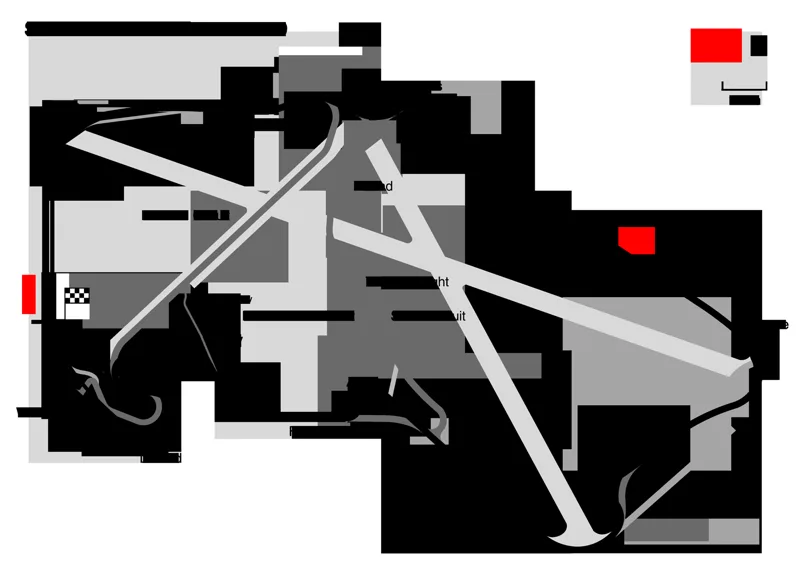
The organisers carried out the largest-scale repairs at the Autodromo Jose Carlos Pace in 35 years. The existing asphalt was replaced entirely to fix problems with the track surface, and the pit lane entrance was improved for safety. The circuit had been closed for the five months before the race to allow the work.
Getting people to the circuit was also new. The Line C metro extension opened a station beside the track on 17 October, and it carried 7,100 spectators on race day alone. Across the Friday to Sunday weekend, 18,000 or more people used it.
The grid itself had changed too. Alexander Wurz retired after the Chinese Grand Prix, and Kazuki Nakajima, son of the former driver Satoru Nakajima, took his place at Williams. Three Japanese drivers were on the entry list, a line-up that had not appeared at any Grand Prix since 1995.
How did qualifying set up the race?
Felipe Massa took pole at his home race, the ninth of his career. Lewis Hamilton was second, a record twelfth front-row start in a debut season, while Kimi Raikkonen qualified third and Fernando Alonso fourth. Adrian Sutil started from the pit lane, so only 21 cars lined up.
Further down the top ten, Nico Rosberg made it for Williams, Mark Webber took fifth for Red Bull and Nick Heidfeld sixth for BMW Sauber. Robert Kubica of BMW Sauber and Jarno Trulli in the Toyota also qualified inside the top ten.
Adrian Sutil and Sakon Yamamoto were knocked out in the first session, along with both Super Aguri cars, Heikki Kovalainen and Kazuki Nakajima, who was making his Williams debut. The second session ended the weekends of the two Hondas, the two Toro Rossos, Giancarlo Fisichella and Ralf Schumacher. Fisichella was making his last appearance for Renault, and Schumacher was making his last start of a career that was ending in the Toyota.
Ferrari drivers topped the Friday timesheets, with Raikkonen leading the first session in the wet. Hamilton led McLaren to a one-two in the second session as the track improved. Stewards later penalised McLaren, Honda and Super Aguri with a 15,000-euro fine apiece for breaching the tyre rules, after Hamilton, Button and Sato had run two sets of wet tyres where one was allowed.
What happened during the race?
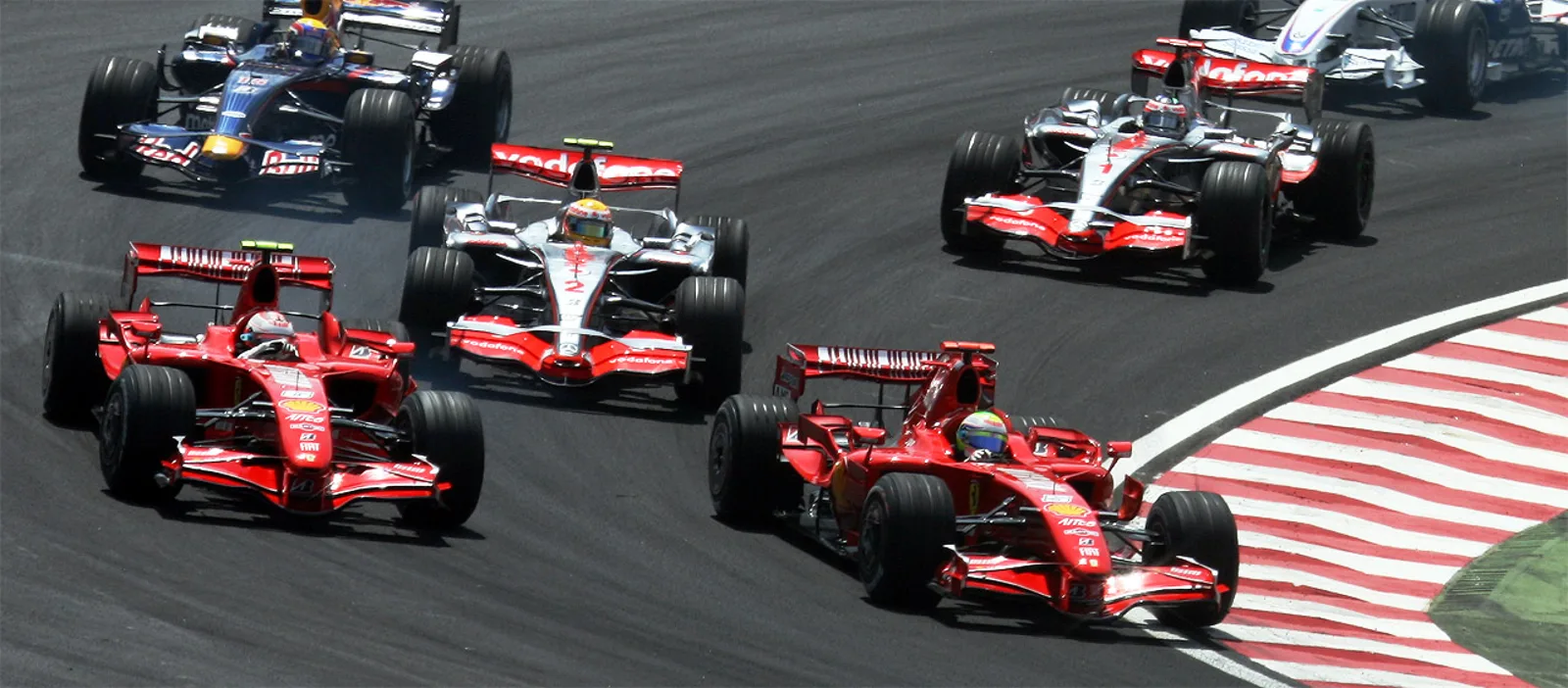
Hamilton's race turned on his first few corners. Raikkonen passed him on the outside at the start, and Alonso went around him on the inside at the third corner. On the Reta Oposta, Alonso then held the inside line against Hamilton's attack. Hamilton locked his brakes, ran off the track and rejoined eighth.
Hamilton began to recover, passing Jarno Trulli on lap two and Nick Heidfeld four laps later. Then his gearbox failed on the Reta Oposta. He could not find a gear, coasted while most of the field passed him, and after about thirty seconds he reset the car's computer and got it going again. By then he was 18th, and a fifth-place finish was the least he needed to take the title.
The front runners began stopping after 20 laps. Robert Kubica made three stops, and Massa pitted on the same lap. Raikkonen came in on lap 22 with a little more fuel than Massa, hoping to pass him after the second stop. Hamilton chose a three-stop strategy, a risk on a circuit with the longest pit lane of the season, and he carried less fuel than Alonso.
Trouble came in the pits as well. Nakajima ran wide on his first stop on lap 32 and injured two mechanics, though neither was seriously hurt. Kovalainen had a more costly lap 37, when he spun at turn three and went into the barriers. He had finished his first 16 races in a row, and a finish would have made him the first driver to complete every race of his debut season.
The second round of stops began on lap 43. Massa ran wide at the Descida do Lago and Raikkonen closed on him, and Massa pitted on lap 50. Alonso followed on lap 52 and Raikkonen on lap 53. Raikkonen set record lap times through his stop and came out in the lead, two seconds ahead of Massa.
Hamilton pitted on lap 57 and rejoined ninth, more than a minute behind Raikkonen. On lap 59 he passed David Coulthard for eighth and set the fastest lap of the race at that point. Nico Rosberg tried to pass Heidfeld on lap 61, and both ran wide, leaving Rosberg ahead and Kubica passing both for fourth. Rosberg tried the same move on Kubica on lap 70.
Who won the 2007 Brazilian Grand Prix?
Kimi Raikkonen won the race, starting third on the grid and taking his first victory in Brazil after three runner-up finishes there. Felipe Massa was second in the other Ferrari, and Alonso took third. The win also gave Raikkonen the drivers' title, by a single point over Hamilton.
Raikkonen had overturned a 17-point deficit to Hamilton across two races to reach the finale in contention. His win in Sao Paulo settled the title, by a single point.
For Ferrari, the result was a one-two finish, the fourth double of the year for the Italian team. Hamilton finished seventh, and Alonso finished third and ended the season one point behind the champion.
Was the result challenged afterwards?
The result was contested after the flag. Race stewards examined fuel irregularities at BMW Sauber and Williams, found no conclusive evidence and imposed no penalties. McLaren appealed, and the FIA rejected that appeal on 16 November 2007, confirming Raikkonen as champion.
Had the appeal succeeded, Raikkonen and Alonso would have kept their places, but Hamilton would have been promoted to fourth. That would have given him three more championship points, enough to take the title. Hamilton said he would not have wanted to win the championship that way.
Did the finale reach a wide audience?
The race drew a large television audience. In the United Kingdom it averaged nine million viewers on ITV1, the highest figure for Formula One in seven years, and its audience climbed to 10.4 million in the closing quarter-hour.
Spanish viewing was just as strong. Telecinco and TV3 together averaged 9.0 million viewers, and their audience share was 77.8% in Asturias, against 69.2% in Madrid.
What were the final results?
| Item | Detail |
|---|---|
| Date | 21 October 2007 |
| Venue | Autodromo Jose Carlos Pace, Sao Paulo |
| Race length | 71 laps |
| Pole position | Felipe Massa, Ferrari |
| Winner | Kimi Raikkonen, Ferrari |
| Second | Felipe Massa, Ferrari |
| Third | Fernando Alonso, McLaren |
| Seventh | Lewis Hamilton, McLaren |
| Other points finishers | Nico Rosberg, Robert Kubica, Nick Heidfeld and Jarno Trulli |
| Title margin | One point, Raikkonen over Hamilton |
Why did the finale mark the end of traction control?
The race was the last to be run with traction control. The system had been used in Formula One for seven seasons after the FIA made it legal and reintroduced it at the 2001 Spanish Grand Prix. The FIA banned it from 2008 and introduced a standardised engine control unit that removed electronic driver aids.
The finale also produced its own set of retirements. Rubens Barrichello did not reach the flag at his home race, a result he had last suffered in 2003. Honda and Renault each lost both of their cars, a double failure Honda had last suffered at the 2006 French Grand Prix and Renault at the 2006 Hungarian Grand Prix. For Heikki Kovalainen, the stop was his first retirement in Formula One.