A tyre dispute at Indianapolis left only three Bridgestone teams on the grid, Michael Schumacher won in front of a stunned crowd, and the fallout reached the FIA and the sport's future in America.
The 2005 United States Grand Prix was a six-car race at Indianapolis after Michelin's teams withdrew over tyre safety at Turn 13. Michael Schumacher won for Ferrari, with Barrichello second and Jordan's Tiago Monteiro third.
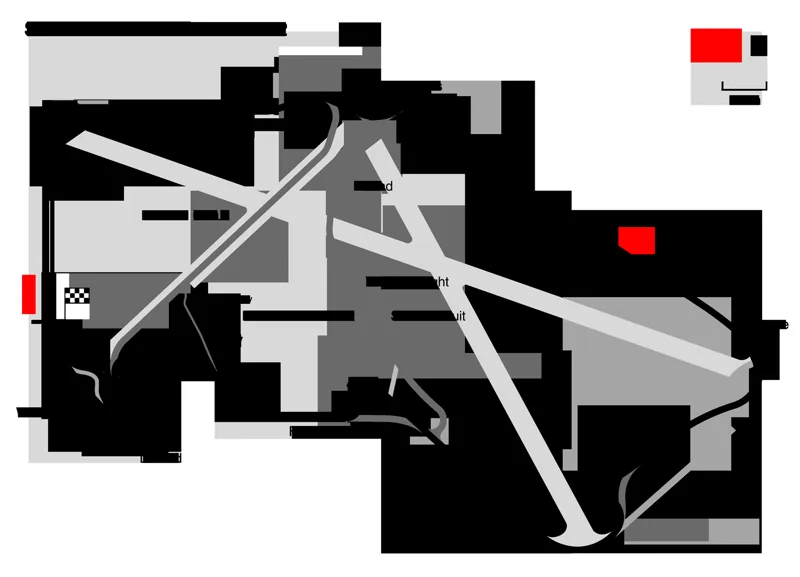
The 2005 United States Grand Prix was held on 19 June 2005 at the Indianapolis Motor Speedway. It is remembered as one of the most unusual races in Formula One history: of the twenty cars entered, only the six running Bridgestone tyres took the start, while the fourteen Michelin-shod cars completed the formation lap and then withdrew to the pit lane.
The result was a win for Michael Schumacher of Ferrari, with Rubens Barrichello second and Tiago Monteiro of Jordan third. The race did little for the sport's image in the United States, a market where it had struggled to gain a foothold, and the dispute behind it raised questions that reached the highest levels of the FIA. The sections below set out how it happened.
Why did the Michelin tyres become a problem?
On Friday 17 June, during afternoon practice, Ralf Schumacher crashed heavily at Turn 13 after a left-rear tyre failure. He was replaced for the weekend by test driver Ricardo Zonta, who suffered a similar failure in his own practice session. Ralf Schumacher had also crashed in that same spot in 2004, when he was driving for Williams.
Turn 13 was a high-speed banked corner, unusual in Formula One at the time, which placed large loads on the tyres. The section had been resurfaced after the 2004 Brickyard 400 using a rougher finish, which may have increased the stress on the rubber. Michelin, which had supplied the race since 2001, could not explain the failures.
On 18 June Michelin said it would fly in replacement tyres from its headquarters at Clermont-Ferrand, but those tyres showed the same problem when they were tested. The company then told its seven customer teams that the tyres could be safe for only about ten laps at Turn 13 unless the cars slowed through the corner.
Williams, Toyota, Sauber, Renault, Red Bull, McLaren and BAR made up the Michelin group. Their drivers depended on the Michelin tyres for the race, which left them with a serious problem when the tyre supplier's own advice implied a speed restriction the race officials would not accept.
Only six cars started, the crowd demanded refunds, and the winner's name was Schumacher, in a race that few fans in Indianapolis will forget.
How did the FIA and the teams fail to reach a compromise?
Michelin's sporting director and its technical representative wrote to FIA race director Charlie Whiting on 18 June. They said they did not know why the Toyota tyres had failed and could not guarantee safety beyond ten laps without a change at Turn 13. Whiting replied on race day, rejecting the idea of new tyres as a breach of the rules and calling a chicane out of the question.
Whiting also made clear that changing the track layout would turn the race into a non-championship event. He offered the Michelin teams a choice: reduce speed through Turn 13, run tyres of a different specification at a penalty, or change tyres repeatedly. He described the Michelin teams' proposals as grossly unfair to the Bridgestone teams, who had brought tyres that worked.
The race morning brought a meeting called for the late morning. Paul Stoddart, owner of Minardi, later published his account of it. Among those in the room were Tony George of the Speedway, two of Michelin's senior staff, Bernie Ecclestone, the team bosses and the Michelin engineers. Ferrari's Jean Todt was not there.
The Michelin representatives asked for a chicane at Turn 13. The meeting rejected the FIA's speed-limit option because of the risk of accidents, and it also dismissed pit stops every ten laps. The group agreed that a chicane was the best solution, but Ecclestone returned to say that Todt had refused to agree, arguing that the problem was the FIA's and Michelin's and not his.
What did the team principals decide on race morning?
After Todt's refusal, the group considered other options, including a non-championship race and a race in which the Michelin cars would be unable to earn points. They finally settled on fitting the chicane and staging an unsanctioned race, with delegates appointed to fill the officials' roles because the FIA's staff would withdraw if the race went ahead against its instructions.
The team principals told their drivers that, without FIA scrutineers, without FIA officials the technical rules could not be policed, and that the drivers should behave honourably in the interest of a good race. Stoddart later wrote that no driver had disagreed with the plan. The Ferrari drivers left the decision to Todt, and nine team principals resolved not to race unless the FIA changed its position.
Renault's Flavio Briatore was then on the phone to FIA president Max Mosley, who had reportedly rejected every proposal and warned that any non-championship race or change to the circuit would threaten the US Grand Prix and all FIA-regulated motorsport in the United States. The FIA later denied that such a threat was made.
Why did the Michelin teams stop before the race?
With no compromise available, the Michelin team principals and Stoddart discussed whether their cars should take the grid. They agreed that the cars would complete the formation lap but could not race. Jordan's Colin Kolles then said that his cars would race after all, despite earlier agreeing not to. A Bridgestone representative asked Stoddart to race as well, and he chose to allow his drivers to start.
On the formation lap the twenty cars set off, as they normally would,. At Turn 13, where the pit lane begins, the Michelin teams returned to their pit boxes, leaving six Bridgestone cars from Ferrari, Jordan and Minardi to begin the race. The decision angered fans, who had not been told of the plan. The BBC radio broadcaster Maurice Hamilton called it the strangest race he had covered.
How did the six-car race unfold?
Michael Schumacher and Rubens Barrichello started at the front, from the grid positions they had qualified in. Tiago Monteiro and Narain Karthikeyan, both for Jordan, lined up behind them, with Christijan Albers and Patrick Friesacher of Minardi at the back. Schumacher kept the lead, and the only change in position came when Albers passed Karthikeyan before losing the place again.
The two Ferraris pulled away quickly. Estimates put the crowd at between 100,000 and 130,000, and by lap 10 many of them had left the grandstands. Thousands went to the ticket office demanding refunds, police were called to keep order, and some spectators threw bottles and cans on the track.
There was no passing except on lapped traffic. Albers ran a three-stop race while the other drivers stopped twice. The lead changed on lap 26, when Schumacher's 32-second stop put Barrichello ahead, and again on lap 51, when Schumacher made the quickest stop of the race at 23.615 seconds and exited the pits level with Barrichello. That manoeuvre pushed Barrichello onto the grass at Turn One, and race officials did not investigate it.
Both Ferraris were then reminded over the radio not to crash out, and they settled into a slower rhythm. Schumacher won by 1.522 seconds from Barrichello. Monteiro and Karthikeyan finished more than a lap down in third and fourth, and Albers and Friesacher took fifth and sixth, two laps behind the winner.
What was the result of the race?
The race was Schumacher's 84th career win and his fourth in the United States Grand Prix, which made it his third straight victory at the event. His win lifted him from fifth to third in the drivers' table, with 34 points, behind Fernando Alonso and Kimi Raikkonen, who stayed first and second on 59 and 37 points.
Monteiro's third place was his only podium in Formula One and the last podium the Jordan team would earn. Karthikeyan's fourth place gave India its only Formula One points finish to date by an Indian driver, and it was the last time Minardi scored points in Formula One.
Every Jordan and Minardi driver scored their first Formula One points that day. At the podium ceremony none of the scheduled dignitaries attended, and the Ferrari team left quietly.
The final classification was the smallest number of finishers in a major open-wheel race at Indianapolis since the 500-mile race began. The earlier record low was seven finishers in 1966, when a first-lap accident eliminated a third of the field.
What were the consequences for the sport?
Bernie Ecclestone said the outlook for Formula One in America and for Michelin's role in the sport was not good, and he said the incident was not the fault of the teams. David Coulthard said the race threw the future of the event into doubt. Stoddart described it as a farce and called for Mosley to resign.
The FIA published a justification of its position, arguing that the rules could not change because a team had brought the wrong equipment, and that a chicane on an untested layout would have exposed the FIA to serious safety and legal risk. It charged the seven Michelin teams under article 151c of the International Sporting Code, citing their failure to supply suitable tyres and their refusal to race.
On 29 June the council ruled against the teams on the tyre question, but accepted strong mitigating circumstances, and of refusing to allow their cars to start. It did not find them guilty of the remaining charges. On 22 July the council reversed its earlier decision and cleared the Michelin teams. Christian Horner and Ron Dennis had argued that Indiana state law left the teams with no option but to withdraw.
Michelin offered refund cheques to every ticket holder and purchased 20,000 seats for the 2006 US race. Ron Dennis suggested an extra race at Indianapolis after the Chinese Grand Prix, but Tony George ruled that out, stating that there would be no race at the Speedway that autumn.
Career summary
| Position | Driver | Team | Notes |
|---|---|---|---|
| 1 | Michael Schumacher | Ferrari | Quickest pit stop of the race, on lap 51 |
| 2 | Rubens Barrichello | Ferrari | Led after lap 26 stop |
| 3 | Tiago Monteiro | Jordan | Only Formula One podium |
| 4 | Narain Karthikeyan | Jordan | First and only Indian points finish |
| 5 | Christijan Albers | Minardi | Only three-stop car |
| 6 | Patrick Friesacher | Minardi | Two laps behind the winner |