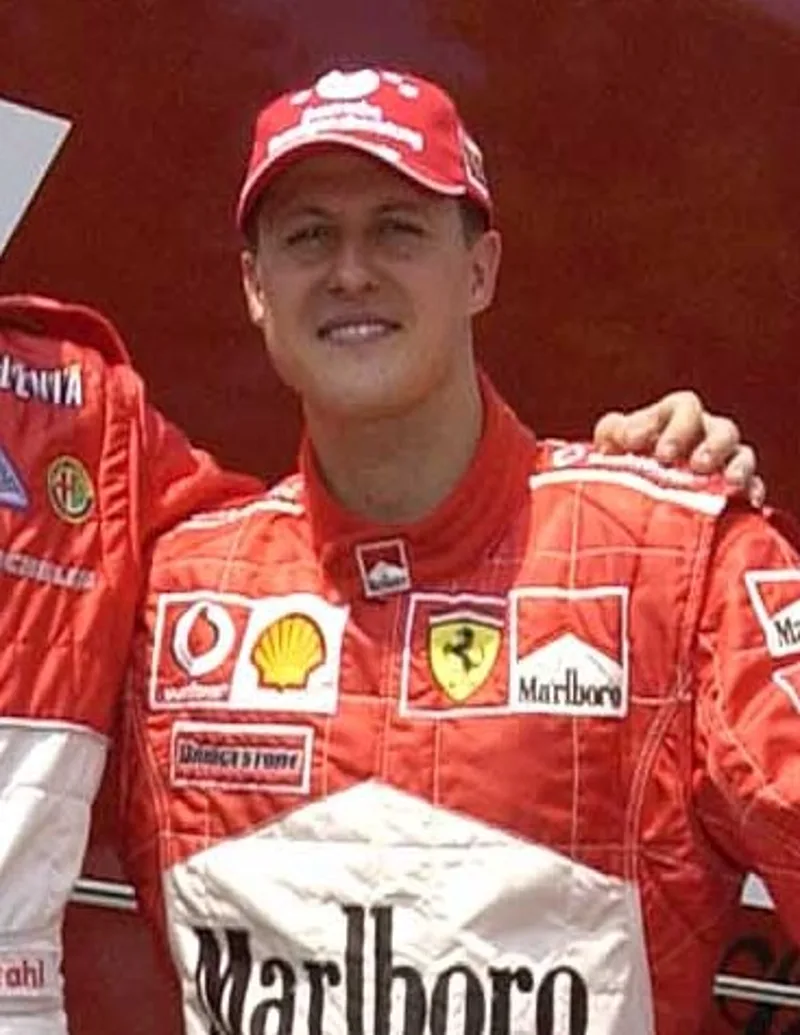
Fernando Alonso became the youngest Grand Prix winner in history, leading almost every lap from pole on the newly reshaped Hungaroring.
Held on 24 August 2003 at the Hungaroring, the race was won by Renault's Fernando Alonso from pole, with McLaren's Kimi Raikkonen second and Williams' Juan Pablo Montoya third. Only one lap of the 70 went to another driver, and the result gave Alonso his first Grand Prix victory.
Fernando Alonso won the 2003 Hungarian Grand Prix for Renault from pole position, becoming the youngest Grand Prix winner in the history of the sport. Only a single lap of the 70 went to another driver, while Kimi Raikkonen and Juan Pablo Montoya completed the podium. The result arrived at the first race on the newly renovated Hungaroring, which had been reshaped to encourage overtaking.
What was the 2003 Hungarian Grand Prix?
The race was the 13th of 16 rounds in the 2003 season and the 18th Hungarian Grand Prix in the championship. It was held on 24 August at the Hungaroring in Mogyorod, Pest, where Alonso's victory was his first in Formula One. He had already made three podium finishes that year, and he believed the Michelin tyres would suit the high-downforce circuit.
Michael Schumacher led the drivers' table with 71 points going into the race, six more than Montoya of Williams and nine ahead of McLaren's Raikkonen. Ralf Schumacher was fourth on 53 points, four more than Ferrari's Barrichello. Ferrari led Williams by two points in the constructors' table, with McLaren third and Renault fourth.
Montoya had won the German Grand Prix before Hungary and had six consecutive podium finishes to his name. He was the bookmakers' favourite, and he was confident his car would suit the circuit after improvements.
A reshaped circuit, a crash-hit weekend and a 22-year-old who led nearly every lap from pole.
What changed at the Hungaroring?
The circuit had been modified to encourage overtaking from 2003 onwards. The FIA, Formula One Management and the Hungarian national federation agreed to lengthen the lap from 3.971 km (2.467 mi) to 4.381 km (2.722 mi). The main straight gained 202 m (663 ft), and the first turn was reshaped into a 145-degree corner.
The chicane at turn 11 went, which opened a longer run from turn 10 to a fresh 90-degree bend with tarmac run-off on the outside. The circuit then rejoined the old layout after a short straight. The changes added more than six seconds to the lap time, and they received a mixed reception from the teams.
Willy Rampf, Sauber's technical director, believed the chances of overtaking had improved, but he thought most passes would still come during pit stop windows. Alonso expected turn one to produce the most overtakes, and Toyota's Olivier Panis did not think the new layout would change the circuit's low-speed, high-downforce character.
How did testing and practice go?
A private test session on Friday morning, reserved for teams with limited testing, saw Alonso fastest at 1:22.230, ahead of Allan McNish and Jarno Trulli, who took the first three places for Renault. Mark Webber and Justin Wilson were fourth and fifth for Jaguar. Fisichella suffered an engine failure during the test and returned later with a rear wheel lock.
The first practice session on Friday was dry and sunny, and Panis set the fastest time at 1:21.770, 0.694 seconds ahead of Trulli. In the second session Alonso set the best time at 1:22.950, 0.324 seconds faster than Michael Schumacher. Several drivers went off the track in the dust, and the circuit proved slippery.
The weekend was marred by a serious accident for Ralph Firman. His Jordan's rear wing dislodged on the straight, and his car went backwards across the grass before hitting the tyre barrier sideways at turn five. The impact was measured at 46G and knocked him unconscious. Practice was stopped for 28 minutes, and Firman was found to have a mild concussion, a bruised ankle and a fractured left heel.
Zsolt Baumgartner replaced him after the Formula One Commission's bureau and stewards waived the 14-day super-licence rule, because he had completed more than 300 km (190 mi) of testing. Ralf Schumacher led the final practice session at 1:21.939, with his brother 0.374 seconds slower, and Michael Schumacher was fastest in the 15-minute warm-up at 1:22.210.
How did qualifying shape the grid?
Qualifying was held in two one-hour sessions, with the running order in the first set by the championship standings and reversed in the second. Trulli took provisional pole in the first session at 1:22.358, but Alonso went quicker in the second session at 1:21.688 to take pole, his second of the season and his second in his career.
Webber drove a spare Jaguar and took third in the first session, and he equalled his best qualifying result in the second, also third. Montoya was fourth, Barrichello fifth and Trulli sixth. Raikkonen was seventh, and Michael Schumacher eighth after oversteer left him without grip at the front of his Ferrari.
Baumgartner set a lap in his maiden Grand Prix, starting 19th after losing a second saving fuel, while Kiesa finished 20th and last after excessive understeer and rear instability caused by a chassis setup fault. Da Matta had been the slowest in the first session after spinning at turn 13.
How did Alonso control the race?
The race began at 14:00 in hot, dry conditions, with air at 34 to 36 C (93 to 97 F) and the track between 47 and 52 C (117 and 126 F). Alonso made a quick getaway on the clean side of the track and led the field into turn one using Renault's launch control, while the Williams drivers struggled on the dirty side.
Ralf Schumacher spun at the left-hand turn two after outbraking himself, and he fell to 19th. Yellow flags came out when Da Matta stalled on the grid. At the end of the first lap Alonso led Webber by 1.96 seconds, followed by Barrichello, Raikkonen, Trulli, Coulthard, Michael Schumacher and Montoya.
On lap two Barrichello tried to pass Webber by braking late for the turn six chicane. He missed the turn-in, and he gave second place back to avoid a penalty. Raikkonen and Trulli went through, and Barrichello dropped from third to fifth.
The first stops began on lap 12. Alonso pitted on lap 13 and his stop took 6.4 seconds, but Webber's stop that lap dropped him to 12th. Raikkonen came in on lap 15, which handed the lead back to Alonso, and a series of refuelling stops among the top ten followed. Coulthard made his last fuel stop on lap 18.
Which early retirements shaped the race?
Barrichello's car retired early on lap 20 when his left-rear suspension failed under braking for turn one. The broken top wishbone let the wheel detach, and the Ferrari ran into the turn one tyre barrier. Barrichello was unhurt, but he criticised the small run-off area there.
Villeneuve retired on lap 15 after his hydraulic system lost pressure while he was trying to rejoin the track. Fisichella retired three laps after Da Matta had overtaken Kiesa for 17th, with an engine failure. Frentzen later ran out of fuel on lap 48 after a radio failure meant he did not enter the pit lane.
Barrichello's accident was not treated as a reason for a safety car. Ferrari later determined that his suspension probably failed after he had mounted the kerbs at an unusual angle when close to the car ahead, between turns five and six.
How did the pit stops play out?
The second round of stops started on lap 30. Ralf Schumacher passed his brother at turn one that lap, and Alonso made his second stop while keeping the lead. Webber stopped on lap 31 and fell from third to ninth, and Trulli came in on lap 32, moving Montoya and Ralf Schumacher ahead of him.
Raikkonen made a second stop on lap 33 and fell behind both Williams drivers. Panis retired on lap 34 with a gearbox fault after completing his second stop. Montoya stopped at the end of lap 35, rejoined fifth and then had a clear track ahead of him, setting the fastest lap of the race.
Michael Schumacher made his second stop on lap 39 and rejoined eighth, behind Trulli. Coulthard made his last stop on lap 43 and rejoined between Trulli and Michael Schumacher. Wilson retired that lap with an engine failure. Alonso made his third and final stop on lap 49, and the order at the front did not change.
Michael Schumacher's race ended in the pit lane. He stalled after running out of fuel on his second stop, which left him at the back of the points. He ended eighth, one lap behind the winner.
What records did Alonso set?
This was Alonso's first of 32 Formula One victories, and it made him the first Spaniard to take a Grand Prix win. He was 22 years and 26 days old, which made him the youngest winner in the history of the sport, beating Bruce McLaren's record from the 1959 United States Grand Prix at Sebring by 78 days.
Alonso was also the eighth different winner in the 13 races held so far that season, and the victory was the only one he would take at the Hungaroring. Raikkonen finished second for the fifth time in 2003, 16.7 seconds behind, and Montoya completed the podium in third.
Ralf Schumacher chased Montoya in the closing laps and finished fourth, just over a second behind. Coulthard's two-stop strategy gave him fifth, and Webber took sixth for Jaguar, with Trulli seventh after complaining his tyres had lost grip at the start of each stint.
How did the drivers and teams react?
Alonso called the win a dream come true, and he said his next target was to fight for the world championship as soon as possible. His father Luis said the win would have bigger repercussions in Spain than anything, while his manager Adrian Campos called him the perfect machine for the job.
Ferrari's team manager Jean Todt called the team's performance disappointing, and Niki Lauda described the race as a disaster for Ferrari. Michael Schumacher said it had not been a great race for him, because he had been impeded by another car and could not run at his fastest pace.
Ralf Schumacher said his chances of the title were pretty distant. Webber said the race had been hard on the car, the tyres and the driver, but that the reward had been worth it. Barrichello was unhappy that he had not received medical attention after his accident, and he criticised the small run-off at turn one for safety.
What did the result mean for the championship?
The win left Michael Schumacher, Montoya and Raikkonen within two points of one another going into the last three races. Schumacher led by one point over Montoya. Alonso's maiden win moved him to fifth on 54 points, four behind Ralf Schumacher.
In the constructors' table Williams took the lead from Ferrari for the first time that season, with 129 points and an eight-point advantage. McLaren was third, 14 points behind Williams.
| Position | Driver | Team | Note |
|---|---|---|---|
| 1 | Fernando Alonso | Renault | Pole and win; first of 32 Grand Prix wins |
| 2 | Kimi Raikkonen | McLaren | 16.7 seconds behind |
| 3 | Juan Pablo Montoya | Williams | Third, completing the podium |
| 4 | Ralf Schumacher | Williams | Just over a second behind Montoya |
| 5 | David Coulthard | McLaren | Two-stop strategy from ninth on the grid |
| 6 | Mark Webber | Jaguar | Sixth, after a third-place qualifying effort |