Ross Brawn's plan gave Michael Schumacher the lead after Mika Hakkinen had led 44 laps from pole, a third straight win that kept the title in Ferrari's hands.
The 2000 San Marino Grand Prix was staged at Imola on 9 April 2000 as round three of the season. Michael Schumacher won the 62-lap race for Ferrari from second on the grid, finishing 1.1 seconds ahead of Mika Hakkinen of McLaren, with David Coulthard third.
Michael Schumacher won the 2000 San Marino Grand Prix at Imola, but the result turned on a pit wall decision as much as on driving. Mika Hakkinen led the first 44 laps from pole, before Ferrari's strategy let Schumacher stay out longer and take the lead. It was Schumacher's third successive win, and it kept the drivers' title fight in Ferrari's favour.
What was the 2000 San Marino Grand Prix?
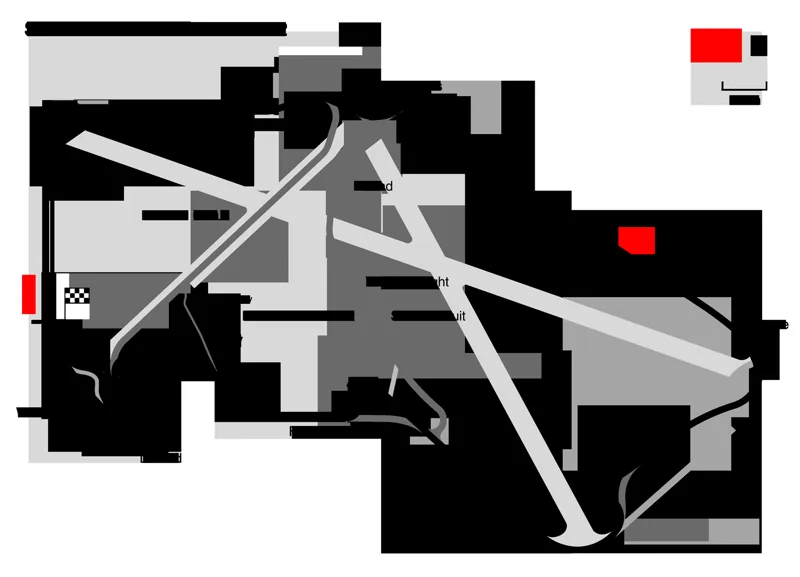
The race was the 20th running of the event and the third of seventeen rounds in the season. It took place on 9 April 2000 over 62 laps at the Autodromo Enzo e Dino Ferrari, a 17-turn circuit that measures 4.933 km (3.065 mi) and runs anti-clockwise. The race carries San Marino's name, but it is held in Italy because San Marino had no track of international standard.
Eleven teams ran two drivers each, with no changes to the season entry list. Bridgestone was the sole tyre supplier, bringing soft and medium dry compounds along with wet-weather tyres. Imola was also the first European round of the year.
For the race the organisers installed an Impact Protection Safety barrier over a 60 ft (18 m) section of tyre barrier outside the Rivazza turn, a safety measure added at the Rivazza turn for this race.
Strategy, not outright pace, settled Imola, and Ferrari's pit calls gave Michael Schumacher a third straight win.
How did the teams prepare for the race?
Several teams tested at Silverstone between 28 and 30 March, while Benetton spent a day at a dragstrip testing a new clutch. Ferrari's test driver Luca Badoer ran standing starts for four days at the private Fiorano circuit, and Michael Schumacher spent three days on aerodynamics and set-up there. Minardi did not test at all, choosing to focus on chassis construction and building a research department.
Ferrari had won the first two races of the season, in Australia and Brazil, and it arrived at Imola with a strong advantage in both championships. McLaren had scored no points, after a technical infringement cost David Coulthard second place in Brazil. Schumacher was cautious about the lead, saying the title had only just started.
Teams tuned their cars for the circuit's heavy braking. Ferrari used lightweight brake discs only in Saturday morning practice. Schumacher ran a new engine for qualifying alone and a new rear wing specification. Sauber changed its rear wing after component problems had forced it out of the previous race.
How did practice and qualifying set the grid?
Mika Hakkinen took pole with a lap of 1:24.714 in the one-hour session, his third pole of the season and the 24th of his career. He ran soft tyres and a detuned engine for reliability. Schumacher was 0.091 seconds slower in second, after he drifted wide at the left-hand Rivazza corner on his final run.
Coulthard qualified third but could not improve, because a driver error on his final run took him wide before the second Rivazza turn. Rubens Barrichello was fourth despite handling troubles that caused severe understeer, and Ralf Schumacher was fifth after an engine issue ended his last run. Heinz-Harald Frentzen took sixth, Eddie Irvine seventh, Jarno Trulli eighth, Jacques Villeneuve ninth and Pedro Diniz tenth.
Further back, Alexander Wurz took 11th with grip problems, while Pedro de la Rosa was 13th and happy with his car's balance. Johnny Herbert qualified 17th after losing his exhaust, which drained engine power, and Jenson Button took 18th on medium tyres for the final 15 minutes. Button was unfamiliar with the track after hydraulic issues earlier in the day.
The lower part of the grid had its own problems. Giancarlo Fisichella managed 19th with grip issues, Mazzacane was the faster Minardi in 20th, and Marc Gene had to wait until Mazzacane had finished his assigned laps before using the second car. Heidfeld completed the grid in 22nd, driving the spare Prost set up for Alesi, after his race car's engine failed to start following a pit stop.
Practice had given an early hint of the pace. Schumacher set the first session's fastest lap at 1:27.270, almost a second quicker than the 1999 pole lap, and he was fastest again in the second session at 1:26.944. Hakkinen finished the final practice session 0.112 seconds faster than Schumacher, who had gone sideways at the Variante Alta.
Several drivers had trouble in practice. Ralf Schumacher abandoned his car at the side of the track after a throttle butterfly fault, and Marc Gene heavily damaged the front of his Minardi against the tyre wall at Piratella. Gene was unhurt but went to the medical centre for checks. Villeneuve changed to fresh tyres, drove too fast and spun into the gravel at the Aqua Minerale corner, ending his session early.
How did the race begin?
The race started at 14:00 local time in cool, overcast weather, with a 60 percent chance of rain. Heidfeld's engine stalled on the formation lap, and he was forced to start from the pit lane. Hakkinen kept the lead into the Tamburello corner, but Schumacher made a poor getaway because of wheelspin.
Barrichello moved into third on the outside of Coulthard, and he appeared to hold back against his teammate, which kept Schumacher in second and stopped Coulthard from passing. Villeneuve made the best start, passing four cars to go from ninth to fifth. Ralf Schumacher lost momentum after running onto the grass to avoid Coulthard, and he fell from fifth to ninth.
At the end of the first lap Hakkinen led Schumacher by 1.2 seconds. Barrichello, Coulthard, Villeneuve and Trulli followed. Frentzen then retired on lap four, after a gearshift selection fault left him unable to change down from sixth.
Why did Ferrari's strategy decide the race?
Hakkinen led the first 44 laps, but the strategy Ferrari technical director Ross Brawn had planned gave Schumacher an edge. The team ran Schumacher on a longer second stint, four laps longer than Hakkinen, and the extra distance allowed him to pass during the second round of pit stops.
Trulli made the first stop of the leaders on lap 24, and it cost him only 9.3 seconds. Hakkinen and Schumacher pitted at the end of lap 27, with Hakkinen holding the lead because he had less fuel. Barrichello stopped on lap 28, and by the end of the first round of stops Hakkinen led Schumacher by 4.5 seconds, with Barrichello 35 seconds further back.
Hakkinen then had trouble of his own. He ran over debris that damaged the air splitter under his McLaren, which made the car harder to handle, and his lead over Schumacher had grown to nearly five seconds by lap 39. Two laps later, on the run to Tamburello, an electronic fault briefly shut down his engine, cutting his lead by two seconds.
Hakkinen made his second stop at the end of lap 44, losing 8.3 seconds and dropping behind Schumacher. Schumacher's own second stop, on lap 48, lasted 6.2 seconds because less fuel was needed. Hakkinen closed to 1.1 seconds at the flag, but the strategy had already decided the order.
Which retirements and incidents shaped the race?
Several drivers fell out early or in the middle of the race. Frentzen retired on lap four, Button's engine failed on lap six, and Heidfeld lost hydraulic pressure and stopped on lap 24. Ralf Schumacher retired on lap 47 with a fuel pick-up problem, and Trulli finished his race stuck in sixth gear on lap 61.
Zonta spun at the Villeneuve chicane on lap 39 and recovered. Verstappen was given a ten-second stop-and-go penalty on lap 23 for blocking faster cars. Irvine accidentally pressed his speed limiter button on lap 21, and his race was disrupted by a clutch problem later on.
De la Rosa's left-rear suspension failed on lap 52 and sent him into the barrier at Acqua Minerale. Barrichello's seat belt partly broke, which left him moving around in the cockpit and losing pace. Hakkinen's race was also made harder by his engine cutting out, which he later blamed for his defeat alongside the strategy.
How did the teams react after the race?
Michael Schumacher credited the strategy and said the extra laps had been crucial, while Mika Hakkinen said he was extremely disappointed to lose the win through strategy. Ferrari's president praised Ross Brawn for the plan, and McLaren's Ron Dennis said second and third were not the anticipated results.
Schumacher said the team's approach had helped him win, and he dedicated the result to the tifosi, the Italian fans at Imola. Hakkinen admitted that debris on the track and his engine cutting out had also contributed, but he praised his mechanics for their work over the weekend.
Luca di Montezemolo, Ferrari's president, praised Schumacher's work and Brawn's race-winning plan, saying that Hakkinen had driven very well. Jean Todt said the road ahead would be a long, hard one, but that the win was an incentive to work even harder.
Barrichello was dissatisfied, saying his settings had never been right and that the weekend had been hard work. Dennis said McLaren still had the capacity to win races in the remaining rounds and was looking forward to the British Grand Prix that followed.
Norbert Haug, Mercedes-Benz's motorsport director, called McLaren's performance a very mature effort and said the days of cars stranded by engine failures were over. Villeneuve said the race showed that BAR could be competitive and perhaps the best of the rest behind Ferrari and McLaren, and Salo was pleased to take a point for sixth.
What did the result mean for the championship?
Schumacher's win gave him a maximum of 30 championship points for the weekend and a 21-point lead over Barrichello, who moved up to second with 9 points. Fisichella, who scored no points, was 22 points behind Schumacher. Hakkinen and Ralf Schumacher were level on six points each.
In the constructors' table, McLaren scored its first points of the season and moved into second place with 10 points. Ferrari led with 39 points, 29 ahead of McLaren, with 14 races still to run. Benetton had 8 points and Jordan and Williams 7 each.
Race results at a glance
| Position | Driver | Team | Note |
|---|---|---|---|
| 1 | Michael Schumacher | Ferrari | Third straight win and 38th career victory, 1.1 seconds clear |
| 2 | Mika Hakkinen | McLaren | Pole sitter who led the first 44 laps |
| 3 | David Coulthard | McLaren | Finished 50 seconds behind the winner |
| 4 | Rubens Barrichello | Ferrari | Last driver on the winner's lap |
| 5 | Jacques Villeneuve | BAR | Held off Salo at the finish |
| 6 | Mika Salo | Sauber | Sauber's first championship point of the season |