Coulthard took pole for McLaren, but rain at the Nurburgring shaped the strategy and Michael Schumacher came through to win for Ferrari.
The 2000 European Grand Prix was won by Michael Schumacher for Ferrari, with Mika Hakkinen second and David Coulthard third for McLaren. Rain at the Nurburgring forced a late change of tyres, and the 67-lap race gave Schumacher his fourth win of the season.
The 2000 European Grand Prix was a Formula One race held on 21 May 2000 at the Nurburgring in Germany before a crowd of 142,000. David Coulthard took pole for McLaren, but heavy rain during the race turned the strategy on its head, and Michael Schumacher came through to win for Ferrari.
Who won the 2000 European Grand Prix?
Michael Schumacher won the 67-lap race for Ferrari after starting from second on the grid. Mika Hakkinen finished second for McLaren, 13.822 seconds behind, and David Coulthard took third one lap later. It was the fourth win of Schumacher's season and his 39th overall in Formula One.
Schumacher's win extended his lead over Hakkinen in the drivers' table to 18 points. Coulthard stayed third and widened his gap to Rubens Barrichello, who was fourth in the second Ferrari. Ferrari added to their constructors' lead over McLaren, which was now ten points.
Rain at the Nurburgring rewarded the bold tyre calls and gave Schumacher a win that kept Ferrari ahead of McLaren in the constructors' table.
What was the championship situation before Nurburgring?
Schumacher led the drivers' championship with 36 points as the race began, and Hakkinen was second with 22. Coulthard was third, two points further back, while Barrichello had 13 and Ralf Schumacher had 12. Ferrari led the constructors' table with 49 points, seven ahead of McLaren.
Schumacher had won the season's first three races, and Hakkinen had responded with a win in Spain, after Coulthard had taken the British race. Hakkinen said the gap was not significant with twelve races still to run, and Coulthard said he would not let three broken ribs, from a plane crash in Lyon, slow him down.
Why was the race moved to May?
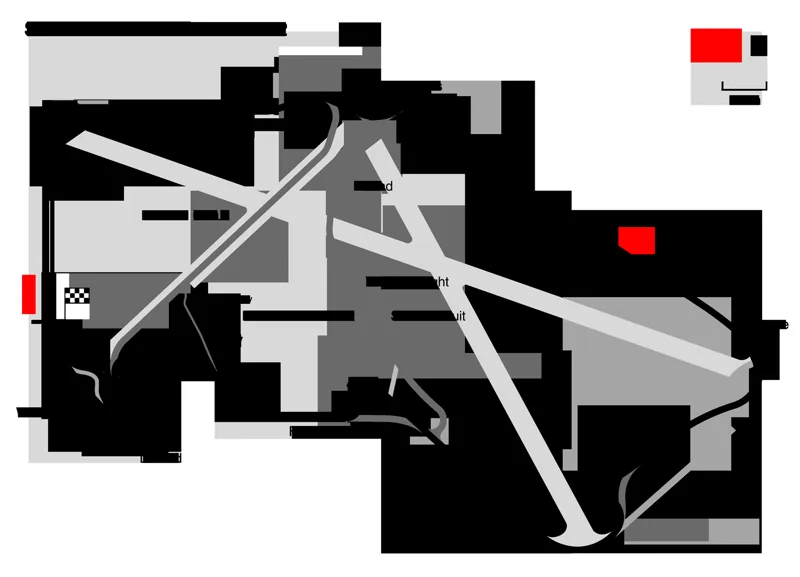
The race was held at the Nurburgring, a 13-turn circuit in the German town of Nurburg, Rhineland-Palatinate. It had been moved from September to May because of the new United States Grand Prix on the calendar. It was the fifth European Grand Prix held at the Nurburgring.
Bridgestone was the sole tyre supplier and brought soft and extra soft dry compounds, along with soft and hard wet-weather compounds. The choice of tyres mattered a great deal on a track that could dry or flood quickly.
How did practice go in changing weather?
Practice on Friday took place in cool and changeable weather. Overnight rain left a wet track that dried during the day. Schumacher set the fastest time of the first session, followed by Jacques Villeneuve, the Jordan drivers and Barrichello, while Hakkinen's tyres locked at Dunlop Curve and left him stuck in the gravel.
Jenson Button set the fastest time of the second Friday session with a light fuel load and new tyres on his Williams. Hakkinen and Coulthard were third and fourth for McLaren, and Schumacher was close behind them.
Saturday morning was cold and overcast. Schumacher was fastest again in the third session, ahead of Hakkinen, Frentzen and Coulthard, and he remained the quickest driver in the final session as well. Button crashed into a tyre barrier during Saturday's running after he struck the kerbs and spun.
How did qualifying decide the grid?
Coulthard took pole with a lap of 1 minute 17.529 seconds, set around 26 minutes into the one-hour session. It was McLaren's first pole in the history of the event, and it was Coulthard's first pole since the Canadian Grand Prix in 1998. Schumacher was second beside him on the front row.
Hakkinen was third after not feeling confident in his set-up, and Barrichello was fourth after driver errors on his first two timed laps. Ralf Schumacher was caught out by the change in conditions as the rain returned, and Trulli, who was nursing a perforated eardrum, improved in the final minutes.
Heidfeld's car was found to be underweight after qualifying. It was 2 kg (4.4 lb) under the 600 kg (1,300 lb) minimum, and the stewards disqualified him from the race. Prost filed no appeal.
| Position | Driver | Team | Result |
|---|---|---|---|
| 1 | Michael Schumacher | Ferrari | Won from second on the grid |
| 2 | Mika Hakkinen | McLaren | 13.822 seconds behind |
| 3 | David Coulthard | McLaren | One lap behind after a late stop |
| 4 | Rubens Barrichello | Ferrari | Three-stop strategy |
| 5 | Giancarlo Fisichella | Benetton | Battled Barrichello and Villeneuve |
| 6 | Pedro de la Rosa | Arrows | First points of the season for Arrows |
| 7 | Pedro Diniz | Sauber | Spun three times early on |
| 8 | Mazzacane | Minardi | Raced without incident |
How did the rain change the race?
The race started on a dry track but with an 80 per cent chance of rain forecast. Most drivers began on soft tyres, and Coulthard was slow to react when the rear of his car was unstable. Hakkinen made a brisk getaway and took the lead into the Castrol-S chicane, despite brief contact with Schumacher.
Rain grew heavier over the middle laps, and the field was pushed towards wet-weather tyres. The pit stop phase started at the end of that lap, and by lap 15 Schumacher and Hakkinen had both made their stops. Schumacher's refuelling had a three-second delay, and Hakkinen's crew needed an extra ten seconds to fit a wheel.
Barrichello led for one lap before his stop, and Ralf Schumacher followed suit. Barrichello had kept his dry-compound tyres on for longer than his team-mate, so he emerged ninth, and the later switch to a three-stop plan was the decisive call of his afternoon.
How did Hakkinen and Schumacher fight for the lead?
Schumacher went ahead on lap 11 by slipstreaming Hakkinen over the rise to the Veedol chicane and making a pass to the left. Hakkinen lost traction and Schumacher led by four-tenths of a second at the end of that lap. Within a few laps Schumacher was more than five seconds clear.
Hakkinen had delayed his second stop for ten laps, and by lap 40 his lighter fuel load had carried him to a 25.6-second lead, with Schumacher heavily fuelled. Schumacher made a pit stop on lap 35 to take enough fuel for the finish, and Hakkinen went ahead on lap 36. Hakkinen's lead grew to 21.9 seconds by lap 44 before he made his own final stop.
After the stops, Schumacher led Hakkinen by 12.5 seconds. He was then unhindered over the final 19 laps and crossed the line after 1 hour, 42 minutes and 0.307 seconds. The average speed for the race was 179.540 km/h (111.561 mph).
Which drivers retired or crashed?
Frentzen retired on lap three after a piston failure. Villeneuve suffered an engine fault linked to a valve issue, and his team called him in on lap 46. Salo lost a driveshaft on lap 28 and crashed into a gravel trap.
The most dramatic incident came on lap 29, when a three-car collision at the Castrol-S chicane involved Irvine, Verstappen and Ralf Schumacher. Irvine's rear wing detached, and Verstappen crashed into the tyre barrier, but the safety car was not deployed despite the debris on the track.
Button and Herbert collided on lap 49, leaving a hole in Button's front wing that he did not notice at first. Later, Wurz and Herbert clashed at the Coca-Cola Kurve, and both cars spun into the gravel. Water eventually got into the damaged wing, and an electrical fault shut down his engine on lap 65.
What did the result mean for the championship?
Coulthard had 61, and Barrichello 49. Ralf Schumacher moved up to fifth on 20 points after passing Fisichella.
Williams extended their lead over Benetton to 12 points, and Jordan stayed fifth with 13.
What technical changes did the teams make for Germany?
Ferrari and McLaren both introduced a revised aerodynamic package, mainly to improve qualifying performance. Ferrari brought its 049B engine and smaller Brembo brake callipers with lighter disc pads, while McLaren fitted cooling chimneys to the sides of the MP4/15 to help dissipate heat.
Williams brought new cast titanium uprights, which had not been used at the previous Spanish Grand Prix. BAR used a new Honda engine together with a revised version of its gearbox, and Minardi fitted a revised front wing to its M02s after wind tunnel testing.
Zonta's rear wheels locked under braking later in the race, and he slid into a gravel trap before coming to rest against a kerb.
Why did Barrichello's strategy matter?
The change let him climb through the field, and it set up his late battle for third place with Coulthard. Barrichello was not able to hold on to the podium, though, and he finished fourth.
Barrichello was disappointed to miss the podium. He said three stops were the way to make up lost time, but he found it difficult to overtake in the spray. The strategy showed how much the wet conditions rewarded teams who made bold calls on their tyres.
Schumacher received the winner's trophy from the German Chancellor, Gerhard Schroeder, and from Romano Prodi, the president of the European Commission. He explained that none of the leaders had pitted on lap 12 because they did not want to fit wet tyres and find them slower than the dry compounds. Once the others began to change to wet tyres and proved faster, the leaders followed.
Hakkinen said his start from third place was one of the best of his career, and that the move had repaired the disappointment he had felt in qualifying. Coulthard described the race as one of his most difficult, because his rear grip was poor and visibility in the spray was very bad. He said he had focused on his own car and waited to see where he would finish.