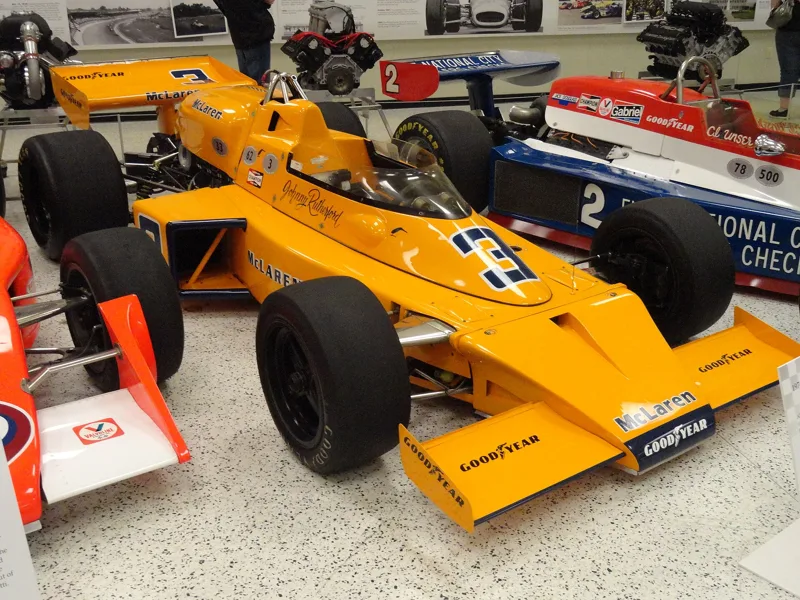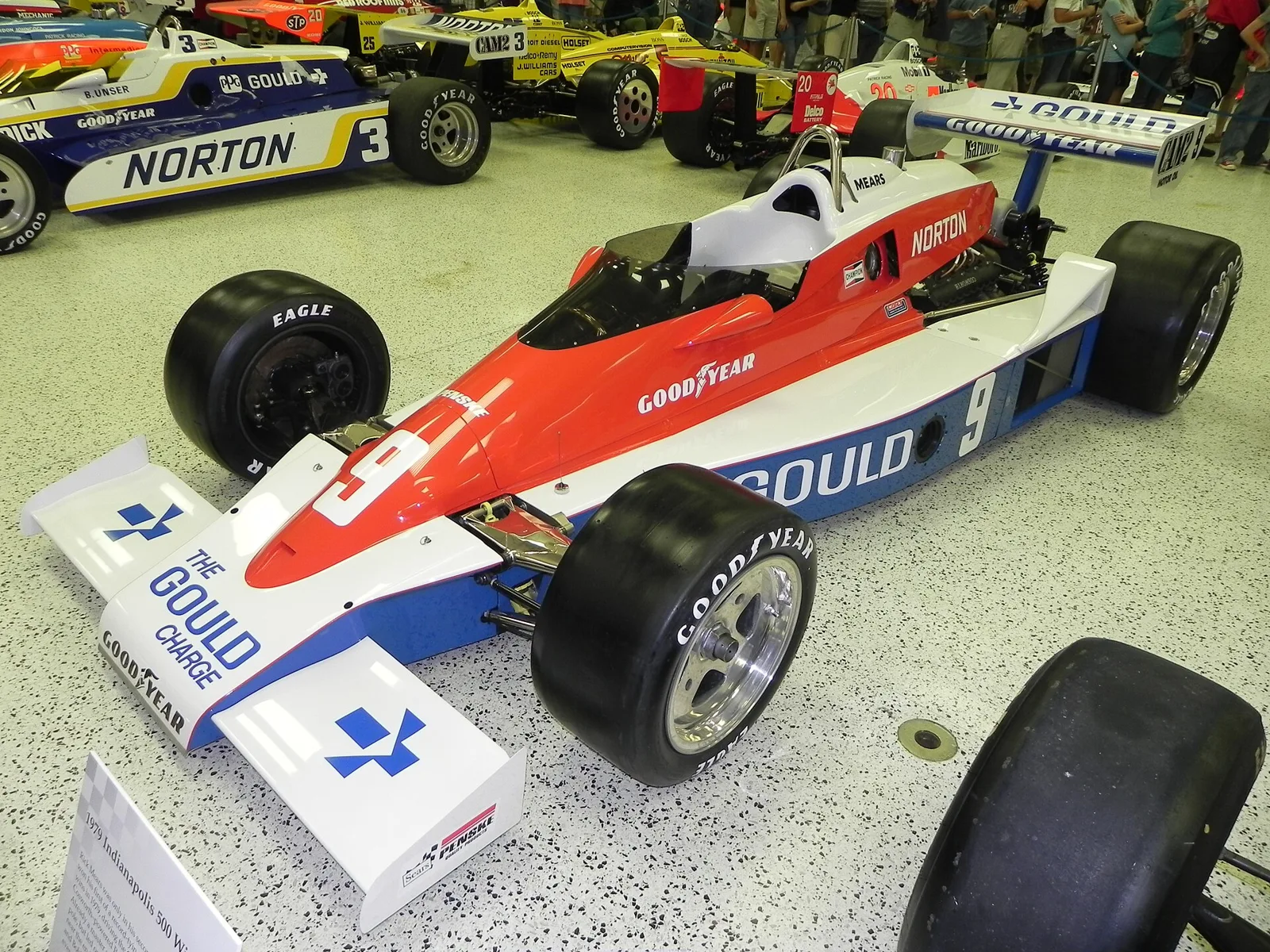
Johnny Rutherford was declared the winner after rain stopped the race, which was scored to lap 102 and remains the shortest official Indianapolis 500 on record.
Rain ended the 1976 Indianapolis 500 on lap 103, and officials scored it to lap 102. McLaren's Johnny Rutherford was the winner, with A. J. Foyt second while chasing a record fourth win. It is the shortest official 500 on record.
The 1976 Indianapolis 500 was the 60th running of the race, held on 30 May 1976 at the Indianapolis Motor Speedway in Indiana. Johnny Rutherford was declared the winner after rain stopped the race, which was scored to lap 102 of the 200 scheduled. It remains the shortest official Indianapolis 500 on record, and A. J. Foyt finished second while chasing a record fourth victory.
Who won the 1976 Indianapolis 500?
Johnny Rutherford won the 1976 Indianapolis 500 for McLaren after starting from pole and leading for most of the afternoon. Foyt was second when the rain came, and officials scored the race to lap 102. Rutherford's second Indianapolis victory came over a distance of 255 miles (410 km).
Rutherford took the lead outright on lap 80, as clouds gathered over the track. He was in front when rain brought the red flag on lap 103, and he kept that position through the stoppage.
Rutherford walked to Victory Lane under an umbrella and gave his winner's interview there, while Foyt, angry at the outcome, went back to his garage without speaking to the media. Rutherford's win was the final victory for the Offenhauser engine at Indianapolis.
A rain-shortened race, a call made at 102 laps and a winner who walked to Victory Lane under an umbrella.
Why was the 1976 race so short?
The race was stopped by rain on lap 103, and it was never restarted. Under the rules in force, a race had to reach at least 101 laps, one lap beyond halfway, to be official, and the scoring was reverted to the end of lap 102.
When the stoppage began, 97 laps were still to run. Officials could have waited for the track to dry, but they judged that there was not enough daylight left to complete the distance if the rain returned, so they started to assemble the Victory Lane platform.
Around 2:15 p.m. the rain stopped and the sun came out, and by 2:45 p.m. the chief steward, Tom Binford, said a restart was roughly twenty minutes away. The cars were lined up in single file for a warm-up, but the rain returned harder before the restart.
At roughly 3:15 p.m. officials judged the track lost, and USAC declared the race official. The result stood at 102 laps, and Rutherford was named the winner.
During the stoppage Foyt complained that Rutherford had gained track position under the caution for Jerry Grant's tow-in. He said Rutherford had bent the Electro-PACER light protocol and picked up as many as 13 to 18 seconds. Other drivers backed up that account, but USAC settled the dispute by restarting the cars nose to tail, which erased Rutherford's advantage.
How did qualifying unfold?
Rutherford won the pole after a strong practice week. On the Saturday of pre-qualifying practice he finally went quicker than anyone had managed that month, which made him the favourite. Gordon Johncock briefly held the top spot before Rutherford bumped him off it, and A. J. Foyt settled for fifth.
Time trials were delayed by overnight and morning rain, so qualifying did not start until 2:30 p.m. on Saturday. Tom Sneva took the outside spot on the front row, and the day ended with Rutherford, Johncock and Sneva at the front. Qualifying closed with nine cars in the field.
Mario Andretti had left Indianapolis to compete in the Belgian Grand Prix. He returned from Belgium in time for the third weekend of qualifying, and his speed was faster than the pole. As a third-day qualifier, though, he had to line up behind the earlier qualifiers and started 19th.
Bump Day, 23 May, provided the final drama. Hobbs squeezed into the field at 4:55 p.m. and Jan Opperman, at 5:59 p.m., pushed Eldon Rasmussen out of the field. Mike Mosley and Bobby Unser had been the quickest drivers on the second day, and they lined up 12th and 13th.
| Grid position | Driver | How they qualified | Note |
|---|---|---|---|
| First | Johnny Rutherford | Won pole on Pole Day | Led the first three laps of the race |
| Second | Gordon Johncock | Front row on Pole Day | Took the lead on lap 20 |
| Third | Tom Sneva | Front row on Pole Day | Ran in the top five early on |
| Fifth | A. J. Foyt | Pole Day qualifier | Finished second |
| Twelfth and thirteenth | Mike Mosley and Bobby Unser | Second-day qualifiers | Quickest on the second day |
| Nineteenth | Mario Andretti | Third-day qualifier | Charged from 19th to 7th in two laps |
How did Janet Guthrie's attempt end?
Janet Guthrie became the first woman to enter the Indianapolis 500, but she never made a qualifying attempt in 1976. Her team was underfunded, and a series of mechanical failures, including a burned piston, hampered her preparation.
Her arrival was complicated from the start. Her flight lost her luggage, including her helmet and driving suit. Teammate Dick Simon had an oil leak and then a turbocharger fire in the first days of practice, and Guthrie could not take to the track until 10 May.
She completed the first phase of her rookie test on 11 May, despite low oil pressure and overheating. Rain cut short her second phase, and she finally completed the rookie test on 17 May. Her best practice lap in the car was still too slow to earn a place in the field.
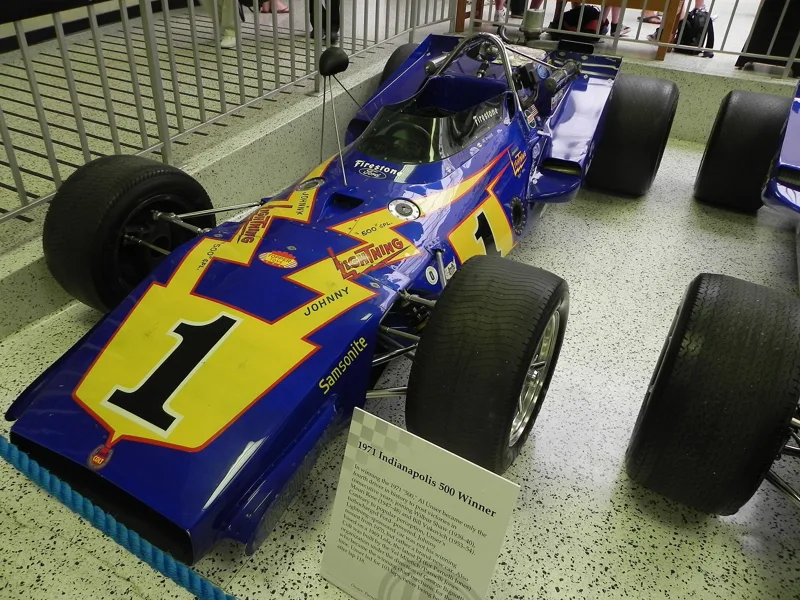
On Bump Day Foyt lent her his backup car, the number 1 entry, and she posted her fastest lap of the month in it. The lap was not enough to bump her way into the field, and she left the track without making an attempt.
Within two days promoter Humpy Wheeler had lined up a car owned by NASCAR team owner Ralph Moody, and she flew to Charlotte to qualify for the World 600 instead.
How did the race unfold?
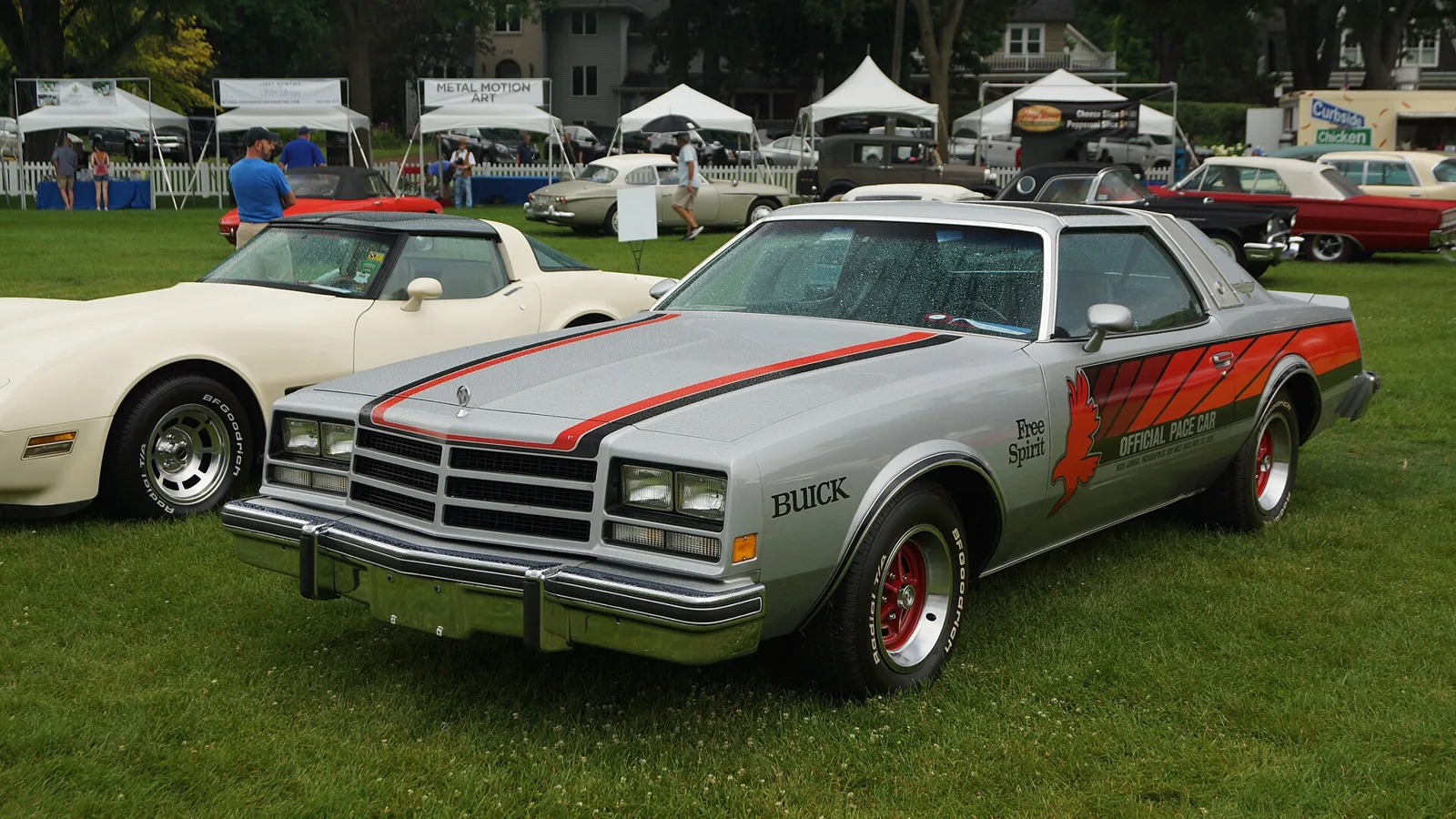
Rutherford led the first three laps from pole before A. J. Foyt passed him for the lead on lap four. Race day was clear and mild, with a 60 percent chance of rain forecast for the afternoon, and Tony Hulman started the field at 10:53 a.m. Eastern time, with Marty Robbins at the wheel of the Buick pace car.
Mario Andretti surged through the field. He started 19th and was seventh after two laps, but Dick Simon's engine failed on the backstretch early on, and his stall brought out the first caution. Simon's problems were not the only ones: on lap ten Roger McCluskey lost his car in turn three, struck the outside wall and spun onto the infield.
Foyt pitted under that caution, and he drove off with a crewman's wing adjuster still attached to the car. The debris kept the yellow flag out for three more laps. Hobbs then developed a water leak, and Foyt almost spun in the fluid but avoided the turn three wall.
Gordon Johncock took the lead on lap 20 after Foyt's problems, but Foyt recovered his position. By lap 50 Rutherford was back in front with Foyt in second and Johncock losing ground in third. On lap 60 Johnny Parsons shed a front wheel, and that brought out another caution, and Foyt pitted under it and led the restart on lap 65.
At lap 70 Foyt was about 9.5 seconds clear of Rutherford, but Rutherford began to close the gap. Clouds were darkening, and rain was reported near Brownsburg. From lap 80 Rutherford led and started to draw clear, while Foyt's car showed signs of handling problems because of the broken front sway bar linkage.
Both drivers were low on fuel, and Foyt pitted first, with Rutherford stopping a couple of laps later and coming out still in front. Grant's car went dry on lap 91, and the green flag came back on lap 95 with Rutherford ahead of Foyt. Drizzle brought a caution on lap 100, and on lap 103 the rain grew heavier and the red flag was shown at about 12:42 p.m.
What did the 1976 race mean for the record books?
The race completed only 102 of its 200 scheduled laps, which makes it the shortest Indianapolis 500 on record. It was also the third race in four years to end rain-shortened, after the races of 1973 and 1975. The next rain-shortened Indianapolis 500 did not come until 2004.
Rutherford's win completed a run of first, second and first place finishes from 1974 to 1976, a three-year span that tied for the best in the race's history. Wilbur Shaw, Al Unser and Helio Castroneves each had equal three-year runs.
The polesitter also went on to finish first or second in each of the following six years. The victory was the final 500 win for the four-cylinder Offenhauser, which had won 27 Indianapolis 500s. From 1977 onward V-8 engines took over, and no four-cylinder engine qualified for the race from 1981.
Victory-lane tradition changed too. Victory lane was used for that rain-shortened race, which was the last time it was used in such circumstances. In later years, the winning car was driven or pushed into the Master Control Tower when the weather was poor, so that the ceremony could be held indoors.
What else happened at the Speedway that May?
May 1976 was a busy month. A new Hall of Fame museum opened in the infield, replacing a much smaller building at 16th Street and Georgetown Road. The month also marked the 30th anniversary of Tony Hulman's ownership of the track and the 50th year of the Town of Speedway, and the United States was celebrating its Bicentennial.
Ronald Reagan visited the Speedway on 2 May, six days before the race. He was campaigning in the Indiana Republican primary on 4 May, met Hulman, toured the track and drove around it in one of the Buick pace cars.
Janet Guthrie's presence attracted media attention, and some competitors resented it. The turbocharger boost was reduced from 80 inHg, used in 1974 and 1975, to 75 inHg for 1976, and some drivers complained that their pop-off valves were not working properly.
Tragedy also touched the month. Eddie Miller suffered a neck fracture in a practice crash and never returned to Indianapolis. Hours after the race, Elmer George, the Speedway's vice president and in charge of the radio network, was shot and killed in a confrontation that was unrelated to the race.