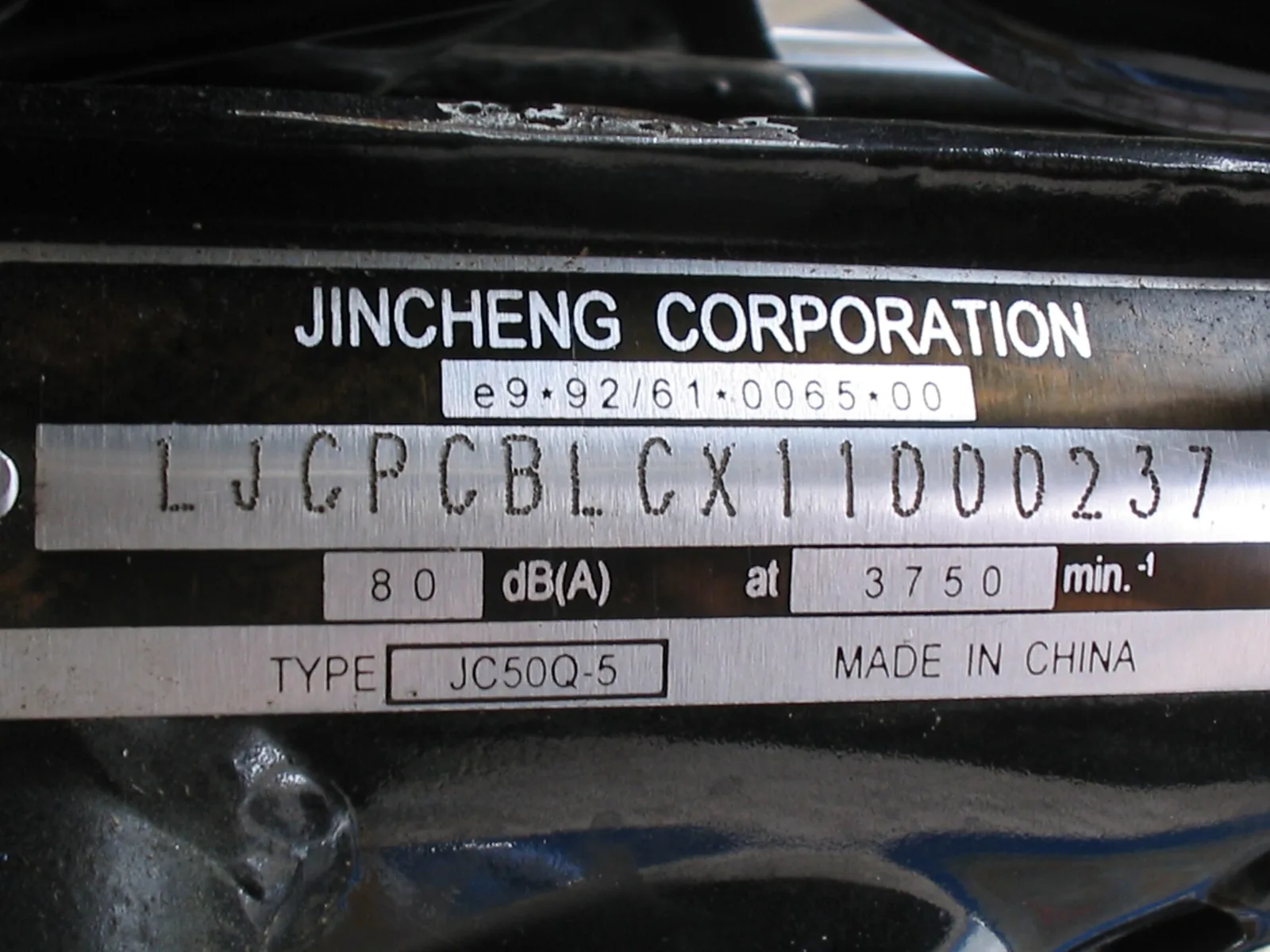
Seventeen characters name the maker, the engine and the build, and a history report can show where the odometer story stops adding up.
A VIN is a unique 17-character code naming a car's maker, type and individual serial number. A VIN-based history report shows ownership transfers, title branding, recalls and reported odometer fraud, though only from records it can reach. Clocking is found by cross-checking titles, owners, wear and reports.
When Motorcheck analysed the Irish used car market in 2017, it found that 15 percent of all used cars for sale were clocked, and 70 percent of those were diesels. Seventeen characters stamped into every modern car can help expose that kind of fraud.
What does a VIN tell you about a used car?
A vehicle identification number is a unique 17-character code that identifies one individual vehicle. It names the maker, describes the type of car, and ends with the serial number of that particular example. Some call it a chassis number or a frame number, and the standard behind it is ISO 3779.
Every character has a job. Digits run from 0 to 9, and capital letters are allowed except I, O and Q, which are barred to avoid confusion with numerals. The code splits into three sections, and the way they are read differs a little between regions.
The first three characters: who built it
The first three characters form the world manufacturer identifier, or WMI. The first of them usually points to the region where the maker is located. WMIs are handed out to countries and makers by the US Society of Automotive Engineers. A small maker that builds fewer than 1,000 vehicles a year uses 9 as the third character and borrows the twelfth to fourteenth positions to finish its identification.
Some makers use the third character for a vehicle category, a division, or both. Under 1G, General Motors' American code, 1G1 covers Chevrolet cars, 1G2 Pontiac cars and 1GC Chevrolet trucks.
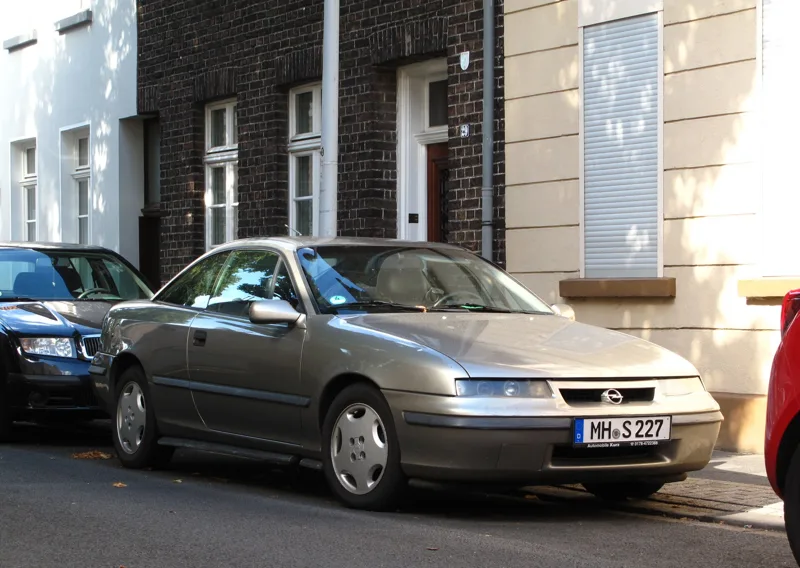
The country in a WMI is not always where the car was built. In Europe, the country of the continental headquarters can issue the WMI for every vehicle made in the region. When Opel and Vauxhall were part of General Motors, their cars carried German codes such as W0L and W0V, since Adam Opel AG was headquartered in Russelsheim, wherever the car was built, from Spain to South Korea. Once Opel passed to PSA, newer models received French codes.
Mergers can make the picture stranger still. Stellantis, formed from PSA and FCA, is in strict terms a Dutch company with its head office in Amsterdam, yet the VINs of its European-made vehicles still carry French and Italian codes. The 2024 Lancia Ypsilon, an Italian brand from the former FCA side, is built in Spain and carries new French codes.
Positions 4 to 9: what it is
The fourth to ninth positions are the vehicle descriptor section. It identifies the vehicle type under local rules and may include the platform, model and body shape, and each maker runs its own scheme. Since the 1980s most have used the eighth character for the engine whenever there is a choice. On the 2007 Chevrolet Corvette, U marks the 6.0-litre V8 and E marks the 7.0-litre.
The ninth character is a check digit in North America and China, where it is compulsory. In Europe it is not required, though Volkswagen began encoding one in selected models between 2009 and 2015, and the Audi A1 is one example.
Positions 10 to 17: which one
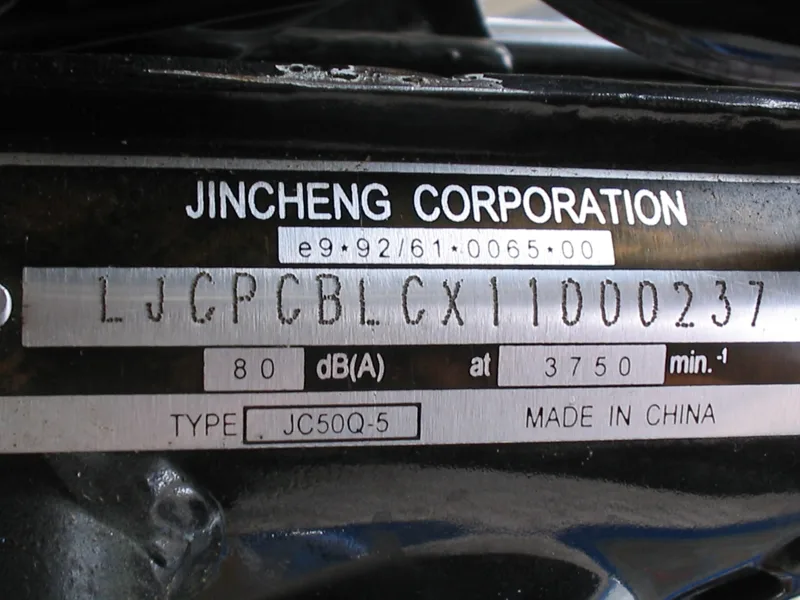
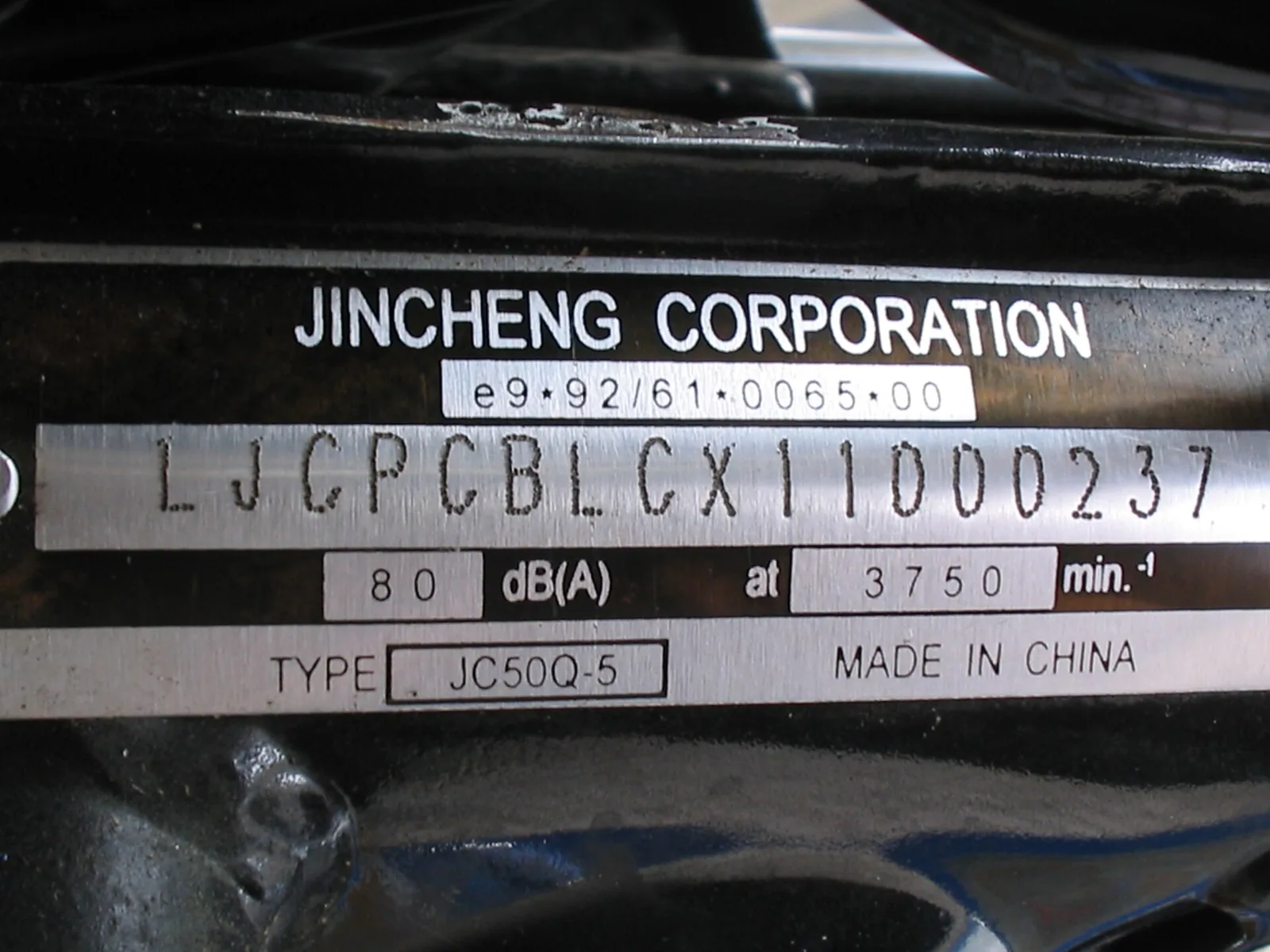
The last eight positions are the vehicle identifier section, which the maker uses to single out the individual car. It may carry option, engine or transmission details, but is often a plain sequential number. In North America the tenth character gives the model year. The eleventh character names the assembly plant, which is compulsory in North America and China, and the twelfth to seventeenth hold the serial or production number in the American and Chinese systems.
Year coding runs on letters and numbers. Y stands for 2000, the digits 1 to 9 stand for 2001 to 2009, and later years are A, B, C and so on. Outside North America the tenth character is usually 0. To avoid the 30-year repeat, a 2008 US rule says that for passenger cars and light trucks, a numeric seventh character means the tenth refers to 1980 to 2009, while an alphabetic seventh character means 2010 to 2039.
Reporting services only show information they can reach, so a clean report is a statement about the records, not the car.
VIN structure at a glance
| Positions | Section | What it holds | Notes |
|---|---|---|---|
| 1 to 3 | World manufacturer identifier | Maker, with the first character pointing to a region | A 9 in third place marks a maker building fewer than 1,000 vehicles a year |
| 4 to 9 | Vehicle descriptor | Vehicle type, platform, model, body style | Eighth character often shows the engine; ninth is the check digit in North America and China |
| 10 | Model year | A letter or digit for the year | Y for 2000, 1 to 9 for 2001 to 2009; usually 0 outside North America |
| 11 | Plant code | Assembly plant | Compulsory in North America and China |
| 12 to 17 | Production number | Serial number of the car | Unique to each vehicle, in the maker's own sequence |
Where do you find the VIN on a car?
The number is stamped or printed in several places. Look at the driver's side lower corner of the windscreen, beside the latch under the bonnet, on the front of the chassis frame, and on the inside of the driver's door pillar.
On newer cars the VIN can be read optically, by barcode scanners or digital cameras, or digitally through the OBD-II port. Smartphone apps can pass it to websites that decode it, and the US National Highway Traffic Safety Administration offers its own decoder.
How does the VIN check digit work?
The check digit is a safeguard against typing errors and bogus numbers. It is calculated from the other 16 characters by a fixed formula, and every road vehicle sold in the US and Canada is validated this way. If the digit you see does not match the digit the formula produces, the VIN contains a mistake.
The recipe is mechanical. Letters are replaced by numbers, each position is multiplied by a set weight, the products are added, and the total is divided by 11. The remainder is the check digit, and a remainder of 10 is written as X. In the worked example, the products add up to 351, the remainder is 10, and the digit is therefore X.
A match proves less than it seems. There is a 1 in 11 chance that two different VINs share a check digit, so a wrong leading character may slip through unnoticed. Two sample VINs, one for a Porsche and one for a General Motors T-body, fail the North American test entirely. For a European car with no check digit, the test simply cannot be run.
What does a vehicle history report reveal?
A vehicle history report is a record built on the VIN. It collects public-record entries: changes of owner, branded titles, lemon law buybacks, recalls and odometer fraud. It may also show maintenance records, collision damage or improper maintenance, and it tries to flag ex-rental, police, emergency-service and taxi cars.
The limit is built in. Reporting services only show information they can reach, so a clean report is a statement about the records, not the car. Data comes from police, the Driver and Vehicle Licensing Agency, finance houses, the national mileage register, insurers and industry bodies. In 2006, an estimated 34 percent of American used-vehicle buyers bought one.
Access varies by country. In the United States, the national title registration system run by the Department of Justice approves about a dozen data providers, roughly half of which sell to consumers; none is currently free to them. The Better Business Bureau recommends choosing one of those. In Britain, the DVLA gives some companies registration data for fraud prevention and consumer protection, and online checks are open to the public and the trade. In India, the Parivahan portal offers registration data but no service history, which private providers assemble from authorised service centres.
In the UK and US, dealers often buy reports and display them on their own websites, where buyers can read them for free. Some governments run a history service of their own, but it is usually limited to one aspect, as with the British MOT history.
What is odometer fraud, and how common is a clocked car?
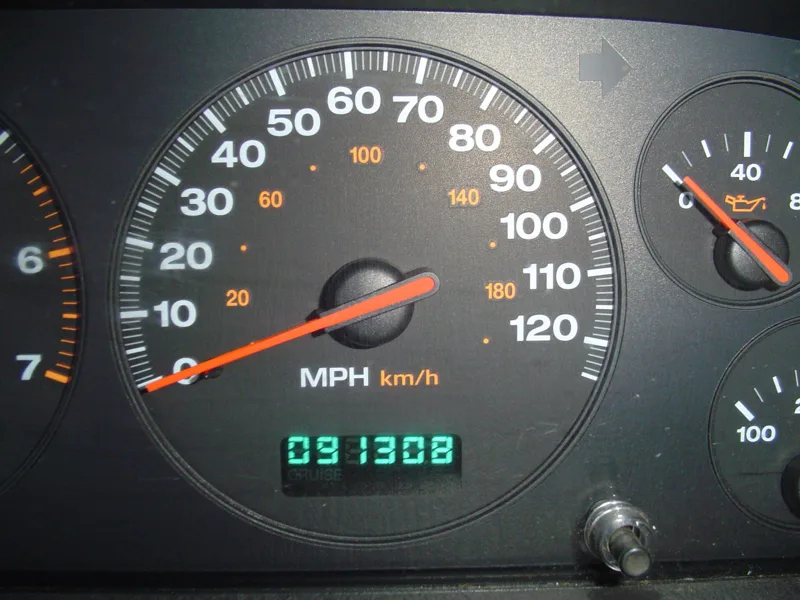
Odometer fraud is the illegal rolling back of an odometer so that a vehicle appears to have covered fewer miles than it has. It is called busting miles in the United States and clocking in the UK, Ireland and Canada. The offence is complete when a seller falsely states the real mileage to the buyer.
The scale is large. The US Department of Transportation's odometer fraud investigators call it a serious crime. The National Highway Traffic Safety Administration's 2002 study found 450,000 vehicles sold each year with false readings, costing buyers more than $1 billion annually. Britain's Office of Fair Trading put the yearly cost at 500 million pounds. AIM Mobile Inspections reported that rollbacks of off-lease used vehicles had risen by 30 percent since the start of 2011.
Odometer technology explains why the fraud changed shape. A mechanical odometer follows the principle of the pascaline, a gear calculator devised by Blaise Pascal in 1645: each gear has 10 teeth, and one full turn of a gear advances the next by one position. Pontiac sold the last mechanical-odometer GM car in the US in 2003, and Ford stopped in 2005. Such counters could be wound backwards, which is the gag when Matilda's father reverses the cable-driven odometer with an electric drill. A car driven in reverse, by contrast, does not roll the number back, as Ferris Bueller discovers.
Digital units are said to be, at times, simpler to interfere with than mechanical ones. Most of the electronic tools used for it plug into the car's OBD2 port.
How do you spot a clocked car?
Four routes are open to a buyer: the title or registration paperwork, a call to former owners, an inspection of the car for wear that fits the mileage, and the history report. Each looks at the same question from a different side.
In the United States, federal law means buyers must obtain a title or certificate of registration, and these carry the vehicle's odometer history. The records can be reached through each state's Department of Motor Vehicles.
A physical inspection looks for the ordinary wear that mileage leaves behind, such as on floor mats and the rubber on the pedals, or for items that are suspiciously new. A low reading with heavily worn pedals is the sort of mismatch that raises questions.
What else should a used buyer weigh alongside the VIN?
Mileage and history feed into price, so what a VIN check reveals should be read against the asking figure. Condition, which covers appearance, vehicle history, mechanical state and mileage, has a major impact on used pricing, and judging it involves plenty of subjectivity.
Price levels depend on who is selling. A dealer retail price, a trade-in or wholesale price and a private-party price all differ. On the American average, a new vehicle sheds roughly 20 to 30 percent of its value in year one and about 60 percent by year five. One theory of the used market holds that owners of problem cars are more likely to sell, so buyers carry a higher risk of a lemon and prices adjust downward.
The reading can also decide legal protection. In the Australian state of Queensland, a car with fewer than 160,000 kilometres (99,000 mi) on the odometer that was built less than 10 years before the sale carries a warranty of three months or 5,000 kilometres (3,100 mi), whichever ends first. At 160,000 kilometres or more, or 10 years or older, there is no warranty. Used cars sold in the EU get a 12-month statutory warranty, the so-called liability for defects.
Where this goes next
The VIN itself is set to stay. When the US regulator amended its rules on 30 April 2008, it said the 17-character system, then almost 30 years old, could continue for at least another 30 years. Cars are also becoming easier to read digitally, with VINs delivered by OBD-II and passed to apps.
The market that depends on these checks keeps growing. One estimate values the global used-car market at US$1.81 trillion in 2025, projected to reach US$3.31 trillion by 2034. By 2025, an estimated 55 percent of global used-car transactions took place on digital platforms. In the US, industry forecasts see the market growing by US$40.2 billion between 2025 and 2029, supported by AI-driven pricing tools.