How the code grew from 1954 serial numbers into today's 17-character format, what each position means and how the check digit is worked out.
A vehicle identification number (VIN) is a unique code that identifies individual motor vehicles. The modern VIN has 17 characters, with a check digit in position nine and a model year code in position ten. International standards and US federal rules set its layout.
A vehicle identification number, usually shortened to VIN, is the code that sets one motor vehicle apart from every other. The same identifier is also called a chassis number or frame number, and it covers cars, motorcycles, scooters, mopeds and towed vehicles. Each of its 17 positions in the modern form has a set job, from naming the maker to recording the production run.
How did VINs begin?
Vehicle numbers first appeared in the United States in 1954. Between 1954 and 1965 no accepted standard existed, so makers and even separate divisions within one company used their own formats. Many of those codes were little more than a serial number.
From January 1966 the US government required a 13-character VIN, phased in over several years. By 1 January 1969 every car sold in the country had to carry one. That first rule was loose: it fixed only the model year, the engine type and a unique six-digit number, leaving the remaining five spaces to each manufacturer.
The format was tightened in 1981, when the National Highway Traffic Safety Administration (NHTSA) required a 17-character number on every on-road vehicle sold in the United States. The letters I, O, U and Q were excluded to avoid confusion with the numerals 0, 1 and 9. The rules drew largely on ISO 3779 but were stricter than it.
The most recent big change came on 30 April 2008, when NHTSA adopted a final rule that kept the 17-character system in use for at least another 30 years. The rule also changed several VIN requirements, which matter to anyone building a decoding system that reads older codes.
A VIN is a fixed sequence of 17 characters, and every position has a job to do.
Which standards govern a VIN?
Four competing standards are used to calculate and lay out the VIN. FMVSS 115, Part 565 applies in the United States and Canada. ISO 3779 covers Europe and many other regions. SAE J853 is very similar to the ISO approach, while ADR 61/2 is the rule used in Australia and refers back to ISO 3779 and ISO 3780.
ISO 3779 and ISO 3780 were first issued in 1979 and 1980. The European Union and the United States both adopted compatible but different versions, so the systems are close without being identical.
What does each part of the VIN mean?
The 17 characters fall into three sections. The first three form the world manufacturer identifier (WMI), which names the maker. Positions four to nine make up the vehicle descriptor section (VDS), which can show the platform, model and body style. Positions 10 to 17 form the vehicle identifier section (VIS), which picks out one car from the rest of the production run.
| Positions | Section | What it records |
|---|---|---|
| First three | World manufacturer identifier (WMI) | Region and maker |
| Fourth to ninth | Vehicle descriptor section (VDS) | Type, platform, model and body; the ninth position is the check digit |
| Tenth to seventeenth | Vehicle identifier section (VIS) | Model year, plant (eleventh position) and production number |
The first character usually names the region where a maker is based, and the SAE assigns codes to countries and manufacturers. A maker that builds fewer than 1,000 vehicles a year puts a nine in the third position and uses positions twelve, thirteen and fourteen for a second part of the identifier.
The third character can separate vehicle categories or divisions. Under 1G, the code assigned to General Motors in the United States, 1G1 means Chevrolet passenger cars, 1G2 means Pontiac passenger cars and 1GC means Chevrolet trucks.
The eighth position identifies the engine on most models since the 1980s, whenever more than one engine is offered. A 2007 Chevrolet Corvette C6 used U for its 6.0-litre V8 and E for its 7.0-litre V8.
Why do some European cars carry foreign codes?
Ownership changes can make a WMI look odd. While Opel belonged to General Motors it carried German codes such as W0L and W0V, even when cars were built in Spain, Poland, the United Kingdom or South Korea. After Opel joined PSA, newer models received French codes.
Stellantis, created from the merger of PSA in France and FCA in Italy, is a Dutch corporation based in Amsterdam, yet its brands still carry French and Italian codes. A recent Lancia Ypsilon, built in Spain, carries a French WMI, which shows how hard it can be to read a country from a code alone.
How is the model year encoded?
In North America the tenth character records the model year. The letters I, O, Q, U and Z, and the digit zero, are never used for this purpose. General Motors and Chrysler marked 1980 with an A, while Ford and AMC used 0. Later years count through the allowed letters, so Y stands for 2000, the digits one to nine cover 2001 to 2009, and the letters resume with A for 2010.
Outside North America the tenth digit is usually zero. Position seven adds a further clue for passenger cars and light trucks rated at 10,000 lb (4,500 kg) or less. A numeric seventh character places the model year between 1980 and 2009, and an alphabetic one places it between 2010 and 2039.
Heavier trucks, buses, motorcycles and trailers cannot be dated within a 30-year range. Characters one to eight and character ten can repeat from the 2010 model year, so the code alone does not settle the year for those vehicles.
How does the check digit work?
The ninth position holds a check digit. It is compulsory in road vehicles sold in North America and China, but Europe does not require it, which is one of the points where the standards diverge.
To test a VIN, you either remove the check digit or give it a weight of zero. Each letter is converted to a number using a transliteration table based on IBM's EBCDIC values, with I, O and Q excluded and an S counting as 2 rather than 1. Each character is multiplied by its position weight, the products are added, and the remainder after dividing by 11 becomes the check digit. A remainder of 10 is written as X.
Take the hypothetical VIN 1M8GDM9A_KP042788, where the underscore marks the missing check digit. The products add up to 351. Dividing 351 by 11 leaves a remainder of 10, so the check digit is X and the full code reads 1M8GDM9AXKP042788.
A matching check digit does not prove that a VIN is correct. Any two different VINs have roughly a 1 in 11 chance of sharing a check digit, so about one wrong code in eleven will still pass. A useful test is a VIN made of seventeen 1s. Its weights add up to 89, and dividing that total by 11 gives 8 with 1 left over, so the code passes with 1 as its check digit.
Where can you find a VIN on a car?
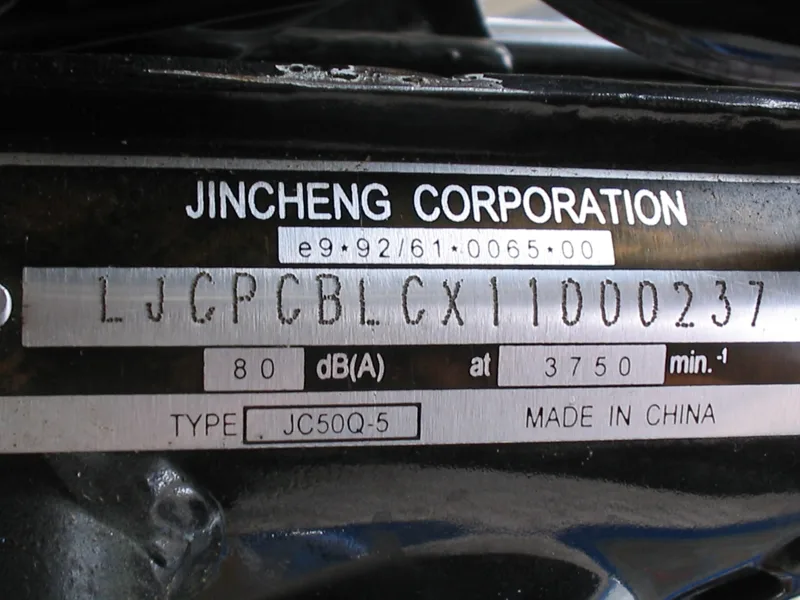
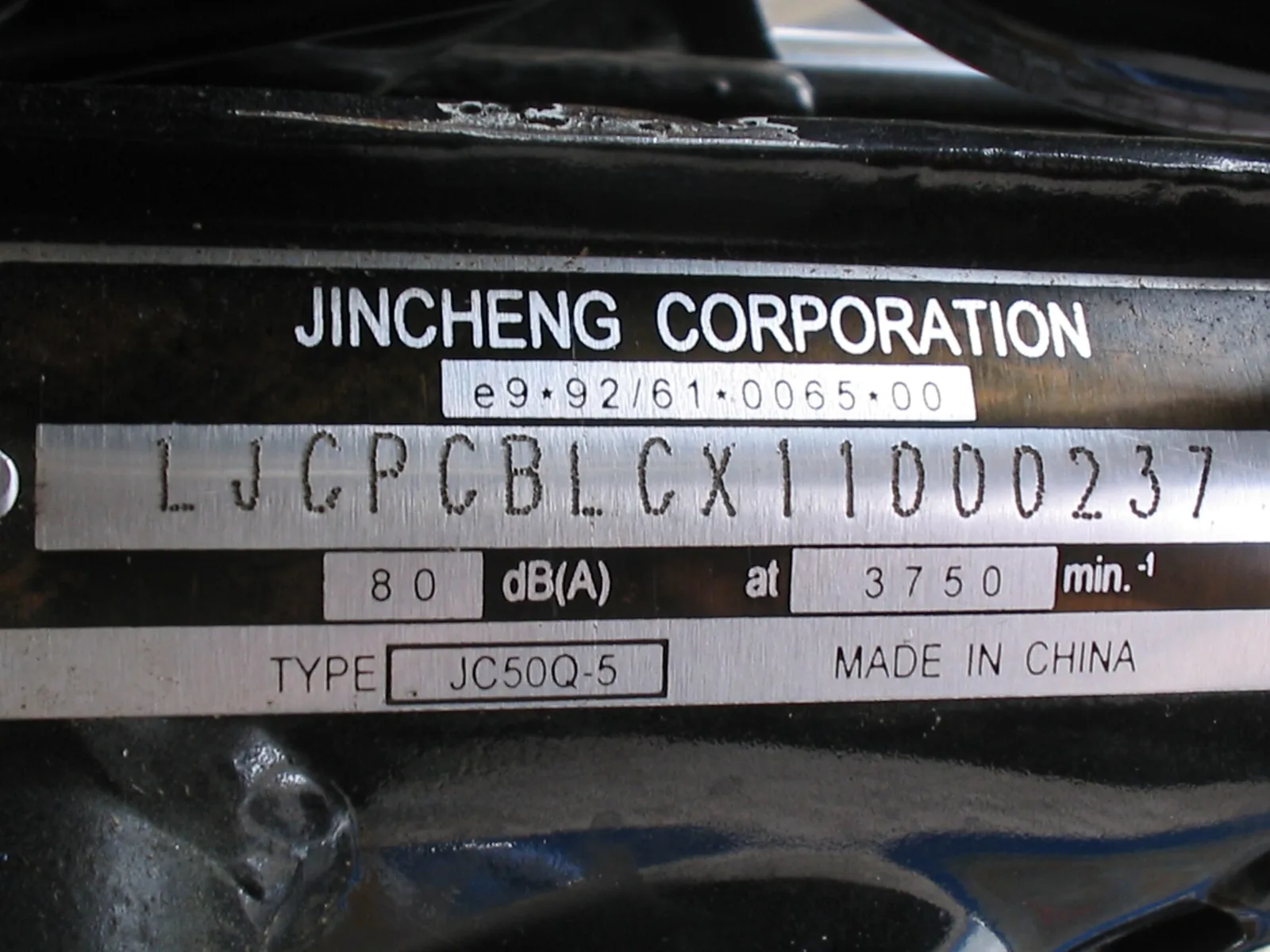
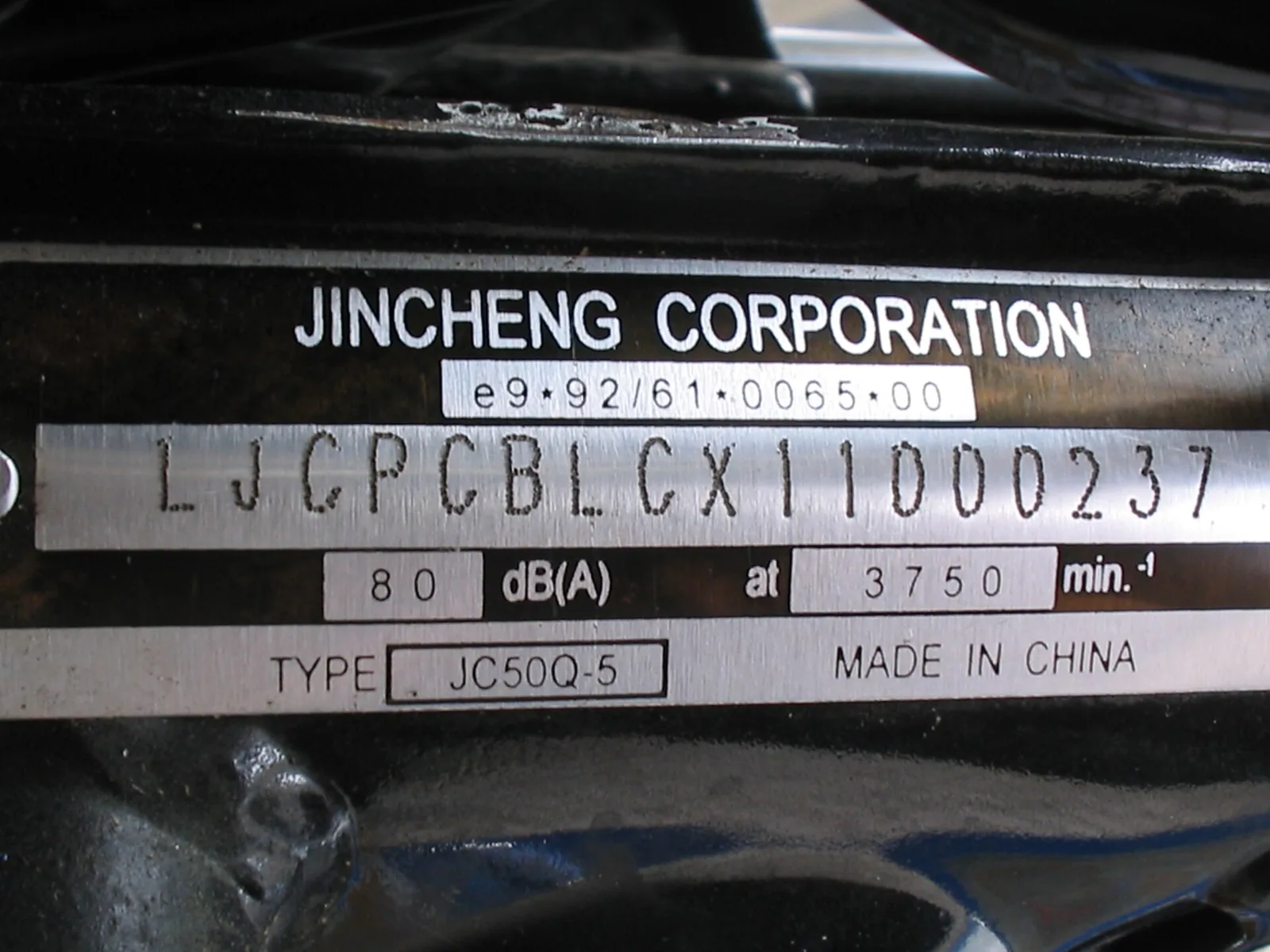
The VIN is marked in several places. The usual spots are the lower corner of the windscreen on the driver's side, under the bonnet beside the latch, the front end of the frame and inside the driver's door pillar. Newer vehicles can also be read by barcode scanner, digital camera or through the OBD-II port.
Smartphone apps can pass a VIN to websites that decode it. Vehicle history services in several countries use VINs to find vehicles that are defective or have been written off, which makes them useful when buying a used car. Checking that the number on the car matches the paperwork is a simple first step.