An $8bn toolkit, a 20 percent saving and one front axle under a Golf, an Octavia and a Leon: how shared platforms work.
MQB and MLB are Volkswagen's modular toolkits for transverse and longitudinal engines, and TNGA is Toyota's equivalent. They standardise components such as pedal boxes, axles and seat heights across many models, cutting cost while letting each brand keep a distinct body and interior.
Before it introduced the Toyota New Global Architecture, Toyota was building roughly 100 different platform variants. By 2020 five TNGA platforms underpinned more than 50% of the Toyota vehicles sold worldwide. Volkswagen made the same bet earlier and spent roughly $8bn on its MQB toolkit. Sharing platforms is how two large carmakers reined in complexity.
A shared platform means different models use the same hard points, and sometimes the same hardware, beneath different bodies. Volkswagen's MQB and MLB toolkits fix the pedal box and a few other front-end positions, while Toyota's TNGA standardises seat height and the parts that hang off it, which is why a family hatchback and a hot hatch can have so much in common.
What is a shared car platform?
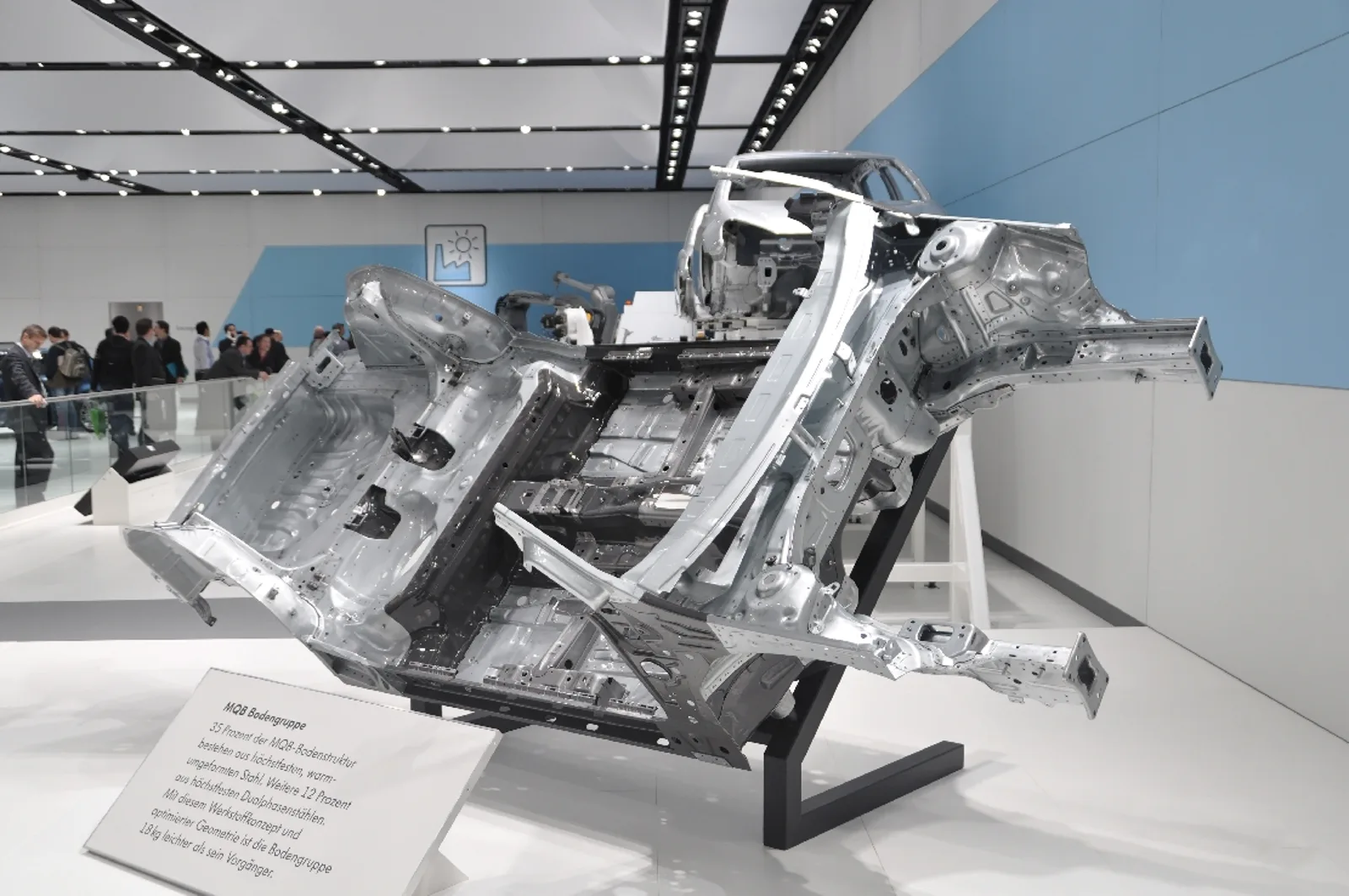
A platform is the underlying structure and key mechanical layout of a car. Sharing one lets a maker spread engineering costs over many models and build them in the same factory. The Volkswagen toolkits go a step further than the usual idea, and the company's own materials say MQB is not a platform as such. It is a system for introducing rationality to the different platforms that have transverse engines, across ten body configurations and eleven vehicle brands.
The principle is a core matrix of components. All drivetrains, whether petrol, diesel, natural gas, hybrid or fully electric, share a common engine-mounting core. That reduces weight and lets different models be built at the same plant, saving more cost.
MQB is not a platform as such, but a system for introducing rationality.
What is the MQB platform?
MQB stands for Modularer Querbaukasten, or Modular Transverse Matrix. It is Volkswagen's strategy for transverse, front-engine, front-wheel-drive cars, with four-wheel drive optional, and it debuted in the Golf Mk7 in late 2012. It underpins everything from superminis to mid-size SUVs, and any factory equipped for MQB can build any MQB car, so Volkswagen can move production between plants as demand shifts.
The constants are the front axle, the pedal box and the engine position, which stay the same even though wheelbase, track and outer dimensions vary. MQB replaces the PQ25, PQ35 and PQ46 platforms. The motoring blog Jalopnik pointed to the uniform placement of every motor and transmission as the biggest feature, noting that around 60% of development costs fall between the accelerator pedal and the front wheels. Britain's Car magazine reported a plan to cut the time needed to build a car by 30%. Ulrich Hackenberg, Volkswagen's head of research and development, called MQB a "strategic weapon".
How MQB developed
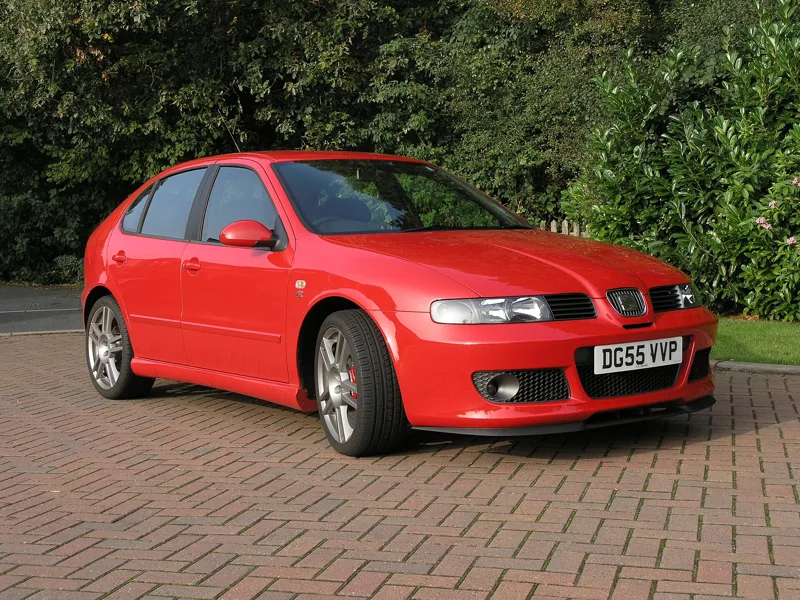
The first generation of 2012 underpins C-segment cars and up. Besides the Golf Mk7 it includes the Audi A3 and TT, the SEAT Leon, the Skoda Octavia and Superb, the Volkswagen Passat (B8), the Arteon and Atlas, and the Touran Mk2.
The second generation, MQB Ax, debuted in 2016 and sorts the platform into three types by size. Each has its own family of cars.
- MQB A0 opened the toolkit to smaller and cheaper B-segment cars, such as the Volkswagen Polo Mk6 and T-Cross, Audi A1 Mk2, SEAT Ibiza Mk5 and Arona, and Skoda Kamiq, Scala and Fabia Mk4.
- MQB A0 IN is a low-cost variation for the Indian market, introduced in 2019, whose first vehicles came from 2021: the Skoda Kushaq, Slavia and Kylaq, and the Volkswagen Taigun and Virtus.
- MQB A1 covers the Audi Q2, SEAT Ateca, Skoda Karoq, Volkswagen T-Roc and the Jetta.
- MQB A2 covers the larger Audi Q3 Mk2, SEAT Tarraco, Skoda Kodiaq and Volkswagen Tiguan Mk2.
MQB Evo followed in 2019. The Golf Mk8 leads a list that also takes in the fourth-generation Audi A3, SEAT Leon, Skoda Octavia and Superb, the Cupra Formentor and Terramar, the Passat B9, the third-generation Tiguan and the Multivan (T7). It even carries a model from outside the group, the Ford Tourneo Connect Mk3.
What is the MLB platform?
MLB, for Modularer Langsbaukasten or Modular Longitudinal Matrix, is the longitudinal-engine counterpart to MQB. The strategy was announced in 2012, though the first car built on it was the Audi A5 in 2007. It was developed by Audi, and until 2015 only Audi and Porsche used it. Volkswagen's first MLB car under its own badge was the Phideon luxury saloon, introduced in February 2016 and built and sold only in China.
Only a few things are fixed: the pedal box, firewall, front wheel placement and windscreen angle. Everything else can be stretched and shaped to suit any body style, size or drivetrain. The roll call grew from the A5, A4, Q5, A8, A7, A6 and Porsche Macan, split into B-class and C/D-class groups, to the second-generation Audi Q7 in MLB Evo form. The Evo family then added the Bentley Bentayga, Volkswagen Touareg, Lamborghini Urus, Audi Q8 and third-generation Porsche Cayenne.
Premium Platform Combustion, the third generation
Premium Platform Combustion (PPC) is Audi's further development of MLB, effectively the third generation after MLB and MLB Evo. It debuted in 2024 with the Audi A5 (B10) for combustion-engined cars with the engine mounted lengthways, and with all-wheel drive as an option. Its name echoes Premium Platform Electric, the electric-only platform built by Audi and Porsche, and PPC is meant to be Audi's last newly developed combustion engine platform. Both share the E3 1.2 electronics architecture developed by Volkswagen subsidiary Cariad.
A feature is a second-generation mild hybrid that Audi calls MHEV plus technology. Along with the belt starter generator, a new powertrain generator sits on the transmission output shaft. With the 48-volt battery, it allows partly electric driving with up to 18 kW and 230 Nm, and recovers energy at up to 25 kW. Engines are the EA888 2-litre four-cylinder petrol, the EA839 3-litre V6 petrol and the EA288 evo 2-litre four-cylinder diesel. Only 7-speed dual-clutch gearboxes are fitted, with no manuals, and real tailpipes replace the fake trims of the previous generation in response to customer feedback. The Audi A5 B10, A6 C9, Q5 GU, Q7 4L and Q9 ride on it.
What is Toyota's TNGA platform?
The Toyota New Global Architecture, or TNGA, is a modular platform that underpins Toyota and Lexus models, beginning with the fourth-generation Prius in late 2015. It handles different vehicle sizes and front-, rear- and all-wheel drive. It grew out of a company-wide effort to simplify what Toyota built, which meant cutting roughly 100 platform variants. As of 2020 the five TNGA platforms carried more than 50% of Toyota vehicles sold worldwide, and Toyota expected about 80% by 2023.
Each platform is based on a standardised seat height, which lets key interior parts such as the steering system, shifters, pedals, seat frames and airbags be shared. Those parts are mostly hidden, so cars on the same platform can still have unique interiors. Toyota says TNGA costs 20 percent less to produce than its older platforms, and adds chassis stiffness, a lower centre of gravity for better handling and a lower cowl for better forward visibility.
The platform was developed alongside the Dynamic Force engine, which swaps more than 800 engine variants for a lineup of 17 versions of nine engines. Transmissions, hybrid systems and all-wheel-drive systems are being pared back as well.
The TNGA platforms at a glance
| Platform | Layout | Wheelbase | Examples |
|---|---|---|---|
| TNGA-B | Transverse, front or all-wheel drive, three-cylinder only | 2,430-2,750 mm (95.7-108.3 in) | Yaris, Yaris Cross, Aqua, Aygo X, Lexus LBX |
| TNGA-C | Transverse, front or all-wheel drive | 2,640-2,850 mm (103.9-112.2 in) | Prius, Corolla, C-HR, Corolla Cross, Lexus UX |
| TNGA-K | Transverse, front or all-wheel drive | 2,690-3,060 mm (105.9-120.5 in) | Camry, RAV4, Highlander, Lexus ES, NX, RX |
| TNGA-L | Longitudinal, rear or all-wheel drive | 2,870-3,125 mm (113.0-123.0 in) | Lexus LC, Lexus LS, Crown Sedan, Mirai |
| TNGA-F | Body-on-frame | 2,850-4,180 mm (112.2-164.6 in) | Land Cruiser, Lexus LX, Tundra, Tacoma, 4Runner |
TNGA-B, C, F, K and L in practice
TNGA-B, developed by the internal Toyota Compact Car Company, underpins city cars, subcompacts, subcompact crossovers and mini MPVs, and takes only three-cylinder engines. It carries the Yaris, Yaris Cross, GR Yaris (with the rear from the GA-C platform), Aqua, Sienta, Aygo X and Lexus LBX, and it also carries the Mazda2 Hybrid.
TNGA-C covers compact cars, compact crossovers and compact or mid-size MPVs. The Prius moved onto it from 2015, along with the C-HR, Lexus UX, Corolla, GR Corolla and Corolla Cross, and it also supports models sold by Suzuki, such as the Swace, Landy and Invicto.
TNGA-K is the biggest family, replacing the older K platform for mid-size and full-size cars, mid-size crossovers and large MPVs. The Camry (XV70 and XV80), Avalon, RAV4, Highlander, Kluger, Grand Highlander, Harrier, Sienna, Alphard, Crown Crossover, Century SUV and Lexus ES, NX, RX and TX all use it.
TNGA-L is the rear-wheel-drive, longitudinal platform for executive, luxury and grand touring cars. It carries the Lexus LC and LS, the Crown S220 and Crown Sedan S230, and the Mirai. The Crown was also built in a narrow version 1,800 mm (70.9 in) wide. TNGA-F is for body-on-frame SUVs and pickups: the Land Cruiser J300 and Prado J250, Lexus LX and GX, Tundra, Sequoia, Tacoma and 4Runner.
What is e-TNGA?
e-TNGA is the modular platform reserved for battery electric vehicles, announced in October 2019 and known internally as 40PL. Buyers can have front drive, rear drive or twin-motor all-wheel drive. The architecture is divided into five modules (front, centre, rear, battery and motor), with up to three versions of each under development, battery capacity included. The first model was the bZ4X crossover, presented in April 2021, and Subaru calls the platform the e-Subaru Global Platform (e-SGP). Other users include the Subaru Solterra, Lexus RZ and Toyota bZ3, with the bZ5, the C-HR+, the bZ4X Touring and Subaru's Uncharted and Trailseeker among the later arrivals. Toyota planned a medium SUV, medium minivan, medium sedan and large SUV by 2025.
What platform sharing means for the car you buy
The practical effect is that cars with very different badges and prices can share much of what you cannot see. A Golf, an Octavia and a Leon share the same front axle, pedal box and engine position. A Corolla and a Suzuki Swace share a TNGA-C platform, and the Mazda2 Hybrid shares Yaris underpinnings. The Subaru Solterra shares e-TNGA with Toyota's bZ4X.
The makers point to benefits in two places. One is Toyota's claimed 20 percent production saving; another is Volkswagen's freedom to build any MQB car in any MQB-ready plant, which lets it respond when demand shifts. For the driver, Toyota cites a stiffer chassis, a lower centre of gravity and better forward visibility. Because the shared parts are the ones hidden away, the interior can still look and feel distinct.
A platform decision can also narrow showroom choice. PPC cars get only 7-speed dual-clutch gearboxes and no manuals, and TNGA-B takes only three-cylinder engines.
Where this goes next
Volkswagen plans to replace the premium PPC and PPE platforms, and the volume MEB and MQB Evo platforms, with a single electric-only Scalable Systems Platform across all its brands from 2029. Audi has said PPC is intended to be its last newly developed combustion engine platform.
Toyota expected TNGA to underpin about 80% of its vehicles by 2023, and for e-TNGA it planned a medium SUV, minivan, sedan and large SUV by 2025. The Dynamic Force engine programme continues to consolidate the engine range.