Two McLaren team-mates, a Honda that won 15 of 16 races and two Octobers when a title was decided by contact at the same Japanese chicane.
Ayrton Senna and Alain Prost were McLaren team-mates in 1988 and 1989 who became Formula One's best-known rivals. Their contact at Suzuka in 1989 cost Senna the title through disqualification, and a first-corner collision in 1990 gave it to him. They reconciled in 1993.
Two Octobers running, the Formula One title was settled by two cars touching at Suzuka. Both times the drivers were Ayrton Senna and Alain Prost, and both times the one who looked the faster man did not benefit as he expected.
How did Senna and Prost end up in the same team?
Senna signed for McLaren for 1988 to partner Prost, who by then had won two world titles for the team. Years earlier Senna had turned down a long-term McLaren contract, and that opening closed when Prost, fired by Renault, took the second McLaren seat for 1984.
Senna instead went to Toleman, then Lotus, scoring his first pole position and win in the rain at the 1985 Portuguese Grand Prix. He finished third in the 1987 championship before signing for McLaren. Prost, meanwhile, had won the 1985 and 1986 titles.
The route to that point had not been smooth. Brabham and Lotus both wanted drivers from their sponsors' home countries in 1984, and Piquet used his influence to keep Senna out of Brabham. A 1983 test for Williams at Donington Park had gone well, with 40 laps and a time quicker than the reigning world champion, Keke Rosberg, but Williams had no vacancy. Toleman was a young team on less competitive Pirelli tyres, and it became his way in.
Their paths had already crossed once, at the 1984 Monaco Grand Prix. Senna started 13th in a Toleman, passed Niki Lauda for second on lap 19, and began closing on the leader, Prost, by about 4 seconds a lap. The race was stopped on lap 31 because of heavy rain, and Prost, as the winner of a short race, received only half of the usual nine points. He lost the championship to Lauda by half a point, the closest margin in the sport's history.
Senna later admitted the 1990 collision was deliberate, payback for 1989.
Who was Alain Prost?
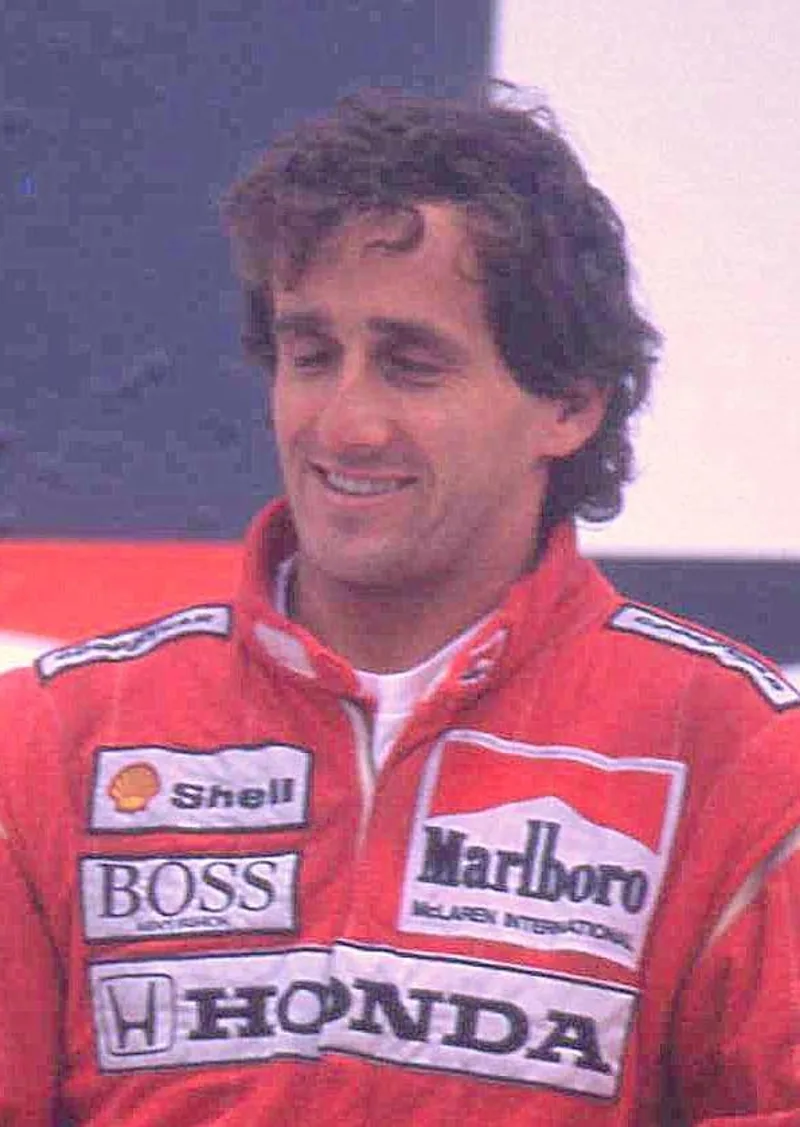
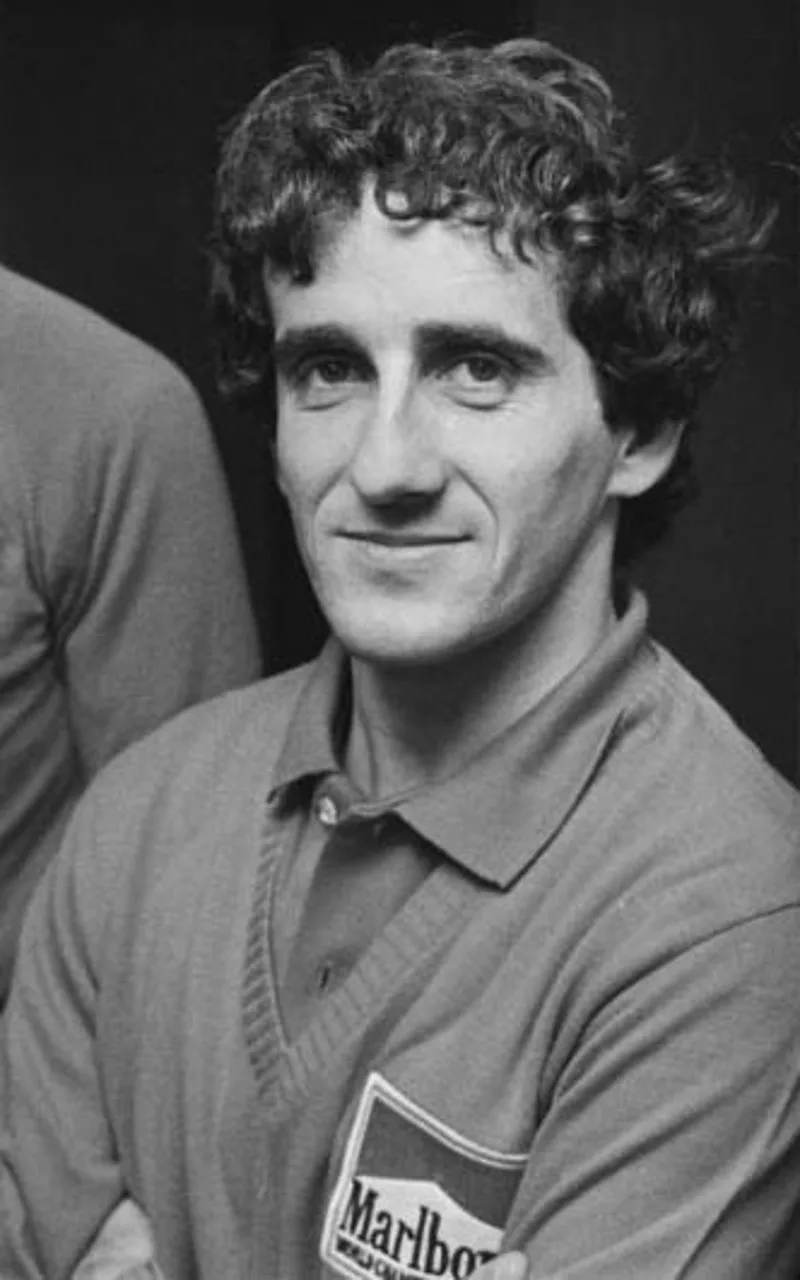
Prost, born on 24 February 1955 in the Loire region of France, was nicknamed the Professor. He raced in Formula One from 1980 to 1993 and won four world titles. At the time of his retirement he held the records for most wins (51), most fastest laps (41) and most podium finishes (106).
He took up karting at 14, won the 1979 European Formula 3 title and made his F1 debut for McLaren in Argentina in 1980, finishing sixth. A move to Renault brought a first win at the 1981 French Grand Prix. He finished second to Nelson Piquet in 1983, two points short, and Renault sacked him two days after the final race.
Back at McLaren he won seven races in 1984, and in 1985 he became the first French world champion. In 1986 he defended the title in a last-race drama in Australia, after Nigel Mansell suffered a tyre failure at 290 km/h (180 mph) and Williams called Piquet in for tyres as a precaution. Prost had already stopped for a puncture and held on to win, the first driver to retain the crown since Jack Brabham in 1960. Lauda later said Prost had sent him into retirement.
Who was Ayrton Senna?
Senna was born in Sao Paulo on 21 March 1960 into a wealthy family. He later raced under his mother's name, Senna, since da Silva is Brazil's commonest family name. He started kart racing at 13 in a machine his father built around a lawnmower engine, finished runner-up in the Karting World Championship in 1979 and 1980, and moved to England in 1981 to race Formula Ford. In 1982 he won 15 of 17 races in the British series.
He took the 1983 British Formula 3 title after a close, contentious fight with Martin Brundle, and won the Macau Grand Prix that year. Signing for Toleman in 1984, he made his Formula One debut in Brazil, and by the end of the season he had finished ninth overall with 13 points.
Even then he had a reputation for supplying precise technical detail about his car and the track. Pat Symonds, his first race engineer, recalled Senna insisting after a crash in Dallas that the wall had moved. It had: another car had nudged a concrete block, and the leading edge stuck out by a few millimetres. Senna was driving so precisely that it made the difference.
How do their careers compare?
| Measure | Alain Prost | Ayrton Senna |
|---|---|---|
| Formula One seasons | 1980 to 1993 | 1984 to 1994 |
| World titles | 4 | 3 |
| Wins | 51 at retirement | 41 |
| Fastest laps | 41 at retirement | 19 |
| Podiums | 106 at retirement | 80 |
| Hall of Fame (International Motorsports) | 1999 | 2000 |
Senna also held the record for pole positions when he died, with 65.
What happened in 1988?
Partnered for the first time, they drove the Honda-powered McLaren MP4/4 and won 15 of the 16 Grands Prix that season. Senna took the championship by three points, winning a then-record eight races, so the title was decided between the two cars in the same garage.
McLaren was just as dominant in 1989. Senna won six races to Prost's four, including the one in Spain just before Japan, but he finished in the points only once besides, while Prost missed the points just once all year. That consistency is why Prost arrived at Suzuka with a lead, and why Senna needed two wins from two races.
What happened at Suzuka in 1989?
On 22 October 1989 the 53-lap Japanese Grand Prix was the penultimate round, and Prost led Senna by 16 points, 76 to 60. Senna had to win both Suzuka and the final race in Australia to keep his title. Prost warned team boss Ron Dennis that this time he would not leave the door open if challenged.
Senna was more than a second and a half quicker in qualifying, but Prost had set up his car for the race and still started alongside him on the front row. Journalist Maurice Hamilton reported that Prost had also removed his Gurney flap, without telling Senna, for extra straight-line speed.
Prost got away faster and built a lead of nearly six seconds, which grew by two when Senna had a slow pit stop. Then Senna, on fresh tyres, hauled him in. He caught Prost on lap 40, and for five laps the gap held at about one second. On lap 47, Senna stayed close through the Spoon Corner, picked up the tow, and dived for the inside at the chicane.
His front wheels never got ahead of Prost's. Prost turned in on the normal line and the cars touched, locking their wheels and stalling at the mouth of the escape road. Prost climbed out. Senna waved the marshals on to push his car, restarted the engine, weaved through the temporary bollards and rejoined.
Why was Senna disqualified at Suzuka?
After the collision Senna pitted for a new nose, rejoined five seconds behind the new leader, Alessandro Nannini, passed him two laps later at the same corner and took the flag. The stewards then disqualified him for cutting the chicane, which gave Nannini the win and Prost the title.
Senna said that FISA president Jean-Marie Balestre, who like Prost was French, had engineered the outcome. The stewards and Balestre denied it, and said Balestre was not even in the stewards' meeting. A Brazilian newspaper headline in November 1996 nonetheless reported Balestre admitting he had helped Prost against Senna.
Ron Dennis said the appeal was about a win unfairly taken away and the prize and sponsorship money that went with it, not about stopping Prost. At a hearing in Paris that week the disqualification was upheld, with a US$100,000 fine and a suspended six-month ban added, and Senna was labelled a dangerous driver.
The question of blame has never been settled. Some say Prost ran into Senna deliberately, others that Senna was over-ambitious, and others that it was a plain racing incident between two embittered team-mates. Only 11 of the 26 starters were still running at the finish.
What happened at Suzuka in 1990?
A year later, on 21 October 1990, Senna led the standings and Prost had moved to Ferrari. Senna qualified on pole but the grid slot sat on the dirty side of the track, and he and Gerhard Berger asked the stewards to move it. They agreed, but an injunction from Balestre reversed the decision.
At the start Prost took the lead, Senna went for the inside into the first corner, and the cars collided, taking both out at once. With one round left Prost could no longer catch Senna's points total, and Senna was champion for the second time. Murray Walker called the collision 'absolutely predictable'.
Prost called the move disgusting and described Senna as a man without value, and said he almost retired on the spot. Senna's reply was that the result was not what he had wanted, but was unavoidable. After he won his third title in 1991, he admitted that the move had been deliberate, as payback for 1989.
Not everyone accepted the blame being his. In a 1991 discussion with Murray Walker, James Hunt argued that Senna had been wrongly vilified for both incidents, and that in each case Prost had left him no room. Hunt said the replays showed it, and added that Senna had reason to feel Balestre robbed him of the 1989 title. He thought the 1991 admission, made in a rush of adrenaline, had humanised Senna.
A two-car pile-up at the first corner left the field to others. Berger, leading in the second McLaren, spun on sand that the collision had scattered across the track. Mansell then led for Ferrari until a driveshaft failed after a pit stop on lap 26, and Piquet inherited the lead and kept it to the flag.
The race itself went to Nelson Piquet, with Roberto Moreno second for Benetton's first one-two. Aguri Suzuki finished third, the first Japanese driver on the podium.
How did the rivalry finally end?
Senna won seven races, including his home Grand Prix, to take his third title in 1991. Prost, winless that year, was sacked by Ferrari over comments about the 643. After a year off he returned with Williams in 1993 and won his fourth title, with Senna finishing second in a McLaren after a record sixth win at Monaco.
The two reconciled on the podium at the 1993 Australian Grand Prix, their final race together. Prost retired at the end of that season, and Senna took his seat at Williams for 1994, partnering Damon Hill.
Senna died on 1 May 1994 after a crash in the San Marino Grand Prix at Imola while leading in the Williams FW16. About 3 million people attended his state funeral. Following safety reforms he was the last driver to die in the F1 World Championship until Jules Bianchi in 2014.
What happened to both men afterwards?
Prost came back to Formula One as boss of his own team, Prost Grand Prix, which he built from Ligier and ran from 1997 to 2001. He raced in the Race of Champions in 2010, won three Andros Trophy ice-racing titles, co-owned the Renault e.dams Formula E team until 2018 and advised Renault, later Alpine, from 2017 to 2021.
Senna built a reputation for wet-weather drives at Monaco in 1984, Portugal in 1985 and Europe in 1993. He entered the International Motorsports Hall of Fame in 2000, and the Automotive Hall of Fame followed in 2025. Prost entered the International Motorsports Hall of Fame a year earlier, in 1999.