A badge-engineered city car that outlived the Fiat partnership, a rally car that carried SEAT's works World Rally effort from 1998 to 2000, and an SUV named by public vote.
The SEAT Marbella was a badge-engineered Fiat Panda built by SEAT, the Marbella name arriving in 1986. The Cordoba WRC was SEAT's works World Rally Car from 1998 to 2000. The Tarraco is a seven-seat flagship SUV presented in 2018 and discontinued in 2024.
For the first time in its history, SEAT let the public name one of its cars. More than 130,000 people sent 10,130 suggestions for what became the Tarraco, and a Catalan independence referendum pushed the reveal back by four months. The Tarraco is the newest of three SEATs here, after a Fiat Panda in disguise and a works rally car.
What is the SEAT Tarraco?
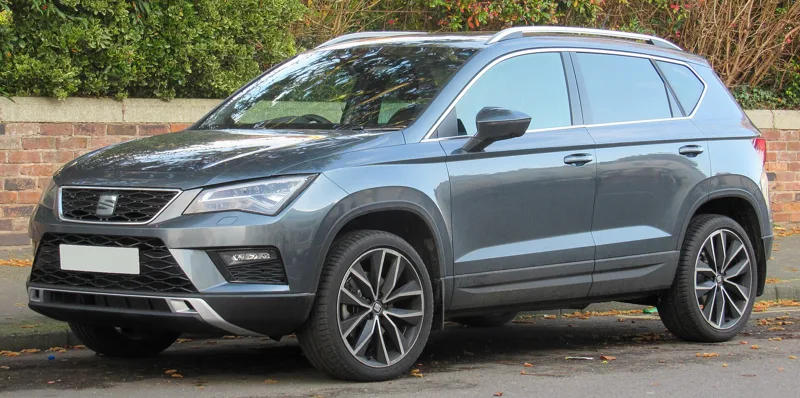
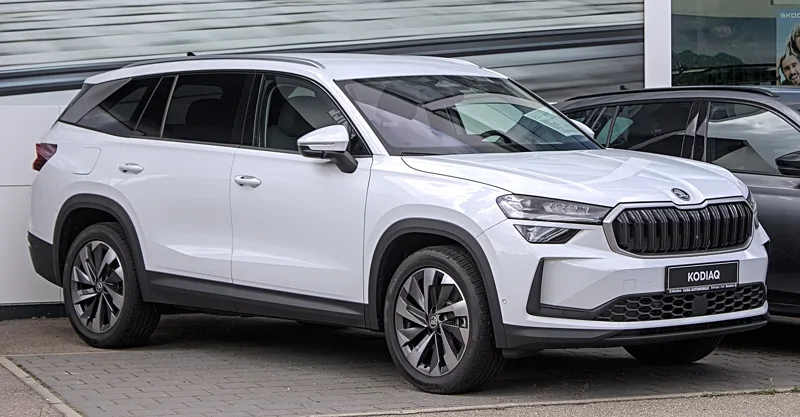
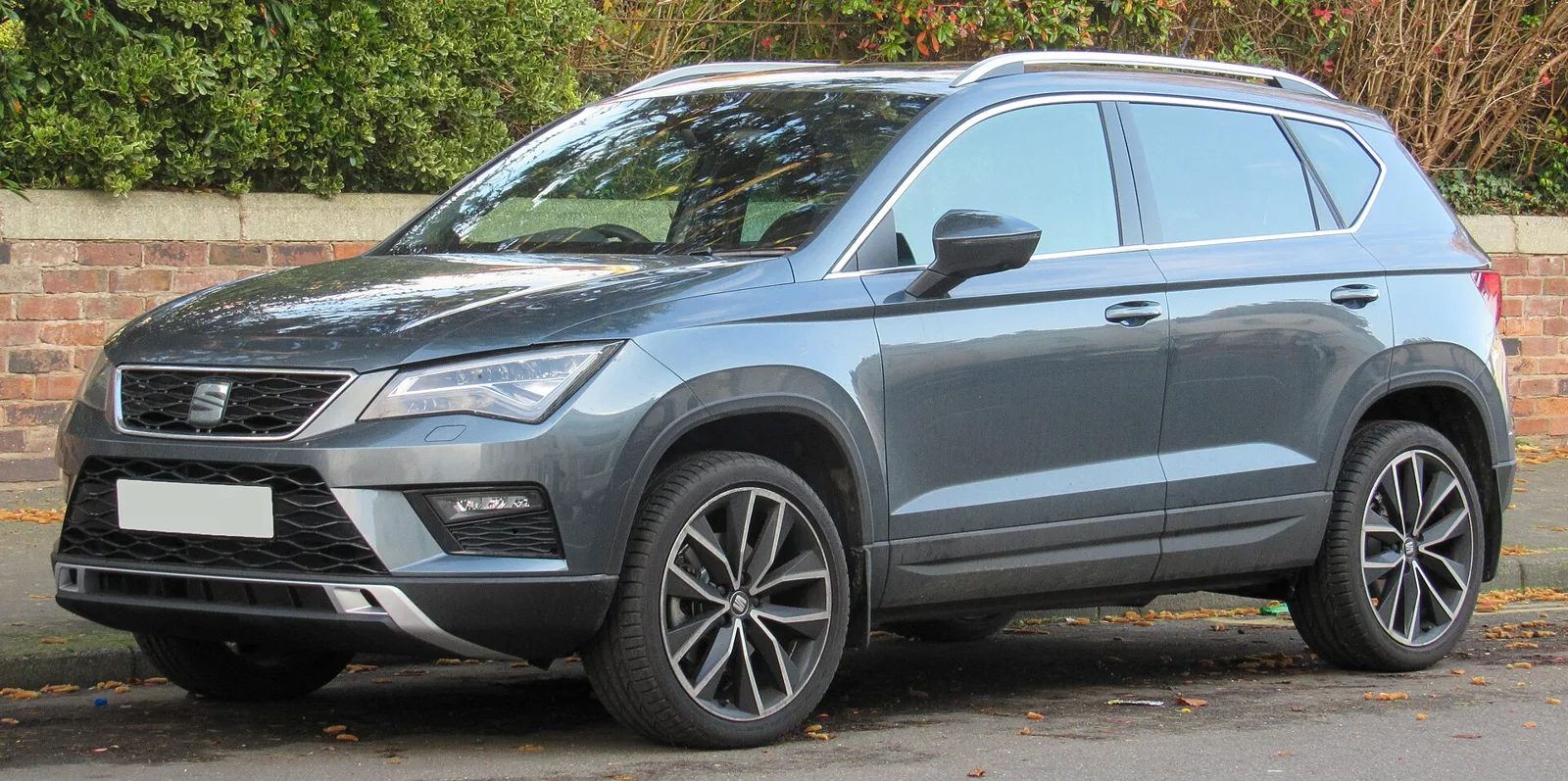
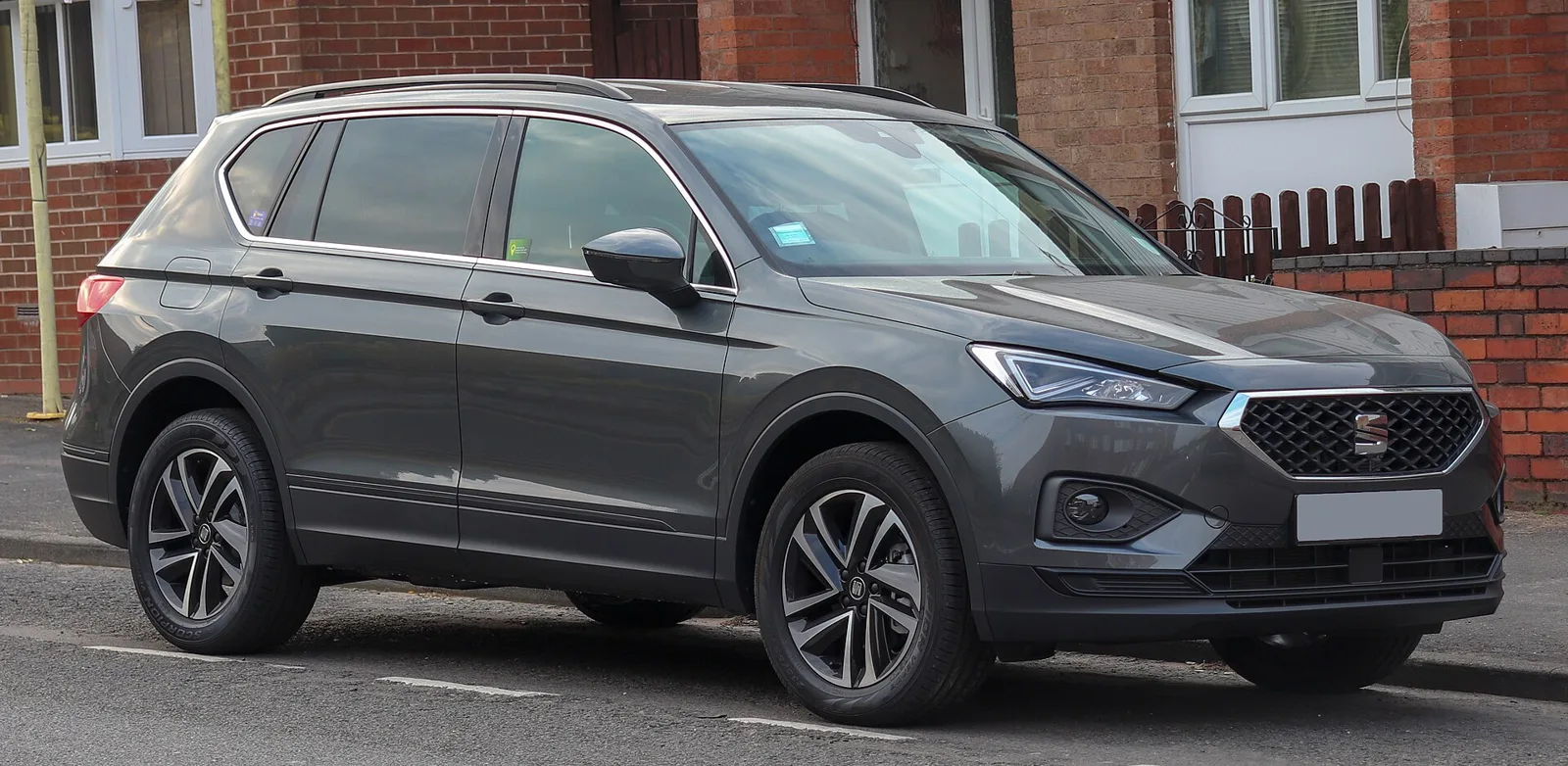
The Tarraco is SEAT's flagship SUV: a mid-size D-segment crossover that sits above the Arona and Ateca and offers seven seats as an option. It rides on the Volkswagen Group's MQB-A2 platform, a close relation of the Volkswagen Tiguan Allspace and the Skoda Kodiaq.
SEAT presented the production car on 18 September 2018, and it made its show debut at Paris in October. It was launched in Tarragona, the town it is named after, but it is built alongside the Tiguan at Volkswagen's plant in Wolfsburg, Germany. Mechanical underpinnings come from the Tiguan and Kodiaq, while the door panels are shared with the Tiguan Allspace.
The Tarraco opened a new design language for SEAT, with a large front grille and new lights, and a return to an approach that Giorgetto Giugiaro had used for the brand at the start of the 1990s. Four trim levels were open to order at launch: SE, SE Technology, XCELLENCE and XCELLENCE LUX. Every one included metallic paint, a DAB radio, Full Link connectivity for Android Auto and Apple CarPlay, an alarm, three-zone climate control and 17-inch alloys.
With the Tarraco, SEAT let the public choose a model name for the first time in its history.
Is the SEAT Tarraco a seven-seater?
As an option. The Tarraco can be specified with up to seven seats, and since the SEAT Alhambra MPV was discontinued it has been the only SEAT to offer that many. Buyers who wanted a third row in a SEAT therefore had one model to look at.
How was the SEAT Tarraco named?
By a public vote, which began in 2017. Anyone could suggest a Spanish geographical name of no more than three syllables, and 10,130 suggestions arrived from more than 130,000 people. After a check on linguistic and legal grounds, SEAT picked nine options: Abrera, Alboran, Aran, Aranda, Avila, Donosti, Tarifa, Tarraco and Teide.
Alboran, Aranda, Avila and Tarraco went to a final vote. The result was announced on 19 February 2018, later than planned, because the name should have been revealed in October 2017 and the independence referendum then under way in Catalonia disrupted the timing. Of more than 150,000 participants in the vote, more than 35 percent chose Tarraco.
The name looks back to Roman Hispania Tarraconensis, whose capital was Tarraco, the old name of present-day Tarragona in Catalonia.
What engines did the SEAT Tarraco have?
Two four-cylinder petrol engines were offered from launch. The 1.5-litre made 150 PS (110 kW; 148 hp) and came with a six-speed manual and front-wheel drive. The 2.0-litre, at 190 PS (140 kW; 187 hp), was paired with a seven-speed twin-clutch automatic and driven through all four wheels.
The 2.0-litre diesel was available with 150 PS (110 kW; 148 hp) or 190 PS (140 kW; 187 hp). Buyers of the 150 PS diesel could choose a manual with front-wheel drive or the twin-clutch automatic with four-wheel drive; the 190 PS version came only in the latter form.
For safety, a German-made Tarraco in the most basic Latin American specification, with 7 airbags and ESC, earned 5 stars for adult occupants and 5 stars for toddlers in 2019, together with the Advanced Award from Latin NCAP 2.0.
Has the SEAT Tarraco been discontinued?
It has. SEAT announced in July 2024 that the Tarraco had ended production in the second quarter of that year, with no second generation planned. A spokesperson said the Tarraco had been a success but that there would be no successor.
The reason given was a change of focus towards the Cupra Terramar, a rival in much the same segment that measures 200 mm (7.9 in) less in length.
What was the SEAT Marbella?
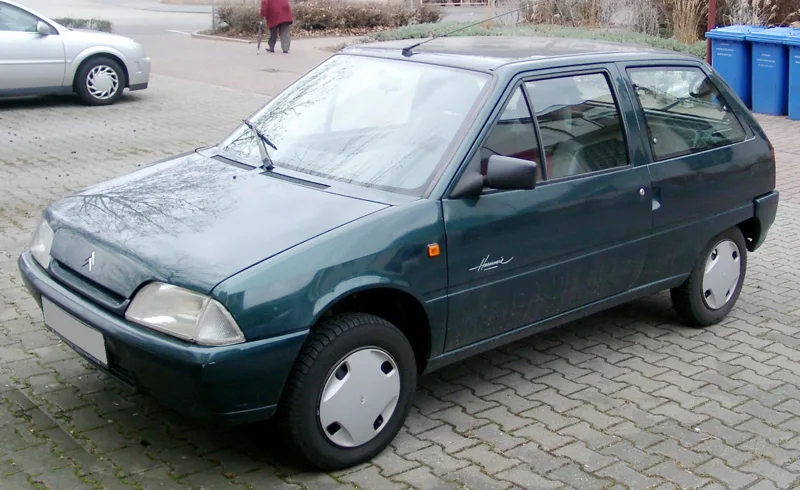
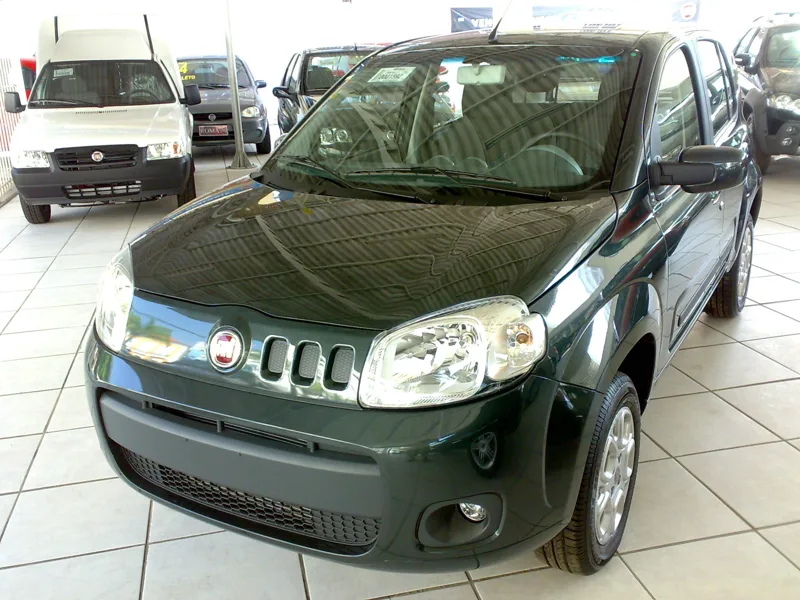
Codenamed 141A, the Marbella was a Fiat Panda re-badged and built by SEAT. The Panda version was built from 1980 to 1986, at first called the SEAT Panda, in the Landaben plant at Pamplona, with more built at Zona Franca in Barcelona. After the partnership between SEAT and Fiat broke, SEAT restyled the car and renamed it Marbella. It was the last SEAT based on a Fiat model.
Production at Landaben ran from February 1980 until it ended there on 29 April 1983. A mild restyle in 1983 brought the Panda a new grille and small changes, and the Marbella name was first used that model year on a luxurious Panda. A second and more thorough restyling in December 1986 gave the car the Marbella nameplate in full, and it was built at Zona Franca until 1998, when the end of Marbella production also ended vehicle production at that factory.
SEAT did not copy the mechanical and cosmetic tweaks that Fiat applied to its Panda in 1986, such as deleting the front quarter-lights, and instead made small changes of its own. The obvious differences were at each end, where the head and tail lights and boot panels differed, and the Marbella had a pronounced slope to its front panel. Its boot held 272 litres, rising to 1,088 litres with the rear seats folded.
What engines did the SEAT Marbella have?
The Panda borrowed heavily from Fiat's parts bin, taking engines and gearboxes from the Fiat 127. The main engine was an inline four-cylinder of 903 cc and 40 PS (29 kW), enough for a car weighing about 680 kg. A 60 PS (44 kW) kit for a more powerful Panda Abarth was offered in Spain through a firm named Apicsa.
| Engine | Output | Top speed | Notes |
|---|---|---|---|
| 903 cc four-cylinder | 40 PS (29 kW) | 131 km/h (81 mph) | Later given electronic injection and cut to 899 cc |
| 843 cc four-cylinder | 34 PS (25 kW) at 5,600 rpm | 125 km/h (78 mph) | No five-speed gearbox in Marbella |
Soon after introduction a smaller version was added, matching the Italian two-cylinder model. Called the Panda 35, it had an 843 cc engine developed from the one that went into the SEAT 850 from the mid-sixties, with a lower compression ratio to set it apart from the 45. Working harder to keep pace, the small engine saved almost no fuel in real use. It continued when the Marbella arrived in December 1986.
Many labels were used across the car's life with few real changes in specification: L, Special, XL, GL and GLX, plus numerous special editions. The Black, Red and Yellow specials arrived in September 1989, followed by Blue, Green, CLX and Jeans in September 1990. Some export markets had their own, such as the Le Jouet series sold in France in the early nineties.
What vans and oddities were based on the SEAT Marbella?
The Panda-based SEAT Trans was a small, high-roofed box van, sold until 1986. The Terra, codenamed 24 and 024A for the box van, replaced it as a van version of the Marbella. Built in Spain from 1987 to 1996, when the Inca was meant to succeed it, it shared the Marbella's front and underpinnings but had a large, high metal box at the rear and a load rack over the cab. Spanish buyers took to it in large numbers, and it was exported too.
A stranger job was the 1982 popemobile that SEAT built at Zona Franca from the Panda for Pope John Paul II's visit to Spain. It had no roof or sides, and a handle at the front let the Pope stand while the car moved. On 17 November 1982 he drove it through the crowds in Barcelona's Camp Nou stadium before a mass for a congregation of over 121,000.
The Spanish company Emelba made several Panda derivatives, including the only five-door Panda, the Elba Cinco puertas, the Pandita 4x4, the Chato and Chato pick-up, and a Panda with a Daihatsu diesel engine. At the 1991 Frankfurt motor show SEAT presented the Marbella Playa, a beach car in the mould of the earlier Pandita and Panda Trans, wearing SEAT's new corporate grille. One pre-production car was completed, but the project stopped.
How did the SEAT Marbella shape SEAT's rallying?
SEAT and its competition director Jose Juan Perez de Vargas created the Copa Panda in 1980, a one-make rally series for young drivers that ran beside the Copa Fura circuit cup. Its most renowned graduate was Carlos Sainz, who won the first edition. As his prize, SEAT gave him a Panda 45 Grupo 2 rally car, with which he took his first title.
After SEAT joined the Volkswagen group, it formed the SEAT Sport department in 1985. The Marbella replaced the Panda in 1986, so the Copa Panda was succeeded by the Copa Marbella, which formed part of the Spanish gravel rally schedule for eight years before the Copa Ibiza took over.
In the Spanish gravel championship, the SEAT Marbella Proto, with a supercharged 1.3-litre four derived from the Volkswagen Polo G40 and 140 hp, won SEAT the 1988 title. The next year Antonio Rius took the two-wheel-drive class in a Marbella. Alex Criville, Juan Garriga and Jordi Tarres also drove it, Tarres successfully against much more powerful cars such as the Lancia Delta in a Marbella weighing only 620 kg.
What was the SEAT Cordoba WRC?
SEAT built the Cordoba WRC as a World Rally Car for its SEAT World Rally Team, to compete in the World Rally Championship. It was based on the Cordoba road car and debuted at the 1998 Rally Finland, with Harri Rovanpera as the main driver.
It was SEAT's official rally car in the championship from 1998 to 2000, with a 2.0-litre turbocharged engine, in the top category. To qualify, SEAT homologated a World Rally Car version of the Cordoba 16v for the FIA championship and other international events. Drivers for the factory included Didier Auriol of France, the 1994 World Drivers' Champion, and the Finns Toni Gardemeister and Rovanpera.
Podiums came at the 1999 Rally New Zealand with Gardemeister, the 1999 Rally GB with Rovanpera and the 2000 Safari Rally with Auriol. The works programme ended with the 2000 season and the third evolution of the car, but the Cordoba WRC kept winning in national championships. In Spain it took the gravel title with Pedro Diego and Marc Blazquez, and Salvador Canellas Jr won tarmac rallies.
Where do the Marbella, Cordoba WRC and Tarraco sit in SEAT's history?
The three cars come from different decades, and the Marbella and Cordoba WRC briefly overlapped at the end of the 1990s.
| Model | Period | Role |
|---|---|---|
| Panda and Marbella | 1980 to 1998 | Badge-engineered Fiat city car; last SEAT based on a Fiat |
| Cordoba WRC | 1998 to 2000 | Works World Rally Car |
| Tarraco | 2018 to 2024 | Flagship SUV, optional seven seats |
The end of Marbella production in 1998 closed vehicle production at the Zona Franca factory, the same year the Cordoba WRC made its debut. The Terra van that grew out of the Marbella was meant to give way to the Inca in 1996, and the Copa Marbella that once fed SEAT's rally talent was eventually replaced by the Copa Ibiza.